This week I have a fuzzy mystery object for you to identify:
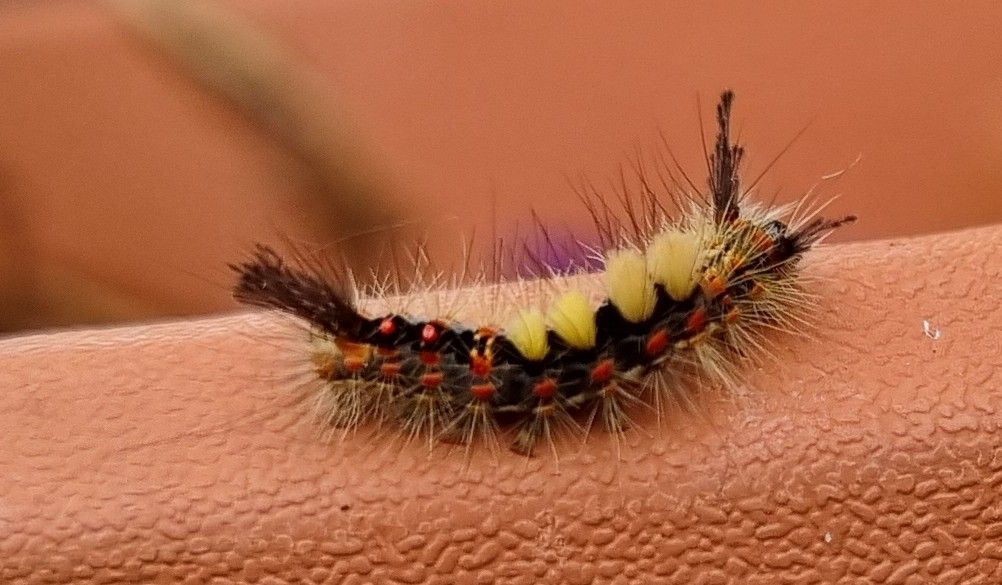
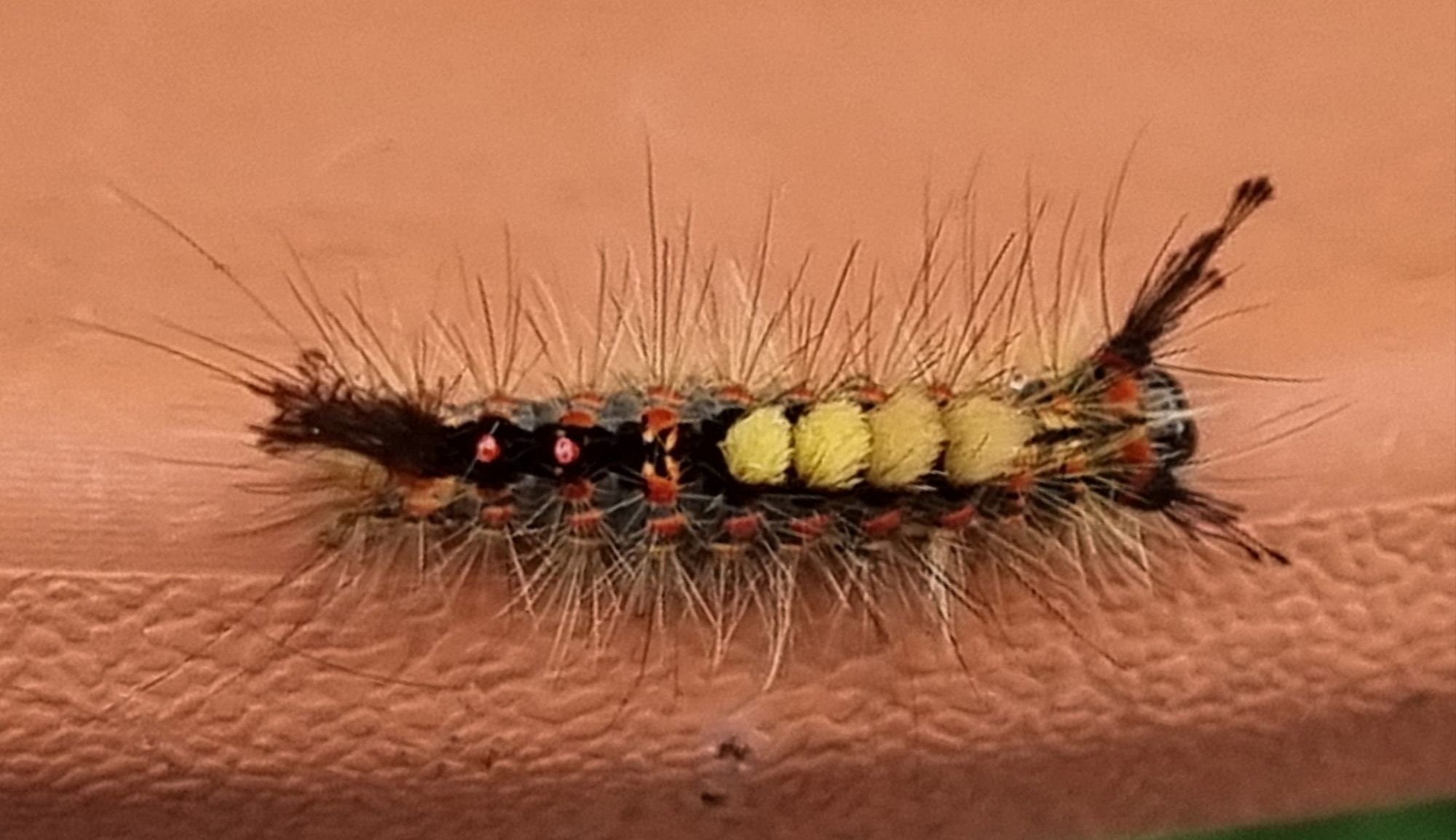

Any idea what this colourful little critter could be? I look forward to hearing your thoughts, questions and suggestions in the comments section below. Have fun!

This week I have a fuzzy mystery object for you to identify:
Any idea what this colourful little critter could be? I look forward to hearing your thoughts, questions and suggestions in the comments section below. Have fun!
Last week I gave you another guest mystery object from regular contributor Andy Taylor FLS FBNA:
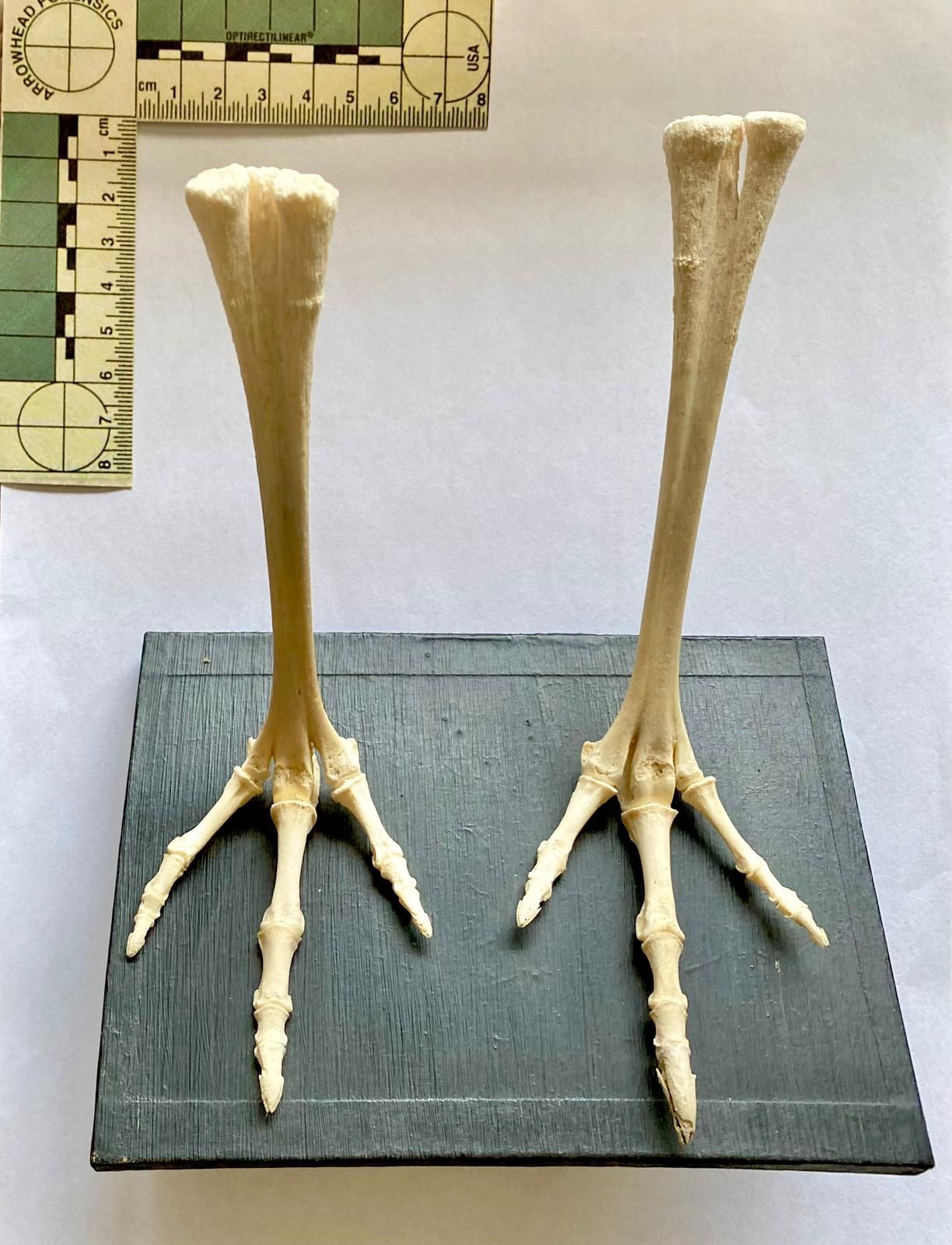
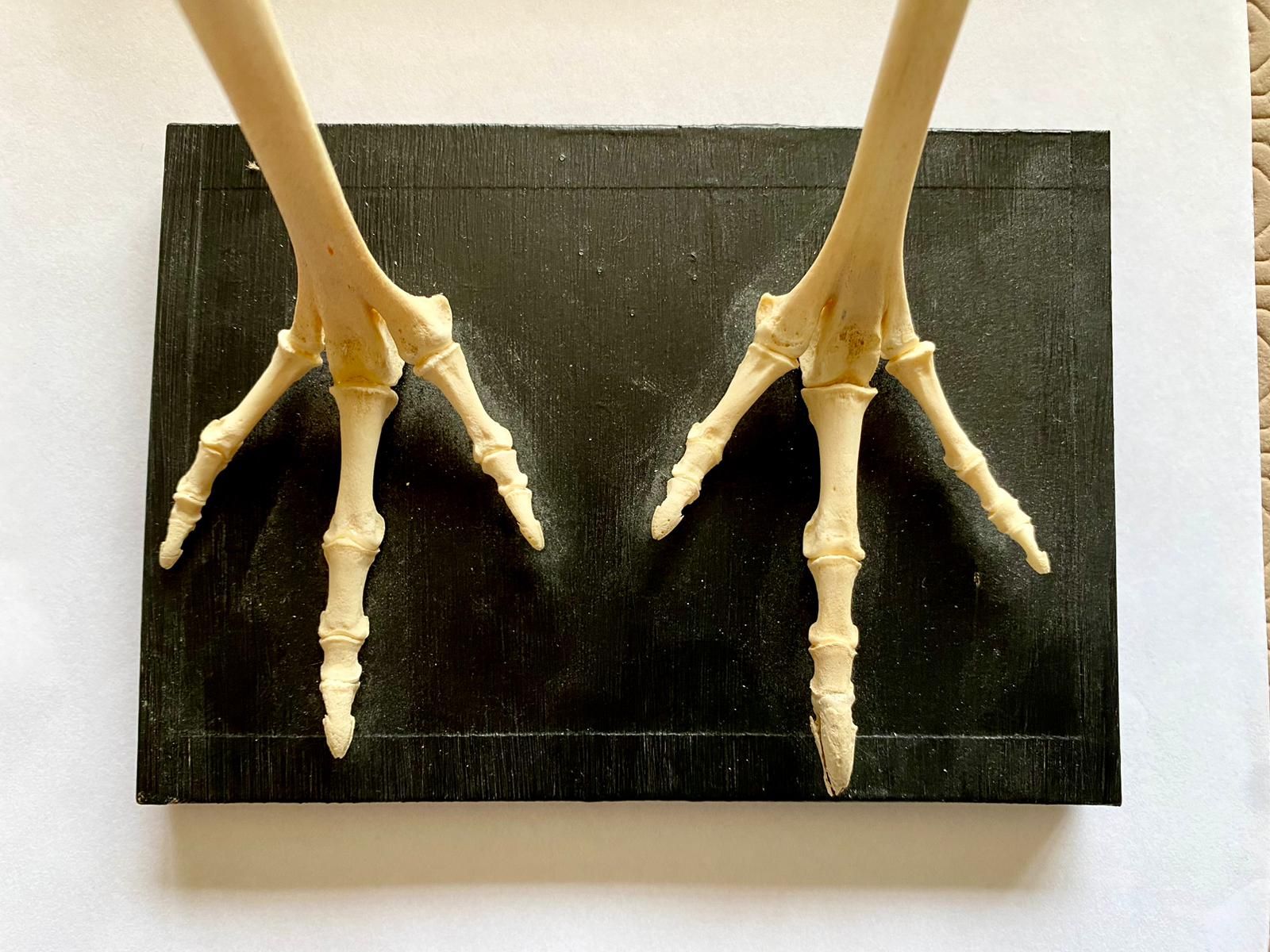
This proved to be a tricky challenge. The large size and the lack of a halux (the rear-facing small toe found in many birds) makes this seem like the feet of some sort of Ratite, which is the group of birds that includes a variety of flightless examples, including Ostriches, Emus, Cassowarys, Rheas, and Kiwis – many of which lack the hallux.
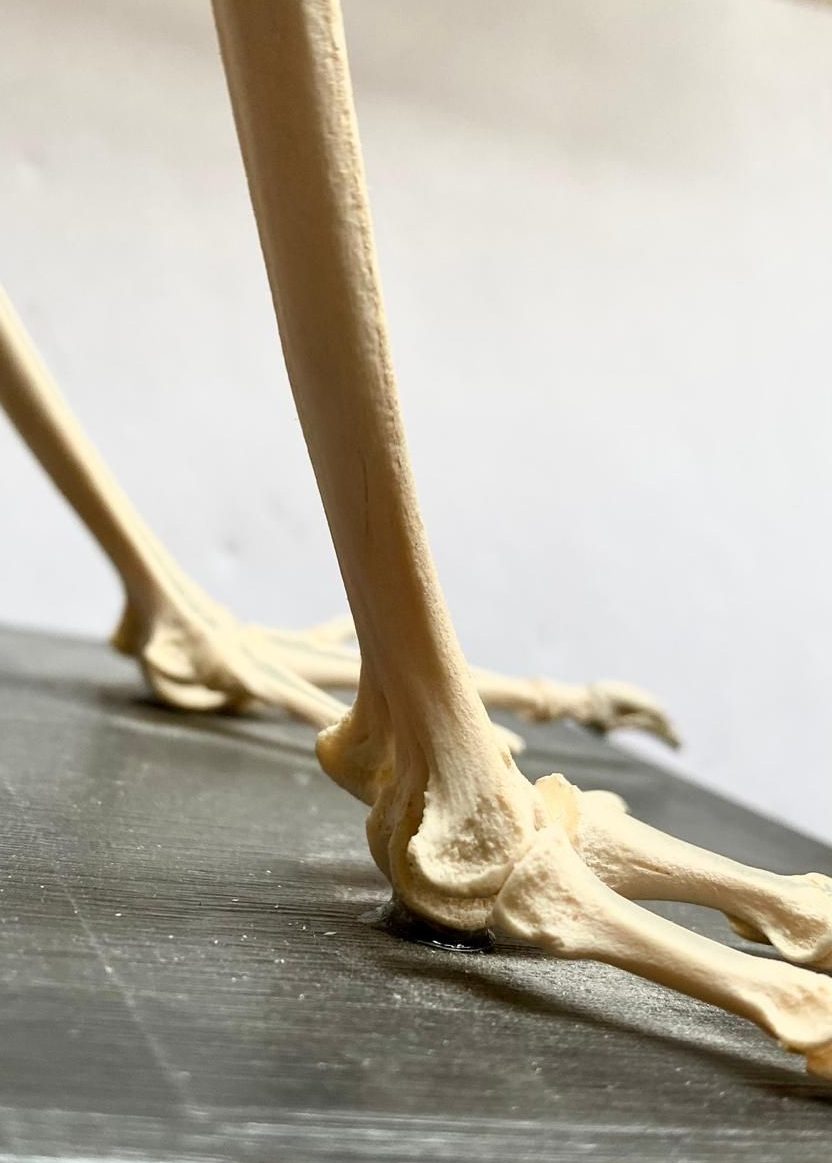
However, these feet do not belong to a Ratite – and in the comments, many of you seemed to notice that there was something funky with the arrangement of the toes and bones that may have offered a clue to indicate that fact. Even though they’re not from a Ratite, there are some useful pointers that can be taken from the similarities, since form follows function and if we know Ratite feet can look similar to these, then perhaps it’s worth asking “why is that?”
Many (although not all) Ratites have three forward-facing robust toes, although the Ostriches are a bit of an exception, as they only have two toes per foot. In the evolutionary push to be fast on your feet, too many toes can make you slow – just look at how horses have lost all but one of theirs.
Ratites also lack a hallux, and their claws don’t curve. These features all reflect the fact that Ratites don’t perch on branches, they’re heavy, and they spend most, if not all, of their time walking around on dry grasslands (actually, this isn’t true for Kiwis or the extint Moas that have more scrubby or habitats, but these Ratites do have a hallux). These are all useful things to consider when thinking about potential species that these feet could be from.
If you think of large and heavy birds that don’t perch and have a grassland habitat the list of possible options gets narrowed down quite quickly. Sereimas and Secretary Birds are out, as they have a hallux and more curved claws. Storks, Megapodes and Galliformes all also have a hallux. But one type of bird matches the description very well – the Bustards (or Otididae if you prefer).
The size means it must be one of the larger species of Bustard, but I suspect that it would be difficult to confirm the identification to species level without good quality reference material, since there are quite a few species. But in this case we’re luck to know the species, since Andy has the information – these feet belonged to a Great Bustard Otis tarda Linneaus, 1758.

It’s a species I’ve talked about before in a previous post and I really appreciate Andy sharing the images and information from his collection, and all the thoughts and comments that came in about the mystery object from the community here on Zygoma. Thanks for taking part!
This week I have another guest mystery object for you from regular contributor Andy Taylor FLS FBNA:

I’m keen to hear your thoughts on what the owner of this magnificent pair of feet might have been in the comments below. If it proves very difficult then myself of Andy might be tempted to offer up some clues, but I have a suspicion that some of you might work it out yourselves. Either way, I hope you enjoy the challenge!
Last week I gave you this mystery object found by the family of one of my colleagues to have a go at identifying:
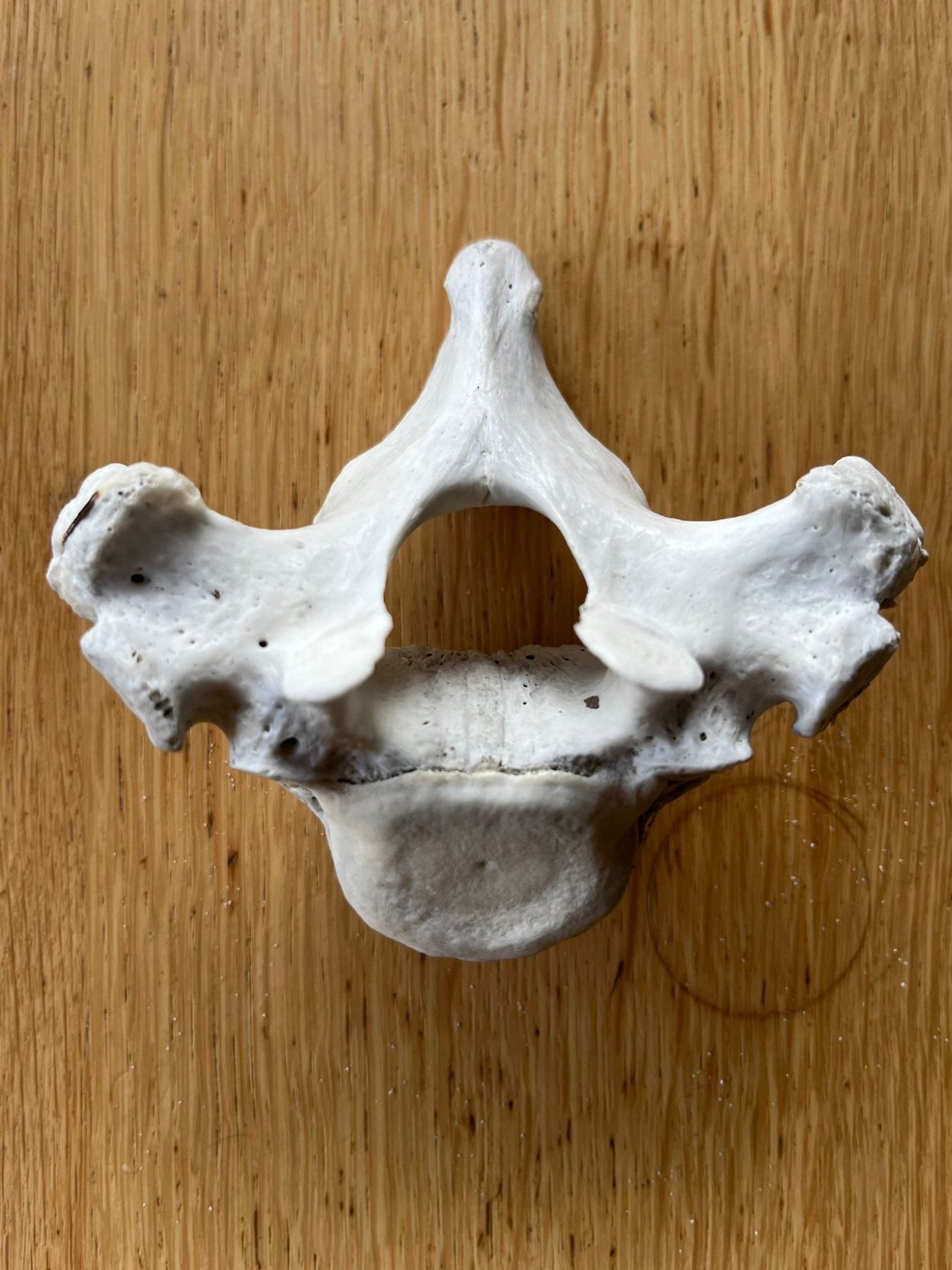
Adam Yates got the ball rolling with some key observations about this skeletal element that provides a handy set of clues to look for when assessing vertebra:
The element is easier than than the taxon. It is a thoracic vertebra from a mammal because it has zygapophyses (so therefore not a fish), flat centrum faces (so therefore not bird or reptile), and rib articulation facets (so therefore not from the neck, lumbar or tail regions). Which mammal is less easy, I’m pretty sure it is isn’t a relative of flipper, but that’s all I’ve got now.
Adam was also right in flagging that it’s not from a cetacean – their transverse processes are longer and less robust than we see in this mystery specimen. However, this bone was found on the beach on Achill Island, so there’s a good chance it’s from a species that’s frequently in the water.
Then Joe Vans, Kat Edmonson and Adam got stuck in with consideration of the possible species and specific thoracic vertebra, and as part of that there was reference to images from John Rochester’s Flickr pages. As far as I’m concerned, John’s pages are some of the best resources available for osteological comparison and I use them regularly.
The discussion ended up converging on the 5th thoracic vertebra (or T5 as it would be commonly referred to) of a Harbour Seal, based on specimens imaged by John here: https://www.flickr.com/photos/jrochester/14181517647 – best compared to this image of the mystery specimen:

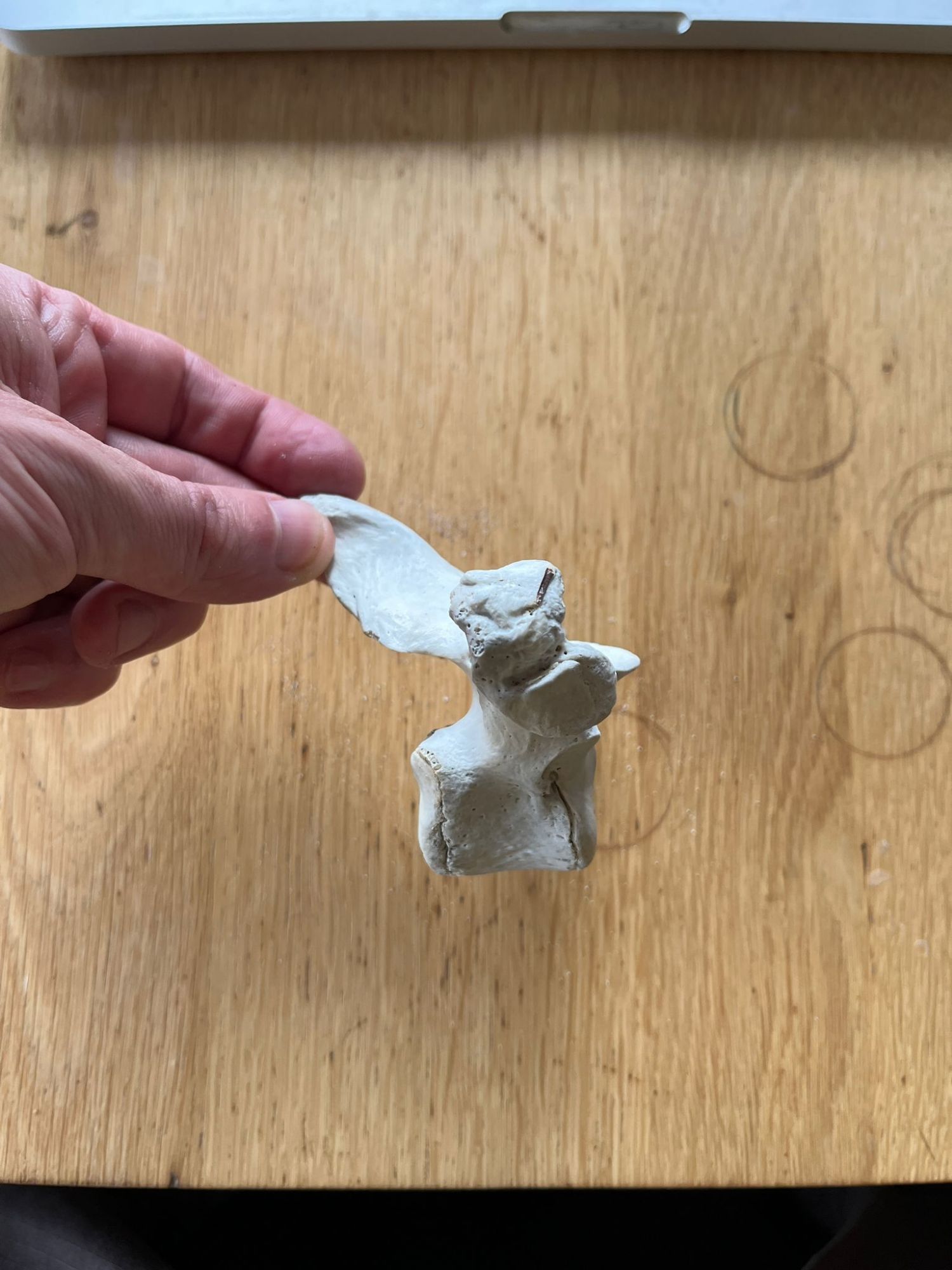
This could well be correct, but I personally think it may be from a different species of seal. The size is fairly large (based on the hand that provides some scale), yet the epiphyses of the articular surfaces are not fully fused, suggesting that this is from a subadult animal:

This suggests to me that the animal had some more growing to do before reaching full size, which may impact on some of the features, but it also makes me think that the vertebra is probably on the smaller end of the size range for the species.
For me that would suggest a Grey Seal Halichoerus grypus (O. Fabricius, 1791) and looking at another of John’s pages: https://www.flickr.com/photos/jrochester/24441096790/in/photostream/ I would expect it to be in the T6 or T7. This also tracks for me in terms of the shape of the neural canal, which seems narrower and taller (generally more square) in the Grey Seal compared to a broader and perhaps more triangular neural canal in the Harbour Seal.
I suspect a measurement of the size would help confirm one way of the other, so I’ll see if I can get that to be sure. I hope you enjoyed the challenge of working this out, and I’d love to hear your thoughts if you think it could be something else!
This week I have another guest mystery object for you, found on a beach by the family of one of my museum colleagues:




Let me know your thoughts about the species, where in the body this particular bone came from, and any other deductions you might have about the animal? I look forward to seeing if you agree with my thoughts!
Last week I gave you this guest mystery object to try identifying, from the collection of Andy Taylor FLS FBNA:

Andy had brought this particular specimen along to the NatSCA Conference, which was held in the Manchester Museum this year. It’s not the only one he brought – there were several fantastic specimens from his incredible collection, my favourite being the Bathynomus Giant Marine Isopod:

It was great to see these specimens, and it’s surprisingly rare to be able to see specimens like this at a conference these days, since UK museums have very strict controls on how accessioned collections are transported and used, which can make it hard to support use in outreach. While this is good for the care of the collections, it does reduce their ability to be used to educate and inspire.
Andy doesn’t have this limitation, since the specimens are from his own collection, which has been built up over 40 years of interest in natural history and through a network of contacts researching life in the deep seas and a variety of other environments. Andy does this because he’s passionate about nature, and his collection is available for use for research, loans to support exhibitions, and use in training and outreach activities.
Many natural history collections in museums came from the activities of passionate naturalists like Andy – in fact quite a lot of local and regional museums in the UK were originally founded to house the collections of local naturalist organisations, that sprung up to support the learning of working people who didn’t have the opportunity to follow an academic route into the natural sciences, but who made huge contributions to our understanding of local biodiversity in the areas in which they were active. These people were true amateurs – doing this work for the love of it, rather than for profit.
Various organisations still support the activities of passionate naturalists (both amateur and professional), such as the British Naturalists’ Association and the Linnean Society of London (of which I am a Fellow) and I think they have huge value for furthering our understanding of natural science and supporting the activities of taxonomists and conservationists who do the vital work needed to protect our threatened natural world.
However, none of this offers an answer to last week’s mystery object, so let’s get to that.
The photos I provided weren’t great, but that didn’t stop the Zygoma regulars from figuring it out. Chris Jarvis indicated that it was a type of mussel, Sallie Reynolds got the clue I offered in last week’s post (“you may need to dive deep to work it out”) and figured it was from very deep in the ocean, and Adam Yates suggested the wrong species in the right genus, and then dialled in on the correct species after a helpful comment from Andy.
This is a specimen of Bathymodiolus thermophilus Kenk & Wilson, 1985 a type of mussel that lives around hydrothermal vents. This particular specimen was collected at a depth of 2.2km from a hydrothermal vent on the East Pacific Rise by Alvin Deep-Submergence Vehicle (DSV) as part of research by the Woods Hole Oceanographic Institution.

The distribution of specimens like this to a variety of people and organisations is an important activity, since it helps ensure examples of species can be made more available for interested parties around the globe – decentralising collections so local events (from earthquakes to funding cuts by anti-science governments) stand less chance of taking specimens out of circulation for research into our global biodiversity.
I would like to offer up my thanks to Andy – his support for this blog has always been enthusiastic and I appreciate it greatly!
This week I have a guest mystery object for you, from the collection of Andy Taylor FLS FBNA – a regular contributor of specimens to the blog, and this year a fellow attendee of the Natural Sciences Collections Association conference, which is taking place in Machester at the moment – but more about that when I come to the answer next week.
For now, here’s the object:


Let me know if you can figure out what it is – I appreciate that the photography of the specimen makes this a bit more of a challenge, so you may need to dive deep to work it out. Have fun!
Last week I gave you a particularly mean mystery object to try to identify:
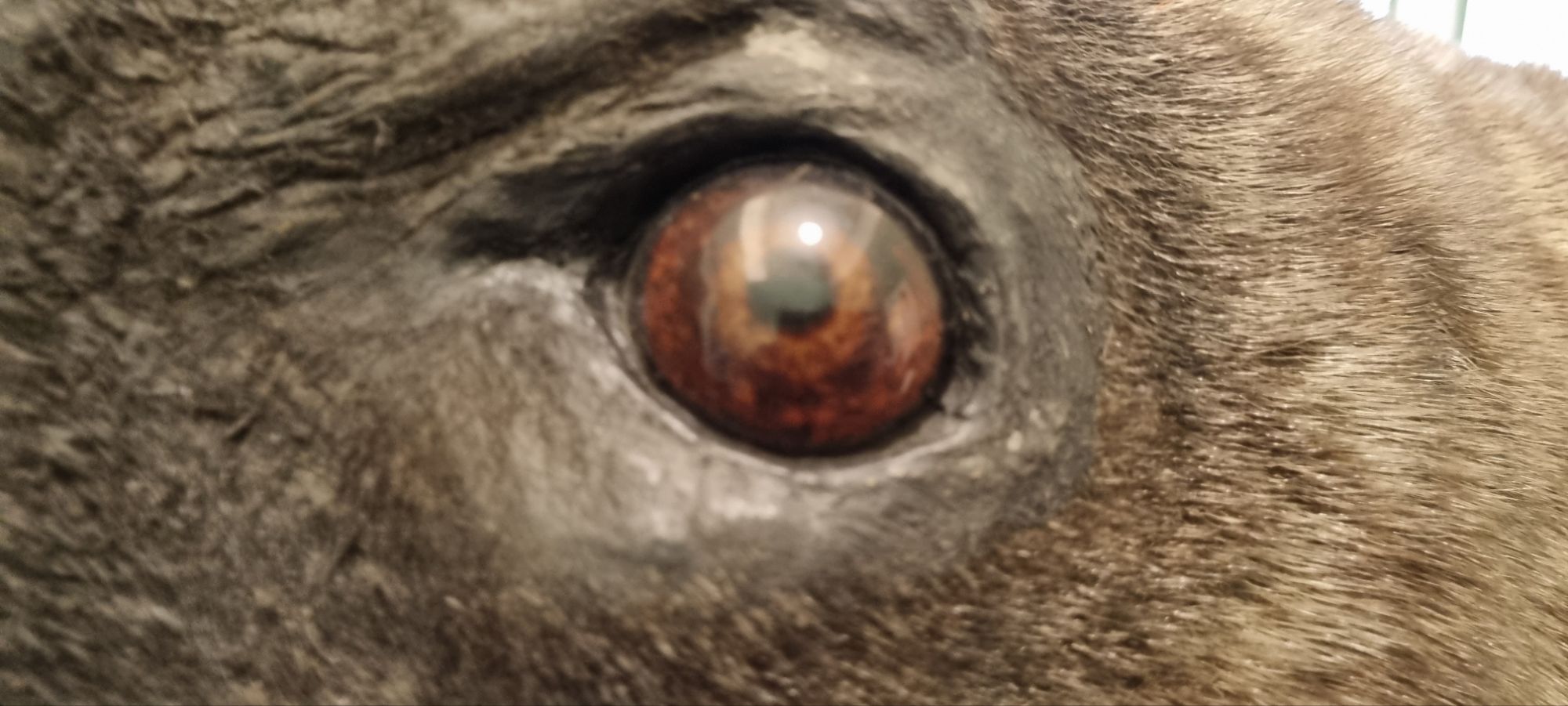
This would be difficult if it was an accurate representation of the eye of the living animal, but I suspect it’s pretty much impossible (unless you’re familiar with this specimen), considering how different this eye appears from the eye of the actual animal. This is something that katedmonson spotted and commented on:
The problem I can “see” with this eye is that we are relying on the skill of the taxidermist to have correctly chosen the exact correct glass eye: pupil, color, shape of the iris, for the animal is is supposed to represent. And did the preparer accidentally strip the eye of any eyelashes, (sus scrofa as many have indicated) or does this animal not have any. Which is fairly unusual as far as ‘eyes’ go. Unless it was cetacean, which the fur would indicate it is not. Not seal either.
Kat made the point I was planning on making when I chose this mystery object – the eyes of taxidermy specimens are a choice made by the taxidermist who does the preparation, and that choice might be accurate – or it might not be. However, there is one point Kat makes that isn’t quite on point – this is in fact a type of seal:

This is a Hooded Seal Cystophora cristata (Erxleben, 1777) – a species that I have talked about before on the blog, in fact I think the specimen I used in that instance may have been the skull that came from this taxidermy example:
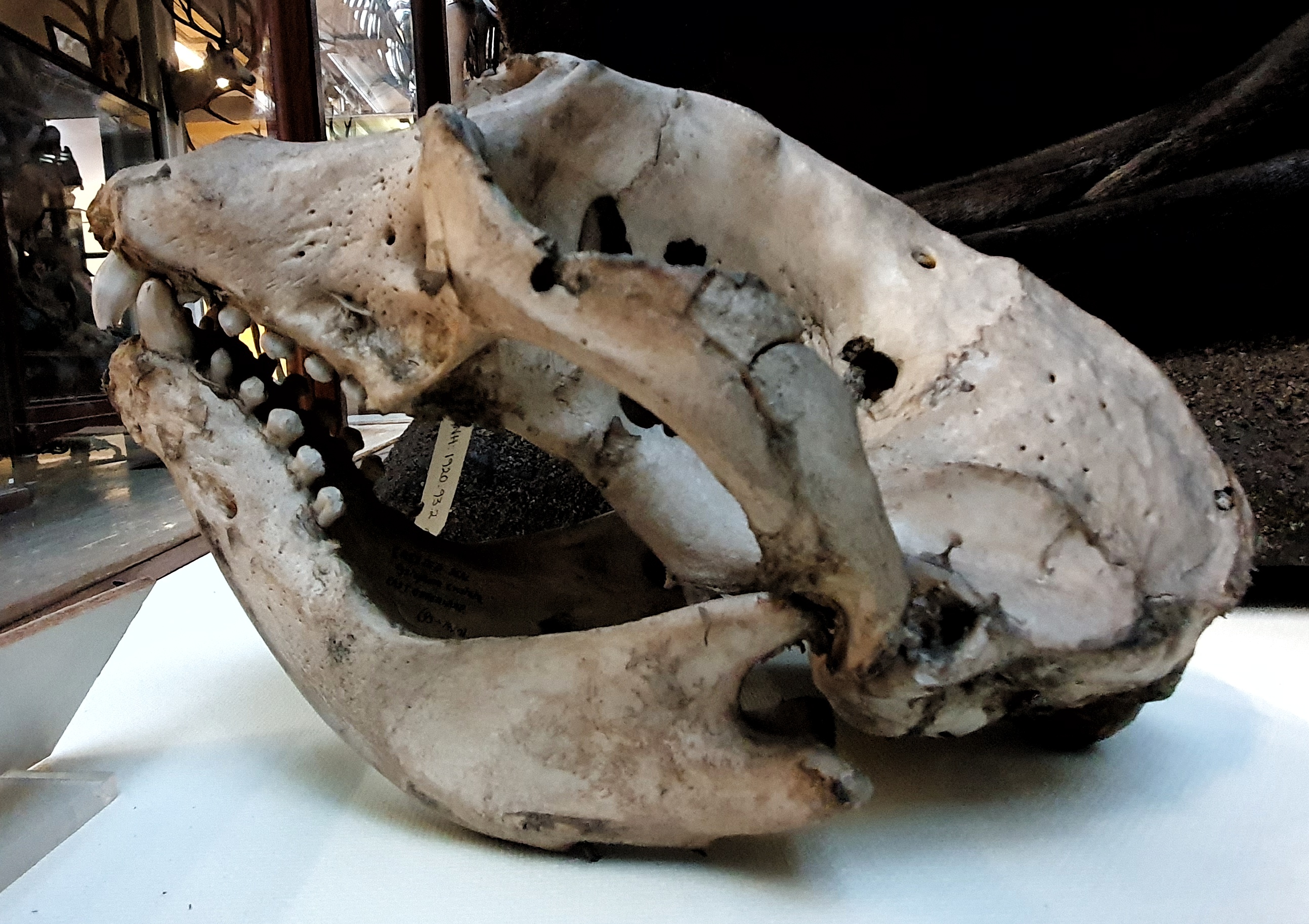
I should probably offer my apologies at this point, for going with such a difficult mystery object, but sometimes it’s nice to pose a puzzle that even the crack community of commenters on the blog have trouble with. Thanks to you all for your thoughts on this – I hope the search for an answer wasn’t too frustrating!
This week I have an unapologetically difficult mystery object from the Dead Zoo for you to try idenifying:
Any idea what this close-up mystery object could be?
Let me know your thoughts in the comments section below – and have fun with it!
Last week I gave you this genuine mystery object to have a go at identifying:
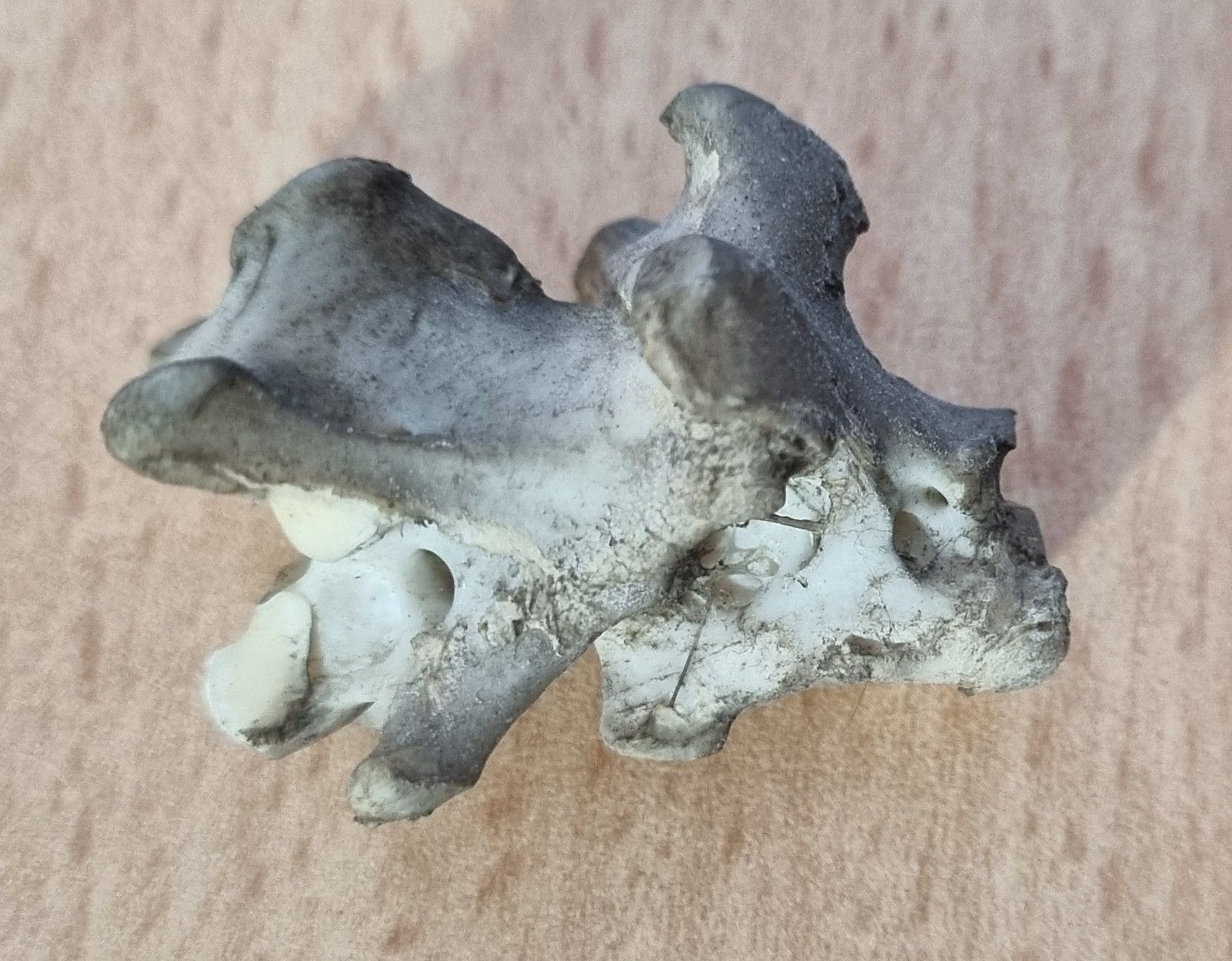

This came to light when we were clearing out cupboards in the Dead Zoo, and it may have been an ill-considered option, considering how tricky vertebrae can be to narrow down to species and how little time I’ve had to research this particular specimen.
I was hoping that someone in the comments might spot something I’d missed, and Adam Yates certainly spotted everything I’d noted from my inspection of the specimen:
Clearly birdy (pneumatic foramina and saddle-shaped posterior centrum face). The odd short anterior of the pair is probably the axis, and the one behind, Ce 3. I can’t do better than that right now, but will return to this puzzle later…
He also added a useful comment about size which I hadn’t really considered fully:
…The first few cervical vertebrae of birds are surprisingly small and I judge this axis to be about 25 – 30 mm across the postzygapophyses, using Paolo’s thumbnail as scale. That would suggest a raft of large species. I’m going to guess this one rhymes with “he knew”.
I’m assuming that’s a reference to Emu, and the size of the vertebrae certainly seem to be in the right size range (at least according to this paper by Baranowski et al, from 2018). However, I’m not entirely convinced that the shape is quite right, Rheas might be a little more similar, and there was a hint at a pouched animal by katedmonson, which I suspect is a reference to a Pelican.
I think these are a little bit too short for a Pelican, but I’ll certainly keep that identification in mind as I try to find where these came from. However, without spending a good bit more time trying to find comparative specimens, it’s going to be a challenge. It may be that the easiest way to work out what this is will be to search for a large mounted bird skeleton that’s missing these vertebrae, since there are not too many such specimens in the Dead Zoo.
But before I start a wider search, I have a hunch that I want to check out. There is a King Vulture specimen that I’ve blogged about previously (way back in 2018) that is large and consists of a partially dismounted skeleton. I think I’ll make that my first port of call, as (if memory serves) it has similar levels of soot build up on the bones, and I suspect it’s in the right sort of size range, as vultures have fairly large and robust cervical vertebrae for their size.
So my thanks to everyone for their suggestions and observations – if I eventually discover the identity of these bones I’ll be sure to update this post, and if you think you know what it is, I’d love to hear your thoughts!
Oh, and if you celebrate Easter, I hope you have a great one!
This week I have a genuine mystery object for you, discovered while emptying cupboards in the Dead Zoo:


Amy idea what these vertebrae might belong to? If it’s of any use for getting a sense of scale, my thumbnail is 20mm across.
I’m interested to hear your thoughts!
Last week I gave you these fuzzy chicks to try your hand at identifying:
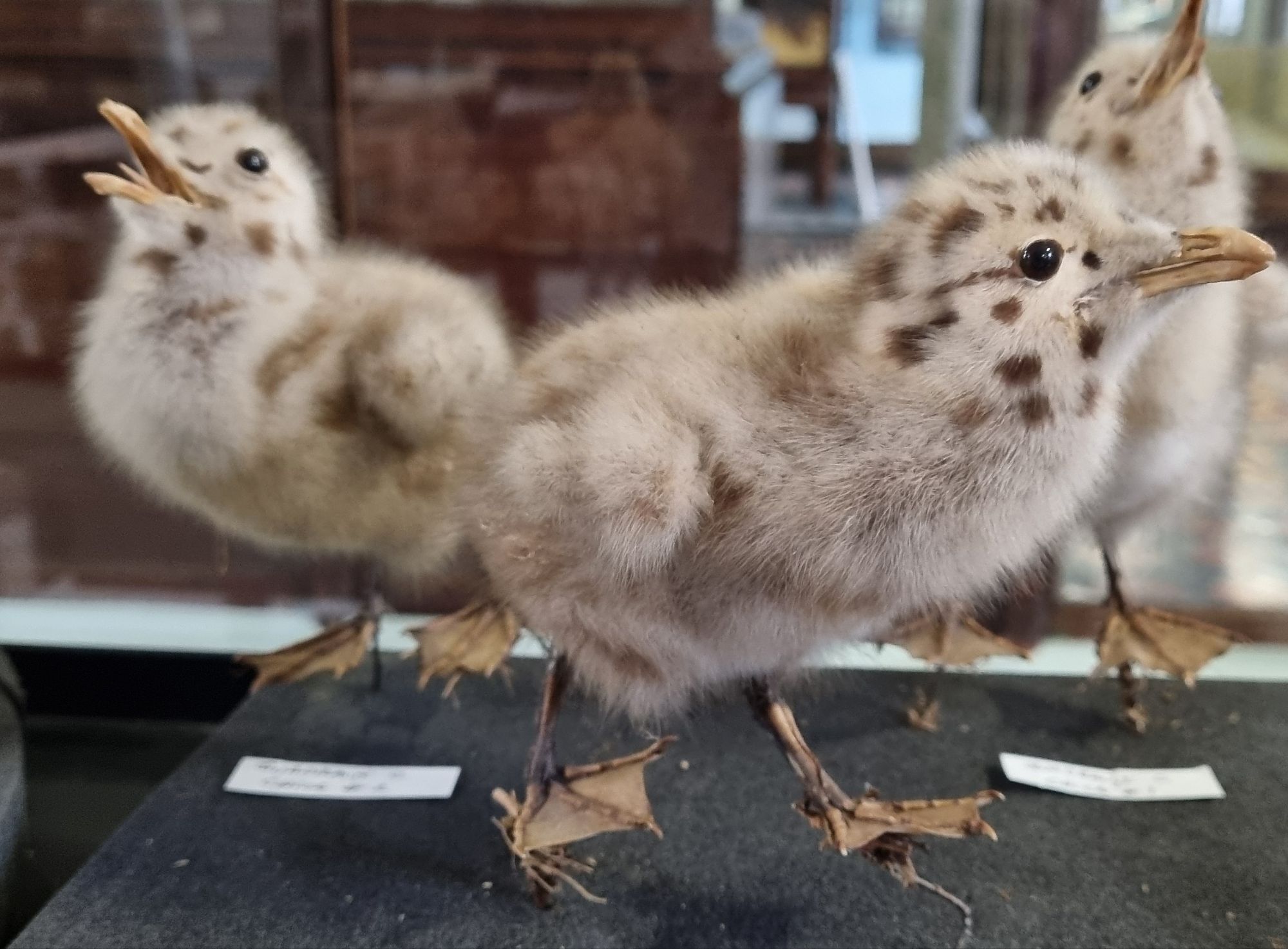
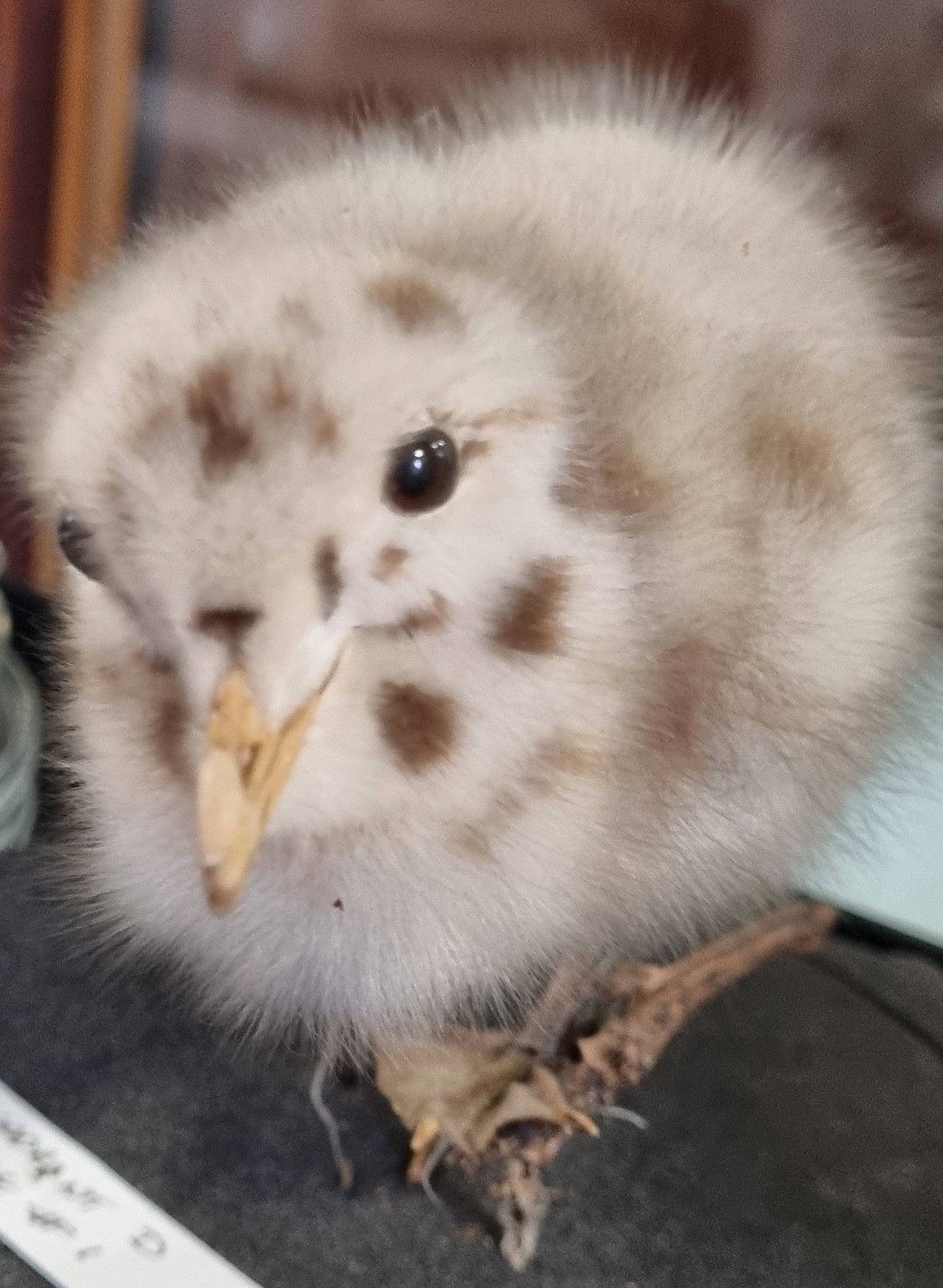
Their speckled camouflage is perfect for pebbly beaches and it’s just what you’d expect from a member of the Gull Family (the Laridae). This is something that everyone picked up on, with a variety of excellent clues.
pleasantly78f070d606 was first in the door, with a great clue identifying the correct species in three words:
Silvery chip thief
The chip stealing (both in the UK and USA meaning of chips) encapsulates one of the more familiar and frustrating behaviours of this commonly kleptoparasitic species:
The “silvery” references the species name argentatus (which in tern references the silvery shade on back of these cheeky birds). So this is the chick of a Herring Gull Larus argentatus Pontoppidan, 1763.
It can be tricky to distinguish between the chicks of various different gull species, but you may notice that these look a bit like they’ve gone for, what I can probably best describe as an eyeliner flick. This bar behind the eye is variable, but occurs frequently in Herring Gull chicks, but less so in the similar looking chicks of other closely related species.
These chicks are from a particularly nicely done diorama in the Dead Zoo, which we’ve been in the process of preparing for transport out of the building. We’ll be sharing some of the progress on the project on some social media platforms (Bluesky and Instagram) soon – so I’ll be sure to share some of those stories from our hard-working team here as well.
This week I have something cute and fuzzy for you to have a go at identifying:

Any ideas what these floofballs might be? If you think it’s easy, keep your answers cryptic to give others a chance to work it out. Have fun!
Last week I gave you a St Patrick’s themed mystery object in the form of this snake:
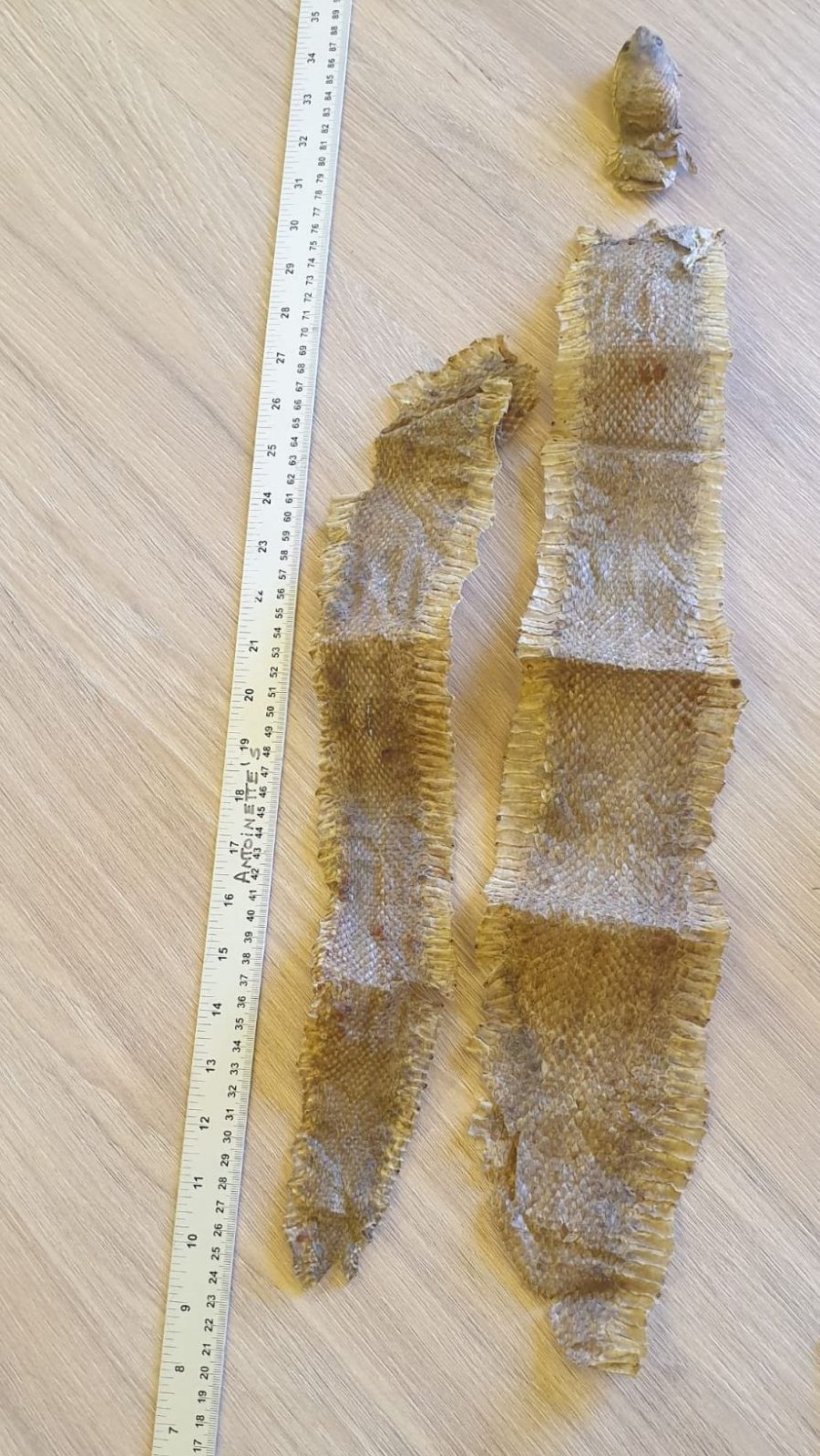
It was a really difficult ask – the skin is faded and the specimen has been chopped into several pieces, making identification very tricky. I did provide a clue with the location of where this specimen is from, to offer a little help in narrowing down the possibilities (it’s from Venezuela).
Unfortunately, as Adam Yates spotted, I managed to leave in another more obvious clue that I thought I’d removed – the name of the species, which appears in the photo of the full specimen. I cropped the image in WordPress, not realising that if you click on it the original uncropped image opens. Not my finest moment!
However, specimen identifications need to be taken with a pinch of salt until they’re verified, so let’s do that as best we can.
The side view of the head of this specimen gives a useful clue that Adam picked up on:

It has a sensory pit between the eye and the nostril, indicating that this is a type of Pit Viper, which does help reduce the options from around 50 Venezeulan snake species to around 15 or so. It’s also consistent with the identification of Bothrops venezuelensis Sandner-Montilla, 1952.
Most of the other Pit Vipers are fairly distinct from this specimen in terms of colour and pattern, but there are a couple of members of the Genus Bothrops (the Lanceheads) that are similar to this.
You may just be able to see a hint of a stripe behind the eye that terminates just above the last scale above the mouth, which can be useful in distinguishing between B. atrox (where the stripe touches the last three scales over the mouth) and B. asper (where it just touches that last scale as we see here), but this feature is less relaibe for B. venezuelensis, which can be distinguished from the other two species by having a more rounded rostrum:
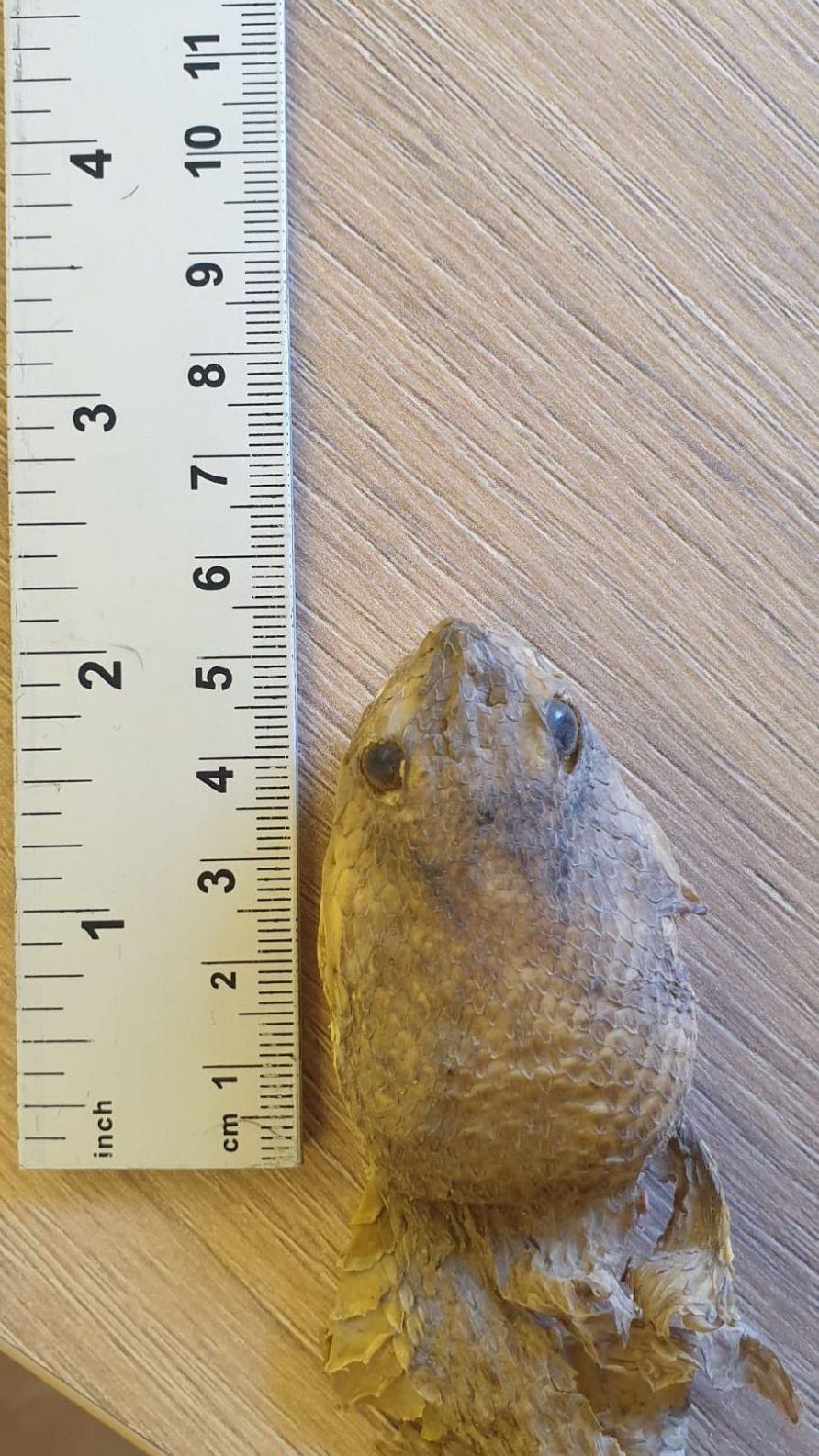
This specimen’s rostrum (snout) is a little pointy, but for a type of snake called a Lancehead, you expect them to be very pointy. Of course this specimen is a little imperfectly prepared, so the rostrum shape may be misleading. As a result, I’d be a bit unwilling to differentiate between B. asper and B. venezuelensis based on the images.
What we do know is that this was certainly a venomous snake, since it bit a farm labourer working on a hacienda who required two doses of antivenom, but they thankfully survived. I suspect that this is why the head is separated, since the snake was killed and presumably identified to assist with administration to the appropriate antivenom.
This specimen is one of several from the same collector, who I plan to talk about more in future posts, since we have great information about a fascinating life.
This Friday we’re gearing up for the St. Patrick’s weekend here in Ireland, so it seems only appropriate to have a snake for you to have a go at identifying:
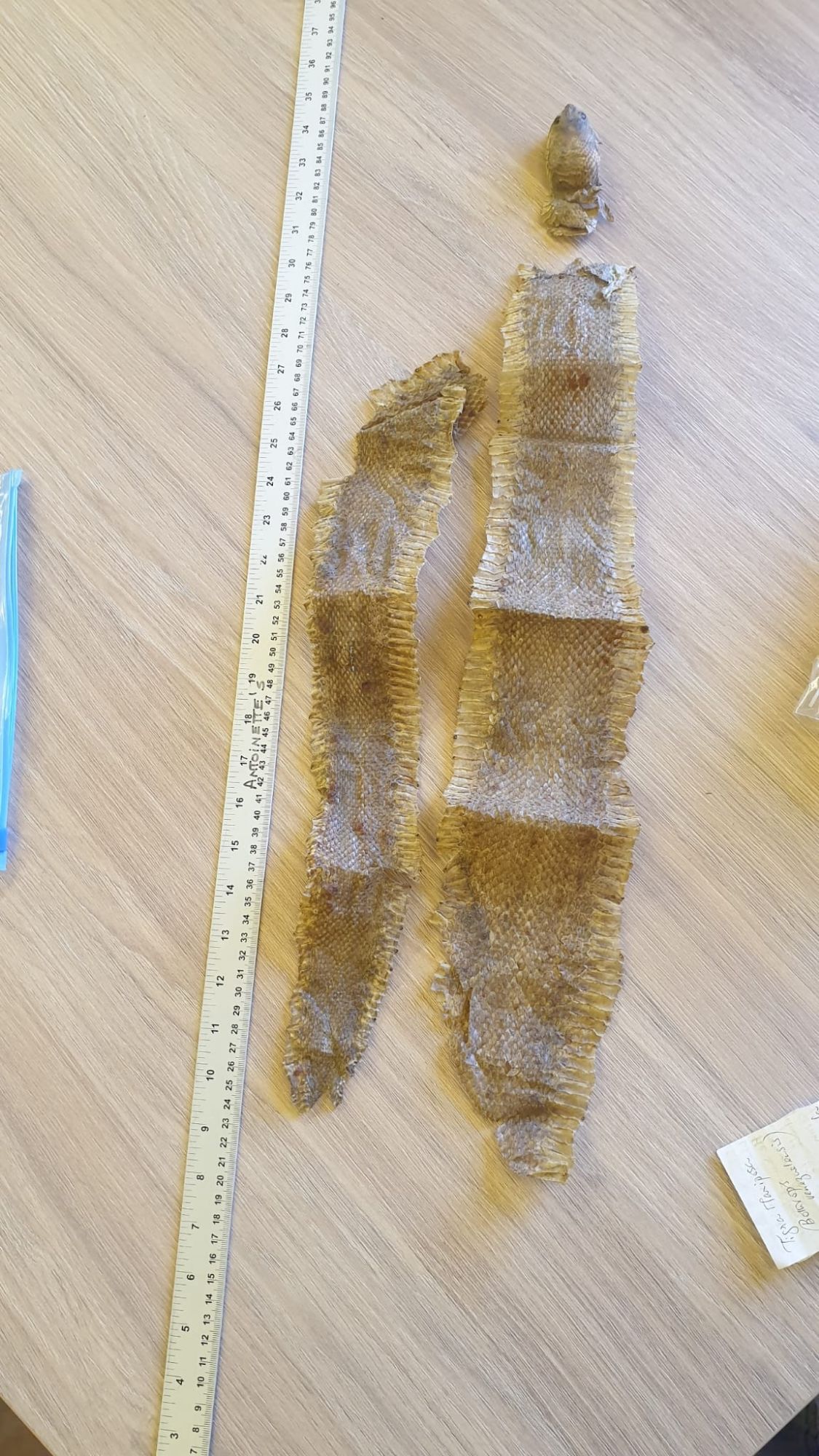

It’s not an easy one, so if you need a clue to help narrow down the options, I can confirm that this specimen is most definitely not Irish and is in fact from a bit further afield.
Big thanks to our Terrestrial Zoology Curator Emma for sharing these photos.
I look forward to seeing how you do with this tricky St. Patrick’s themed mystery object!
Last week I gave you this extreme close-up of a specimen from the Dead Zoo to have a go at identifying:

Only providing this would probably have been unforgivably mean, so I also provided an image with less detail and little bit more context:
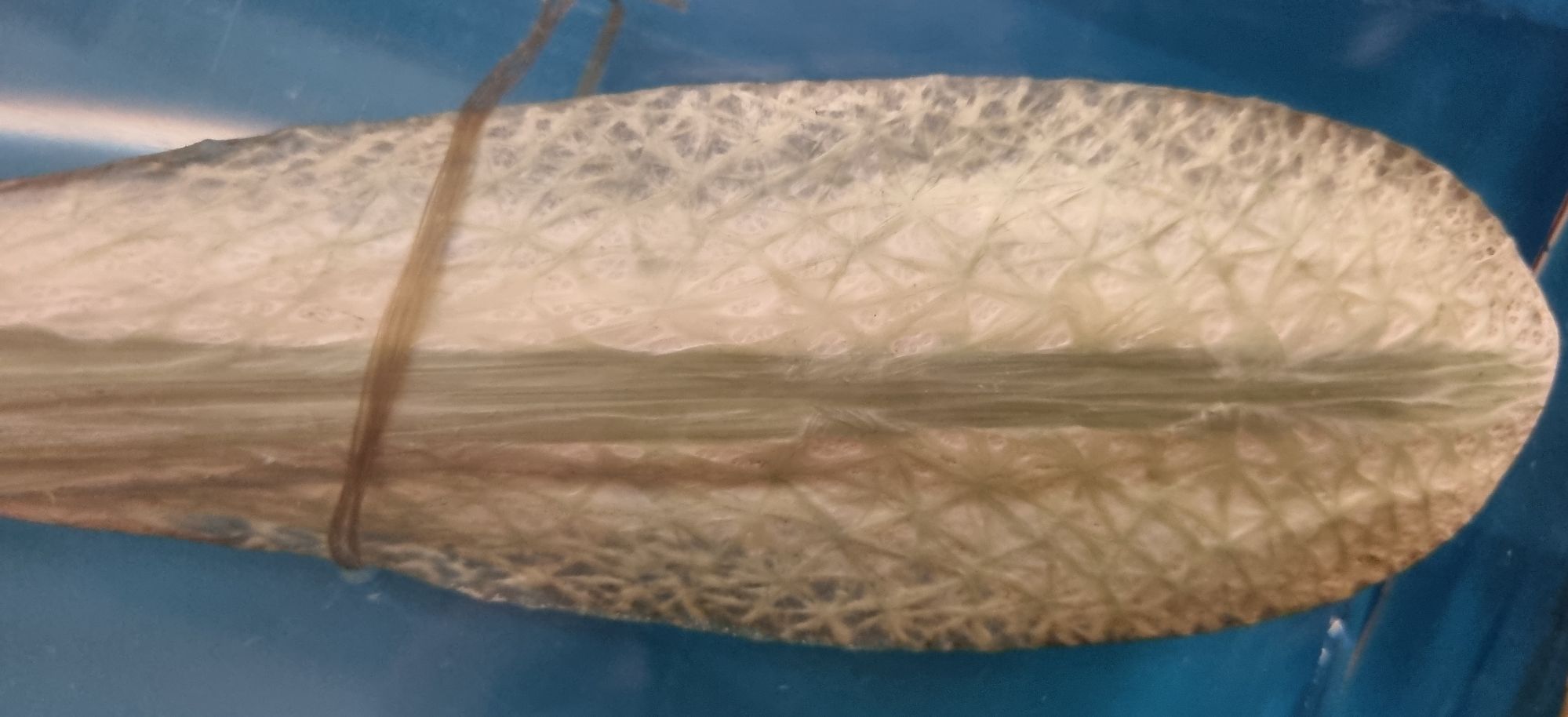
Clearly this provided plenty of information, since several of you managed to work out what this spatula-shaped appendage was from. In fact, the spatulate shape is so distinct it’s incorporated into the animal’s name.
Adam Yates was the first to comment correctly, identifying that this is the rostrum of the American Paddlefish Polyodon spathula (Walbaum, 1792). Here’s a photo of the complete specimen:
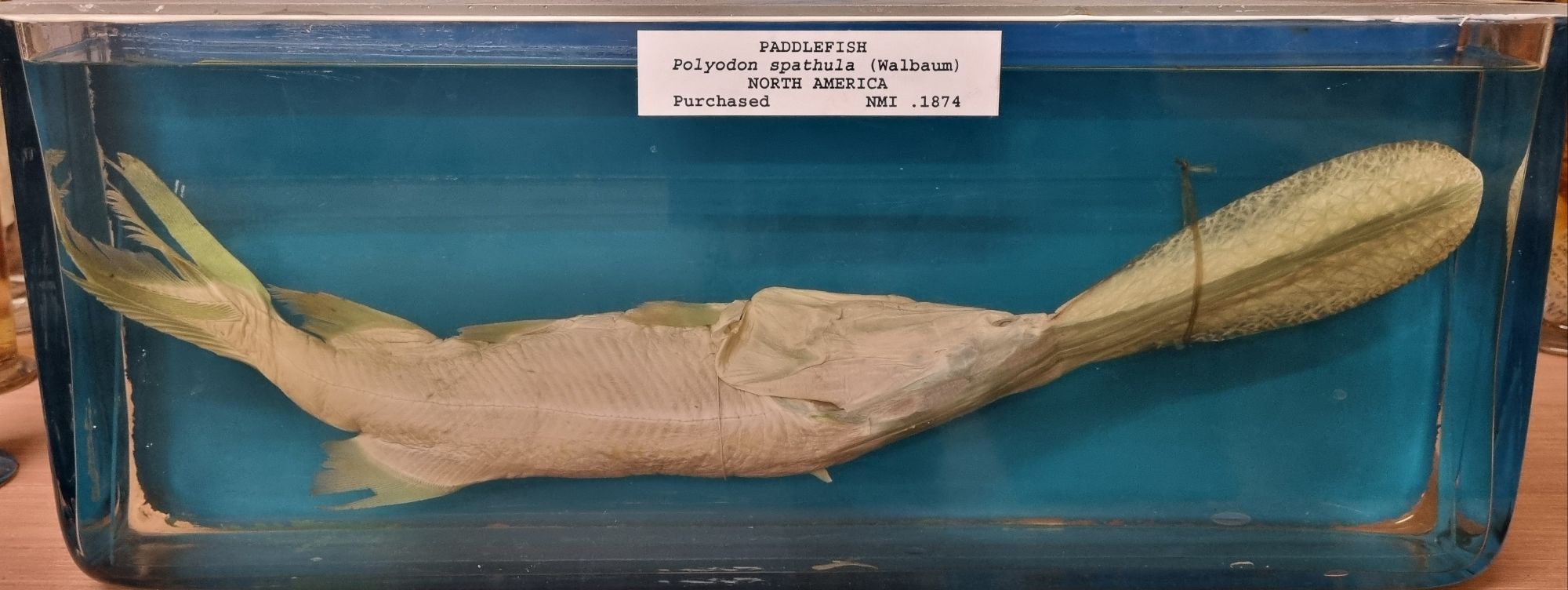
It’s a fairly small example of this wonderfully unusual fish, as on average they weigh in at 60lb (27kg) and measure 5ft long (about 1.5m). I call them unusual because they do things differently to most other fish.
For starters, they’re from a very small family of fish that contains just themselves and a handful of sturgeon species. This family have heterocercal tails like sharks, and cartilaginous skeletons like sharks, but they’re actually bony fish that have become less bony.
They also have that distinctive spatulate rostrum (presumably constructed from little interlocking rays of cartilage based on the detailed photo), which looks more like the bill of a Spoonbill bird or a dabbling duck than the slashing blade that other fish species with an extended rostrum tend to have. However, the rostrum isn’t part of the jaw, and it can’t function in the same way as similar shaped structures in birds. Instead it serves a function in electroreception – picking up the tiny electrical signals from the muscle movements of clouds of planktonic crustaceans. Oh, did I mention that they’re freshwater filter feeders?
The name Polydon suggests to me that the species should have many teeth, and while this may be true for the tiny juvenile stages, the adults have no teeth at all – although the name probably relates to the large number of gill-rakers that are used to capture prey.
Another odd thing is that it’s only the American Paddlefish that filter feeds – the Chinese Paddlefish (which was recently declared extinct) fed on things like fish and crabs and had a totally different feeding mechanism that was much more similar to a Sturgeon.
Sadly, the American Paddlefish is at risk of going the way of its Chinese cousin due to overfishing and exploitation of their eggs for caviar. This would be a real loss, as they represent a fascinating example of how evolution is happy to play fast and loose with our expectations based on nearest relatives and shared ancestry.
This week I have a detail from a specimen, to really test your deductive skills:
I suspect there isn’t really enough to work with here, so here’s a slightly less close up view:
Any idea what this might be? As always, you can pop your thoughts, questions and suggestions in the comments box below!
Last week I gave you a charismatic critter to have a go at identifying:

I only provided a close-up of the face of the specimen, since I didn’t want to make it too easy, and when you see the whole skeleton it’s pretty obvious which animal this is from:

This is, of course, a Pichiciago or Pink Fairy Armadillo Chlamyphorus truncatus Harlan, 1825.
These tiny Argentinan armadillos are incredibly cute, with their silky fine hair and huge forefeet with massive claws (all the better for burrowing, my dear), although it’s a little hard to see that from the skeleton, so here’s this specimen’s skin:
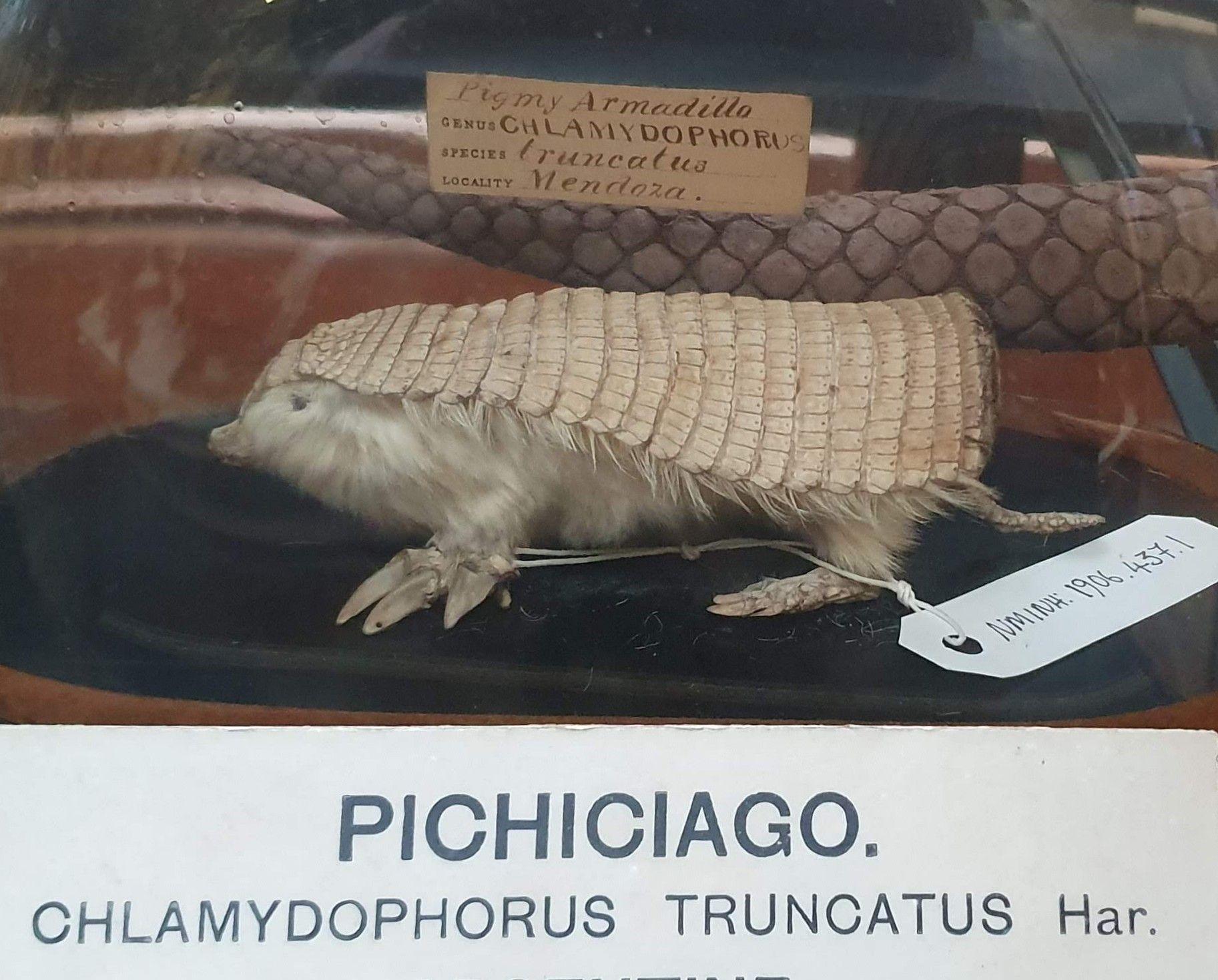
Several of you worked out what this was, but Adam Yates was the first to post the answer – so well done Adam.
One of the observations from Kat Edmonson was about the protuberences from the top of the skull – for which I’ve yet to find any functional explanation. It may be as simple as providing a structure to support the armoured shield over the head area, but it’s not present in other armadillo species, so I’m not sure how this would work.
Since this species burrows and spends a lot of time in the sand hunting for ants and insect larvae, it may be that the bony protrusions help channel sound to help with prey detection and predator avoidance – but that is pure speculation. I’d love to hear your thoughts on this feature!
Well done to everyone who worked out the identity of this mystery object – while it may be distinctive, it’s an unusual wee beastie.
This week’s mystery object is one of my favourite specimens from the Dead Zoo:
I think it’s a bit too easy to identify from a photo of the full specimen, so this is just a close-up of its face, which I think is adorable – a cutie for Valentine’s Day!
Let me know your thoughts on what this might be – and have fun with it!
Last week I shared this specimen from the collections of the Dead Zoo, as it’s a good example of the type of specimen that will often turn up for identification:


If you didn’t recognise it, this is the braincase of a seal.
It’s not usual for seal skulls to be found in sections like this for a few reasons. One is that marine mammals tend to have quite open sutures in their skulls, presumably to help prevent issues with pressure during diving. Another is that young animals (with unfused skulls) will often be the ones that succumb to the rigours of nature. Finally, beaches are high energy environments, so skulls will often be rolled and broken up by wave action.
Knowing it’s a seal is useful, but there are over 30 species to choose between. However, Adam Yates spotted some useful information written on the specimen:

‘It looks like “Yellow Slrank 20/9/92” ???? I’m guessing a location and date, but Slrank? WTF is that?
Got it! Yellow Strand. It is a beach in Ireland.’
This really helps, since there are only a couple of species that are likely to be found in Ireland – the Grey Seal and the Harbour Seal.
It’s about the right size for a Harbour Seal, but the shape isn’t quite right. In particular, the frontals (that pair of bones that forms the skinny section that’s sticking out) aren’t skinny enough. There’s also a hint of muscle scars and unfused frontal-parietal sutures that suggest that the animal may be juvenile.
If that is the case (and I think it is), then I think this is most likely the skull of a young Grey Seal Halichoerus grypus (O. Fabricius, 1791). This was Adam Yate’s suggestion, supported by Kat Edmonson, so well done to them for picking up on that detail.
I hope you enjoyed that challenge – more to come next week!
 Zygoma