
This week I have another guest mystery object for you from regular contributor Andy Taylor FLS FBNA:
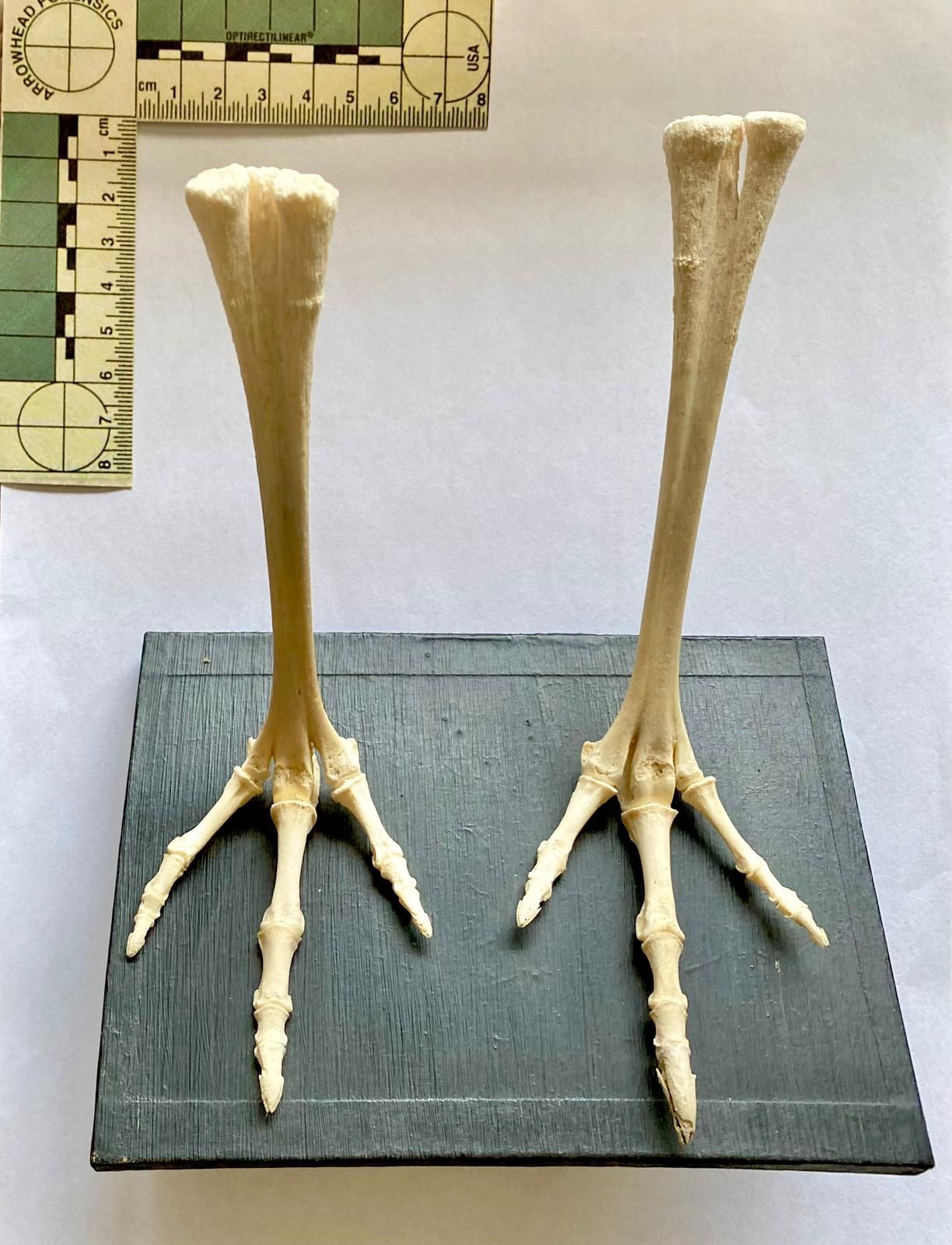
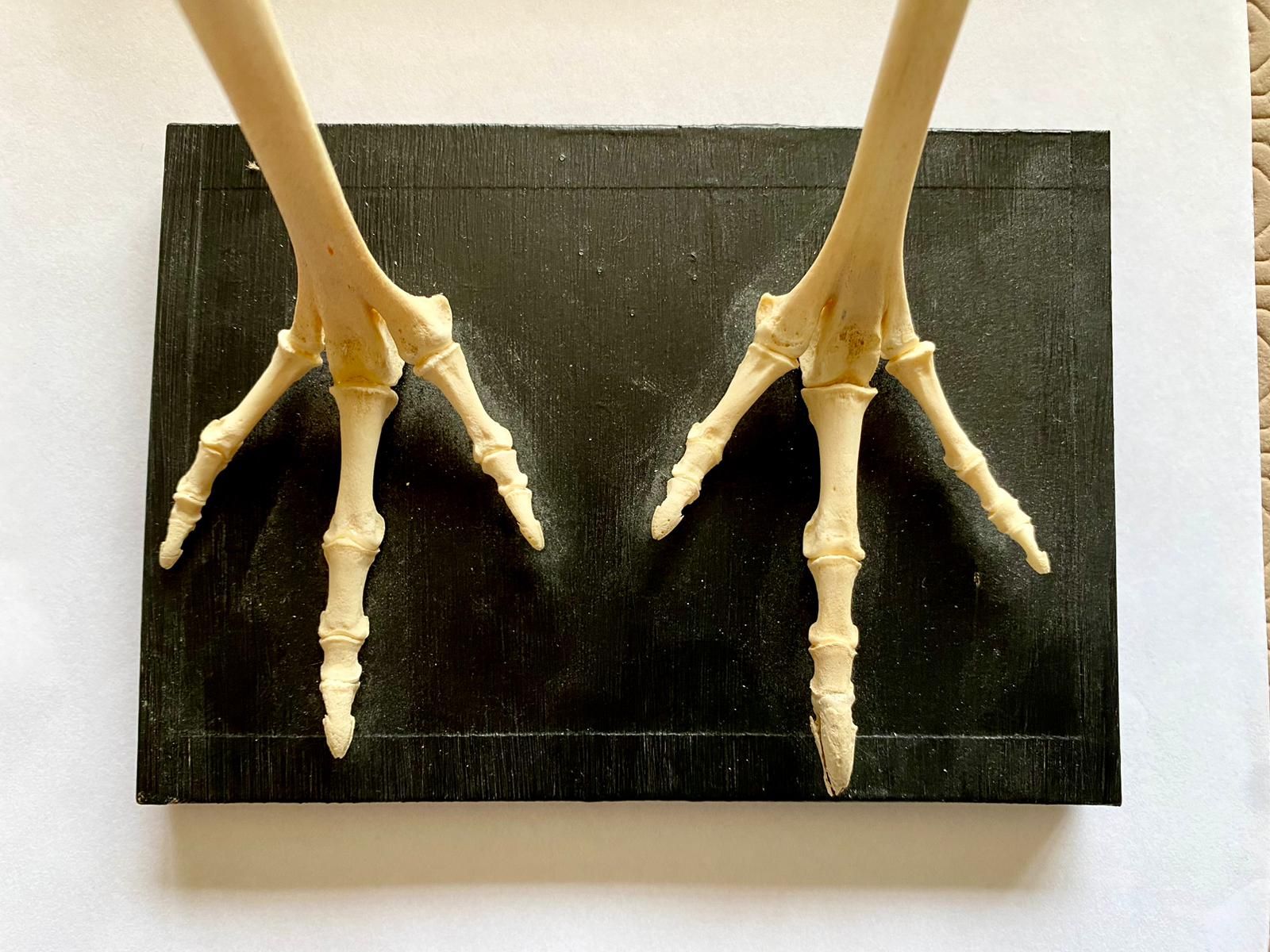

I’m keen to hear your thoughts on what the owner of this magnificent pair of feet might have been in the comments below. If it proves very difficult then myself of Andy might be tempted to offer up some clues, but I have a suspicion that some of you might work it out yourselves. Either way, I hope you enjoy the challenge!


It looks like the exhibit creator swapped left and right feet. And possibly got the phalanges wrong.
Anyway it is very juvenile (no tarsus on the tarsometatarsus) so I suspect it would be quite a bit larger as an adult.
I’m going to go with the running one from New Holland.
You may be surprised to hear that this is a Northern Hemisphere species!
I am indeed, since rhea was my second ID. Like everyone else I was stuck on ratite.
Thanks for the clues, it seems my avian recognition skills were busted. No idea which species, though.
I was going to say it was a close-fitting murine species….
oops, I forgot to mention: excluding the African species!
I love the clue, but it’s not a Ratite!
Perhaps this quote from 1613 is pertinent: “In Banda and other islands, the bird called Emia or Eme, is admirable. It is four foot high, somewhat resembling an Ostrich, but having three claws on the feet, and the same exceeding strong: it hath two wings rather to help it running, then serviceable for flight: the leg great and long.” … note this was not referring to an Emu. Here the small size and lack of claws means I can only guess … but I think of the three species this might be the “dwarf” (Bennetti?).
We have a skeleton of one of those in our museum (southern, not dwarf) and the ‘stabby’ inner claw is really much longer than any of the claws in this specimen. Also the tarsometatarsus is much chunkier than you see here, so I feel we can rule out any member of that trio of species.
Perhaps one of the neotropical ratites then … juvenile rhea or a larger tinamou?
Great quote, but this isn’t one of those stabby Cassowary chaps
Ah, great to be back and happy to take part in the challenges again! These legs are from a large, three-toed bird that is still young because the epifyses were not yet fused. The claws are rather small, and the outer toes seem to miss the smallest digit, maybe lost during preparation. my guess is the small, elegant ratite from South America
Great to have you back Wouter!
Nice clue, but not a Rhea – not even a Ratite in fact..