This week I have a specimen for you to identify that often crops up as an enquiry for museum folks:


I suspect that some of you will recognise this, so let’s hear your best cryptic clues as to the identity!

This week I have a specimen for you to identify that often crops up as an enquiry for museum folks:
I suspect that some of you will recognise this, so let’s hear your best cryptic clues as to the identity!
Last week I gave you this lovely fishy from the Dead Zoo to try identifying:

I think everyone recognised that this specimen is a member of the Molidae – that’s the family containing the Sunfish. But the tricky bit was working out which of the five living species it might be.
I didn’t include a scale, because it would have made it a bit too easy. Most of the Sunfish are very large – on average well over 2m long, with some over 3m. They’re also heavy – most weighing in at over 2 tonnes and with a specimen of the Southern Sunfish recognised as the biggest bony fish on record at 2,744kg.
However, the mystery specimen is a lot more svelt, as it’s from the smallest species – the Slender (or Truncated) Sunfish Ranzania laevis (Pennant, 1776).
So I offer my congratulations to everyone who managed to work it out, with Adam Yates making the first comment to indicate the species. It’s worth noting Allen Hazen’s observation that the paint job on this specimen is not really very accurate. – although this isn’t unusal for fish taxidermy.
All that’s left to say on this is that this Slender Sunfish was a much easier object to move than its Ocean Sunfish cousin, who was much bigger and even less slender than me…

Happy Friday everyone! Here’s a fishy mystery object from the Dead Zoo for you to have a go at identifying:
Let me know your thoughts in the comments below – have fun working it out!
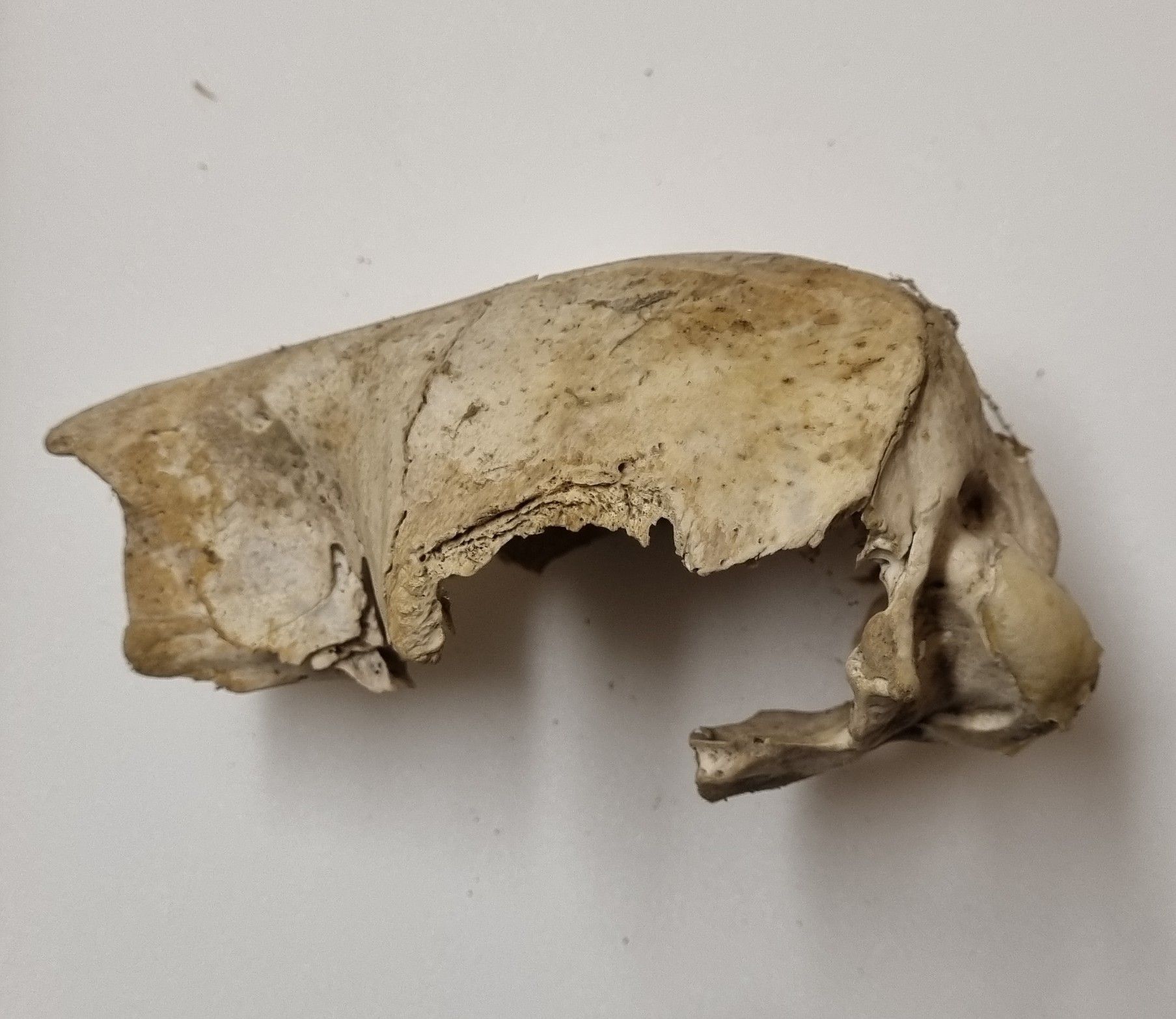
Last week I gave you this very tricky object to have a go at identifying:

It certainly proved a challenge and I have to admit to feeling a little guilty about setting such a difficult one. The reason it was such a challenge is because this is an abberant form.
I’m not sure if anyone worked it out fully, but katedmonson dropped in the word “Oughter” and Adam Yates spotted that it has a long-slung body that looked like it might belong to a mustelid… which it does.
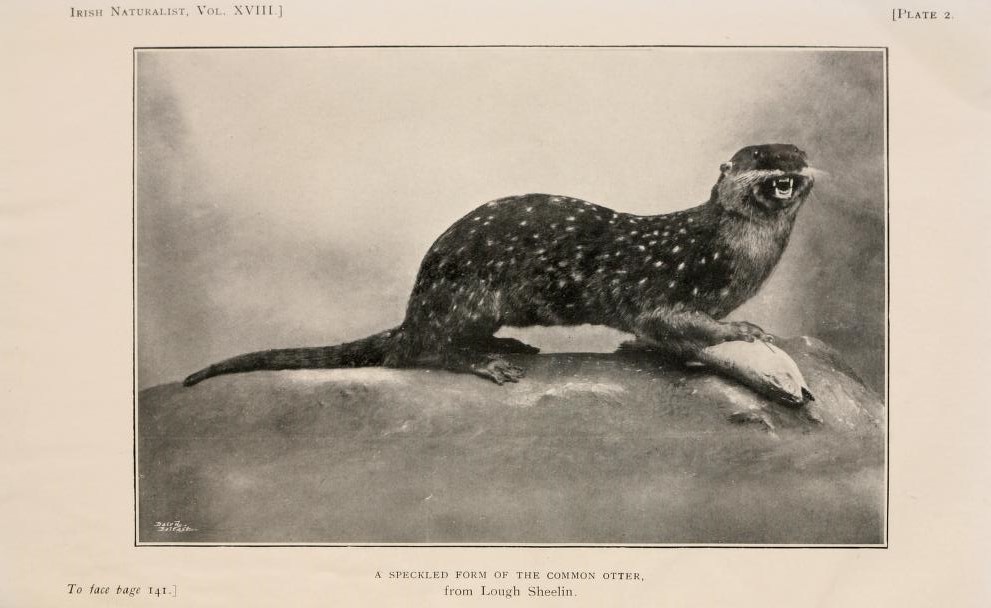
This is in fact a Eurasian Otter Lutra lutra Linnaeus, 1758 – a particular noteworthy specimen due to its speckles:

And when I say it’s noteworthy, I mean there was a note written about it – published in Volume 18 of The Irish Naturalist in 1909. It’s an interesting note, that draws on the experience and knowledge of Mr Williams, the hugely experienced taxidermist who prepared the specimen – along with many others in the Dead Zoo.
Here’s the note for your perusal, and while we’re talking about notes – it’s worth noting how much darker the fur is in the photo from 1909 – this is the problem we have with fading due to light over time:


Thanks for all your thoughts on what it could be – it was really interesting to see how everyone went about solving this one!
This week I’m going to put you to the test with this mystery object from the Dead Zoo:
I’m not going to lie, this is probably going to be a challenge, but somehow I suspect that someone will manage to spot what it is.
As always, you can leave your thoughts, questions and suggestions in the comments box below, and I’ll try to offer some useful hints if it’s proving too difficult. Best of luck with it!
Apologies for the late posting of the answer to last week’s mystery object, I lost all track of time over the Christmas break!
Last week I gave you this boring object to identify from the Dead Zoo:

Of course, by boring I mean it bores into materials, as it’s actually a pretty interesting type of mollusc, and by looking at the comments, it’s clear that everyone has a good idea of what it is.
I had hoped to trick a few people into thinking it could be a type of shipworm, by pointing out that this specimen has bored into pine, when this species much more commonly bores into softer rocks, like mudstones and chalk. They do this by using their muscular foot to attach themselves to the substrate and then they twist their shells into the surface.
The shell has multiple tiny rasping teeth all over the surface, which you can see on the specimen above, and this grinds away the rock (or in this case wood). You might expect the shell to be thick in order to achieve this, but actually it’s very thin – which is partly why the mollusc bores itself a hole in a hard substrate for protection.
This specimen is a type of Piddock and it was collected in Ireland, which can certainly help with the identification since there are only a few species of Piddock that have been found in Irish waters, although it does have a fairly characteristic feature readily visible – the beaked anterior end (which sits at the bottom of the bored hole, so this one is upside down).
This feature is seen in the Common Piddock, Pholas dactylus Linnaeus, 1758 while in species like the White Piddock and American Piddock the anterior end doesn’t form the same beaked shape. Well done to everyone who worked it out!
I did mention in the original post that it may not be very festive-looking, but the Common Piddock could be considered one of the most festive molluscs, since they bioluminesce, giving off a bluish green glow and an alternative common name for them is Angelwings due to the thin shell, shape and white colour. So not a boring boring mollusc by any means!
This week I have a nice mystery object for you from the Dead Zoo to have a go at identifying:
It may not be the most festive looking object, but it is embedded in a piece of pine, and that’s about as festive as I can manage. Any idea what it is?
Last week I gave you this piece of bone to have a go at identifying:

I have to admit, it’s even harder than I thought it would be, so I should probably apologise about now! Adam Yates got as close as I think is really achievable from just this photo, dropping the clue:
He was very stern and he flipped me the bird when I suggested it looked like a ship: galley-form you could say.
This of course is a hint that the bone is a sternum from a bird in the Order Galliformes. Adam then followed up with:
I’m grousing because its proving difficult for me to identify beyond tribe level
This points us in the direction of the Tetraonini – the tribe within the Galliformes that contains the various species of Grouse. I’m entirely in agreement with Adam. Bird sterna are quite characteristic, as you can see from the gallery of different sterna below:
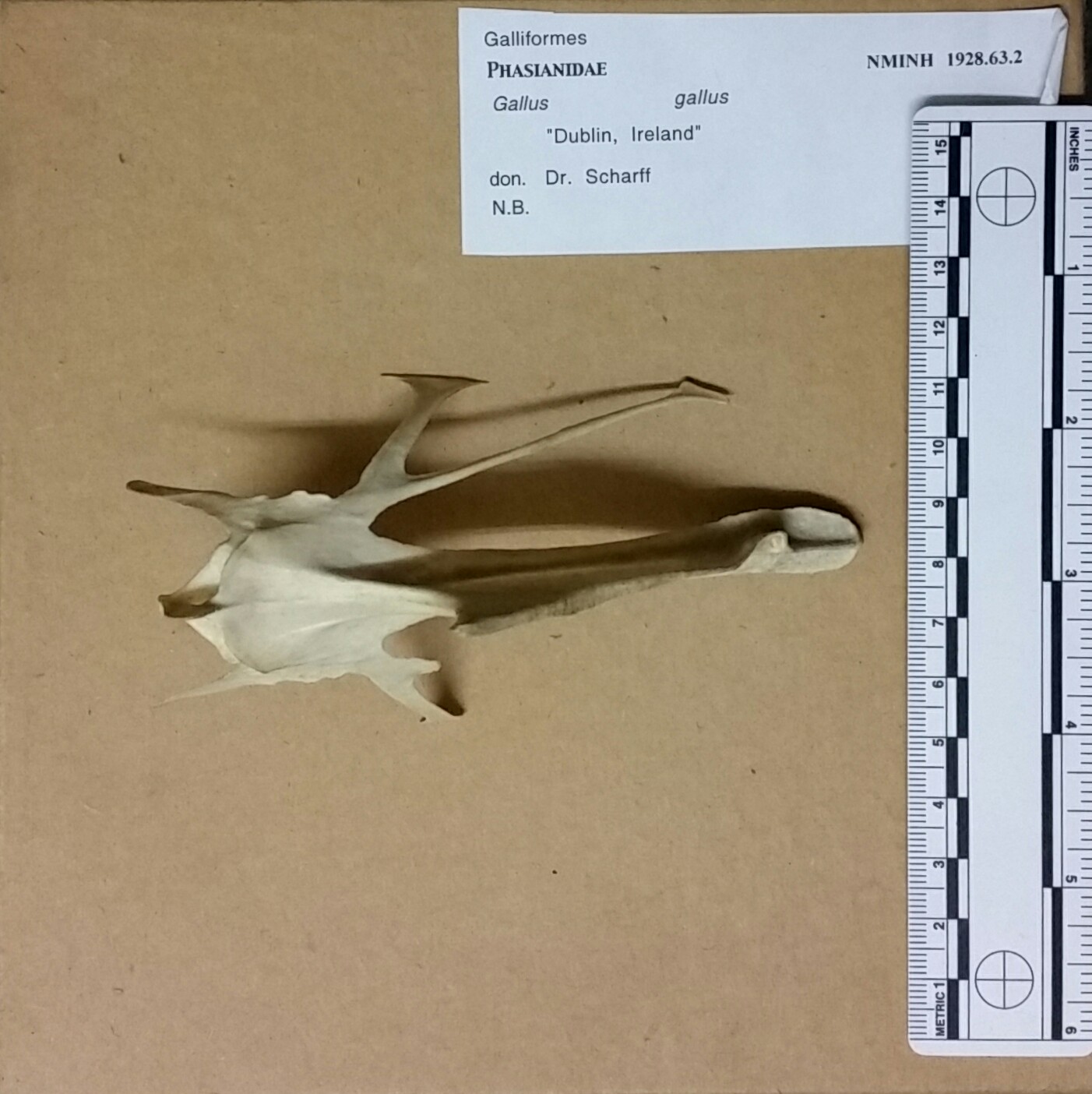
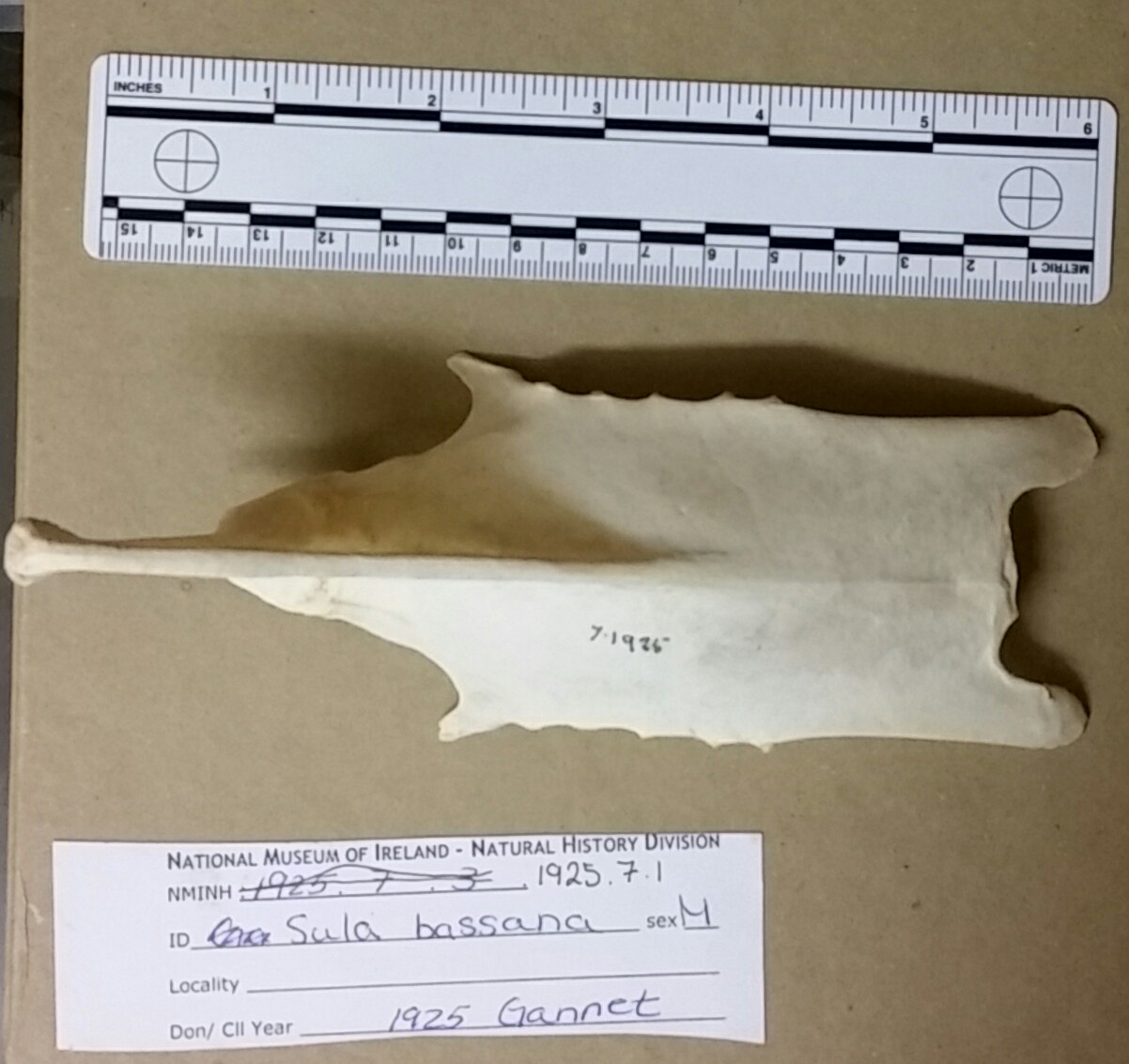


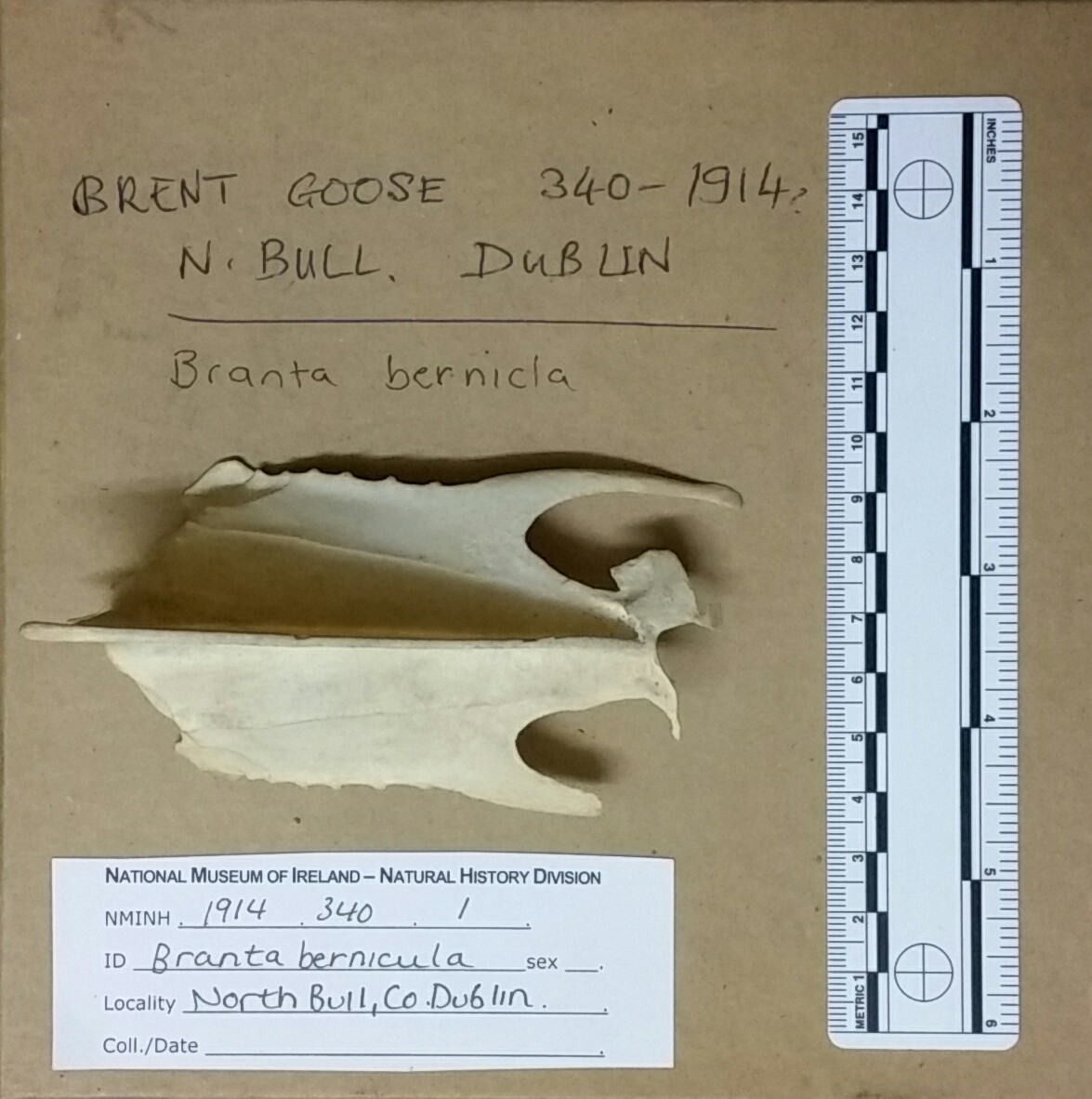
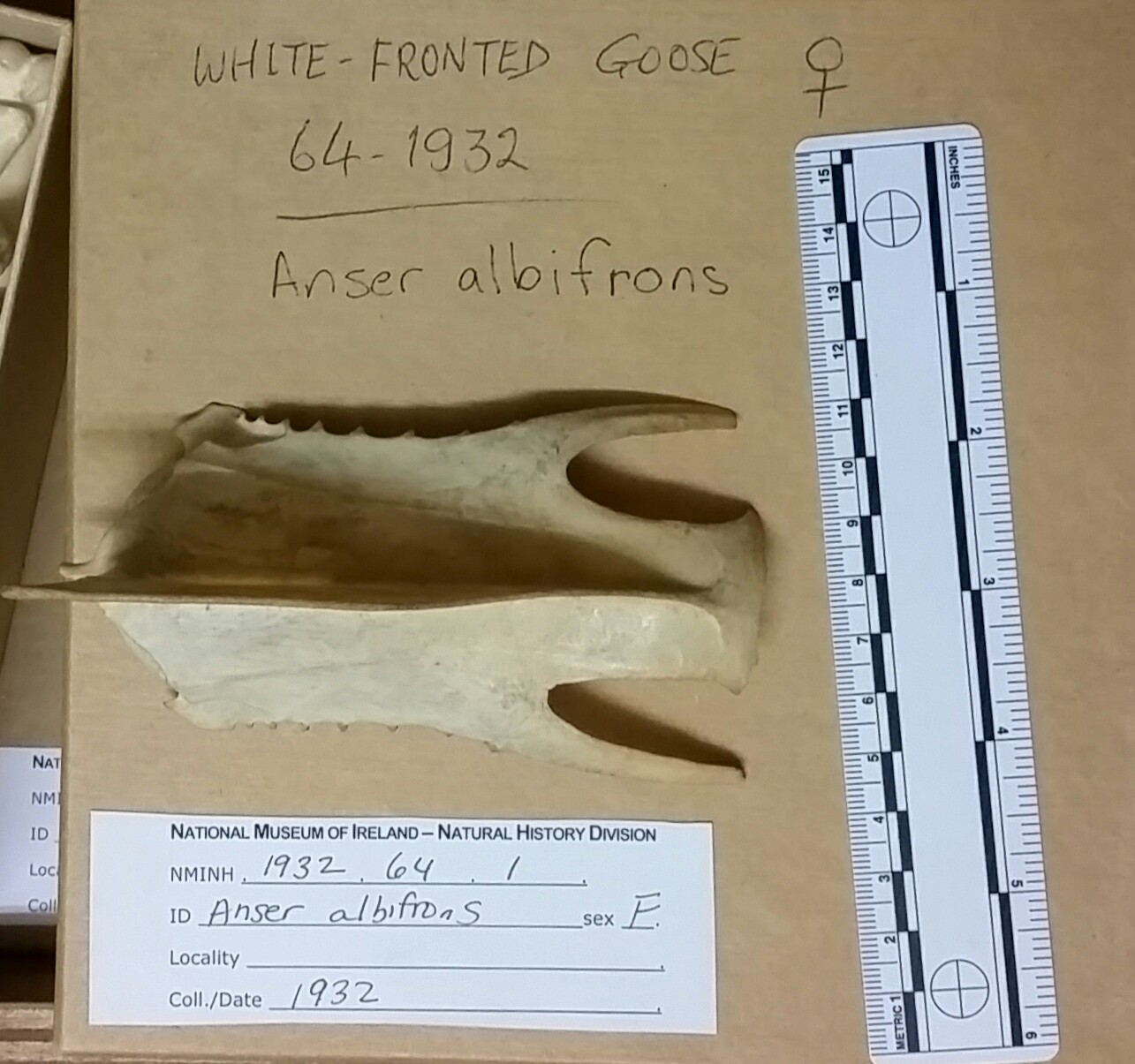


The chicken sternum in the images above (first one pictured) is the closest in form to the mystery object. The Galliformes have a tiny flat section to their sternum, with long processes coming off to support the pectoral muscle, unlike most other birds which have large flat sections to accommodate the muscle. This likely reflects the low use that the flight muscles tend to get in the Galliformes, which generally (although not exclusively) avoid flying if possible.
The fact that the sternum is showing its ventral side and it’s broken in several places, it’s really not feasible to definitively identify it to species based on the available information.
However, I have some additional context, because this piece of bone is actually just a small piece of set-dressing in a diorama from the Dead Zoo, depicting a Peregrine Falcon nest:
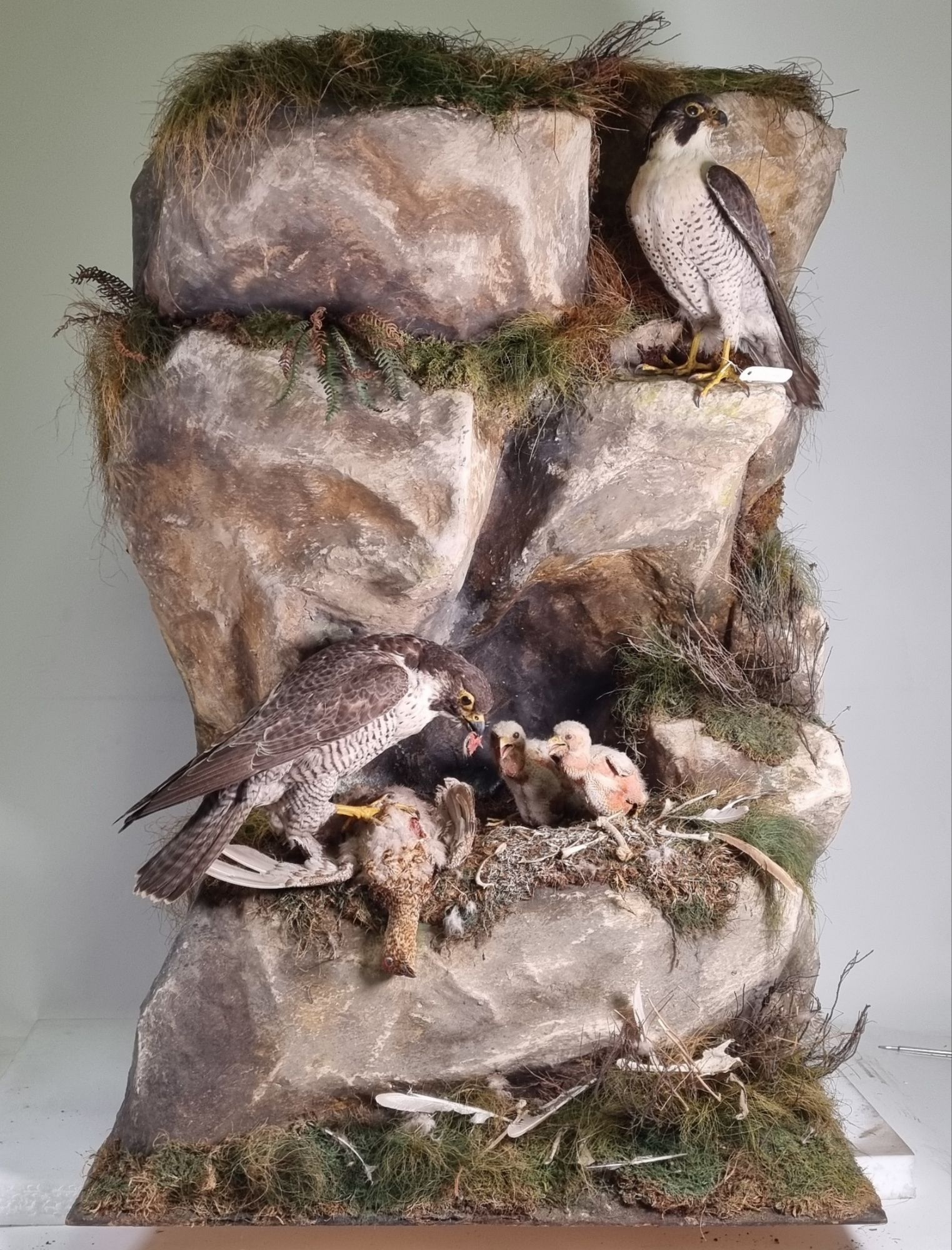
In this diorama the Peregrine chicks are being served a tasty portion of Red Grouse:

Since the bones of the Red Grouse would have been removed as part of the taxidermy process, there’s every chance that some of those bones used in the dressing of the diorama may have come from the specimen, although I’m sure there would be plenty of bones from Pheasants and other Red Grouse available in the taxidermy studios of Williams & Sons, where this was made.
So well done to everyone who got as far as Galliformes – I promise it won’t be quite so difficult next time!
This week I have a piece of bone for you to have a go at identifying:
Just the one photo, so not much to go on, but I suspect you’ll be able to figure it out. Bonus points if you can work out where this bone was found. Have fun!
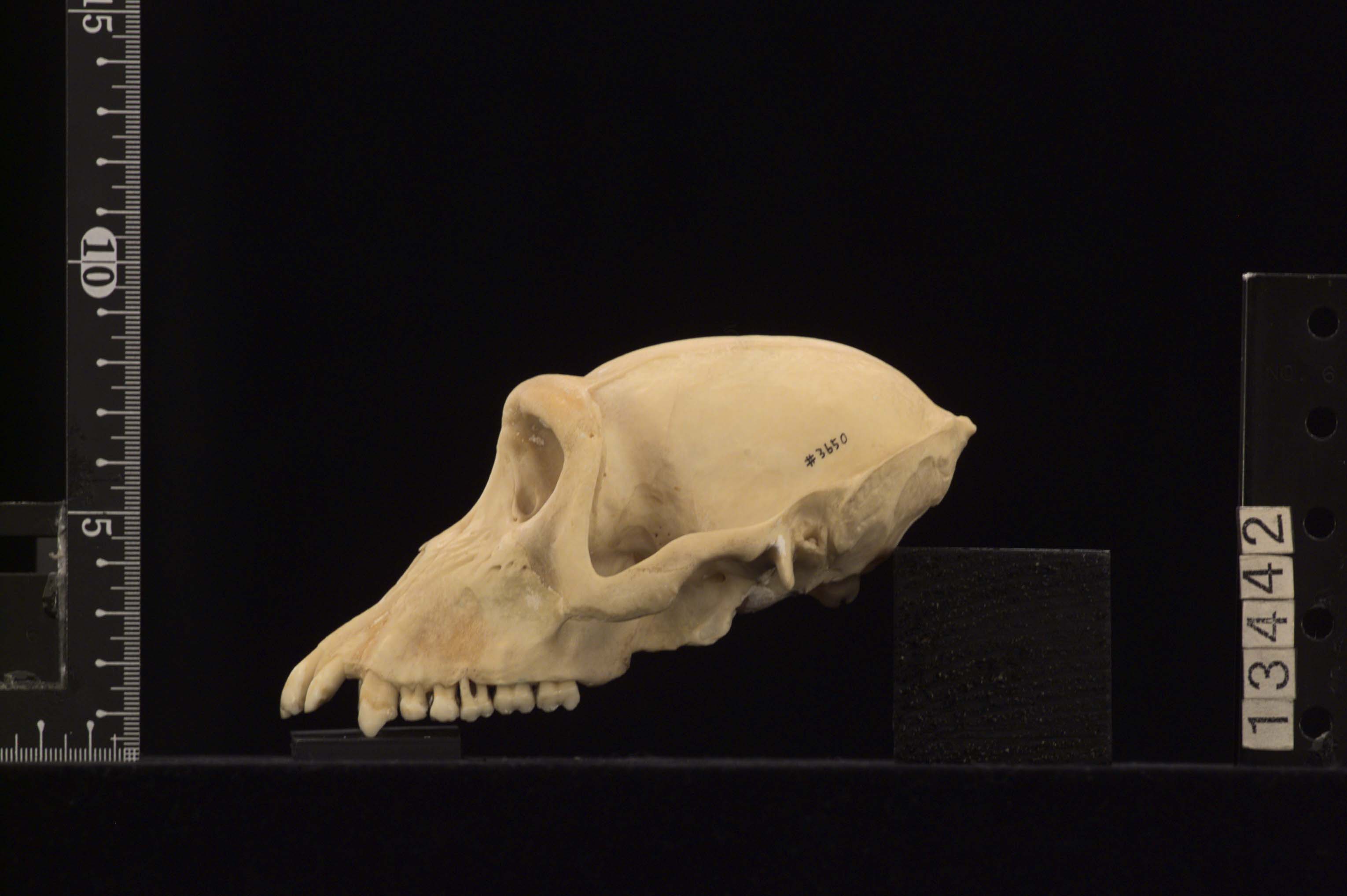
Last week I hit the 500th mystery object milestone, with this skeleton from the collections of the Dead Zoo to identify:

This specimen came to us from the Royal College of Surgeons of Ireland, and Emma Murphy, our curator responsible for the terrestrial zoology collections has been checking the identification. At the moment this is listed as being a “Baboon”, but there are 5 (maybe 6) species of baboon – so which could it be?
Just to complicate matters, Emma suspects that this may be a specimen referred to in an 1834 catalogue as a “pig-tailed baboon”, which may be where the “Baboon” listing came from. That’s not a recognised species anymore, they’re now called Southern Pig-tailed Macaques – or Northern Pig-tailed Macaques, since the Pig-tailed Macaques were split a decade or so ago.
Looking at the anatomy is always a good place to help work these issues out, but that requires comparative material – which is never as easy to find as you might like. However, there are some useful resources out there. A particularly good one is the Mammalian Crania Photographic Archive, and there are other useful sites like Skullbase and the Animal Diversity Web.
Looking through these various resources it becomes a bit easier to start picking out features to assist with identification, but it takes a bit of work and close scrutiny of a lot of different individuals within each species, to get a better idea of variation.
In profile the mystery specimen has relatively small canines and no sagittal crest, which suggests it’s a female. The face (or rostrum) is quite long, which rules out a lot of Macaque species, especially since the females tend to have shorter faces than males, and the females only develop the longer face when they are fully mature.

However, the baboons all have very long faces (even the females), so this specimen seems a little short for some of them. The Chacma Baboon is the closest I could find in proportion, but when viewed from above, the mystery specimen doesn’t seem to have the extremely well-defined cheek ridges that stand out in all baboon skulls (here’s a link to an example from the Animal Diversity Web).
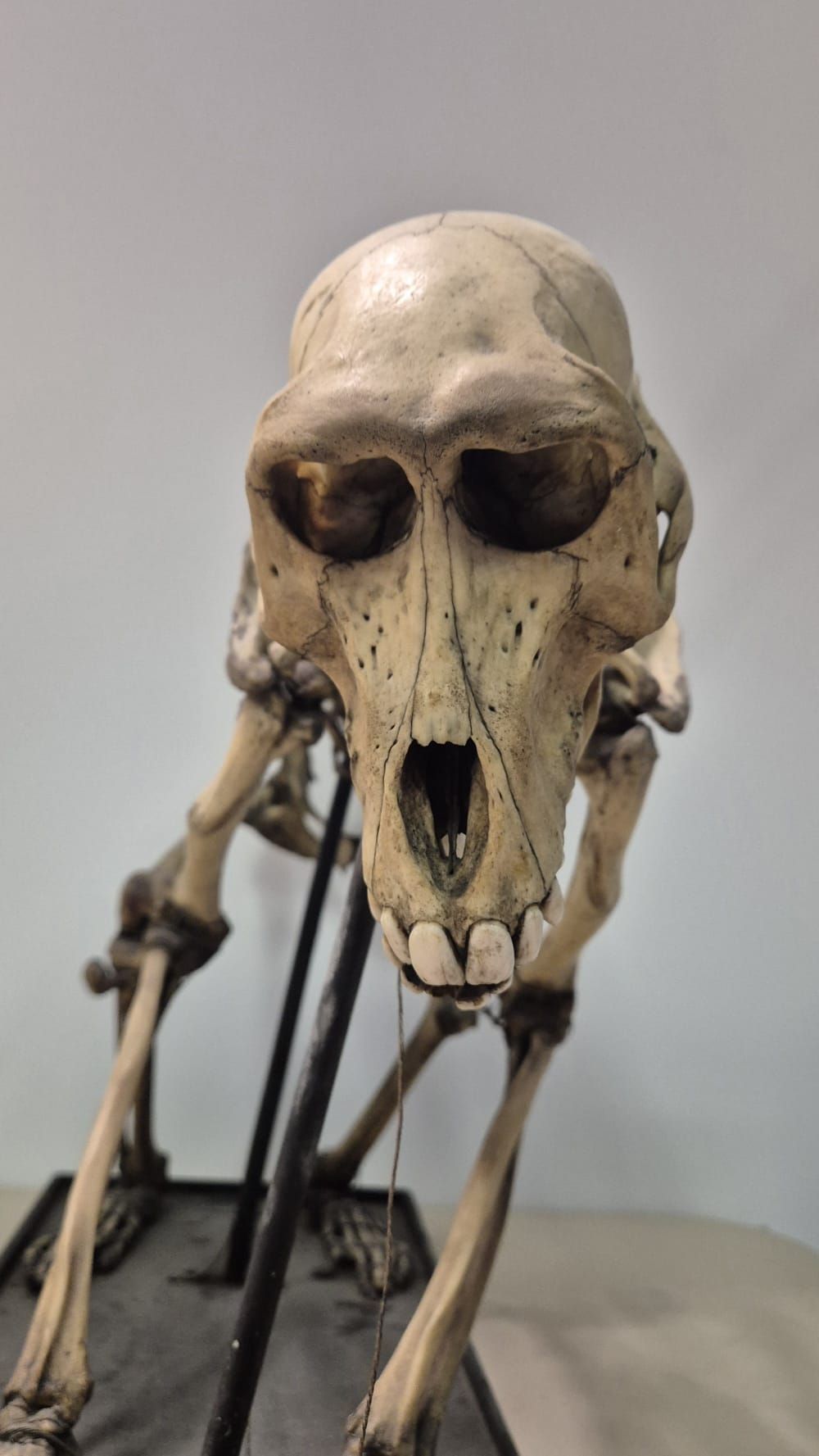
After considerable comparison, the skull of the mystery specimen looks most similar to the skull of a Southern Pig-tailed Macaque featured on the Mammalian Crania Photographic Archive, although I feel that I want to look a little more closely at the confiuration of the nasal bones in relation to the frontals before making a final call, since photographs can sometimes be misleading.
My thanks to everyone for your suggestions – there were plenty that all fell in the same general area of the monkey family tree, with baboons and macaques all being suggested. Your thoughts helped me narrow down a list of likely candidates and on balance I suspect this is most likely the Southern (or possibly Northern) Pig-tailed Macaque specimen that Emma found the old entry for in the catalogue. It would probably have been much easier to figure out if the tail had survived intact!
Hopefully I’ll see you here next week for mystery object #501!
Well, this is a bit of a milestone – the 500th mystery object. Over 15 years’ worth of weekly posts, sharing some of the interesting objects that I’ve come across in my work, as a curator, or that have been shared with me by other people with a fascination with the natural world (particularly zoology).
This week I have a specimen from a new contributor to the blog, Emma Murphy, who is part of my curatorial team at the Dead Zoo (I’m still finding it hard to believe that I have a curatorial team!)
This specimen came to us from the Royal College of Surgeons of Ireland and we think it probably dates back to the 1830’s. As such, the identification that accompanies it is extremely out of date, so this specimen is in need of reidentification:
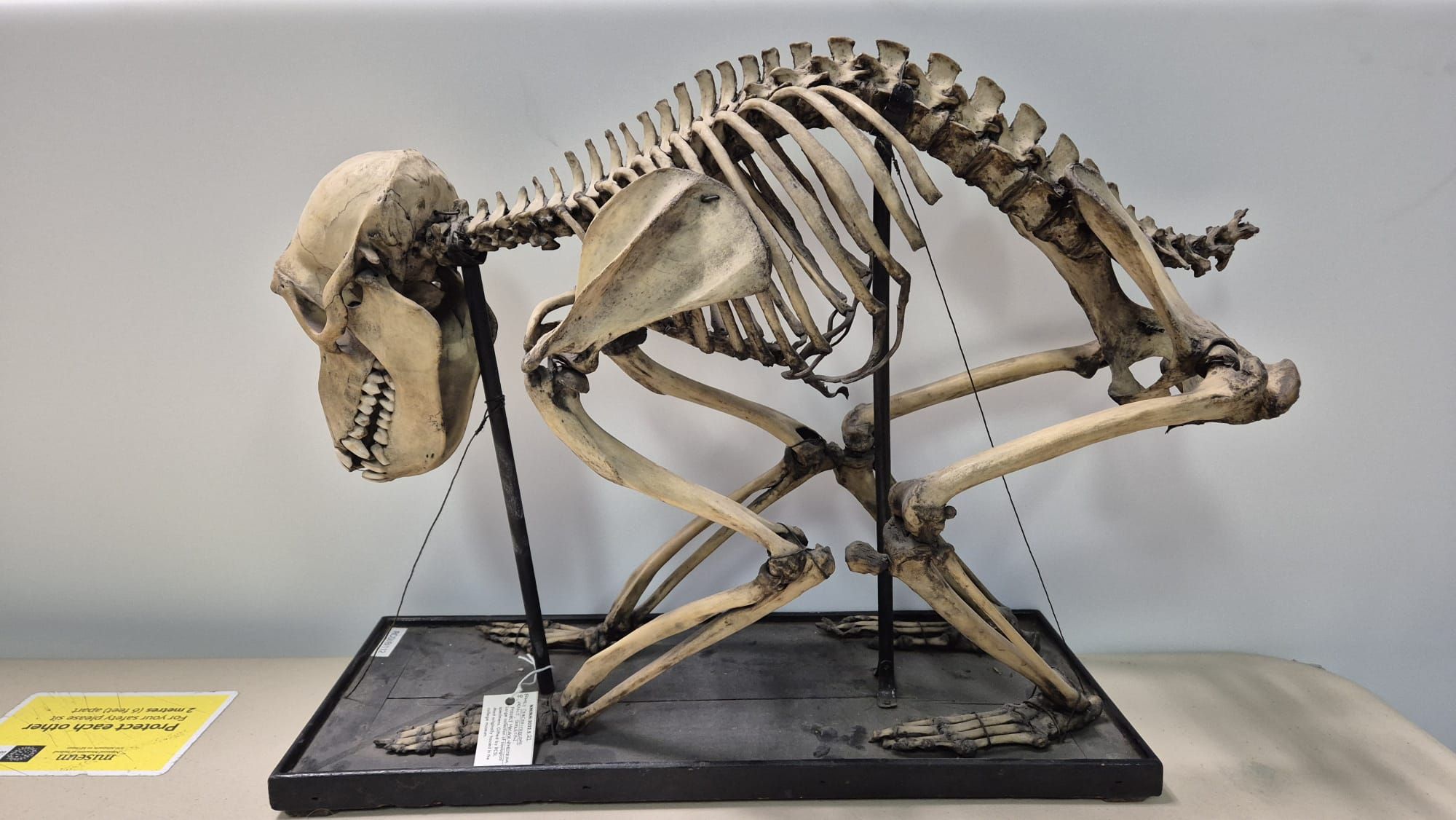

So, do you have any idea which species this skeleton might be from? As always, you can leave your thoughts in the comments box below – I hope it proves a fun challenge!
Last week I gave you this mystery object from the Dead Zoo to try your hand at identifying:
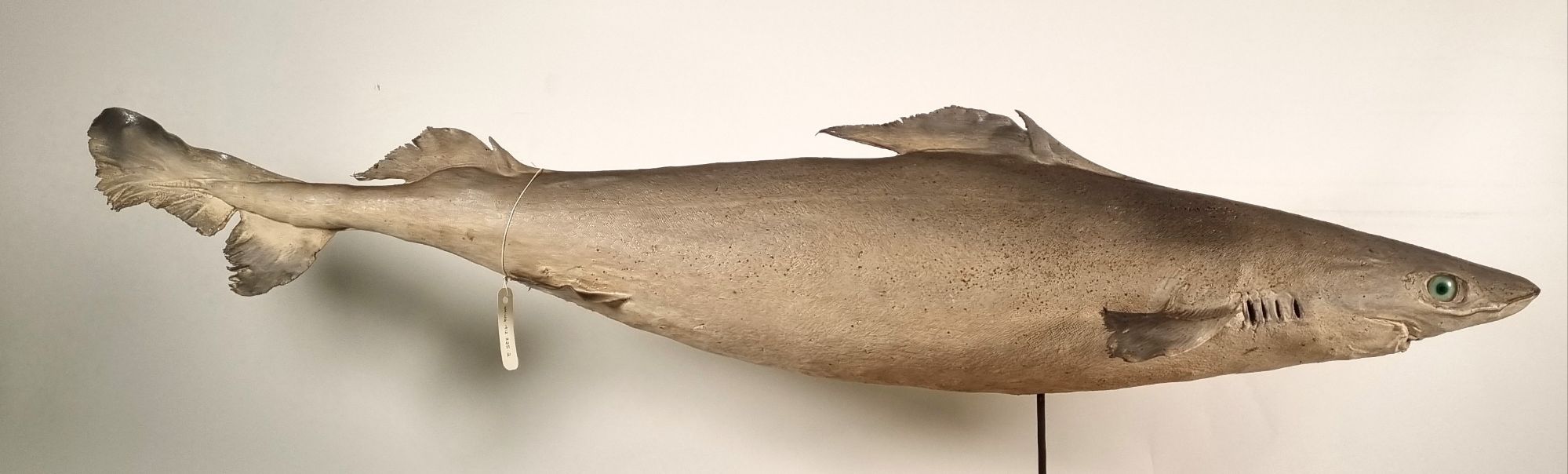
There were some muttering about this being a squalid in the comments and on social media (I left Twitter some time ago, but I’m on Bluesky, Mastodon, and LinkedIn), and those mutterings were of course correct, since this is a shark in the Order Squaliformes. A useful point for identification of this Genus is the lack of an anal fin.
There are a lot of Squaliformes, but this one has a profile that best fits the form of either the Squalidae (the Dogfish) or the Centrophoridae (the Gulper sharks). The tail offers a clue to distinguish though, as it has a full tail notch and a secondary partial notch that gives a squared off section of the tail tip that isn’t seen in the Squalidae (although some do have a squared off tail tip, but with just a single partial notch).
Within the family Centrophoridae you could spend a bit of time going through about 20 species to rule some out, or you can take a shortcut and guess that this specimen is from the waters around Ireland and start searching for likely candidates there. This approach helped Adam Yates get the identification.
I think the taxidermy of our specimen may have made this harder, since I don’t think the taxidermist had a big enough eye for the species (if you look at the specimen’s head you can see how hollow the orbit appears around the eye):

The large eyes are one of the features of this deep sea species that does indeed occur in Irish waters, but the scales are probably the most useful feature, although unfortunately they aren’t easy to see clearly on the specimen (although if you click the photo you do get a bigger version).
As Adam recognised, this is a Leafscale Gulper Centrophorus squamosus Bonnaterre, 1788.
This particular specimen was collected in May 1906, 70 miles off Bull Rock in County Kerry, in a trawl at 110 fathoms. It came to the Dead Zoo via Irish Fisheries, along with many other specimens that have helped lay the foundations of our understanding of the marine life found in Irish waters.
We still receive new specimens from trawlers around the island, with new records of species and interesting variations within species being donated quite frequently. With the dizzying rate of technological developments, it’s easy to assume that we already know everything about the life on our planet, but in reality we’re still discovering new things all the time, and our knowledge is very incomplete.
So thanks to everyone who joins in the mystery object – it gives me a chance to learn new things from you, and I hope it helps you to test your skills, and maybe learn some new things about the animals we share the planet with!
This week I have something a little fishy from the Dead Zoo for you to have a go at identifying:
Any thoughts as to which species this might be? As always, you can leave your questions, observations and suggestions in the comments box below – I look forward to hearing your thoughts!
Last week I gave you this somewhat challenging bird to have a go at identifying:

The challenging part was not simply due to this being one of the wading birds (a group within the Order Charadriiformes), which can be quite hard to identify for the uninitiated, but it’s also a species that is quite unfamiliar. This is because one hasn’t been seen since 2006 (and possibly much longer ago than that).
A similar looking relative of this bird is the Whimbrel, which is a species that several people suggested. However, as Adam Yates spotted, the Whimbrel has a strong dark bar in front of the eye running from the base of the bill, whereas this specimen has a weak stripe behind the eye, that doesn’t connect up to the bill.
This bird is a Northern, or Eskimo, Curlew Numenius borealis (Forster, 1772), as correctly spotted by Sallie Reynolds. The species is considered likely to be extinct, with the last confirmed sighting in 1963.
The species used to be numerous across their range, migrating from their breeding grounds in the Arctic, all the way down the length of America to Argentina for the summer. It seems likely that this particular specimen was blown off course, since it ended up in Ireland.
Well done to Sallie, Adam and everyone who figured out the mystery!
This week I have a nice mystery object for you to have a go at identifying:
I suspect it may be a bit of a challenge – the Charadriiformes can be notoriously tricky, so I wish you the best of luck!
Last week I gave you this guest mystery object from Andy Taylor FLS (and now) FBNA to identify:

It wasn’t a particularly difficult one, since that huge bill immediately narrows down the possibilities.
The spear-like bill shape is reminiscent of a heron’s, but it’s heavier – not quite as massive as something like a Marabou Stork, Adjutant, or Jabiru, but heavy nonetheless.
As Adam Yates noted, this is the skull of a White Stork Ciconia ciconia (Linnaeus, 1758) – the second mystery object in a row with the initials C. c. (the previous one being Crocuta crocuta).
When attempting to identify bird skulls, a hugely useful resource for reference is Skullsite, which is run by regular commentor on the blog, Wouter van Gestel – who referenced the White Stork with a comment relating to their reputation for the delivery of babies.
So well done to everyone who worked out the species, here and on Mastodon, Bluesky and LinkedIn – and my thanks to Andy for sharing another gem from his collection!
This week I have a guest mystery object for you, from avid naturalist and frequent contributor, Andy Taylor, FLS:
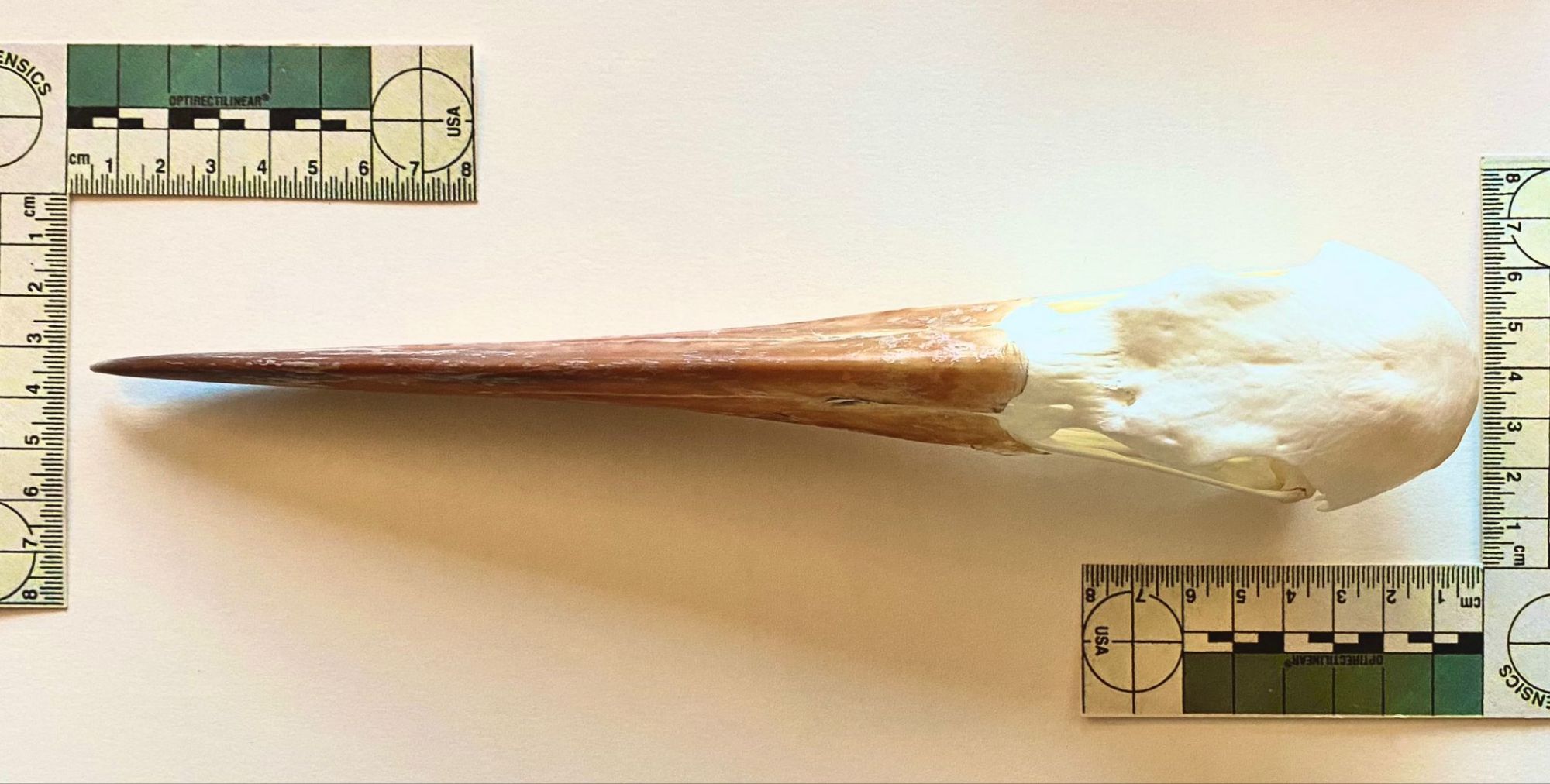

I suspect that some of you will get this one easily, so it’s time to break out your creativity and let me know what you think it is with a cryptic clue.
I hope you have fun with it!
Last week I gave you this mystery object to try your hand at identifying:

I picked this specimen because it’s from Ireland, but it’s not a species you might normally associate with Ireland. Plus it’s fragmentary and missing some parts that are useful for identification.
That said, after a little initial mis-step, the correct species – and indeed subspecies – identification was reached. So well done to James Bryant, Adam Yates, and Allen Hazen.
This is a section of mandible from a Cave Hyena Crocuta crocuta spelaea Goldfuss, 1823. This jaw shows just three teeth, but they are very useful teeth for identification, since they are characteristically robust, with really heavy conical premolars with well defined cingula (those ridges of enamel near the base). Perfect for smashing through bones. The curve of the jaw is also a useful clue.
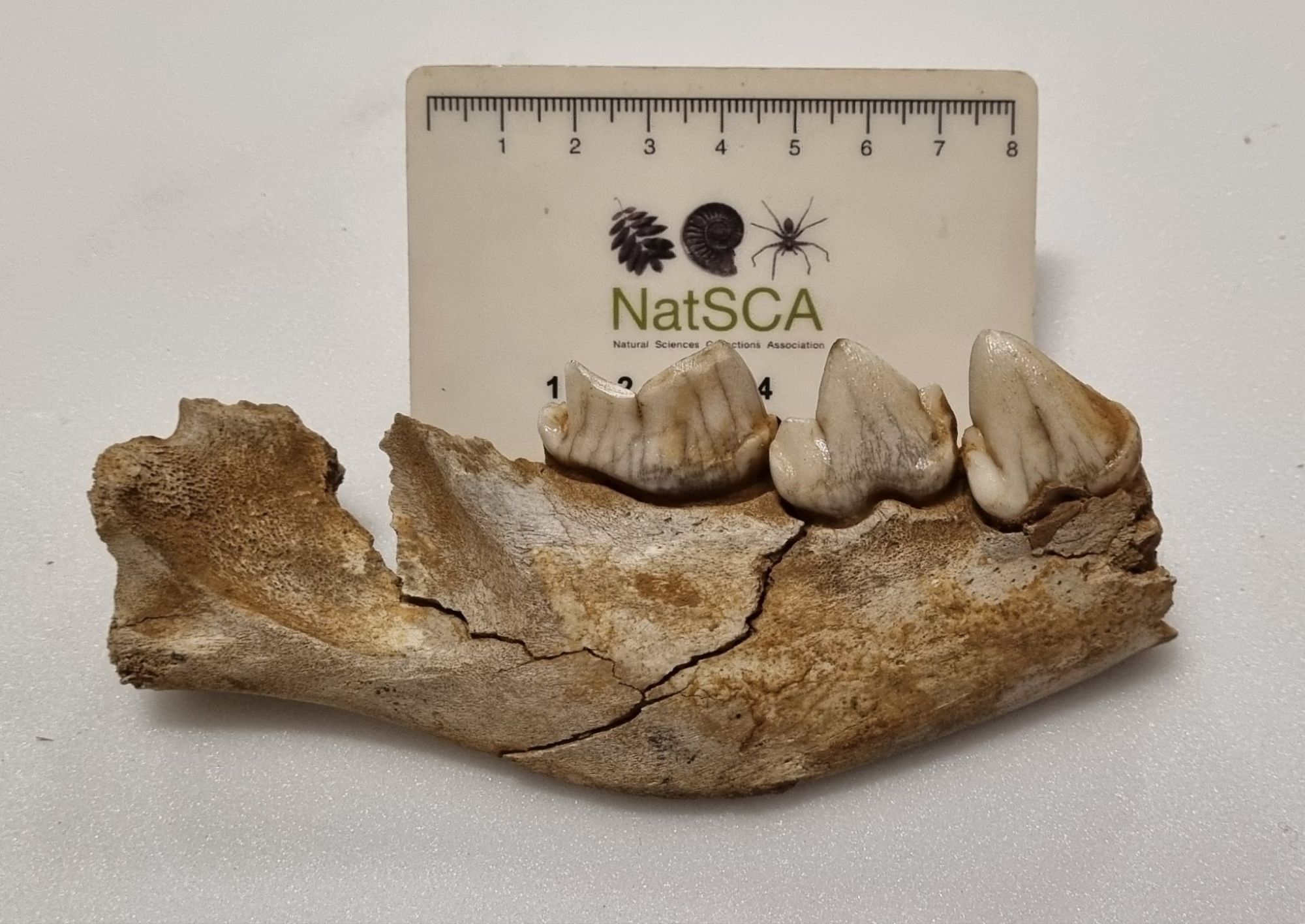
The Cave Hyena was present in Ireland around 40,000 years ago we have several specimens in the Dead Zoo, mainly from Castlepook Cave in County Cork. These caves provide a rare glimpse of pre-glacial fauna, since most other sediments (and therefore fossils) from the Pleistocene period were scoured away by the glaciers of the last glacial period.
So well done to everyone who figured it out. Specimens like this provide a fantastic snapshot into the prehistory of Ireland, offering a sense of how changing climate and landscapes shape biodiversity over time.
This week I have a fossil mystery object for you to have a go at identifying:
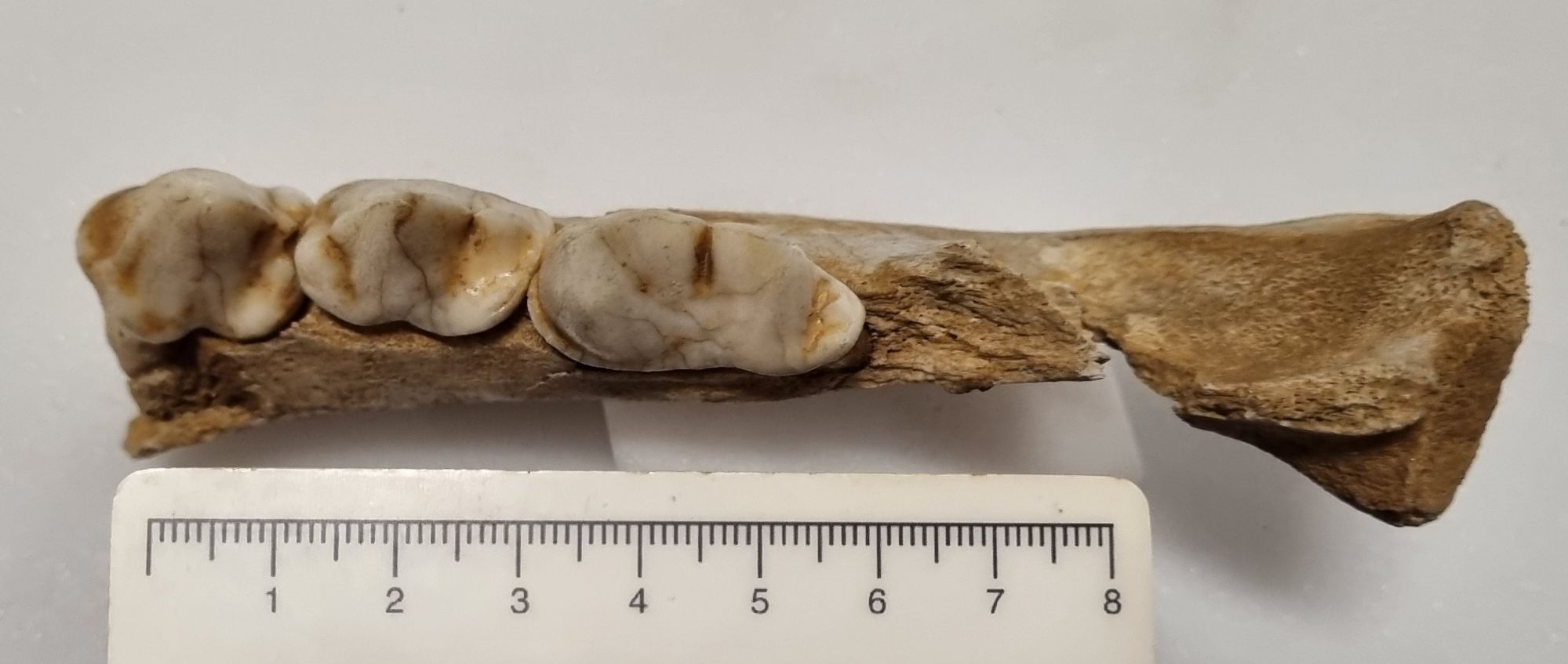
Any idea what this section of mandible might be from?
As ever, you can leave your thoughts, questions and suggestions in the comments box below. Have fun!
Last week I gave you this cute little skull to identify:
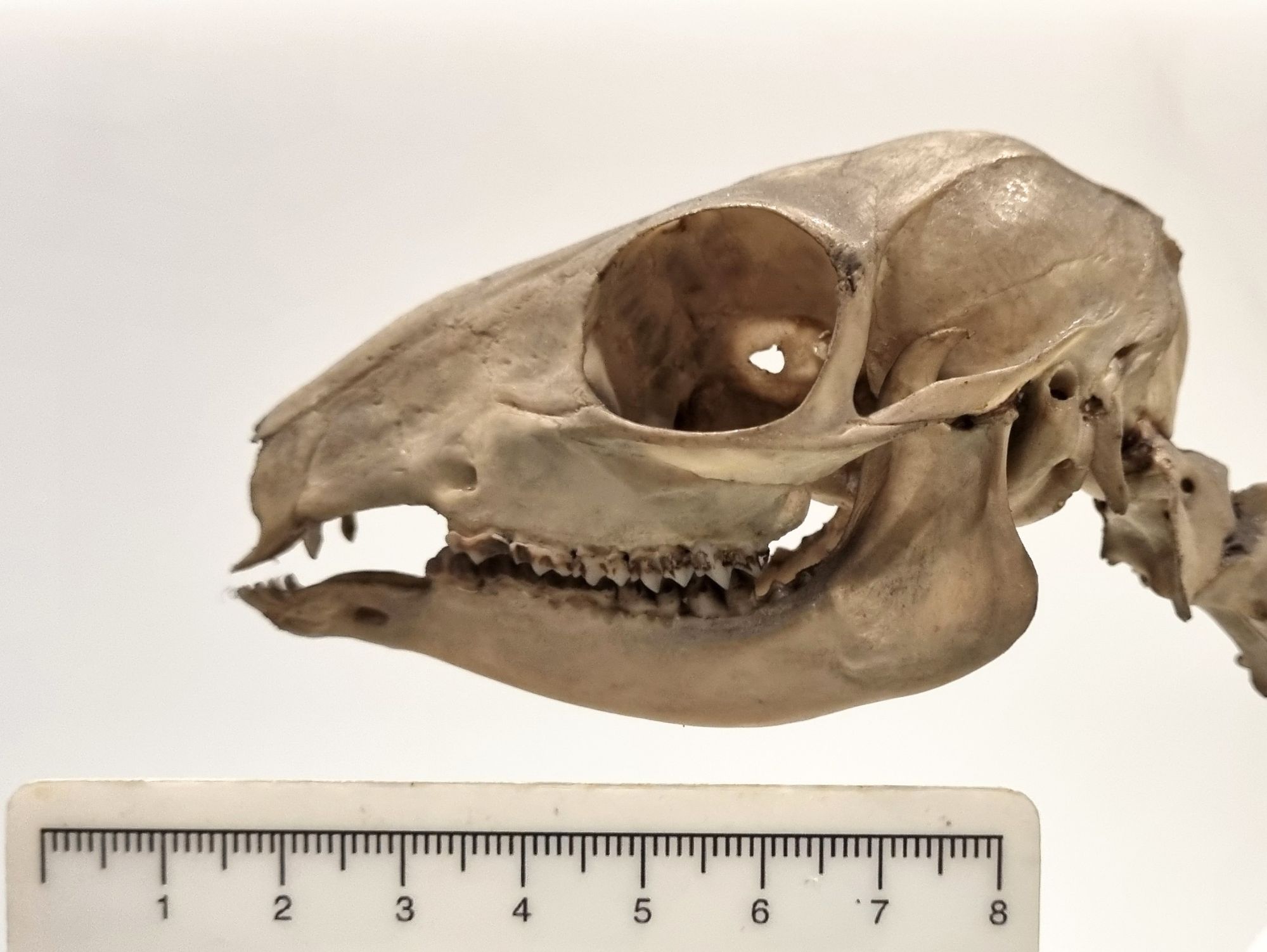
This is an object I selected when I was recovering from Covid, so I picked it thinking that I knew what it said on the label and so it would be an easy one to write up an answer for. Of course, the Universe being the way it is, I came to write this answer and realised that I actually took note of the wrong label.
My brain is clearly still not fully recovered from being ill, so now comes the complicated bit where I have to work out what it is, with no more information than I gave you, since I’m writing this answer at home and I don’t have access to either the specimen or our database.
Fortunately a lot of that work has already been done by the wonderful regular visitors to Zygoma (thanks folks!)
This is one of the diminutive Artiodactyls. It has neither horns nor antlers (although the specimen is female, so those might not be present even if the males of the species had them). It lacks scars from scent glands, so it’s not a Dik-dik or other tiny antelope. However, it does have small but prominent canines, which offer a clue. As Chris Jarvis suggested, this is the skull of a Mouse-deer, in the family Tragulidae.
There are three possible Genera in the family, but a quick check against specimens from the Genus Hyemoschus show some clear differences – both in general proportions of rostrum (snouty bit), the number of foramina in the front part of the mandible (Hyemoschus normally have two, but our mystery specimen has just one).
There are also differences in comparison with specimens in the Genus Moschiola – which seem to more usually have two foramina in the maxilla and a somwhat open suture at the junction between the bones of the maxilla, frontal and nasal bones.
That leaves the Genus Tragulus, which the mystery skull fits with very well.
It all gets a bit more complicated from there. In terms of size, I think we can rule out the Greater Mouse-deer since the mystery skull is about 2cm shorter that an example of the Greater Mouse-deer that I featured on the blog about 12 years ago (where doe the time go?):

This size difference is not a perfect characteristic to use, since the skull length can overlap between the species, but the mystery specimen has all the indicators of being a mature adult and it would still be at the absolute smallest end of the spectrum for the Greater Mouse-deer.
Distinguishing between the other possible species is more problematic, since there can be quite a lot of regional variation within the remaining species. From looking at examples of skulls online I’m leaning towards the Lesser Mouse-deer rather than the Java, Philippine, Vietnam or Williamson’s Mouse-deer, but that’s based on the structre of the zygomatric arch and general proportions rather than any clearly distinctive features.
In this instance I can at least check my hunch tomorrow on our museum database, to see if my hunch plays out – I’ll update this answer with the result as soon as I have a chance!
[Update: I’ve had a chance to check and my hunch was off – it’s listed as Java Mouse-deer Tragulus javanicus (Osbeck, 1765), so it goes to show that you do need those clearly distinctive features to get a good identification! This is why it’s better to rule out what it can’t be based on the data available and be happy with having a few possibile options, rather than making a misidentiifcation]
Thanks to everyone who had a stab at the identification – I hope you enjoyed the challenge!
 Zygoma