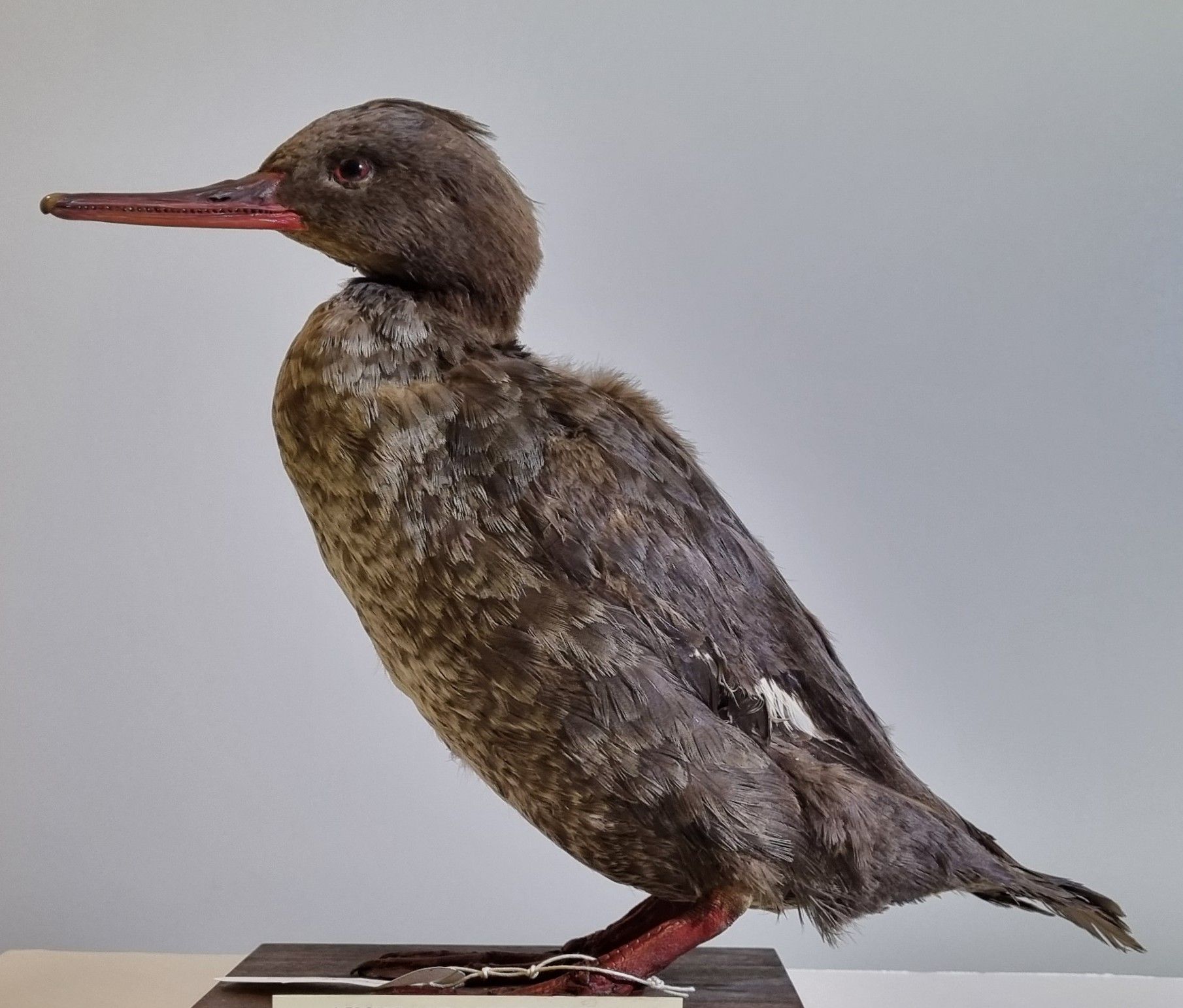
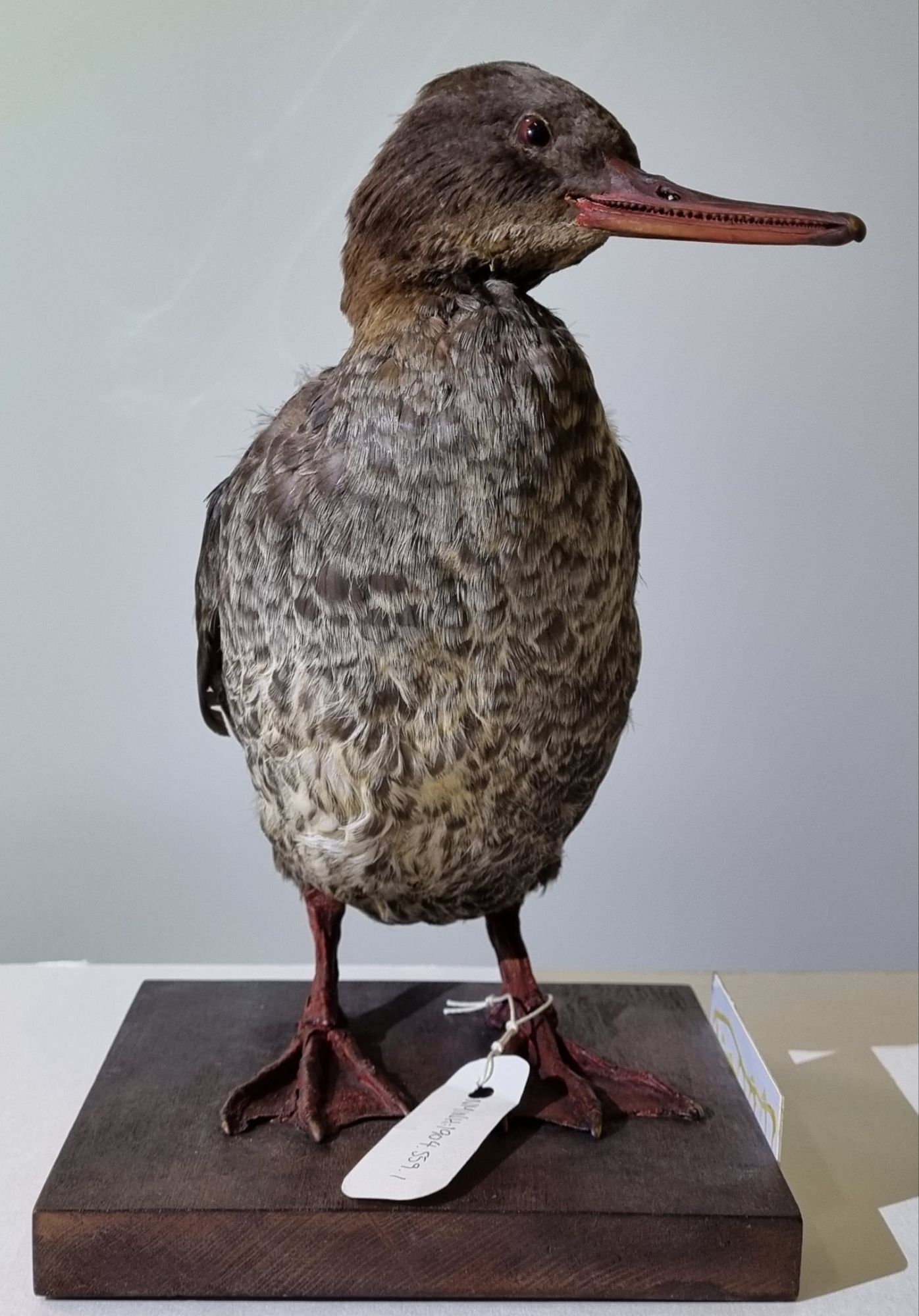
Last week I gave you this fantastic specimen from the Dead Zoo to have a go at identifying:
It wasn’t a hugely difficult object to identify, given its distinctive narrow serrated bill on a duck-like body, which are hallmarks of the mergansers – a genus of piscivorous ducks:
There aren’t many species of merganser – just six alive today, so on the face of it, there aren’t many to choose from. This particular specimen looks most like a juvenile Red-breasted Merganser, as several people suggested – but it’s not one of those.
This particular specimen is one of two other known merganser species that survived until historic times, but which are now extinct. The other species has no taxidermy specimens to represent it, and is only known from subfossil material from Chatham Island, off the coast of New Zealand.
Our mystery object is one of the very few taxidermy mounts that can show us what the Auckland Island Merganser (Mergus australis Hombron & Jacquinot, 1841) looked like. There are only 27 existsing specimens of this species in the world, most of which are preserved in fluid, and have lost most of their colour as a result – although ours is no doubt a little faded from the natural light in the galleries.
The Auckland Island Merganser is a good example of a species that did not survive contact with humans. Their original distribution was much more widespread on New Zealand and Chatham Island, but the arrival of Polynesian peoples led to their loss everywhere except on Auckland Island.
The arrival of Europeans and the pigs and cats they brought with them to Auckland Island pushed the population to the brink, and then hunting expeditions around the turn of the 19th to 20th century wiped out the rest. This particular specimen was shot on the 5th January 1901. One year and four days later the last pair were killed by the same man – Lord Ranfurly, the Governor of New Zealand.
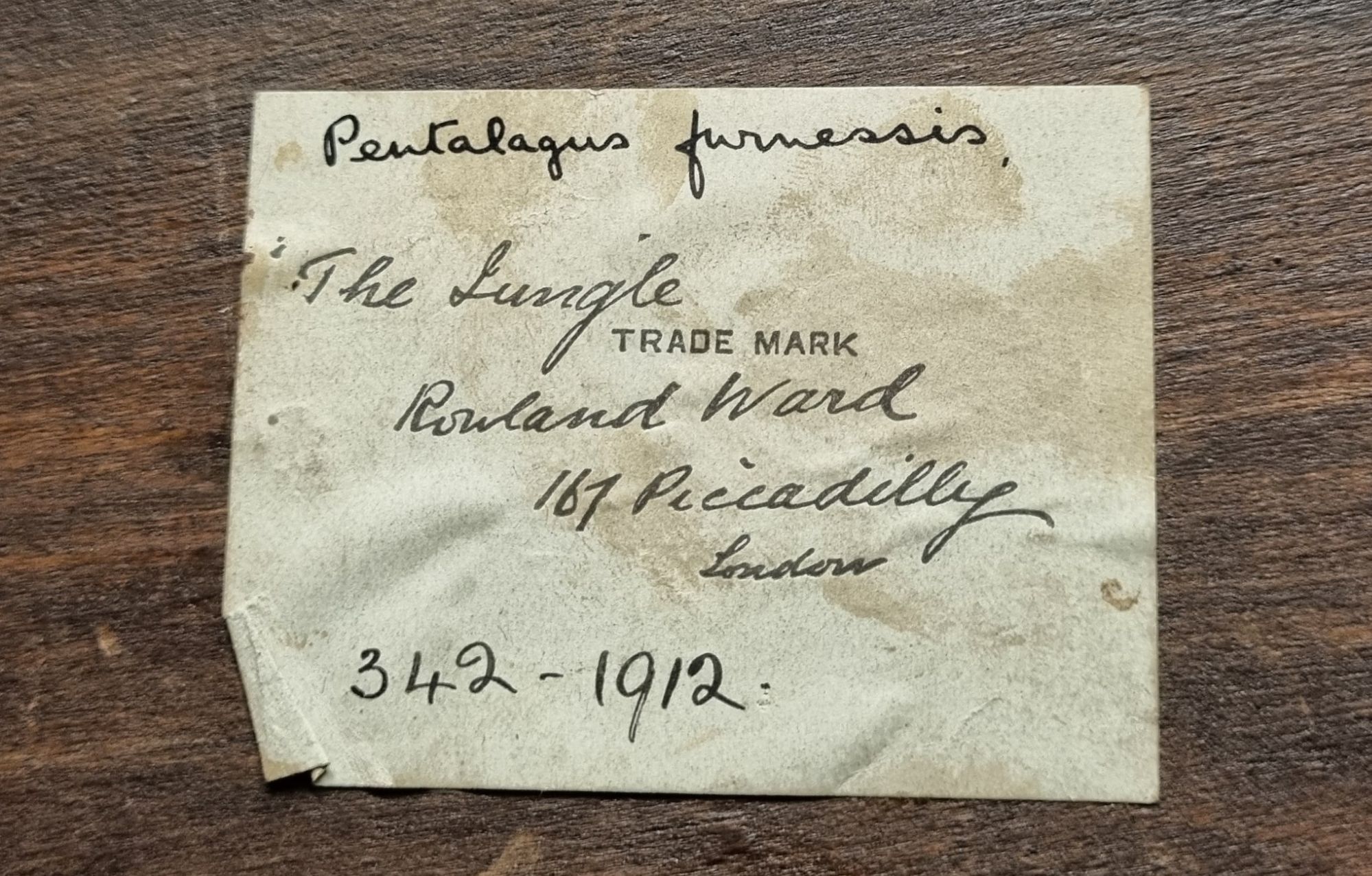
Ranfurly finished his term as Governor in 1904 and it seems likely that some of the skins of the specimens he collected in New Zealand returned with him. Some went to the British Museum (Natural History), while this one was prepared at “The Jungle” – Rowland Ward’s by shop at 167 Piccadilly, London before coming to Dublin.
It’s saddening to think that a species was pushed over the brink of extinction so deliberately, with no effort to preserve or protect it. Around the same time in North America the Passenger Pigeon became extinct in the wild, but at least the decline of the species had spurred efforts to preserve the remaining individuals in an effort to breed them. Meanwhile in New Zealand, it seems that the scarcity of the Auckland Island Merganser increased the demand for specimens, thereby sealing the fate of the species.
If you want to know more about the life and habits of these birds, New Zealand Birds Online is a great resource, with excellent information, so do check it out.
On a final note, I am currently attending the excellent NatSCA conference in Oxford at the moment, so extinct birds are very much on my mind. Later today I am looking forward to seeing the remains of the last fragments of surviving skin from the Dodo. We once shared our planet with these animals, and while it’s remarkable that we still have these specimens that help us understand what has been lost, it would be better if they had never been lost at all.






 Zygoma