For the first time in quite a while, I managed to escape from my desk and spend a little time in the collections of the Dead Zoo. The main reason was to facilitate access for researchers doing some really cool projects, but it also gave me a chance to spend a little time exploring the collections I’m responsible for.
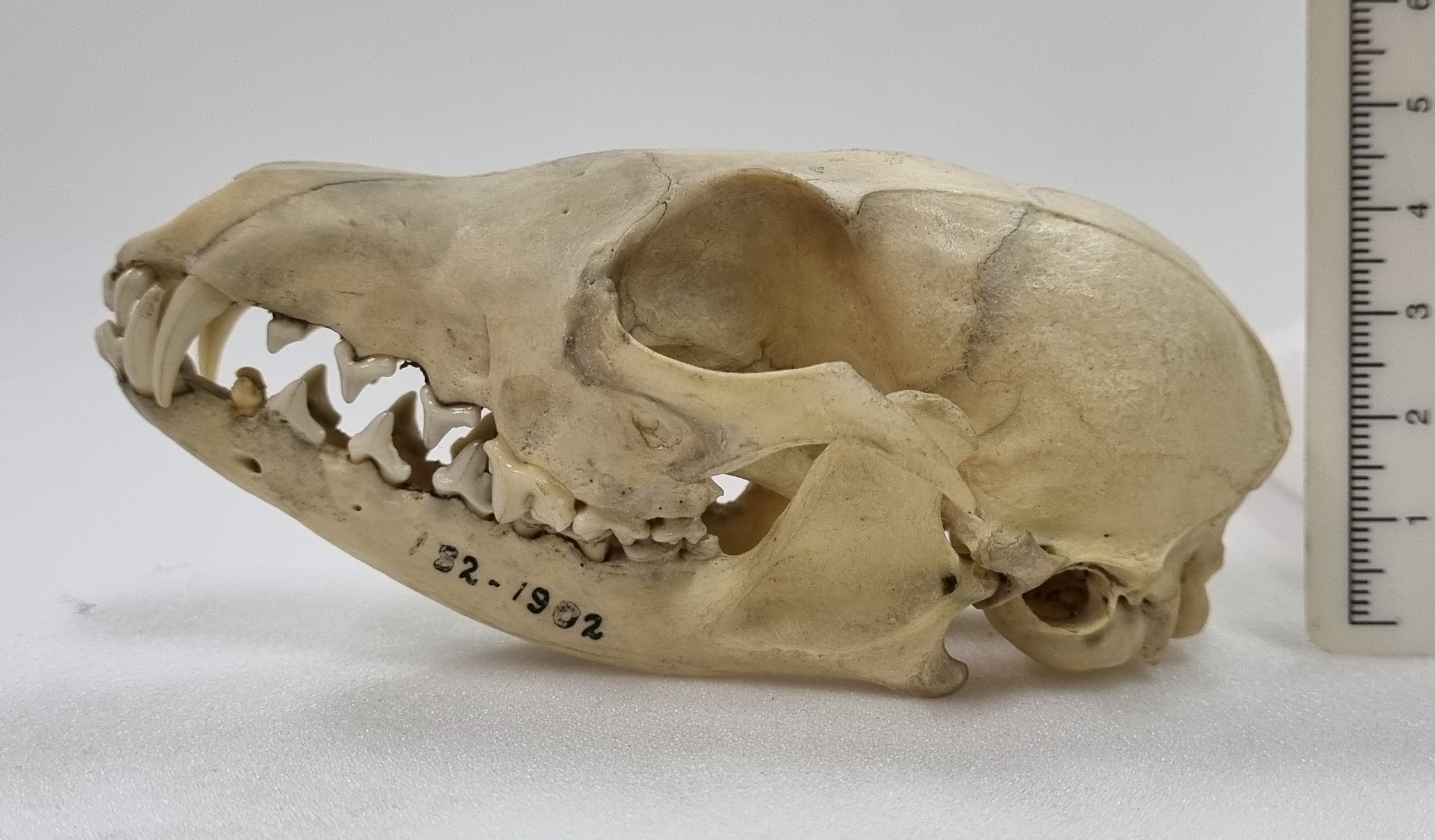
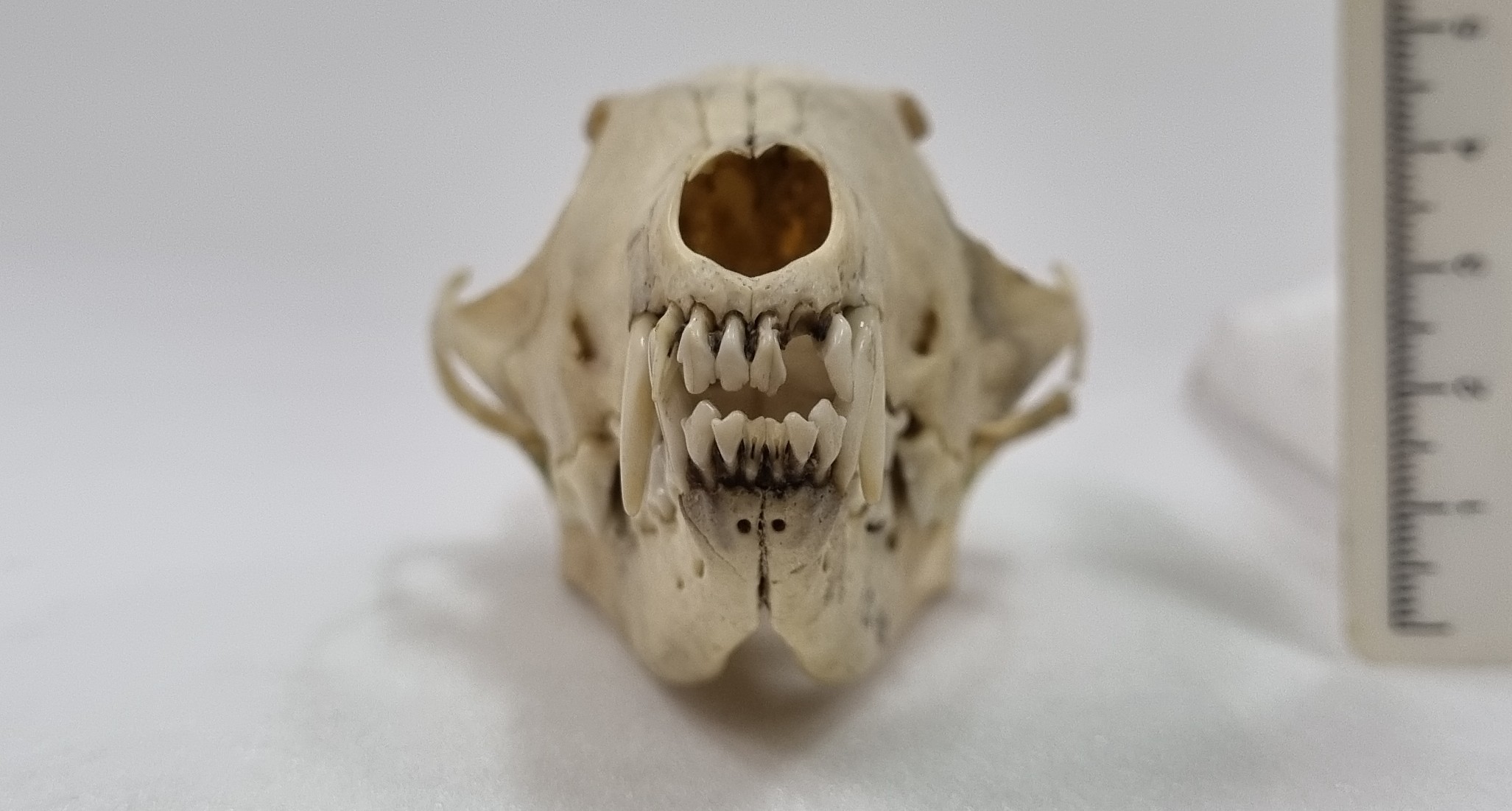
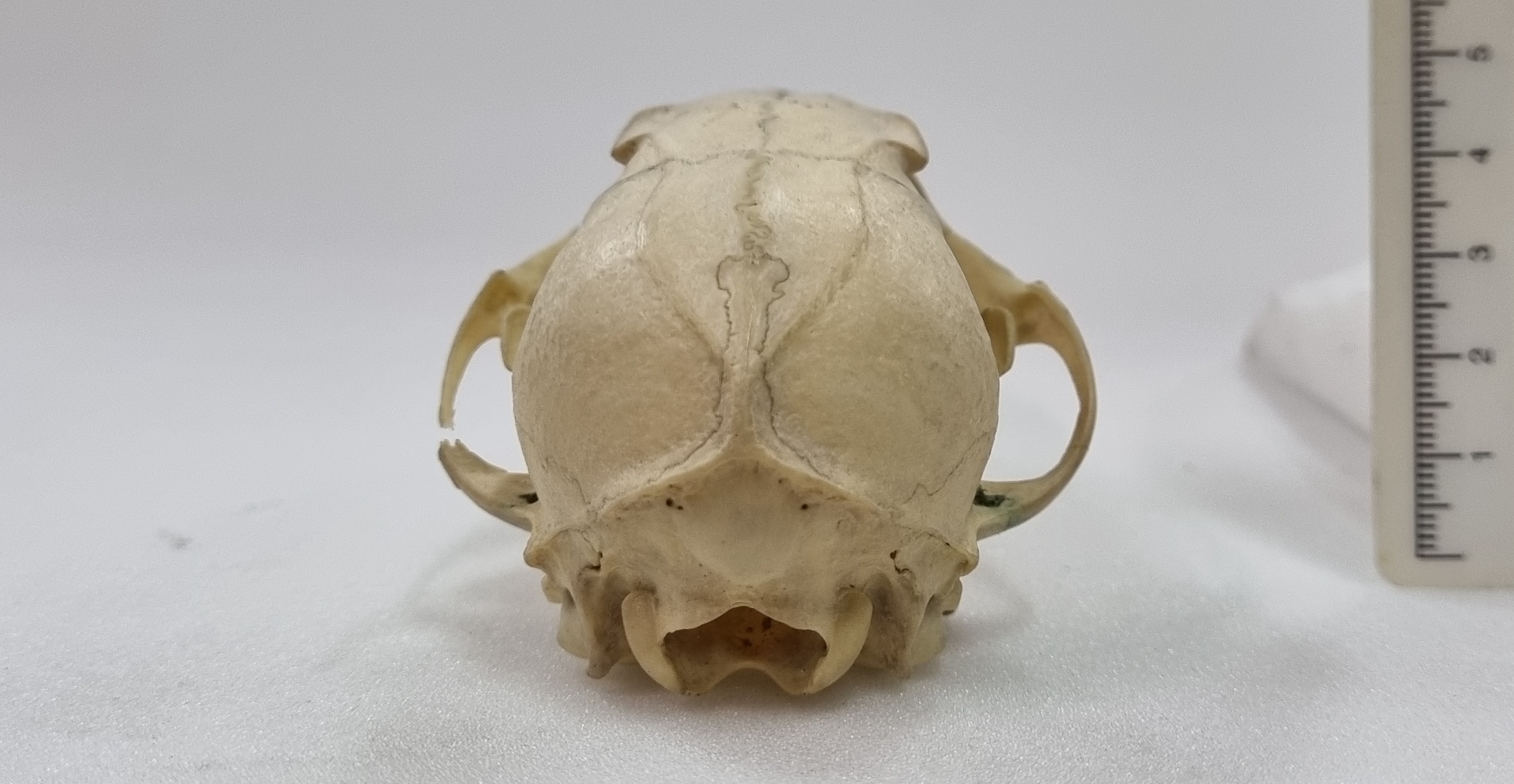
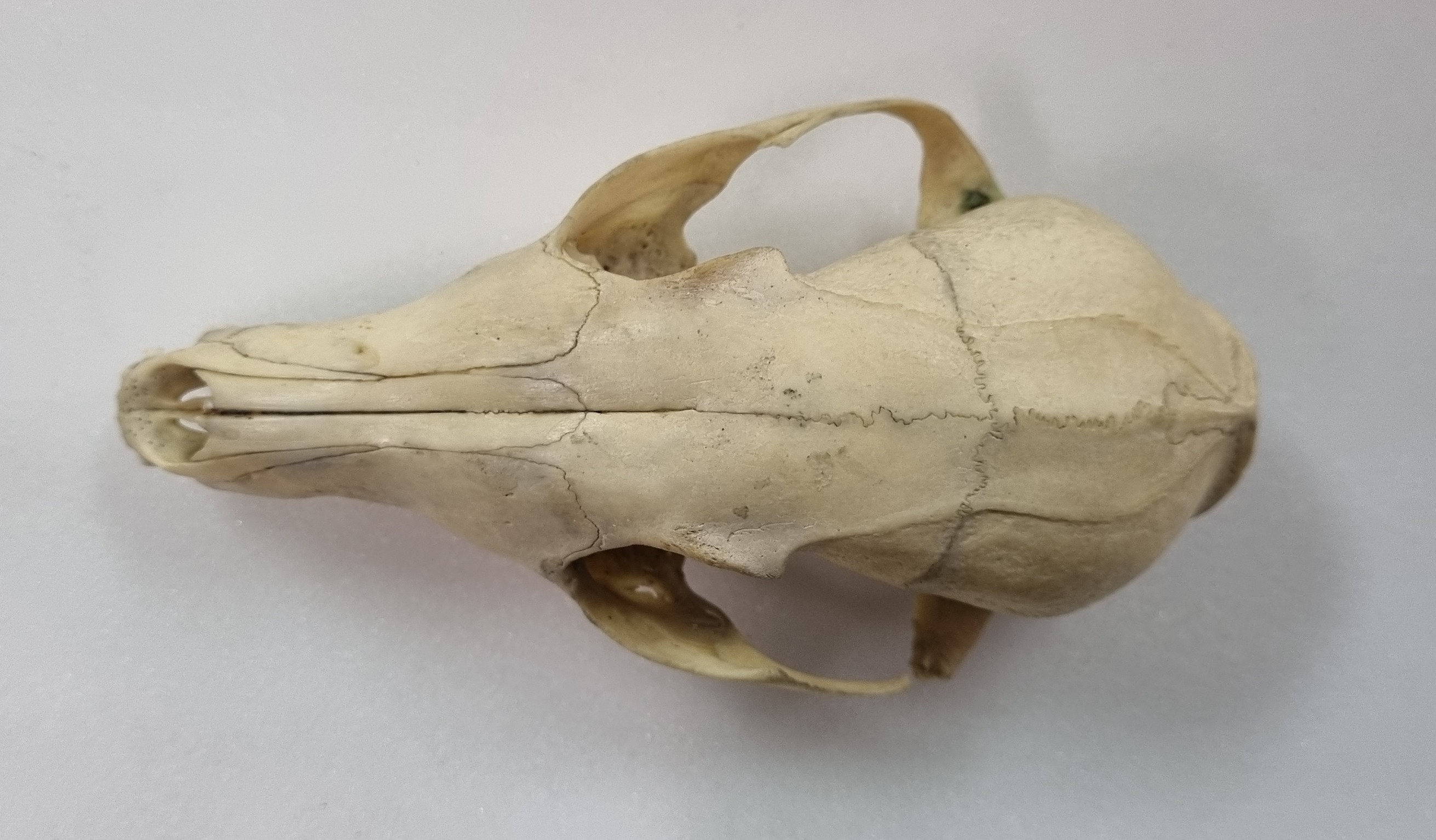
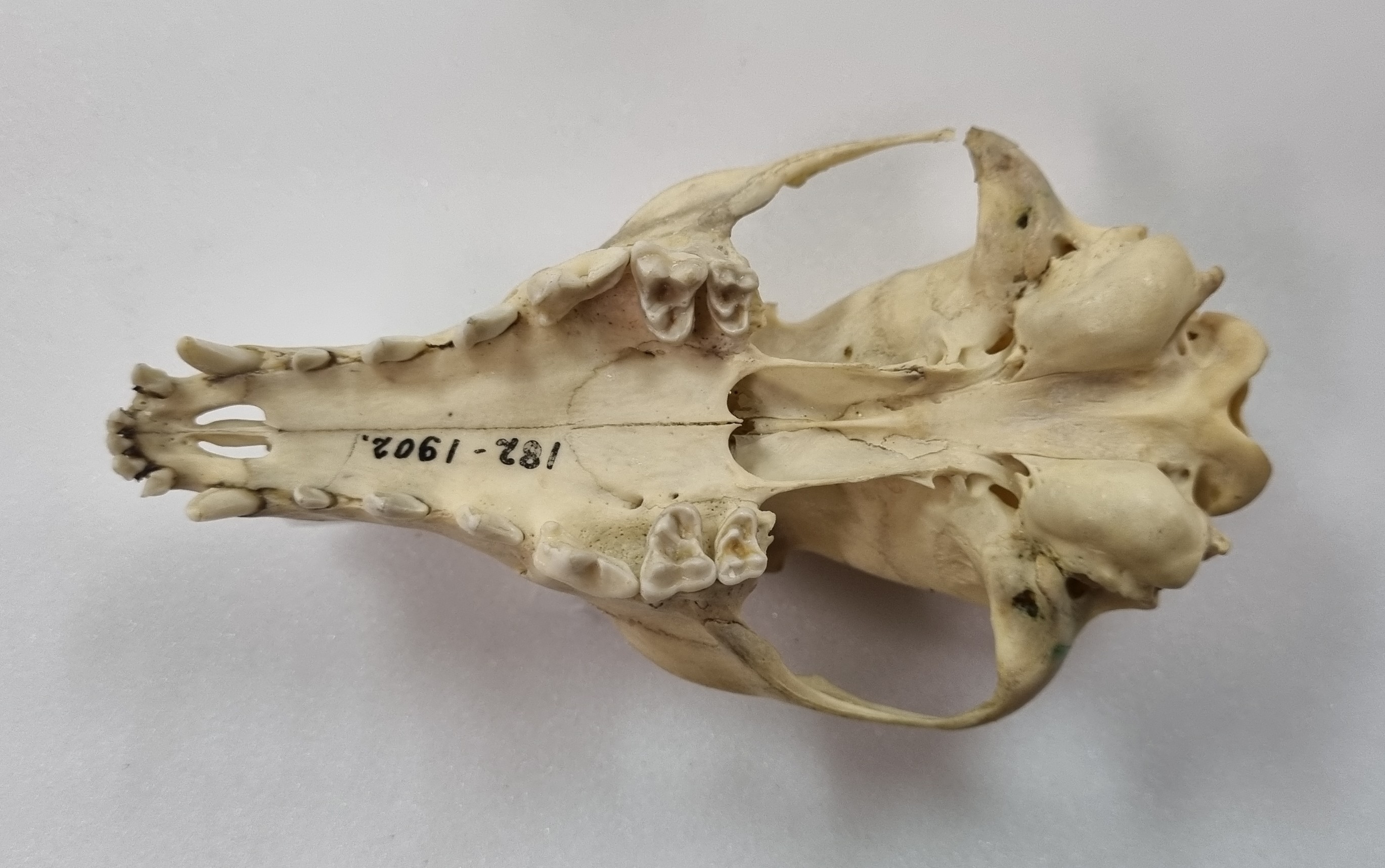
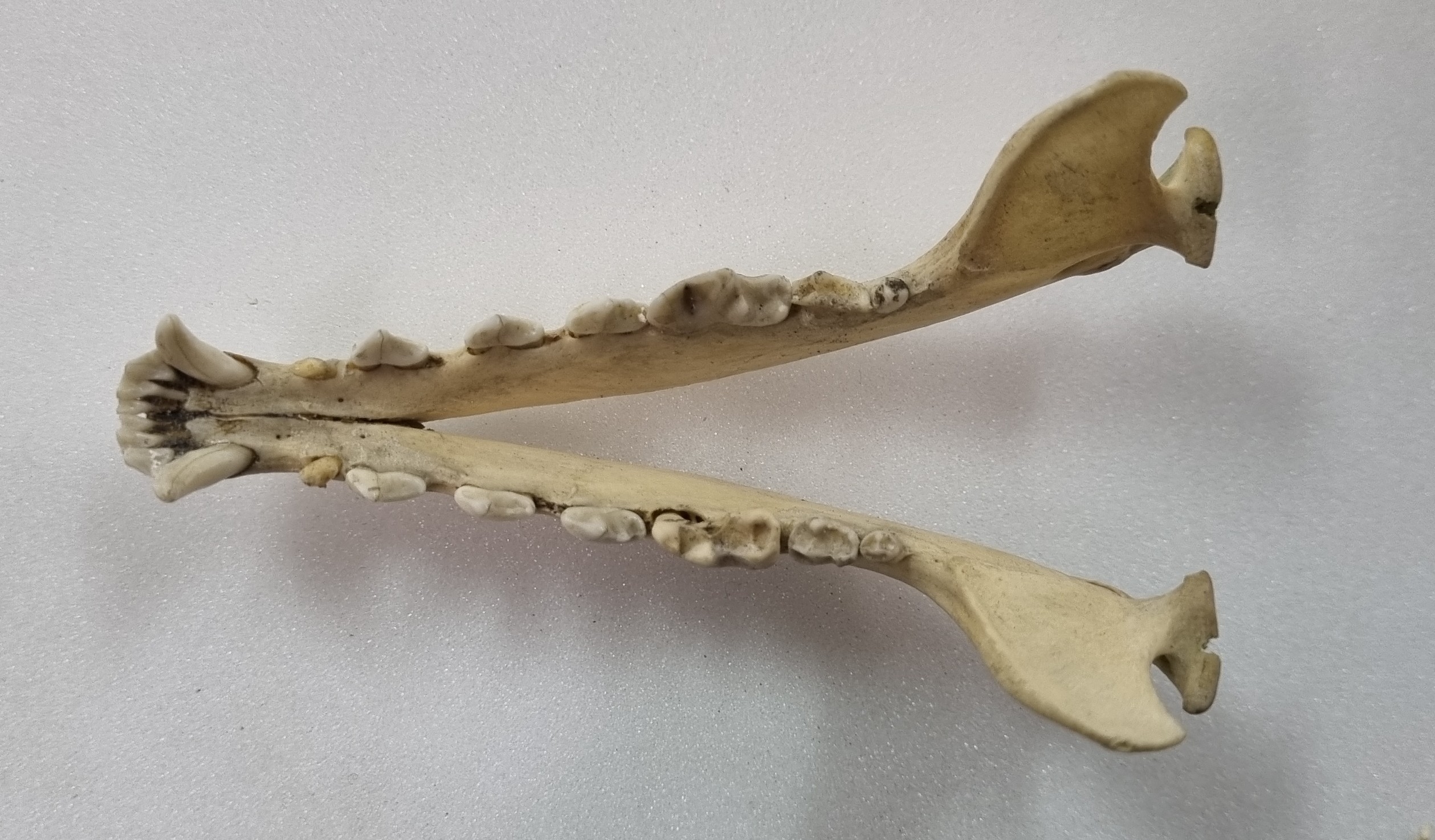
In one of the cabinets I spotted this skull, and I thought it might make a good mystery object:
So, do you have any thoughts on what this might be? As ever, you can leave your questions, observations and suggestions in the comments section below. I hope you enjoy this specimen as much as I did!
Last week I gave you this specimen from the Dead Zoo to have a go at identifying:
Evidently it was a bit too easy, since everyone who commented not only worked it out, but took the time to come up with clever cryptic clues to reveal the identity. The first was Tony Irwin with:
I suppose that a pencil sketch of this would qualify as a labradoodle?
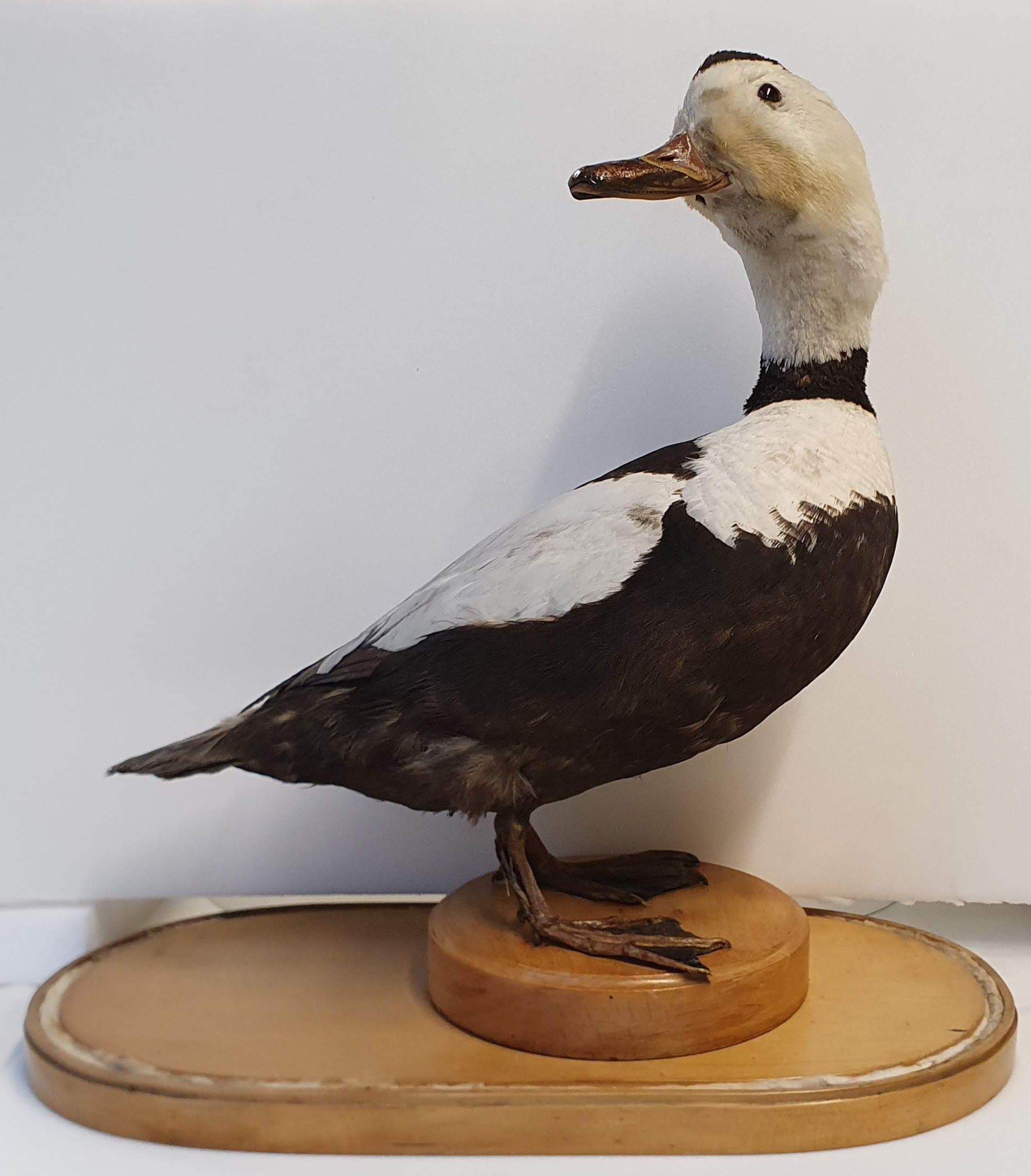
This is a specimen of Labrador Duck Camptorhynchus labradorius (Gmelin, JF, 1789), an endemic North American duck that has the dubious honour of being the first American species to be pushed into extinction following the European invasion of the continent. The exact reasons for the extinction are unsure, but between the adult birds being shot or caught on fishing lines, their eggs being over-exploited as a food source by settlers, and competition with humans for mussels and other marine molluscs, the already small populations were quickly reduced to nothing.
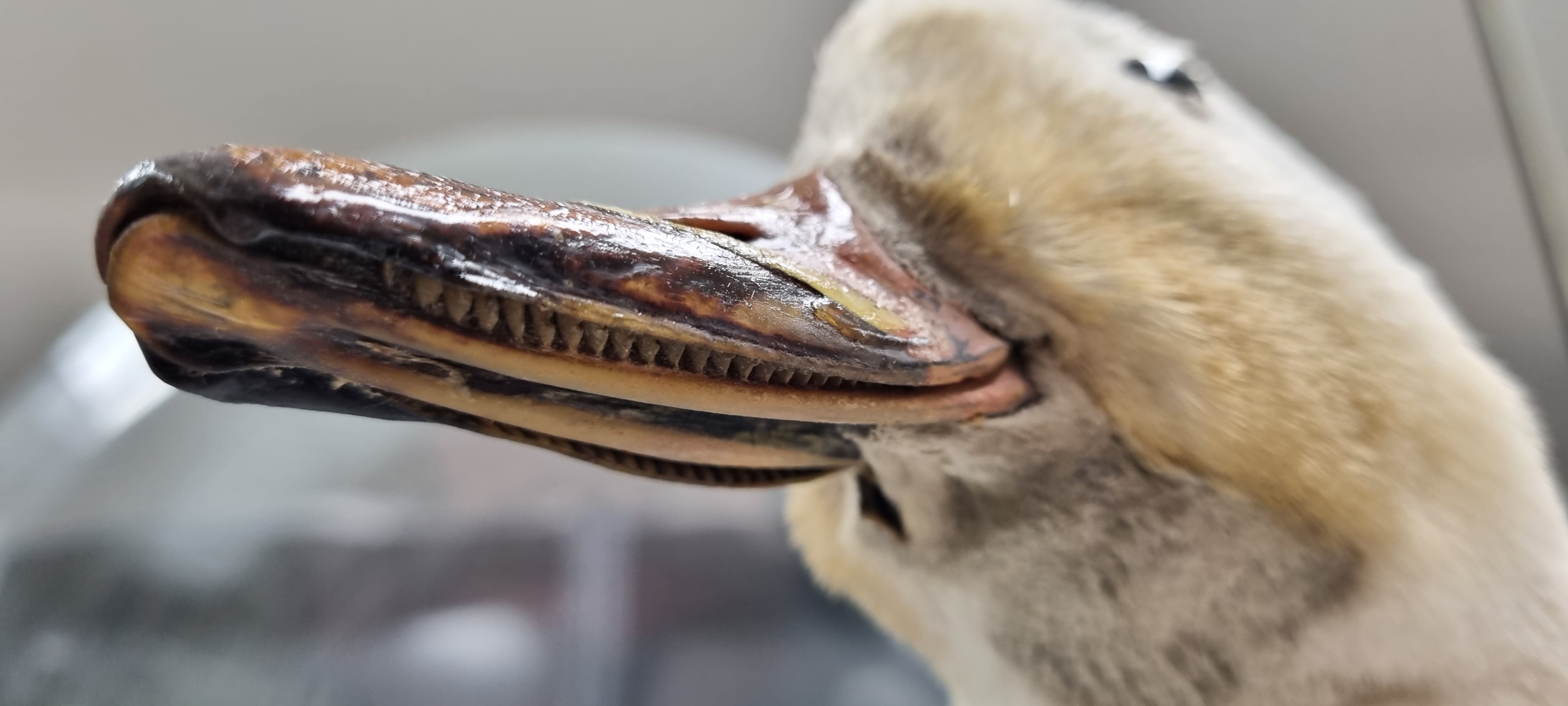
Lamellae in the bill of the Labrador Duck.
The last sighting was in 1878, but the museum bought this specimen in 1892 for the princely sum of £30-0-0 (that’s the equivalent of about €5,376 in today’s money). It had passed through a few pairs of hands before the Museum got hold of it, but we’re fortunate in knowing that the specimen was brought to Ireland in August 1838 from New York by Lt. W. Swainson R.N. who was in command of The Royal William, a paddle steamer in the service of the City of Dublin Steam Packet Co.
Only 55 specimens of Labrador Duck are known from museums around the world, so all information about them is valuable, especially when you consider how scarce and irreplacable they are. Specimens like this really hammer home the responsibility we have as museum professionals who are responsible for their care.
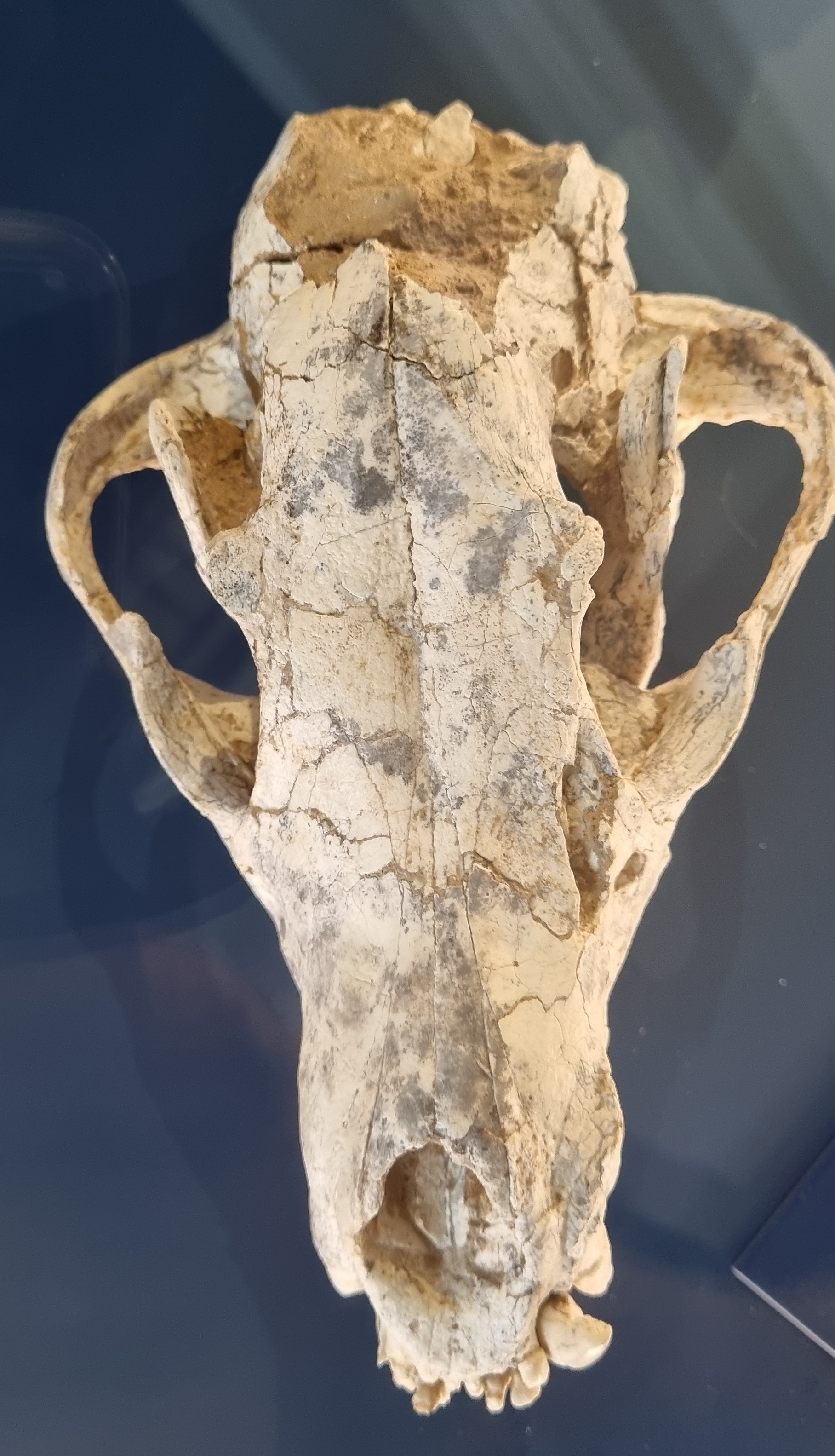
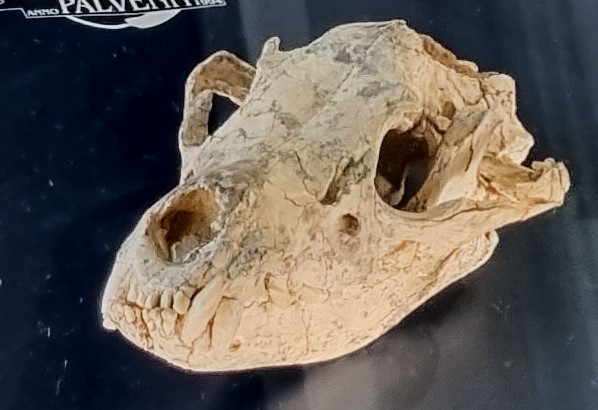
Last week I gave you this 6 million year old fossil skull to have a go at identifying:
The specimen is on display in the geology galleries of the Natural History Museum at the University of Oslo (which is well worth a vist). However, this did mean the photos provided weren’t quite as good as I’d like, particularly notable being the lack of a scale bar (sorry!)
Even without a scale, consensus shifted towards this being some kind of hyena, thanks to the curved mandible and (hint of) robust molars and shorter toothrow than you might expect to see in a canid. The broad and flat profile of the frontals between the eye sockets probably helped too:
Hyenas have an interesting evoloutionary history, branching off from the basal feliforms around 22 million years ago and adapting to fill a terrestrial carviore niche in Eurasia and becoming quite diverse. In America the canids were filling that same niche, which led to some competition when the canids made it to Eurasia (spoiler alert – the hyenas lost that competition, leaving us with just three highly specialised bone crushers and the decidedly weird Aardwolf living today).
Four live specimens of hyenas (clockwise from top left): spotted hyena (Crocuta crocuta), brown hyena (Parahyaena brunnea), aardwolf (Proteles cristata), striped hyena (Hyaena hyaena). Image by Termininja, 2020CC BY-SA 4.0
The mystery specimen was labelled as Thalassictis wongii (Zdansky, 1924), a species described from China and originally placed in the genus Icititherium, but reassessed by Kurtén (1985). A cladistic treatment of the Hyaenidae by Werdelin & Solunias (1991) later placed it in the genus Hyaenotherium, but that may not have been accepted by the curatorial team in Oslo without an accompanying formal taxonomic treatment.
These are the sorts of decisions that need to be made when considering something as simple as a label stating a species name, so you can imagine my sense of trepidation as we are about to embark on a major project at the Dead Zoo, which will allow us to reassess the information with our 10,000 or so display specimens. Fun times ahead!


 Zygoma