Friday mystery object #400 answer

Last week we hit the 400th mystery object, which was this specimen from the Dead Zoo:
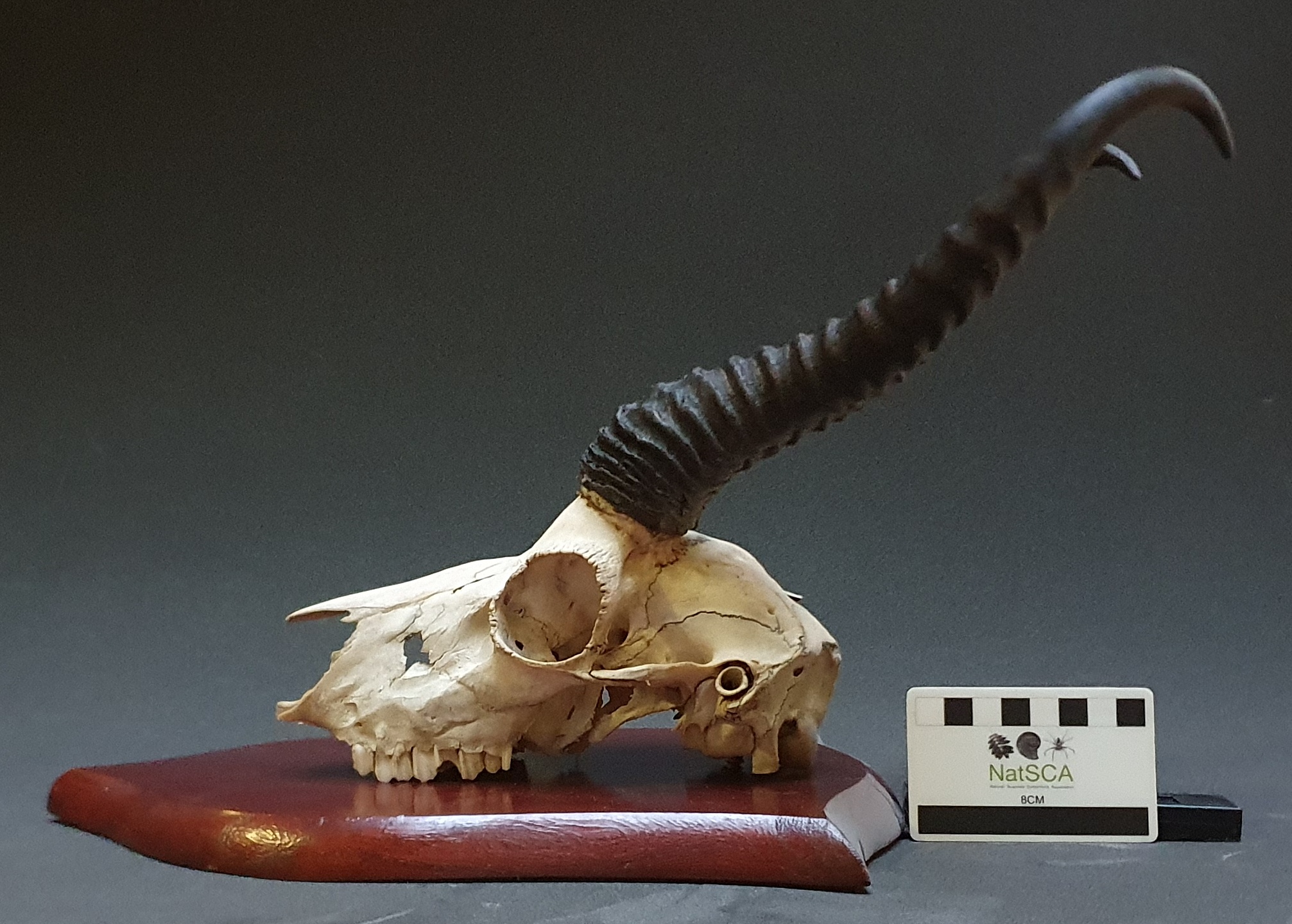
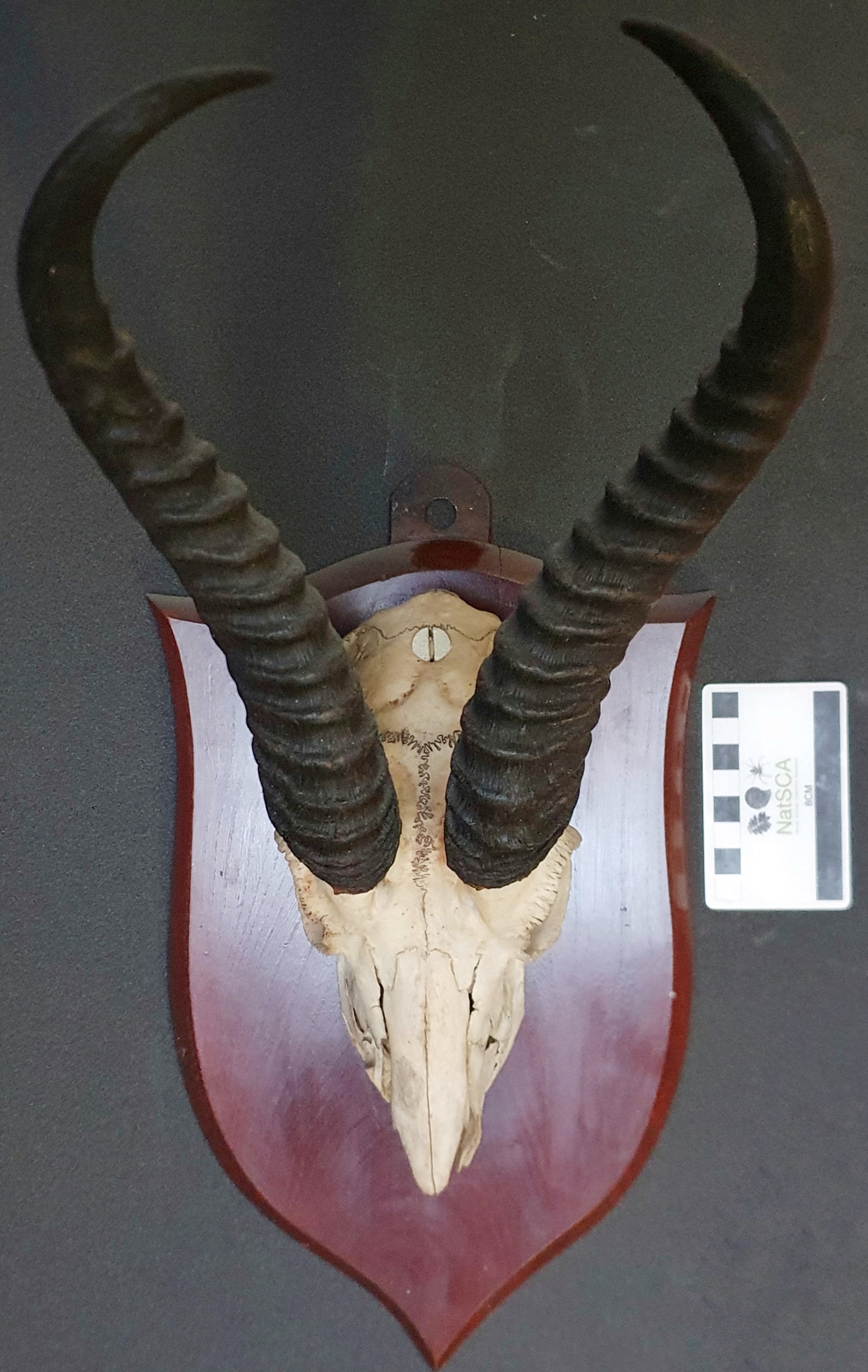
Horned beasties can be tricky since there are over 140 species in the Bovidae. There is quite a lot of diversity in size and in horn shape, but there are some general patterns, with spirals, twists, curves and recurves. A good place to trawl through for comparisons is the Animal Diversity Web, which has plenty of images.

However, this is one of the better known species, with nicely lyrate horns, so quite a few people recognised it without having to go searching. This is a Springbok Antidorcas marsupialis (Zimmermann, 1780), a South African antelope that has given its name to the nation’s rugby team. Well done to everyone who figured it out, particularly Goatlips, who got there first!

This specimen is one of 333 game heads that we’re in the process of decanting from the Museum, as part of a project that includes moving thousands of invertebrates and birds, as well as a couple of whales. If you’re interested in how we’re dealing with the game heads we recently reported on it at the NatSCA Conservation Twitter conference, which I’ve shared below:

h

Friday mystery object #399 answer

Last week I gave you this cute little bird of prey to have a go at identifying:

It didn’t prove to be much of a challenge, but I was impressed by the answers nonetheless. In particular, the first answer by Hilary Blagbrough is both a delightful poem and correct:

A little hunter from the east
that feasts on juicy dragonflies
In black and white is smartly dressed
No colours seen on legs or chest
Who is this with the panda eyes?
That of its sort, is not the least

So this mystery object is a bird of prey found in Asia. It’s very small and primarily feeds on insects, although it can take small mammals, reptiles and other birds of a similar size or smaller than itself. Since it’s a falcon, but smaller than expected, it’s called a falconet.

There are a few species of these falconets that are quite similar. However, as Hilary says, this one doesn’t have any colours on the legs or chest and it’s just black and white, without any patches of colour and it has discrete patches of black around the eyes. These features all suggest that this is the Pied Falconet Microhierax melanoleucos (Blyth, 1843).

There were several correct identifications on Twitter and more in the comments on the blog after Hilary’s poetic post. So well done to everyone who figured it out!

Friday mystery object #399

Friday has rolled around again, with startling alacrity.

At the Dead Zoo it’s been another busy week of decanting, with our whale skull being crated up and ready to roll:

All the decant work plus post-Christmas catching-up activity hasn’t left me much time to hunt down mystery objects, but I had this cutie in my office and I thought it might be a nice little challenge:

Any idea what it might be?

As always, you leave your questions, thoughts and suggestions in the comments below. Have fun!

Friday mystery object #398 answer

Happy 2021 – I hope you had a great celebration!

Last year I gave you this mystery skeleton for you to have a go at identifying:

That erect stance and those super-short and chonky wing bones are a dead giveaway that this is one of those charismatic flightless waiter birds (and before you ask, yes the “i” is intentional).

There are around 20(ish) species of penguins or pengwings if you’re Benedict Cumberbatch.

Although the various species look superficially similar, with their black and white base colour scheme and tubby yet streamlined shape, they do have some distinguishing characteristics. Unfortunately, the most obvious relate to plumage and that’s missing here.

Size can help with narrowing it down – and this particular specimen is small. Admitedly it’s hard to tell that without a scale bar, but the large species have relatively small skulls in proportion to their body size, so they can be ruled out.

Bill length and shape can also provide some good indications even from non-skeletal birds and you can of course check out my favourite online resource (SkullSite.com) to see skulls of most of the main penguin genera, if not all the species (yet!). In the comments, James Bryant and Wouter van Gestel (creator of the aforementioned SkullSite) recognised that this is a Little, Blue or Fairy Penguin Eudyptula minor (J.R.Forster, 1781).

Little Penguin in the Melbourne Zoo. Image by fir0002, 2009.

This is the smallest species of penguin, it has breeding colonies in Australia and New Zealand and the population on Phillip Island has become a bit of a tourist attraction. They feed on small fish, like anchovies and pilchards or small invertebrates including squid and jellyfish.

There will be more mystery objects to come for 2021 – let’s hope this year works out better for everyone than 2020…