This week I have another marine invertebrate from the Dead Zoo decant project for you to have a go at identifying. Any idea what this is?
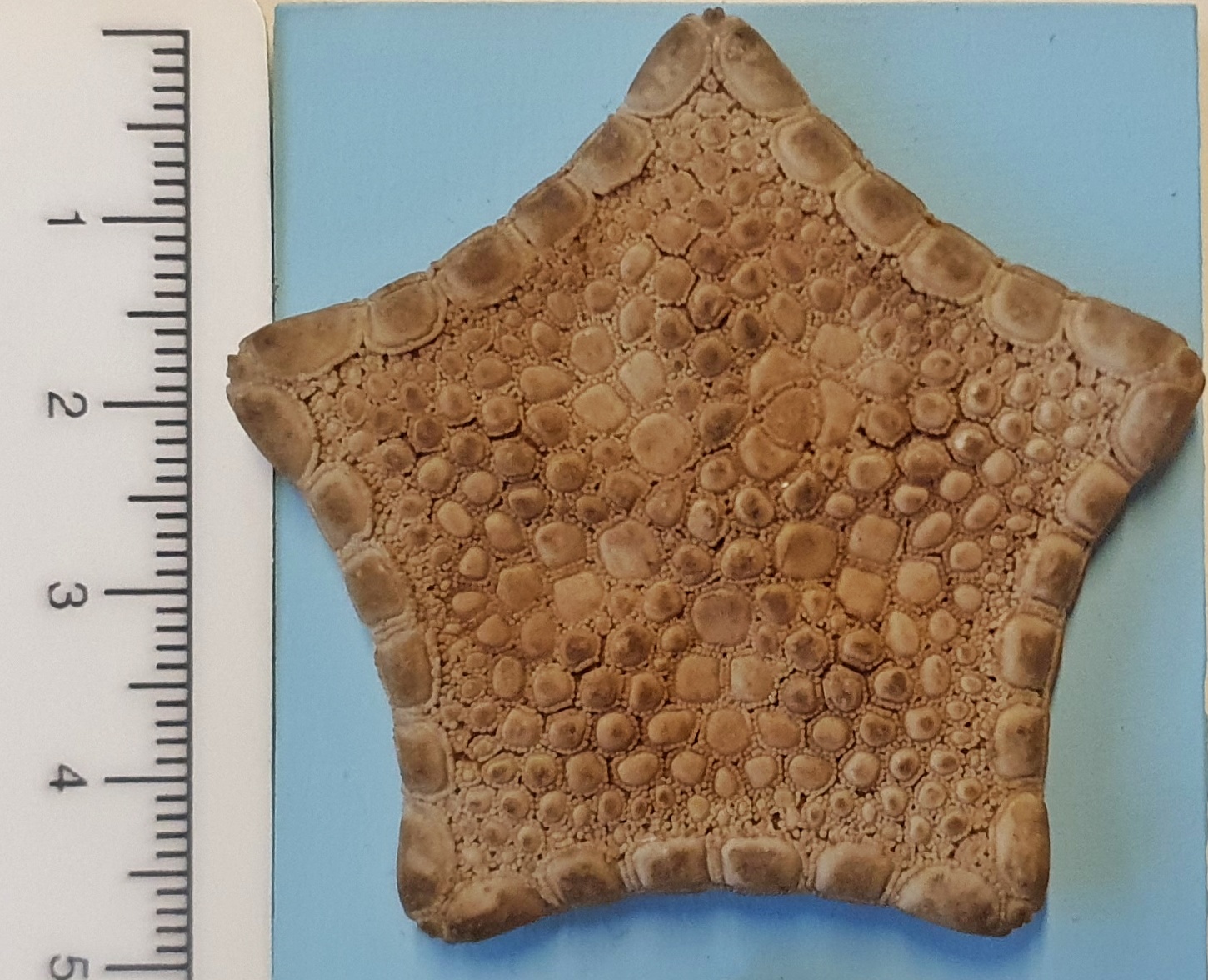
As ever you can put your questions, observations and suggestions in the comments below. Have fun!

This week I have another marine invertebrate from the Dead Zoo decant project for you to have a go at identifying. Any idea what this is?
As ever you can put your questions, observations and suggestions in the comments below. Have fun!
Last week I gave you this specimen from the Dead Zoo to have a go at identifying:

It was a bit mean of me to not include a scale, but several of you managed to work it out regardless.
The overall group is fairly easy to spot, since it has 10 legs, the front pair bearing claws (or chela if you want to get technical) and the main body area is rounded. So it’s a crab.
In addition, the long legs and small body give it an overall shape reminiscent of a spider, so it’s a good bet that it’s some kind of spider crab.
Now, there are quite a lot of types of spider crab out there, but that sub-triangular body shape and those long legs help narrow down the possibilities further. In fact, it does share some similarities to the gigantic Japanese Spider Crab.

Unlike the Japanese Spider Crab (which was suggested), this doesn’t have extremely elongated chela. So not one of them. It’s also way too small, although my lack of a scale bar doesn’t make that obvious – sorry! However, the mystery object is in the same family (the Inachidae).
Once you start looking at the genera in the Inachidae there’s only one that matches the mystery object’s proportions, and that’s the Macropodia. Once you get that far, it becomes a case of discounting possibilities based on much more detailed features.
The Marine Species Identification Portal is a fantastic resource for checking this finer level identification. Going through the various species descriptions in there helps spot the key features for distinction between species.
In this case, the mystery object is particularly similar to M. tenuirostris and M. rostrata and it’s mainly the shape of the carapace around the ‘shoulders’ where the chela attach to the body that help confirm this to be the Long-legged Spider Crab Macropodia rostrata (Linnaeus, 1761).
So it was a good effort for everyone who managed to get this to family level, I congratulate those who worked this out to the genus and I doff my hat to anyone who managed to identify it to species. So jennifermacaire, my hat is doffed!
This week I have another mystery object for you from the Dead Zoo decant:
This week the team has been wrapping and packing arthropods, so here’s one for you to have a go at identifying. Have fun!
Last week I gave you this specimen from the Dead Zoo to have a go at identifying:
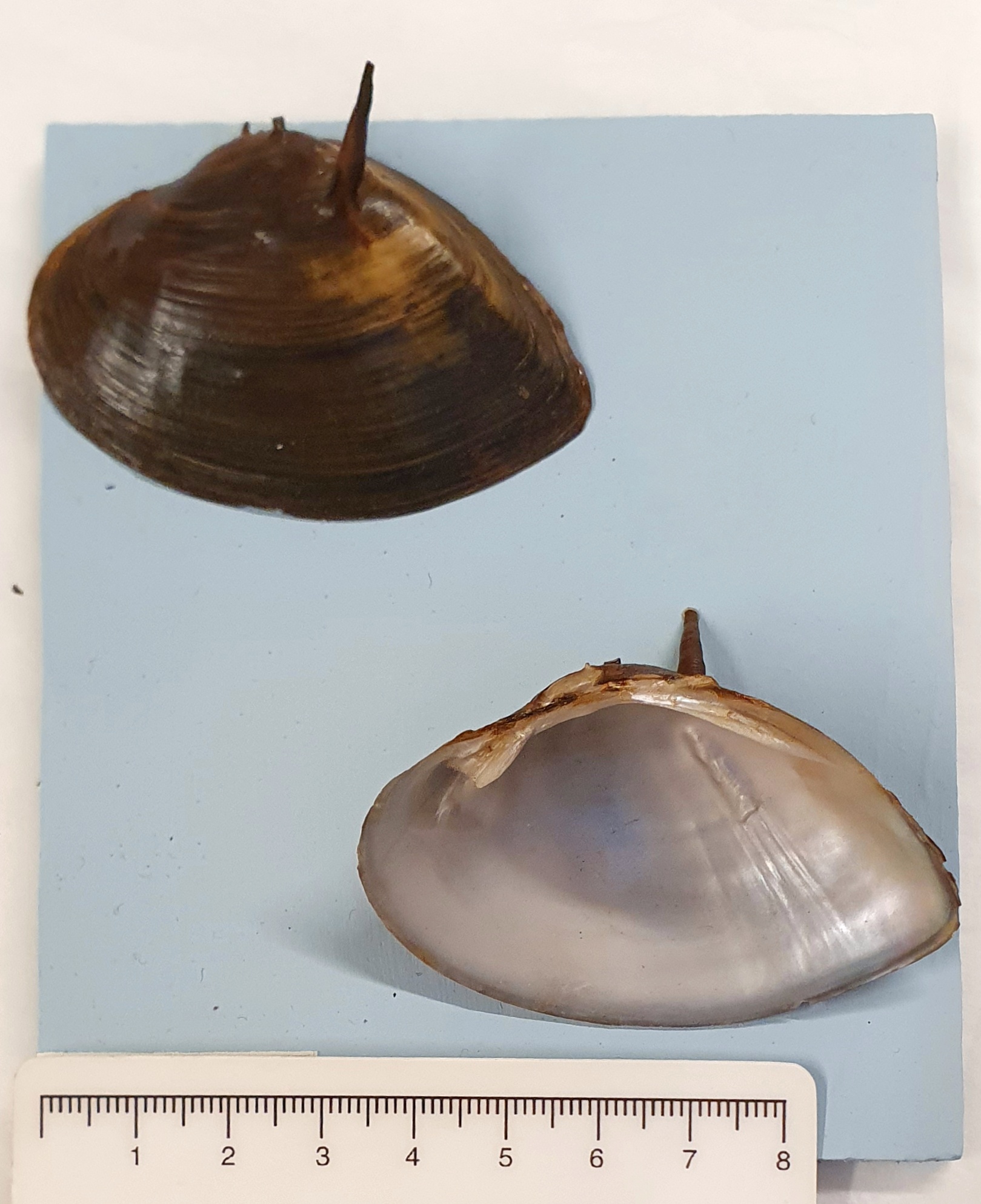
I don’t often do molluscan mystery objects, but the unexpected spike on this shell really caught my eye.
It is very distinctive, so I wasn’t overly surprised by the correct answers from several people – Tony Irwin even managed a nice cryptic clue playing on the scientific name for this species:
“Could be a young wizard’s spell to make something not quite round, perhaps using a wand made from a bit of blackthorn?”
This is of course alluding to Elliptio spinosa (I. Lea, 1836), known more commonly as the Altamaha or Georgia Spinymussel.
These freshwater mussels are endemic to America and are limited to large, fast-flowing rivers in Georgia. They are currently endangered, partly due to changes in their river habitat (such as increasing ammonia pollution in water) and partly due to a decline in the species of fish that they rely on as hosts for their parasitic larval stage.
I’m not certain what the spines are for, but since these mussels live in the sediment of fast-flowing rivers, they may simply act as anchors to help prevent them from being dislodged.
A bit of a short answer this week, but I’m typing one-handed due to an injury and I need some rest. I will endeavour to have another mystery object for you next week though!
The last few months have been busy in the Dead Zoo. If you’ve been following the #DeadZooDiary hastag on Twitter you will have seen that the smaller of our two suspended whales has been taken down and now we’re doing the groundwork to get the larger of them decanted.
But while all of that is going on, we also have a team of art handlers packing and wrapping another 10,000+ specimens that also need to leave the building for upcoming roof replacement works. This week’s mystery object is just one of these specimens:
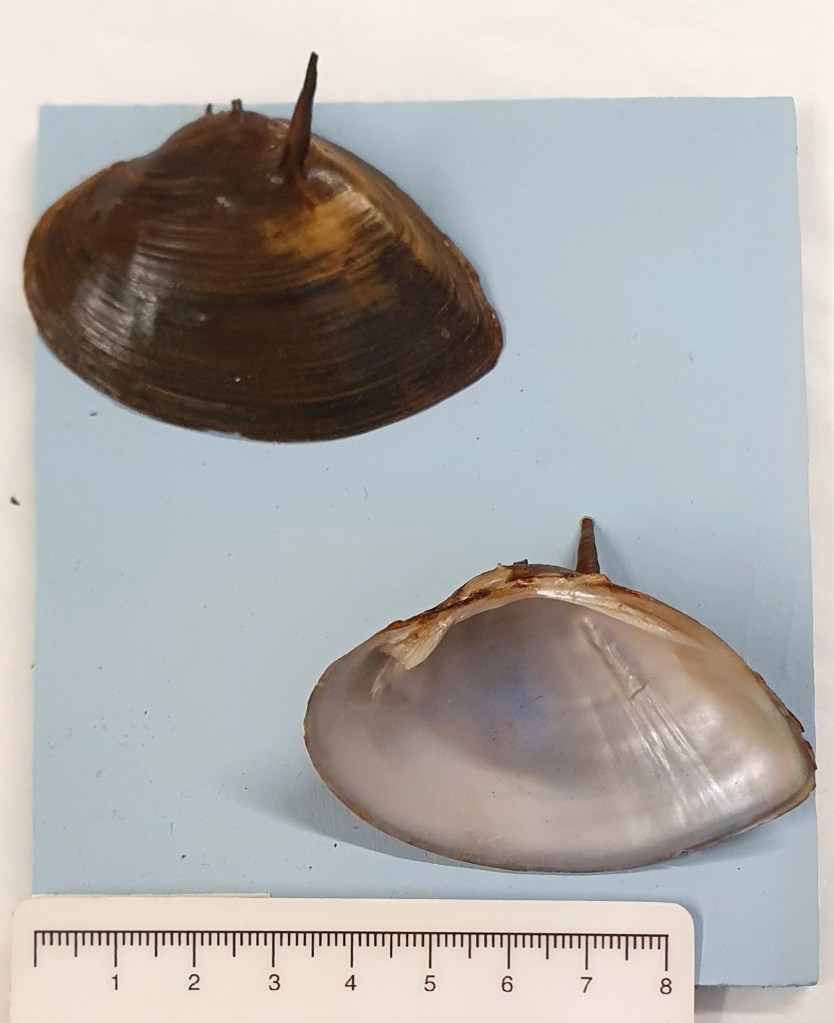
Any idea what this shell is from? As ever, you can leave your observations, questions and suggestions in the comments box below – I’ll do my best to respond, but I apologise in advance if I don’t get a chance. Have fun!
 Zygoma