Friday mystery object #326 answer

Last week I gave you this dissected mandible to have a go at identifying:

20180322_162222-01.jpeg

I thought it might be fun to get a poetic response and I wasn’t disappointed. There were some great efforts and I thoroughly enjoyed unpicking the clues from the verses people crafted in response. Of course, a poetic soul is only so much use in this game – you also need to work out what it is.

Bob Church was the first with a bardic response that was unambiguously on target for the identity of the mystery specimen:

Though the bone’s a disaster
There’s enough left to answer
What this rolly polly animal could be
It might sound a bit funny
But mix a turtle and bunny
And you’ll find the bowled over family

Of course, if you mix a turtle and a bunny you get something that looks like the artistic creation by John Tenniel in 1865 to illustrate Lewis Caroll’s Mock Turtle from Alice’s Adventures in Wonderland:

alice_par_john_tenniel_34

Gryphon and Mock Turtle with Alice, by John Tenniel in 1865

The animal in question is actually remarkably similar in appearance:

9-banded Armadillo by Ereenegee, 2011

9-banded Armadillo by Ereenegee, 2011

It’s the Nine-banded Armadillo, Dasypus novemcinctus Linnaeus, 1758, a decidedly odd animal that lives in South, Central and southern parts of North America.

Most mammals have well differentiated teeth, so the homogeneity of these in shape (or homodont condition) suggested that you were dealing with something a bit unusual, with simple peg-like teeth, open roots and no enamel. That makes the mandible quite distinctive, even with some missing teeth.

The one slightly confusing thing about this half a jaw is that it appears to have tooth holes (or dental alveoli) for 10 teeth (as recognised by salliereynolds, who also got the identification right), but armadillos are only meant to have eight teeth in each side of their upper and lower jaws.

I thought this difference might throw you off the Armadillo scent a bit, but clearly I was wrong. The difference in this jaw will probably be because it comes from a young animal which still has milk teeth (or the alveoli for them) that aren’t all replaced by the adult teeth.

These insectivorous armoured animals are unusual in a variety of ways beyond their dental idiosyncrasies. They have imbricated bony nodules or plates embedded in their skin (or osteoderms) that forms a tough armour:
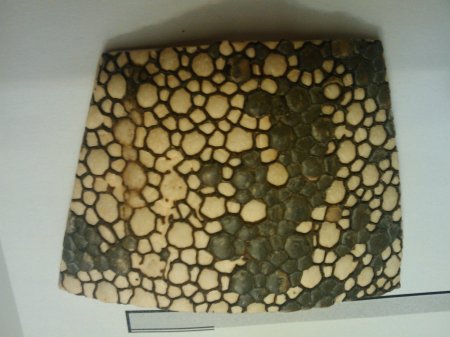
mysob3a

Dorsal view

mysob3b

Ventral view (width ~5cm)

They also consistently give birth to four offspring every time, originating from a single egg that splits into four. So every Nine-banded Armadillo has three identical siblings. I think this fact alone qualifies them as one of the weirder animals out there.

More mysteries next week!


*Juliette Kings may have got in with the first identification, with reference to the Armadillo’s habit of jumping straight up in the air when alarmed and occasionally screaming, but it sounded a bit more like she was suggesting Goat.


Friday mystery object #326

Yesterday I was doing some work in the gallery of the Dead Zoo and found a specimen that needs a little light repair work to stick teeth back into sockets. I thought it might make an interesting object for you to have a go at identifying:

20180322_162222-01.jpeg

Any idea what this piece of mandible might belong to? It’s probably a bit too easy for some of the mystery object veterans, so please keep your suggestions cryptic and, if you’re in the mood, poetic.

Have fun!

Atacama ‘alien’ (not an alien) revisited

You may (or probably may not) remember back in 2013 I got annoyed by the sensationalist reporting around some diminutive human remains found in the Atacama desert which were hyped by some to be evidence of alien life, and by others as an example of an extreme form of dwarfism. The apparent age of the individual was suggested to be 8 years based on bone density and fusion as assessed by a paediatrician.

Atacama Humanoid © 2013 Sirius Disclosure

Atacama Humanoid © 2013 Sirius Disclosure

In light of this I wrote an analysis of the specimen pointing out that in the features suggested it was a human foetus, probably aborted, exhibiting features altered by taphonomic processes (things that happen between death, burial and discovery) that apparently increased bone density and appearance of fusion, as has been noted in an infant Egyptian mummy, where bone fusion suggested an age between 7 and 10 years, but the height and dentition suggested an age between 14 months and two years (huge thanks to rlabanti for tracking down this archived copy of the paper, as I forgot the reference and the old link died).

You probably wouldn’t believe how many angry comments I received from conspiracy theorists for challenging the idea that the specimen was an alien. Actually, you probably would if you know your memes:

9148130

Aliens aside, the authors of the initial study have been doing more work and have come to the conclusion that the specimen represents a preterm infant with an interesting suite of genetic anomalies that may account for the features seen. I’ve seen the paper and the genetic analysis looks pretty reasonable (at least as far as I am able to assess), but there is still a gaping hole in the taphonomic analysis – in that there is none.

I still consider this to be a problem, because you can’t understand phenotypic (what an individual looks like) abnormalities using genetics in isolation, especially when you know without doubt that there have been post mortem processes taking place. However, as interpretation of the specimen has become less sensational, I find myself less concerned by the omission – although it remains significant. We now know from the new analysis that the Ata foetus was female and had a genetic profile suggesting some input from a variety of geographical locations, but with a predominantly Chilean genome. This information humanises Ata and changes the tone of the discussion.

Rather than my suggestion of deliberate abortion – which was based on an initial mistake regarding damage to the skull which was post mortem rather than a cause of death – it’s more likely that the mutations cited as likely causes of genetic disorders contributed to spontaneous abortion (miscarriage). This is a deeply distressing, yet unfortunately common situation when there are developmental issues with a foetus. On a human level, it means that someone lost their child – and that deserves a bit of respect and sensitivity.

Friday mystery object #325 answer(ish)

Last week I gave you the challenge of identifying this bit of bone found in a rockpool in Kimmeridge by 7 year old Annie:

mystery325a

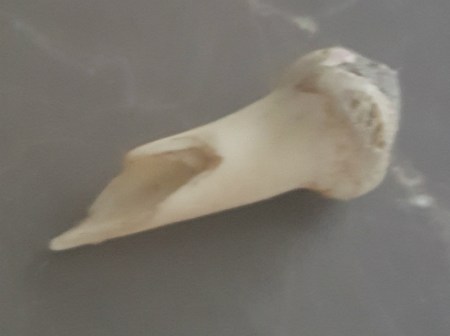
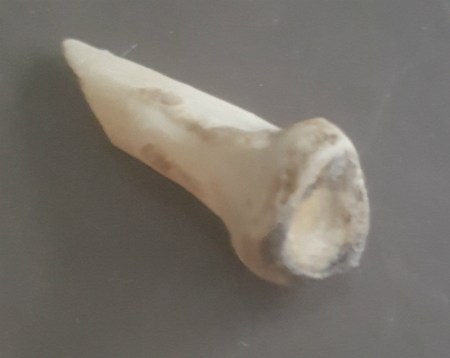
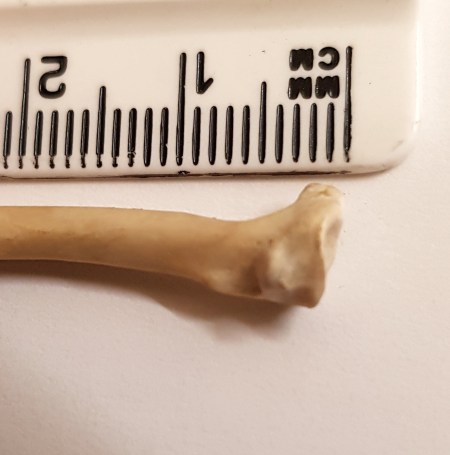
It’s not the easiest item to identify for a variety of reasons. First of all it’s broken, only showing one end and probably missing quite a lot of the element. Next, the images don’t show all of the angles you might want to see and because the object is small the images aren’t as clear as you might like.

However, there are a few angles visible (see below) and there is a scale, so the main requirements to get an approximate identification are in place. I say approximate, because with something like this I think you really need the object in your hand where you can compare it to other material in detail if you want to make a confident identification.

Excuses aside, let’s take a look and see what it might be…

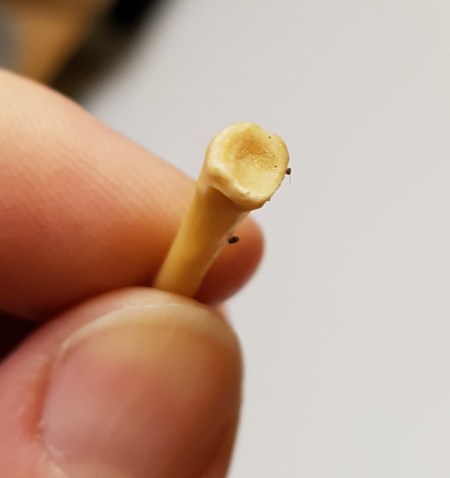
The first thing to note is that the bone is hollow with thin walls. This rules out fish, reptiles, amphibians and mammals (including humans jennifermacaire) – leaving birds.

Weathered mammal bones may have a void in the bone where the marrow would have been, but the cortex (outside layer) will be thicker and near the articular surface it tends to be quite solid.

mystery325c

Hollow bone = bird (usually)

Next, the articular surface of the bone is concave, which palfreyman1414 picked up on:

As far as I recall (mentally running through images in my head) both ends of the proximal limb bones in tetrapods have convex ends?

This is accurate, but while the proximal (near end) of the limb bones are convex, the more distal (far end) limb bones tend to have concave ends, so that helps narrow down what this bony element might be.

mystery325b

Concave articulation

For me the give-away here is the fact that there’s no ridge within the concavity of the articular surface, which means that it will allow movement in several directions – something that the bones of bird feet don’t really need, which is why bird lower legs,  feet and toes have a raised ridge inside the articular surface that corresponds with a groove in the other surface, keeping the articulation of the joint tightly constrained.

20180315_143049-01.jpeg

Articulation of Shag phalanx showing raised ridge

However, bird wing need to make a wider range of motion (at least in some species), so the mystery object is most likely the distal end of a bird radius (the ulna tends to have a hook at the distal end). This is the conclusion that Wouter van Gestel and DrewM also came to (joe vans should’ve stuck to his guns).

20180315_143712-01.jpeg

Distal articulation if duck radius

Identifying the species of bird is a lot more complicated. The size suggests a pretty big bird, which narrows it down and the locality in which it was found makes some species more likely than others. I took a look at the radius of some species that are commonly found on the coast, like Guillemot, Herring Gull, Duck, Cormorant/Shag and Gannet, Skimmer, Pigeon and I also checked out Chicken, since their bones are probably the most commonly occurring on the planet.

20180315_142205-01.jpeg

Gannet radius with some distinctive structure around the articulation

Many of the species I checked had quite a distinctive structure around the distal radius articulation, but the gulls, ducks and chickens that I looked at had fairly unremarkable distal radius articulations, making it hard to definitively decide what the mystery object is based on the images.

20180316_072154.jpg

Herring Gull radius

20180315_143308-01.jpeg

Chicken radius


So with that somewhat disappointing conclusion I admit partial defeat, but I can say that it’s not from a Cormorant, Shag, Gannet, Pigeon or Guillemot. Sorry I can’t be more specific Annie!

Unfortunately that’s just how the identification game works sometimes… we’ll try again with something new next week!

Friday mystery object #325

This week I have a genuine mystery object for you passed on from my NatSCA colleague Holly, that was found in a rockpool in Kimmeridge by 7 year old Annie when she was out fossil hunting on the beach:

mystery325amystery325bmystery325c

Any idea what this object could possibly be?

I don’t think there’s any need for cryptic clues this time, as it’s a proper challenge and I’d love to hear what you think it is and what it’s from. Have fun!

Friday mystery object #324 answer

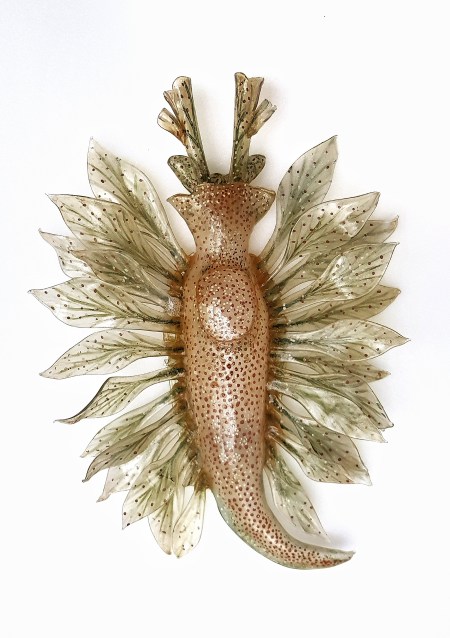
Last Friday I gave you this rather beautiful object to have a go at identifying:

mystery324

I thought it might prove fairly easy for some of you and I wasn’t disappointed. Both in the comments here and on social media there were lots of you who managed to work out what this is, largely from images or illustrations of the model that could be tracked down online.

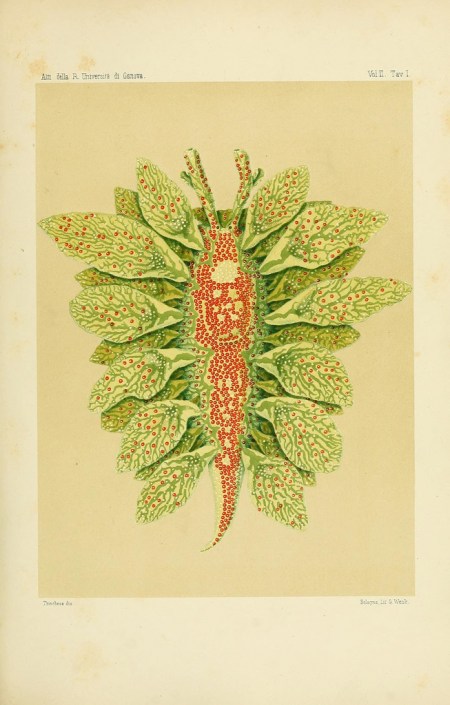
This is a glass model of a sea-slug made by the Blaschka father-and-son team of lampworkers, who were based in Dresden in the second half of the 19th Century. They made a huge number and variety of models of marine organisms, based on illustrations they found in a variety of scientific publications, which they adapted to enable reproductions in glass.

Beccaria tricolor by Leopold Blaschka (between 1863-1886). From the collection of the Corning Museum of Glass and Digitized by Boston Photo Imaging May 2011

Design illustration of Beccaria tricolor by Leopold Blaschka. From the collection of the Corning Museum of Glass and Digitized by Boston Photo Imaging May 2011


Caliphylla mediterranea by S. Trinchese in Æolididae e famiglie affini del porto di Genova, Pt.1 (c.1877-1879)

Illustration of Caliphylla mediterranea by S. Trinchese in Æolididae e famiglie affini del porto di Genova, Pt.1 (c.1877-1879). Image from Harvard University, MCZ, Ernst Mayr Library, via Biodiversity Heritage Library

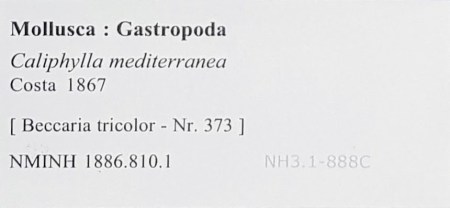
This particular specimen has the number 373 on its label, which corresponds with the number on the Blaschka design illustration above, so we can be confident that the design is for this model.

20180222_105117

Label for the specimen – note the National Museum of Ireland – Natural History (NMINH) number which starts with the year the specimen was acquired. This specimen arrived in August 1886 and cost the fairly modest sum of 3d (for  some context, an average UK farm labourer’s weekly wage in 1886 was 13s 4d*,  which would be enough to buy 53 of these models).

I should probably say the design is for this type of model, since the Blaschkas produced multiple versions of each design. These sold all around the world to museums and universities, who ordered them from a catalogue to be used in display and teaching in lieu of real specimens, which would often look like nothing more than tiny grey lumps once preserved in alcohol.

To give you an idea of what these creatures look like alive, here’s an image of an undetermined species of Caliphylla

Caliphylla sp. from Réunion, by Nathalie Rodrigues, 2015

Caliphylla sp. from Réunion, by Nathalie Rodrigues, 2015

As you might imagine, as soon as you take one of these animals out of water their complex frills start to stick together like a piece of damp fancy lettuce and it becomes hard to see their leafy structure.

And they really are leafy, because Calliphyla is one of the solar-powered Sacoglossa sea-slugs that steal chloroplasts from algae, which they then store in their bodies and can use to obtain energy from the sun. So all those leafy bits are a result of convergent evolution with plants, providing a large surface area for light to reach the chlorophyll. This means they also end up being well camouflaged against predators, although they may get nibbled by the occasional confused herbivore.

* British Labour Statistics: Historical Abstract 1886-1968 (Department of Employment and Productivity, 1971)