Friday mystery object #292

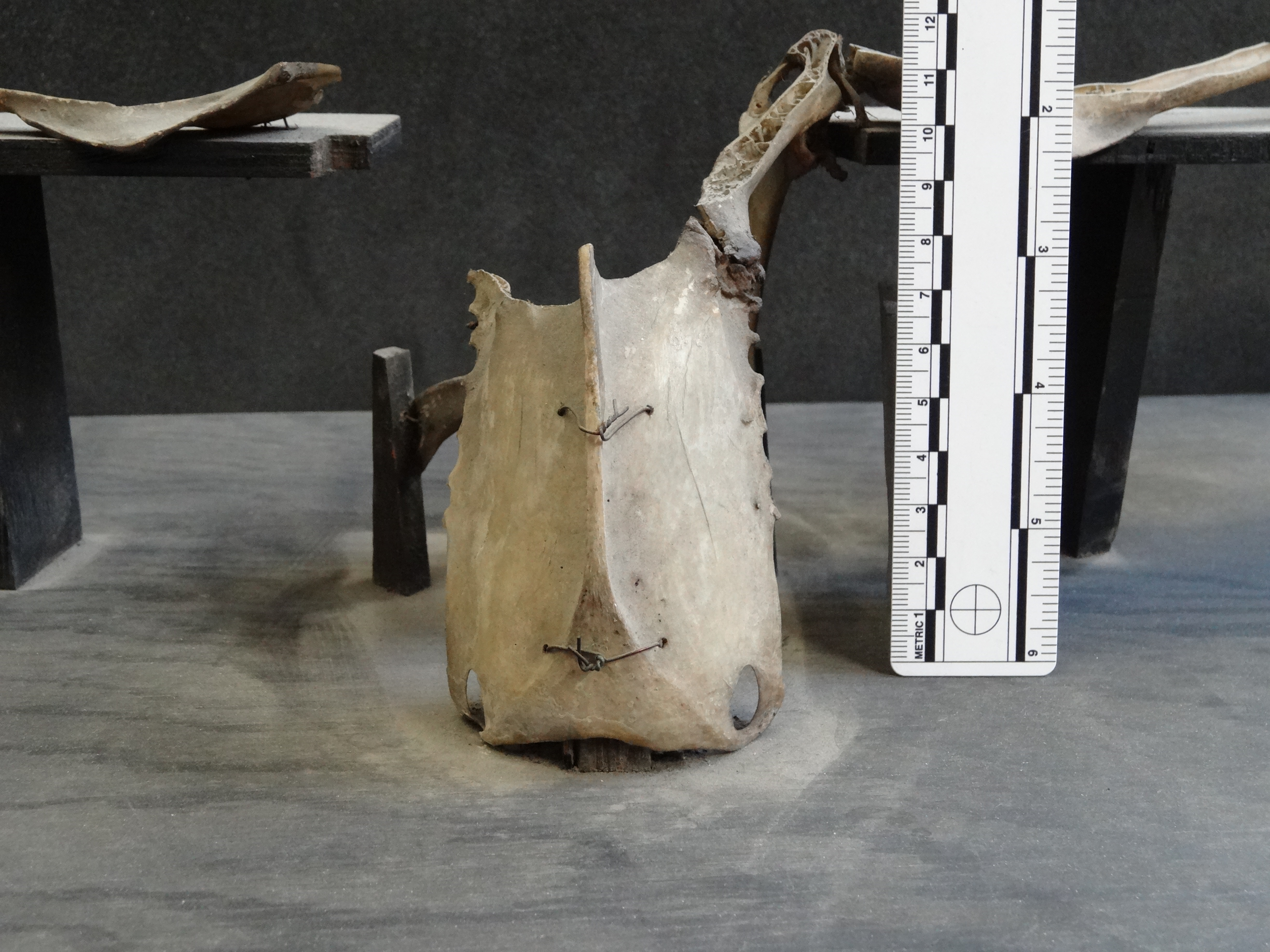
This week I have my last mystery object from the Grant Museum of Zoology, since I am starting my new job as Assistant Keeper of Natural History at the National Museum of Ireland next week. However, there is one specimen that’s been getting on my nerves the whole time I’ve worked at the Grant, as it says on its label that it’s from an Albatross, but I simply don’t believe it. Can you help me work out what this rather dusty specimen actually comes from?:

dsc06030No need for cryptic clues I think, since it’s probably going to be a little bit of a challenge and some discussion seems likely – which will be easier if we all know we’re talking about the same thing.

Have fun with this one!

Friday mystery object #291 answer

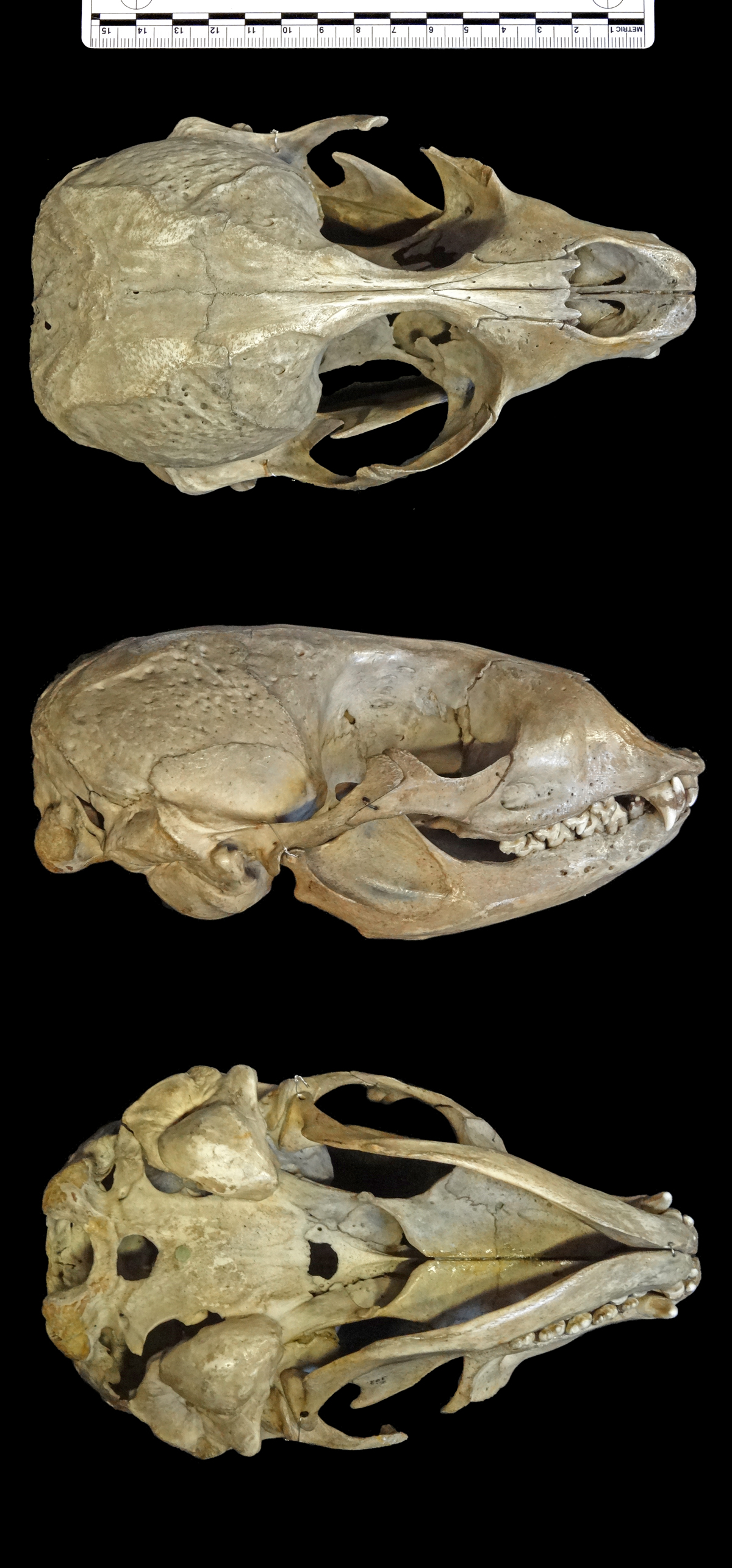
Last week I gave you this skull from the Grant Museum of Zoology to identify:
mystery291

I thought this would be a fairly easy one and so I wasn’t surprised when Chris was straight in with a correct identification, in a suitably cryptic manner of course.

The huge open sinuses inside the orbit and openings around the auditory bullae (as spotted by palfreyman1414) immediately suggest that this is an animal that dives deep underwater, as the large openings help prevent pressure from building up inside the skull. The shape of the teeth are another giveaway that this is a fish-catching mammal in the Order Carnivora. It is of course a seal.

But what kind of seal? There are 33 species of pinniped, so there are a few options, although the large and distinctive species like Walruses can be ruled out for obvious reasons. In this size range and with multicusped teeth like these we’re looking at one of the true seals (the Phocidae) at the medium to small end of the size range.

When you start looking at the skulls of seals in this range, you need to look  closely. It lacks the flat top of the head and steeply sloping profiles following the nares of a Grey Seal, plus the interorbital distance (the distance between the eyes) is much smaller.

It lacks the inflated nasal region of the cold water Bearded Seal, Ribbon Seal, Ringed Seal and Harp Seal, which need well developed nasal turbinates to help warm the air they breathe in. It also lacks the deflection of the zygomatic below the orbit that is seen in the smaller species like the Caspian and Baikal Seals.

Overall the morphology is most similar to either the Spotted Seal or Harbour Seal, but picking between the two is tricky, especially since the Harbour Seal has around five subspecies that vary somewhat in size and shape of things like the auditory bullae. There is a list of characters that can be used to distinguish between the skulls of the two species by John J. Burns in the Encyclopedia of Marine Mammals. Using that as a guide I think this is a Harbour Seal Phoca vitulina Linnaeus, 1758.

Thanks to everyone who had a go at identifying this – I hope you had fun with it!

Friday mystery object #291

Today’s mystery object is a fairly straightforward one from the Grant Museum, although I’m hoping that we’ll get a species identification for the specimen. Any idea what this is?

mystery291

As usual, a nice cryptic clue would be appreciated so that we can have some fun and not give away what it is too soon for those who are developing their identification skills. Enjoy!

Friday mystery object #290 answer

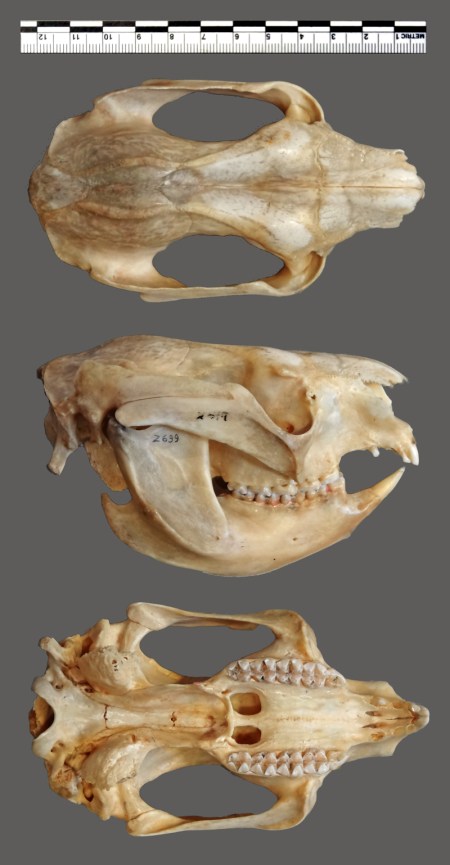
Last week I gave you this skull from the Grant Museum of Zoology to identify:

mystery290

I thought it was a fairly easy one and, from the slew of correct cryptic answers, I think many of you spotted what it was quite quickly. However, if you’re not familiar with this sort of abstract critter, you probably found it more of a challenge.

In terms of physical characteristics, the vacuities (holes) in the palate are a sure indicator that this is a marsupial – as Allen Hazen pointed out. He also recognised that it has a broad head and short rostrum (nose) for a marsupial, narrowing down the possibilities – particularly for an animal of this size – Wombats or Koalas.

For me these two main options can be quickly distinguished by looking at the zygomatic arch, which is high at the rear and runs downward in the Koala, but which  runs horizontally in Wombats. The skull of the Koala is also very square and flat on top, whereas Wombats have a more domed braincase.

Mystery 116

Many of the cryptic clues referred to bears, since these animals are often called a Koala Bear for some bizarre reason – I must say that I’ve never seen much similarity between a Koala and a Bear, although once upon a time people thought Red Pandas were bearlike as well and I suppose the two species have some fuzzy, tree climbing and specialist-diet type similarities.
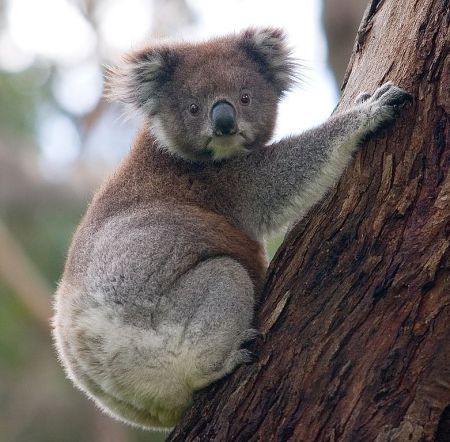
Koala climbing a tree. Photo by DAVID ILIFF. License: CC-BY-SA 3.0

Koala climbing a tree. Photo by DAVID ILIFF. License: CC-BY-SA 3.0

So well done to everyone who managed to identify the specimen and provide some great cryptic clues, especially Chris who was first on the scene with a reference to bears and the obscure ‘pap’ which is the first solid food of Koala joeys, which is partially broken down eucalyptus released from the caecum of the mother.

A special mention for palfreyman1414 who was tenacious is working out the mystery and who also managed to provide a reference to a story I’d not heard before about a man in New Zealand who reported an unlikely incident to Police and got in some trouble for it.