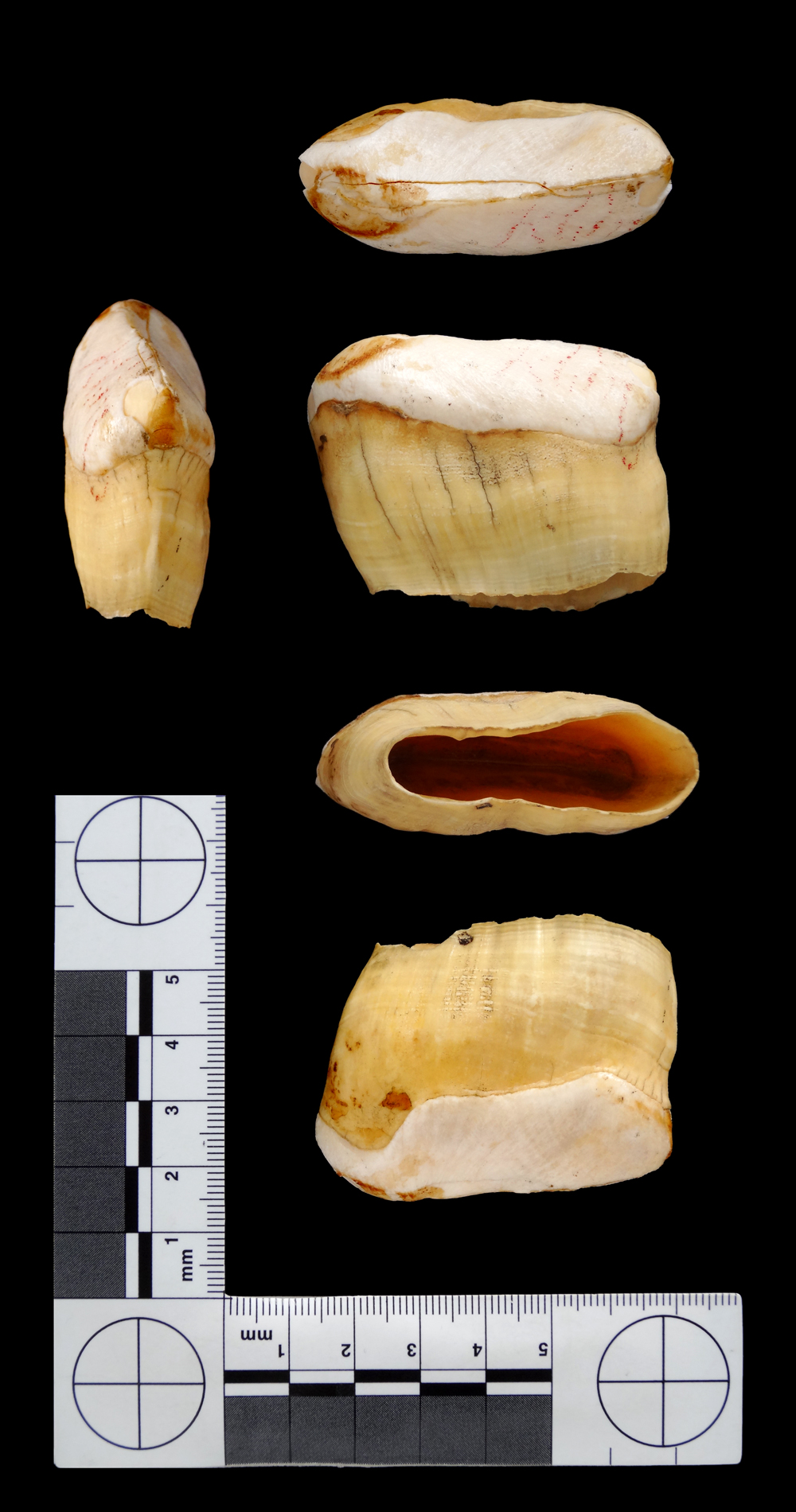
Last Friday I gave you this unusual tooth to identify:
It had me a bit stumped, as I couldn’t think of many things big enough for a tooth this size and I could think of even fewer with a tooth this shape.
My first thought was one of the smaller toothed whales, since this would be in the right size range and the open root is similar to what you see in a Sperm Whale:
But the low and wide shape was all wrong for most of the whale teeth I can think of, except perhaps for the rather odd tusks found in the mandibles of some species of beaked whale.
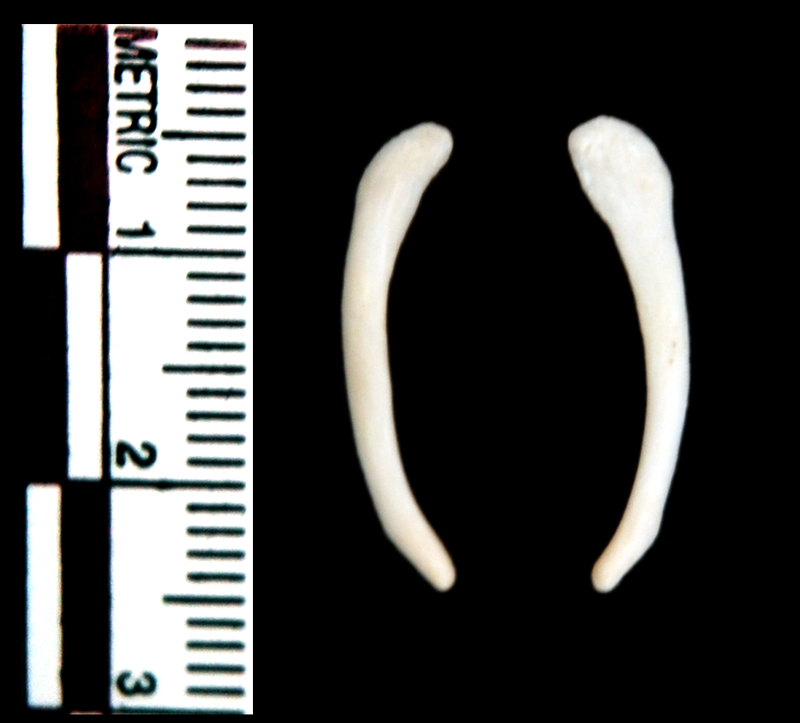
This Friday I have something for you to identify that has been puzzling me for a while. It looks very distinctive, but I can’t narrow down what it is, so I’d really appreciate your thoughts.
Can you work out what this is?
As usual you can put your suggestions and thoughts below and I’ll do my best to reply. Feel free to ask questions, but at the moment I can only provide answers based on the physical object because I have no idea where it came from or when we got it. It’s a real puzzle!
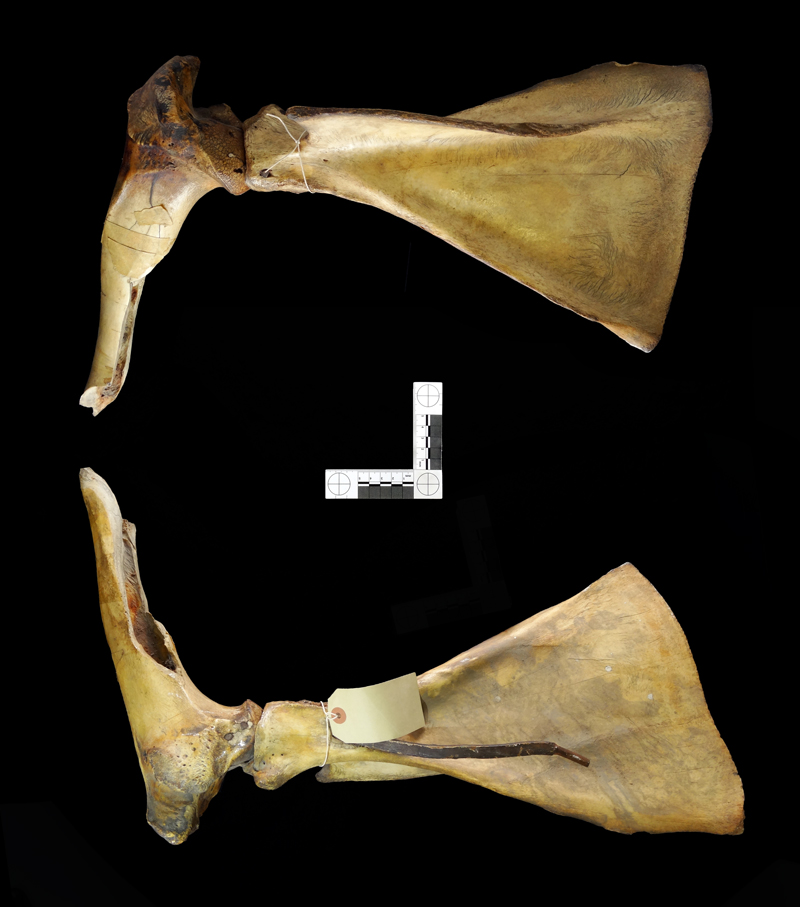
Last Friday I gave you this rather large scapula that I discovered in a crate in the Horniman’s stores to identify:
It wasn’t an easy one, since there are relatively few distinctive features on a scapula compared to something like a skull.
Jake has talked about scapulae on his blog before and that provides a good place to see that this specimen is most likely from an ungulate – but an ungulate much bigger than a Red Deer. This led to suggestions for Cow, Horse, Aurochs and one of the larger species of deer.
Outside the comments section on Zygoma there were also suggestions of Giraffe and Giant Irish Deer and I wondered about Camel.
All in all, there were a lot of suggestions, but none of these looked quite right when I searched for comparative material – although finding good images of scapulae online wasn’t easy. I did, however, find a useful video explaining the differences between Horse, Cow (or Ox) and Camel scapulae:
This was enough for me to rule out each of those animals, although the closest was the Cow – in particular the relative sizes of the two faces (called fossae) on either side of the raised ridge called the spine. However, the shape of the acromion (the hooked bit of the raised spine that points towards the shoulder joint) didn’t seem blunt enough for a Cow.
The size differences in the fossae turn out to be about the same in Sheep and deer as in Cow, which led me back in the direction of Jake’s deer scapulae, which seemed to most closely match the shape, if not the absolute size.
Taking the size into account I realised that this animal must stand almost twice the height of a Red Deer, which narrows it down to just one modern species – the Moose or Eurasian Elk Alces alces (Linnaeus, 1758), which can stand at over 2m at the shoulder compared to the Scottish Red Deer’s (still imposing) 1.22m.
I still need to double-check my identification against a confirmed Moose scapula, but from looking at some images of Moose skeletons online it seems that the shape of both the fossae and the acromion fit well.
So a big thanks to everyone for their help in identifying this and special props to newcomer Jeanie who seems to have been spot-on about this being from a cervid. Thanks!



 Zygoma