Friday mystery object #525 answer

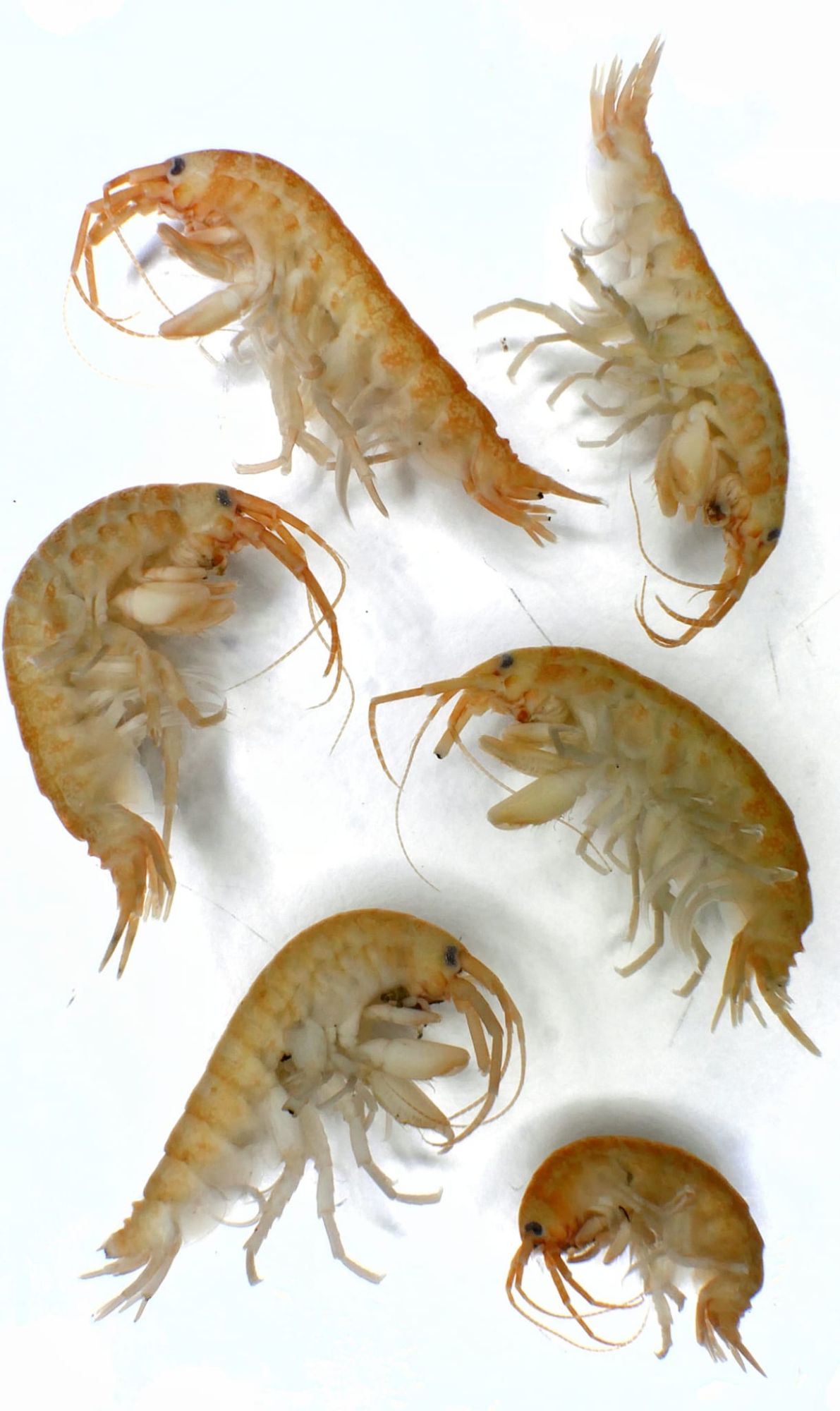
Last week I gave you these specimens that are new to the Dead Zoo to have a go at identifying:


Image taken by Jamie Maxwell, 2025

These are specimens that were lodged in the collection as part of research identifying them as a new invasive alien species to Ireland.

Adam Yates and Chris Jervis both worked out which invasive this happens to be, and it’s a bad one. These are examples of the Demon Shrimp Dikerogammarus haemobaphes (Sowinsky, 1894).

This species is a real problem, as it’s predatory and voracious – able to predate species much larger than themselves. They are very difficult to differentiate from other amphipods, although they do have some distinguishing features that can provide an identification.

There’s some very useful information about the species on the National Biodiversity Data Centre’s Invasives.ie page, which highlights some of the features for identification and details the risk posed by the species in Ireland.

Invasive species like this can have a huge environmental impact – altering food chains, introducing diseases that related taxa may be less able to cope with, and ultimately disrupting ecosystems that are already under pressure from multiple other impacts.

Managing the introduction and spread of species like this requires vigilence – the Check Clean Dry campaign offers some useful advice on how to help stop the spread:

Well done to everyone who worked out this demonic little mystery – I hope you can avoid finding these in your area!

Friday mystery object #524 answer

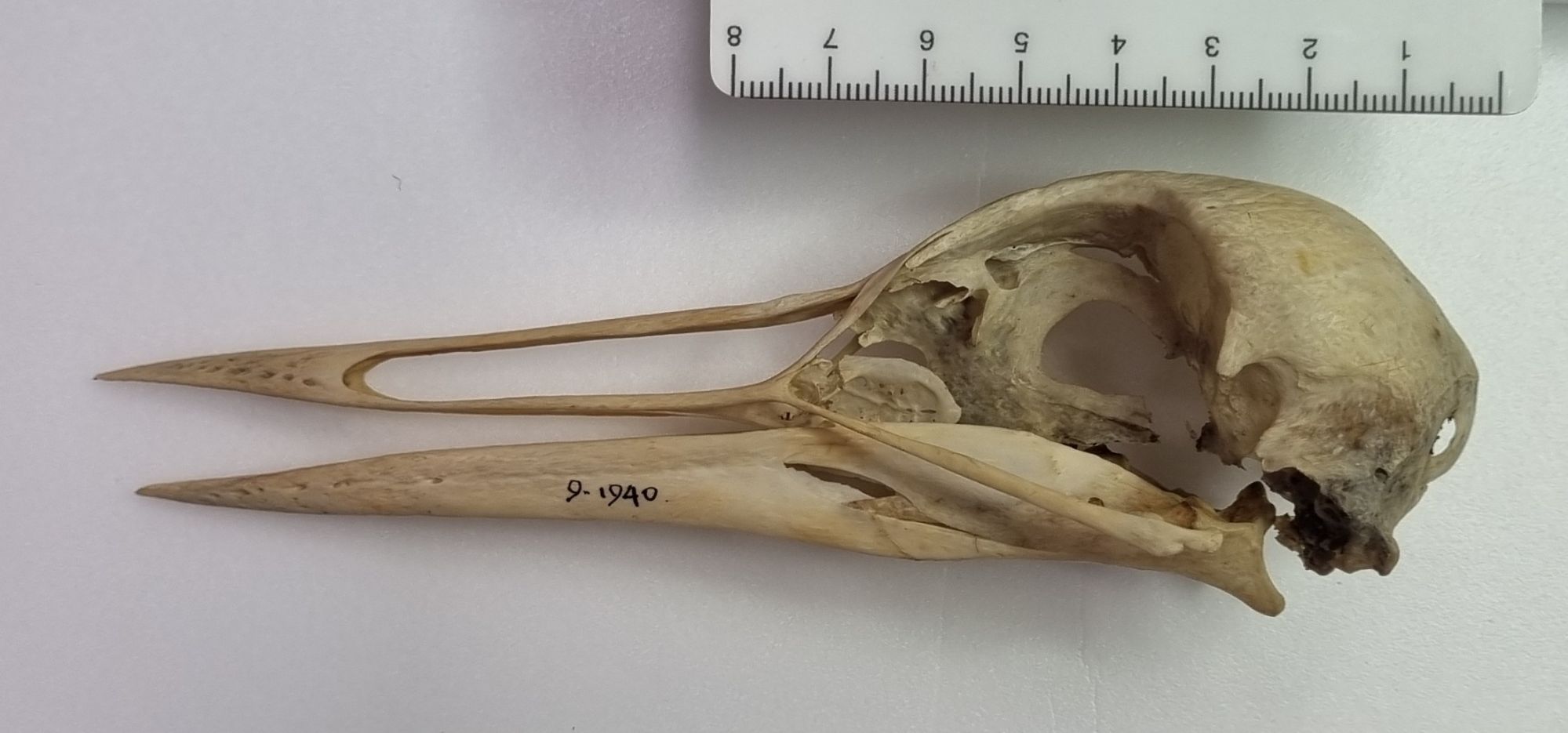
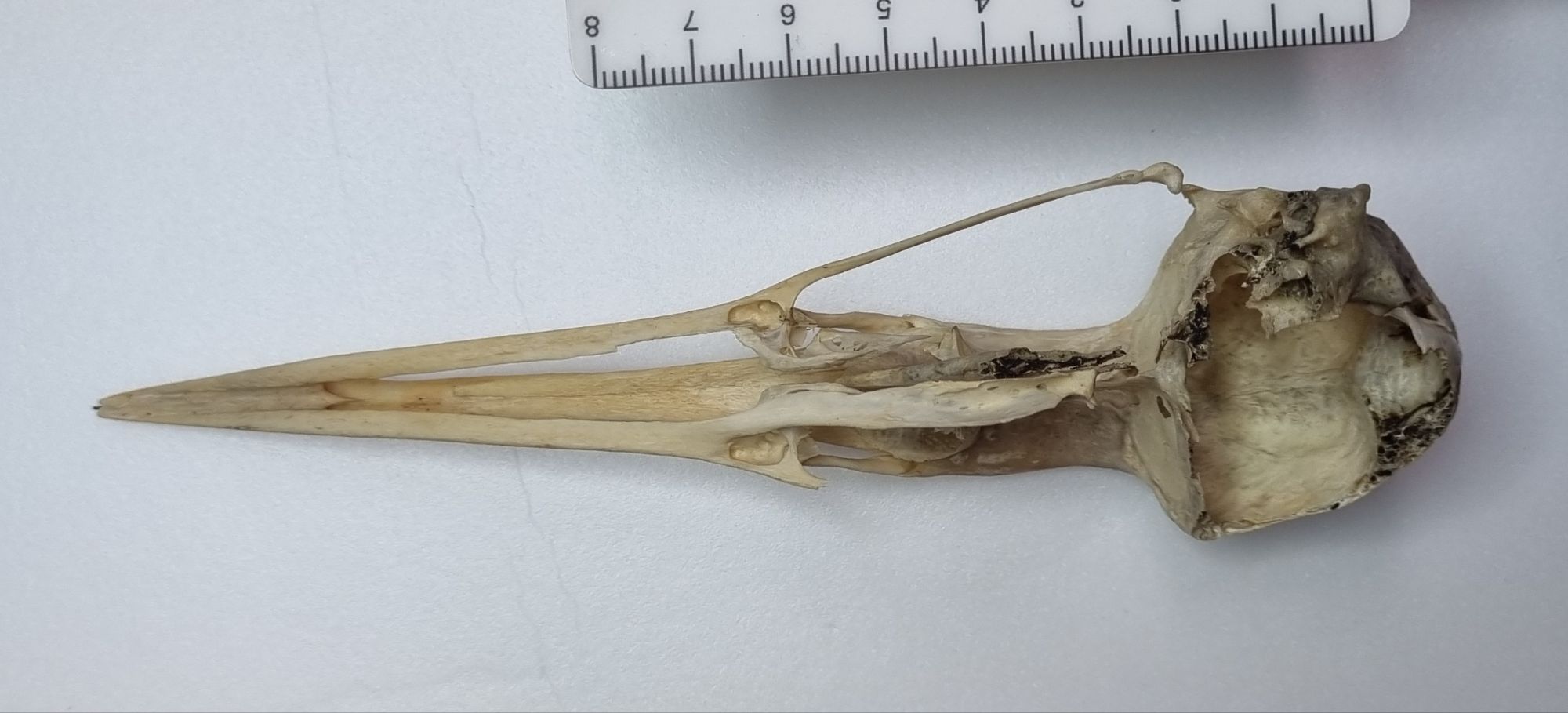
Last week I gave you this skull from the collections of the Dead Zoo to have a go at identifying:

Bird skull identification can take a bit of work, until you get your eye in on things like the bill morphology (especially without the clues provided by the keratin sheath). Resources like the excellent Skullsite.com certainly help a lot, by providing a huge range of images of different species for comparison, and with tools to help narrow down options based on skull size and bill morphology.

As it turns out, Adam Yates certainly had his eye in, and he was first to comment with a correct identification for this specimen. It’s a Common or European Crane Grus grus (Linnaeus, 1758).

I chose this specimen as it’s one that we recently put on display in the Dead Zoo Lab as part of a community curated project called Our Irish Natural History. Eight community groups involved with iCAN (the Irish Community Archive Network) contributed to the work, which was coordinated by Adriana Ballinger – a fantastic postgraduate humanities researcher who has been working with us for the past year on a project with a focus on the wider cultural context surrounding natural history collections. The community groups involved each explored a different areas of interest, illustrating and exploring some of the connections between objects and local communities.

The Common Crane offered a fascinating topic explored by the Woodlawn Heritage Group and Galway Community Archaeology, who delved into the past history of the Crane in Ireland, and its importance to Bronze Age people, also touching on their recent return, with a pair of these fantastic birds recently recorded nesting in rewetted boglands. There’s too much information for me to cover it all here, so I recommend taking a look at the work for yourself on the Galway Community Archaeology web resource about the project.

These sorts of projects, that connect our ostensibly scientific objects back into local communities through a cultural link are a fantastic way to broaden the relevance and interest in our collections. As a scientist it can be easy to focus on one aspect of an object – but every item we look after can be viewed from multiple perspectives – all of which add value and relevance.

I look forward to working on similar projects in the future, while hopefully taking the opportunity to share more of the collection here, for those of you with an interest in identification!

Friday mystery object #519 answer

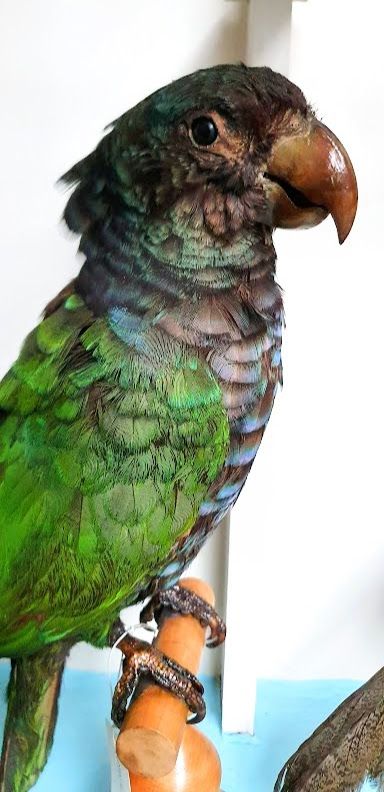
Last week I gave you a bit of tricky mystery object in the form of this colourful character:

Obviously it’s a parrot of some sort, but there are LOTS of parrots. With over 400 species to choose from, identifying one from a single image is not easy at all. Generally when it comes to parrot identification it’s very useful to know where it came from, and without that information this mystery is made even harder – but if I’d provided the locality it would have been way too easy!

I find a useful way to narrow down possible species when looking at parrots is to simply use a search engine and add descriptive terms of the colours of parts of the external anatomy. In this instance I searched for “parrot with emerald green wings, blue and purple chest” which offered up a few possible species, but it significantly narrowed down the options to work through. Of course, I did that with some awareness of colours likely being a little off.

This is a specimen that arrived in the Dead Zoo in 1902 and it’s been progressively fading due to light exposure over the last 120+ years. The purples here are muted and I suspect the blue visible on the breast is actually residual following preferential colour loss of red pigments (types of carotenoid) that would have interacted with the structural blue colour of the feather (structural colours being much more light-stable than pigments) to create a much more vivid and robust purple colour than we see today. With that in mind, it becomes much easier to work out what this species is.

This is the Dominican Amazon (or Imperial Amazon, or Sisserou) Amazona imperialis Richmond, 1899 – one of just three species of parrot from the Commonwealth of Dominica, an Island in the Carribean. Here’s an illustration of what it looks like when it’s not faded:

This species features on the flag of the Commonwealth of Dominica and sadly there are very few of these stunning birds remaining, with estimated numbers somewhere between 40 and 60 mature individuals – making it Critically Endangered.

While numbers had been declining due to habitat loss, hunting and the taking of wild birds for the pet trade, the population has been significantly impacted by severe hurricanes hitting the island – which are increasing in frequency and severity due to climate change.

Hopefully, conservation efforts and the relatively inaccessible mountaious areas of the island in which the birds live will allow them a chance to recover, but they breed slowly and the threat from hurricanes remains.

Well done to everyone who had a go at this – it really was very difficult, so props to Katenockles who came close with a suggestion of the Blue-headed Parrot. Of course, there were lots of comments that referenced the infamous Norwegian Blue, which for younger readers might be unfamiliar, so here’s the source:

Just to note, while there are no parrots known from Norway, there are some fossil examples known from Denmark – so perhaps there is a chance the Norwegian Blue actually existed – albeit 55 million years ago,

Friday mystery object #518 answer

Last week I gave you this mystery object to have a go at identifying:

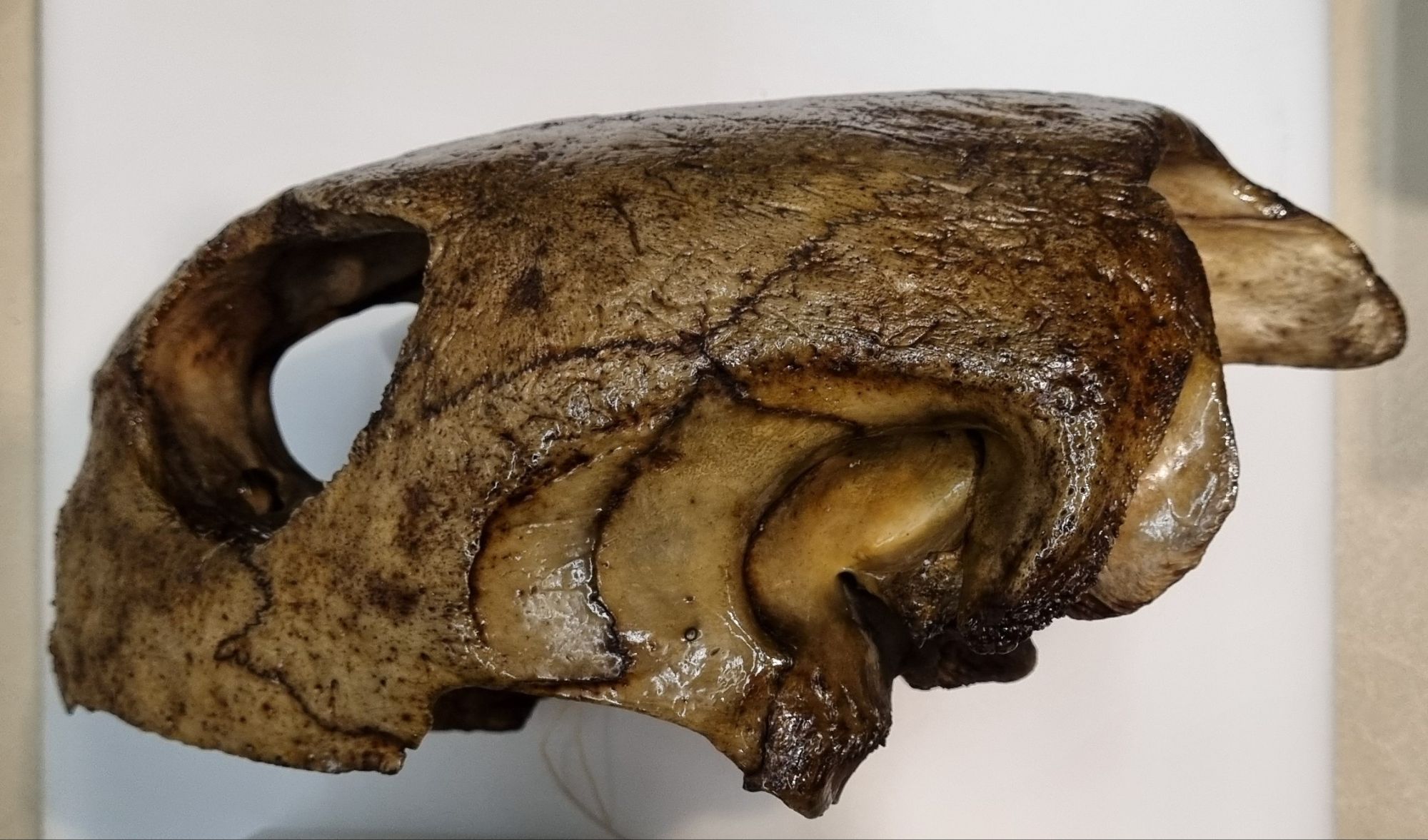
This one is fairly straightforward to get to the superfamily level – it’s one of the Sea Turtles (the Chelonioidea). However, despite there only being seven species alive today, their skulls can take a bit of careful observation to distinguish the diagnostic features that offer the clues to a species level identification.

When attempting this kind of thing, it’s always helpful to have access to a good key or guide that illustrates and describes those diagnostic features, and for me a very useful resource is The Anatomy of Sea Turtles by Jeanette Wyneken. Alas this excellent reference only covers six of the seven species, so it’s worth also taking a look at the Chatterji, Hutchinson and Jones redescription of the skull of the Australian flatback sea turtle for the sake of completeness.

In the comments on the mystery object this became something of a mix, with a variety of options being proposed. The first, from Adam Yates was actually the correct identification, but he then second-guessed himself.

In a nutshell, you can tell that this is a Green Turtle, Chelonia mydas (Linnaeus, 1758) based on the broad U-shaped curve of the upper jaw (other Sea Turtles have a more pointed bill).

There are plenty of other features as well, such as the configuration of the bones of the palate, a pair of ridges in the maxilla – which are admitedly a little hard to make out, so I’ve indicated them in red below to help you spot where to look:

Another useful feature visible from the palate is the lack of pterygoid processes, which rules out the Australian Flatback Turtle.

I also happen to know that this specimen was collected from Ascencion Island, which is slap bang in the middle of the Atlantic Ocean and is renowned as an important breeding site for Green Turtles.

So thanks to everyone for your thoughts on this one – I hope you had fun investigating, and I hope you find the references above useful if you stumble across more turtle skulls in need of identification.

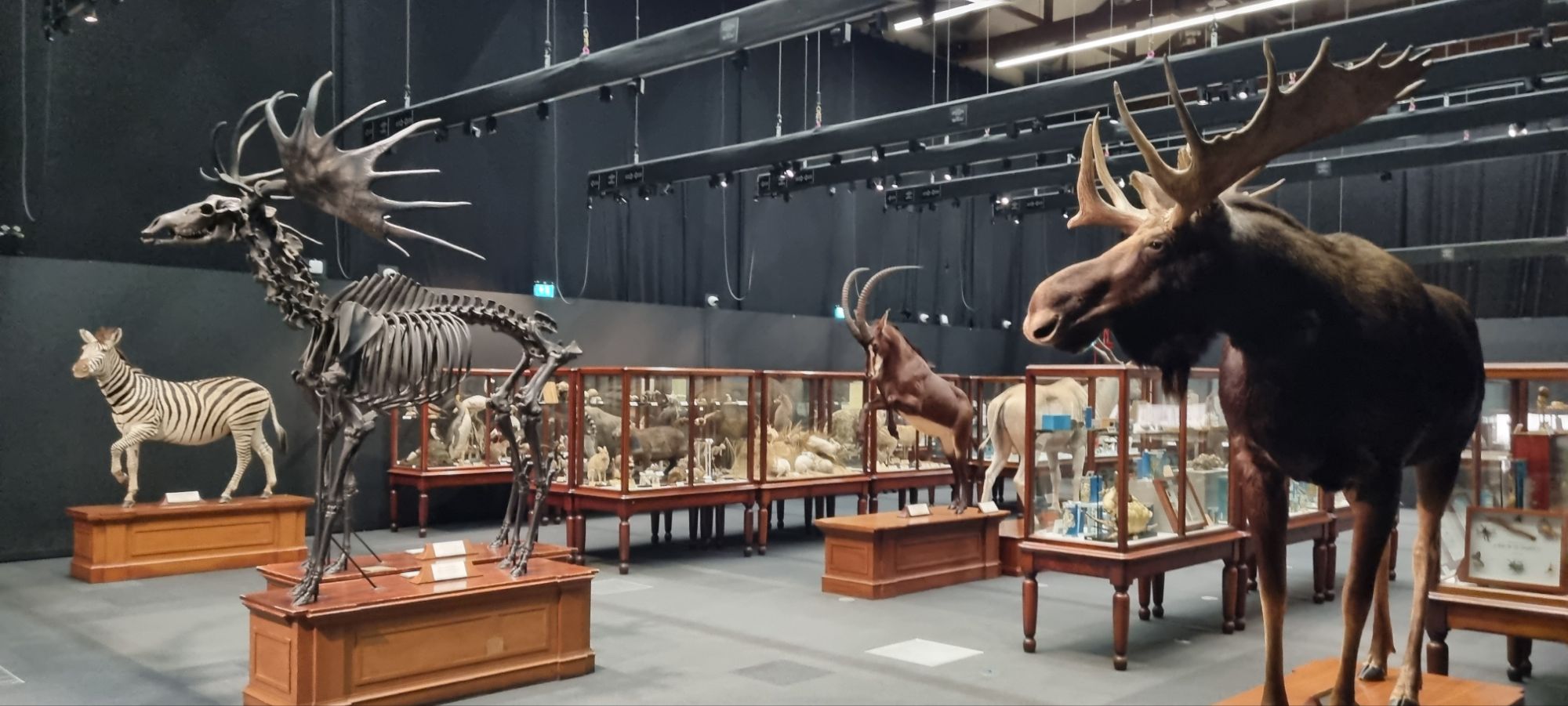
I should probably add that I picked this specimen because I spotted it during the install of some displays in the new Dead Zoo Lab, which I’ve been working on intensively for the last few weeks. This is a space where we will be displaying some of our collections, and working with collaborators and our audiences on how we’ll be using our objects in the future redisplay of the Dead Zoo when the building has been refurbished.

The Dead Zoo Lab is now open to the public, so I’ll add a photo of the space below, and you can read more about it in this article in the Irish Independent in case you’re interested. I hope you get to visit sometime – and if you do, be sure to let me know!

Friday mystery object #517 answer

Last week I gave you a close up of a specimen from the Dead Zoo to have a go at identifying:

I don’t think this proved too much of a challenge, since Chris Jarvis responded with a correct identification within the hour:

This one’s sent me into a spiral, kudyu show a bit more,. bucky?
chrisjarvise8da89e10d says: July 18, 2025 at 8:44 am

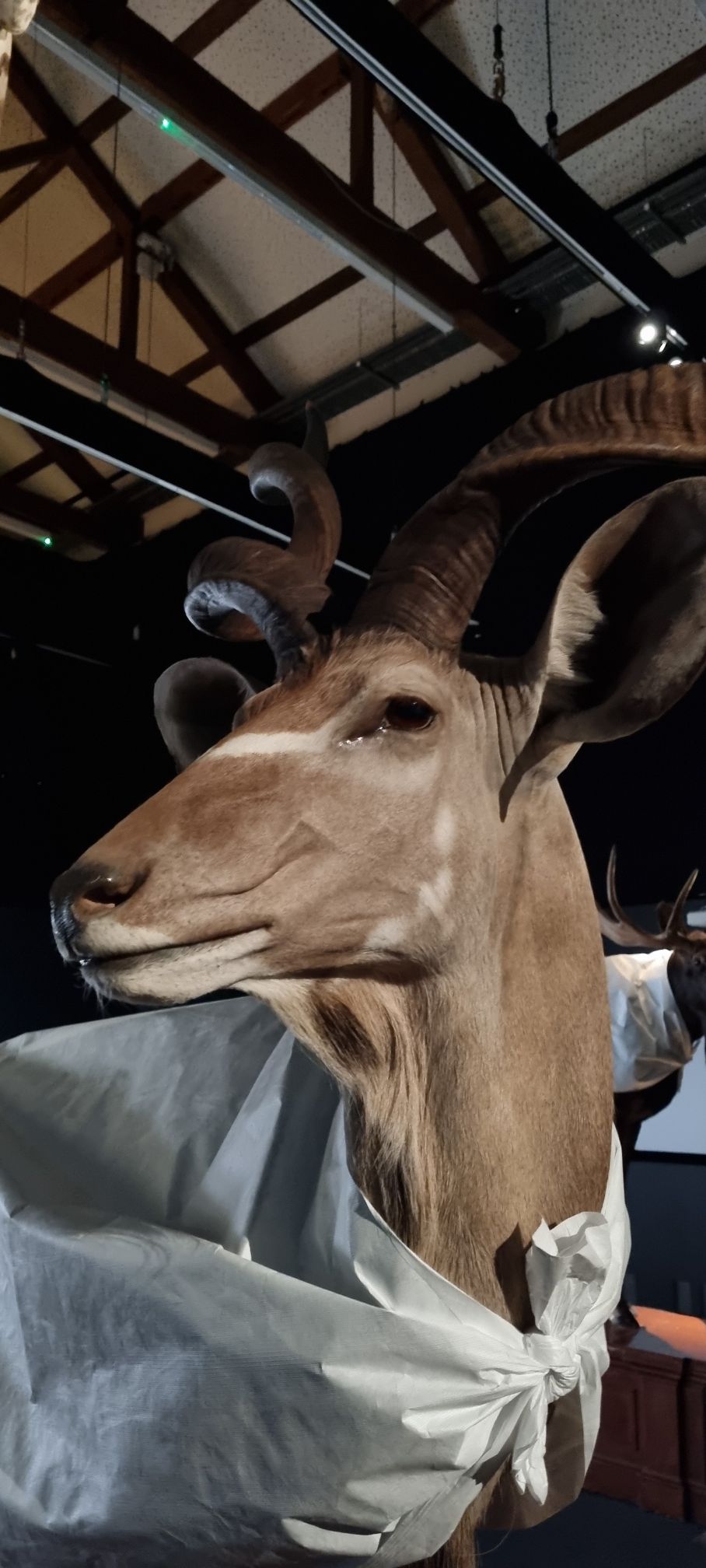
In case you missed the cryptic clues here (after all, I suspect that not everyone is as much of an antelope aficionado as Chris), this is a male Greater Kudu Tragelaphus strepsiceros (Pallas, 1766).

These handsome, large, spiral-horned antelopes have a distinctive white chevron that runs between their eyes – presumably the clue that Chris spotted to identify this specimen so quickly.

There are other species in the Genus Tragelaphus that look similar to the Greater Kudu, but they have different colouration and subtly different patterns on their faces.

I had the photo of this specimen because I’ve been working with my colleagues in the National Museum of Ireland team on getting objects ready for display at another of our Dublin sites called Collins Barracks. Obviously this is one of those objects.

The Dead Zoo has been closed since last September, while we’ve been emptying the space of collections for a major and much needed refurbishment. Of course, we want to make some of the collection available to the public while the Dead Zoo is closed, hence the work we’re doing now.

However, the display we’re working on is a bit weird – but it’s not intended to be an exhibition. I want it to be more of an iterative experiment for myself and my team to work out how we’re going to deal with redisplaying and interpreting the collections when the refurbishment works are done and we reopen the main Dead Zoo building on Merrion Street.

We’re calling the temporary display the “Dead Zoo Lab”, because of the experimental approach we plan to take. We want to involve the public in a conversation about how what we’re doing works for our audiences. I’m excited to see how we can build dialogue in this space to help inform our work over the next few years.

I am getting a bit ahead of myself though, as we still need to finish installing objects over the next week or so, before we can open the doors to the public. Once we get to that stage I’ll be sure to share some photos of the space for the Zygoma community – and I’ll be excited to hear your thoughts!

Friday mystery object #517

The last mystery object was a close-up detail of a specimen, and it proved tricky, but not impossible to identify. I thought I might try another close-up of a specimen, to see if it might yield a similarly balanced challenge for this week:

I feel like this has enough information to make an identification, but hopefully it’s not too easy.

Let me know what you think it could be in the comments box below – I hope it proves a fun challenge!

Friday mystery object #511 answer

Last week I gave you a particularly mean mystery object to try to identify:

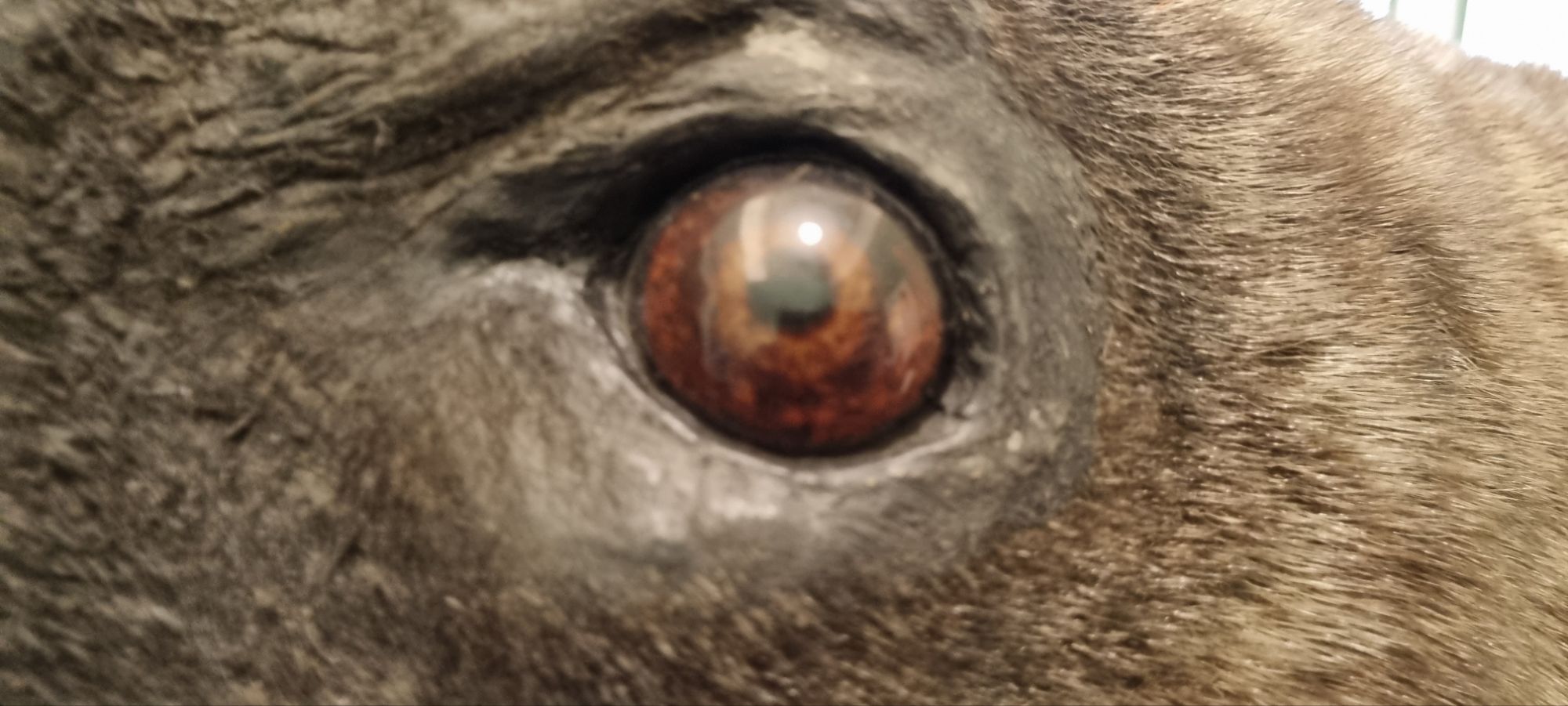
This would be difficult if it was an accurate representation of the eye of the living animal, but I suspect it’s pretty much impossible (unless you’re familiar with this specimen), considering how different this eye appears from the eye of the actual animal. This is something that katedmonson spotted and commented on:

The problem I can “see” with this eye is that we are relying on the skill of the taxidermist to have correctly chosen the exact correct glass eye: pupil, color, shape of the iris, for the animal is is supposed to represent. And did the preparer accidentally strip the eye of any eyelashes, (sus scrofa as many have indicated) or does this animal not have any. Which is fairly unusual as far as ‘eyes’ go. Unless it was cetacean, which the fur would indicate it is not. Not seal either.

Kat made the point I was planning on making when I chose this mystery object – the eyes of taxidermy specimens are a choice made by the taxidermist who does the preparation, and that choice might be accurate – or it might not be. However, there is one point Kat makes that isn’t quite on point – this is in fact a type of seal:

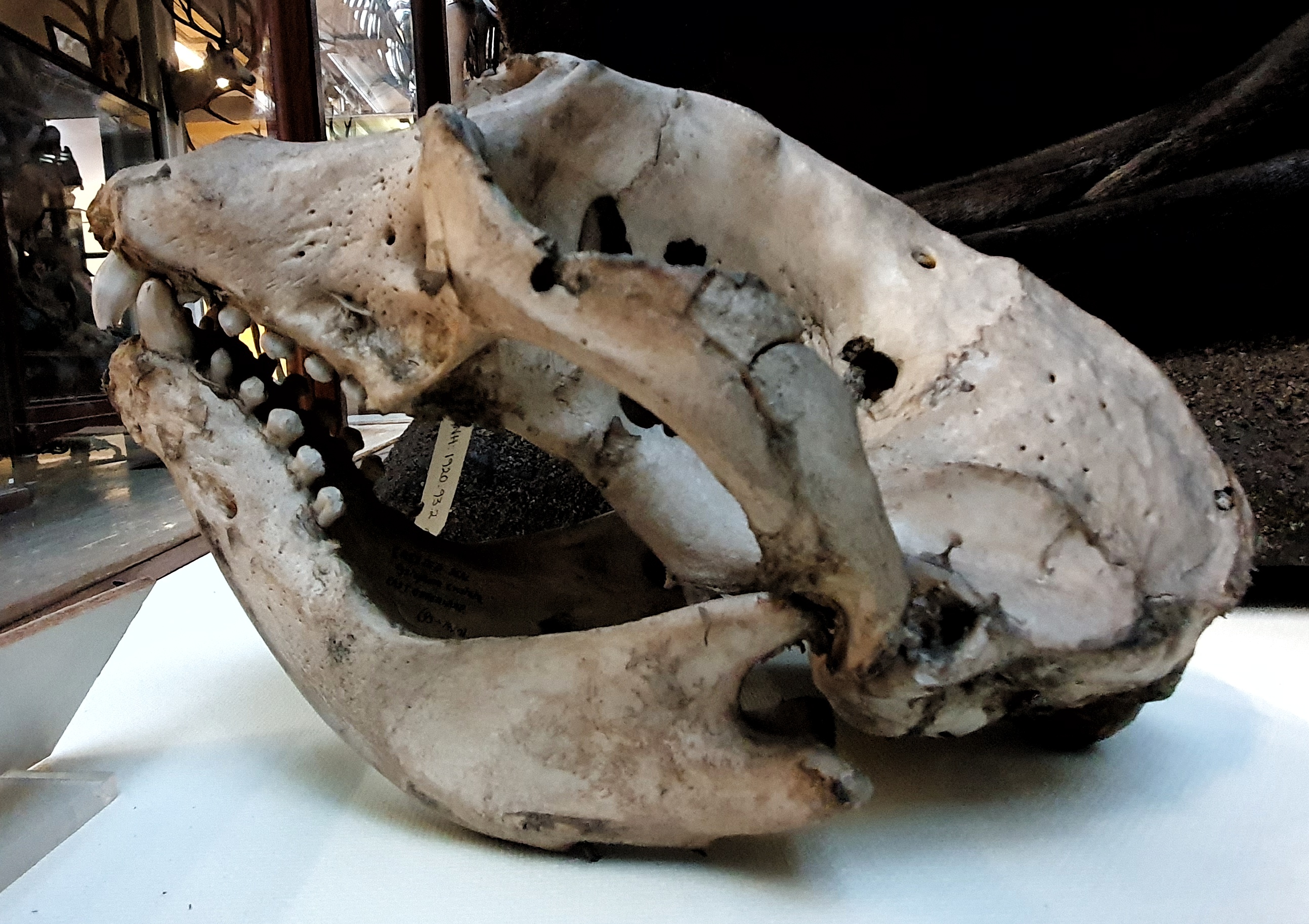
This is a Hooded Seal Cystophora cristata (Erxleben, 1777) – a species that I have talked about before on the blog, in fact I think the specimen I used in that instance may have been the skull that came from this taxidermy example:

I should probably offer my apologies at this point, for going with such a difficult mystery object, but sometimes it’s nice to pose a puzzle that even the crack community of commenters on the blog have trouble with. Thanks to you all for your thoughts on this – I hope the search for an answer wasn’t too frustrating!

Friday mystery object #509 answer

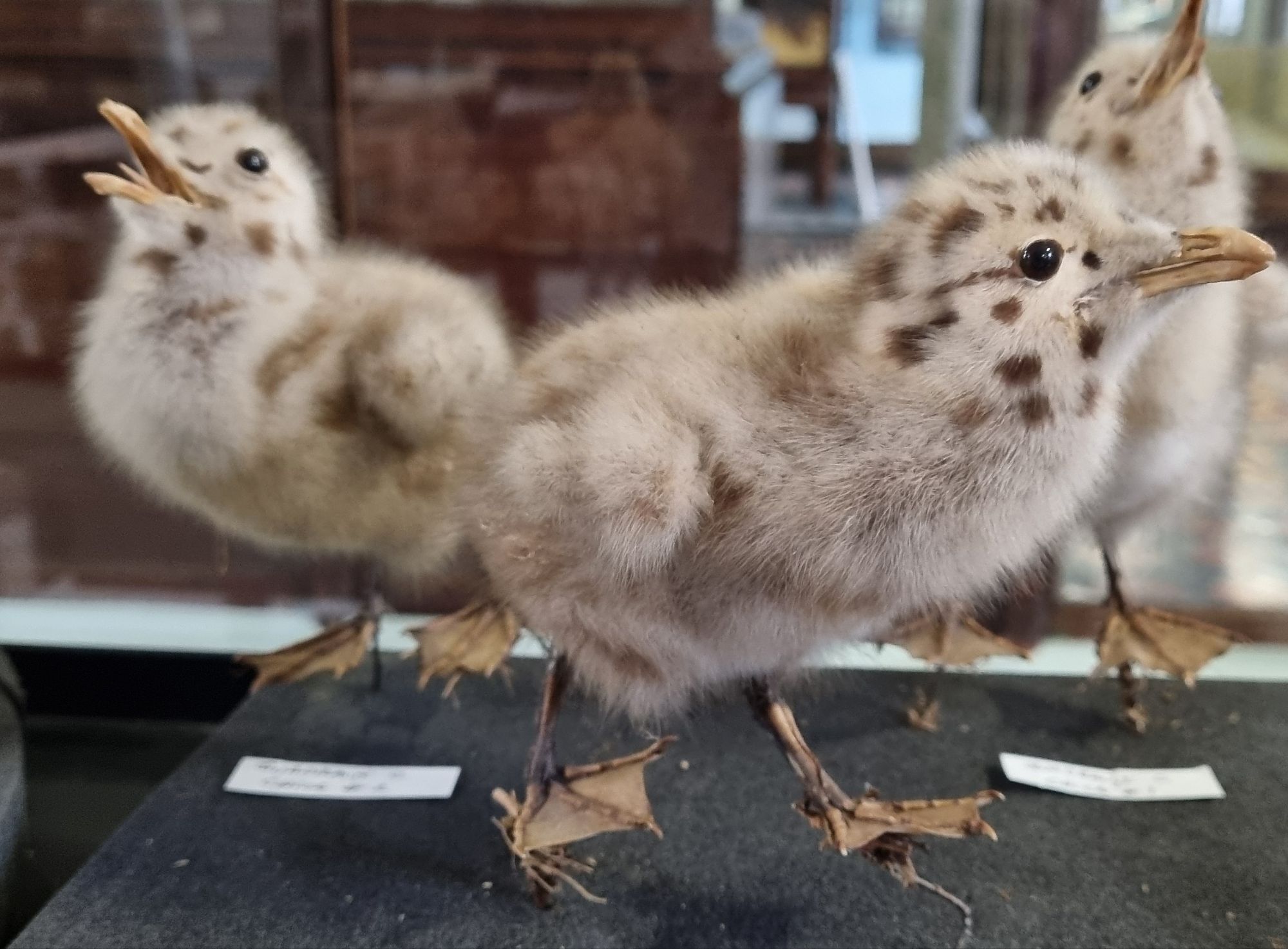
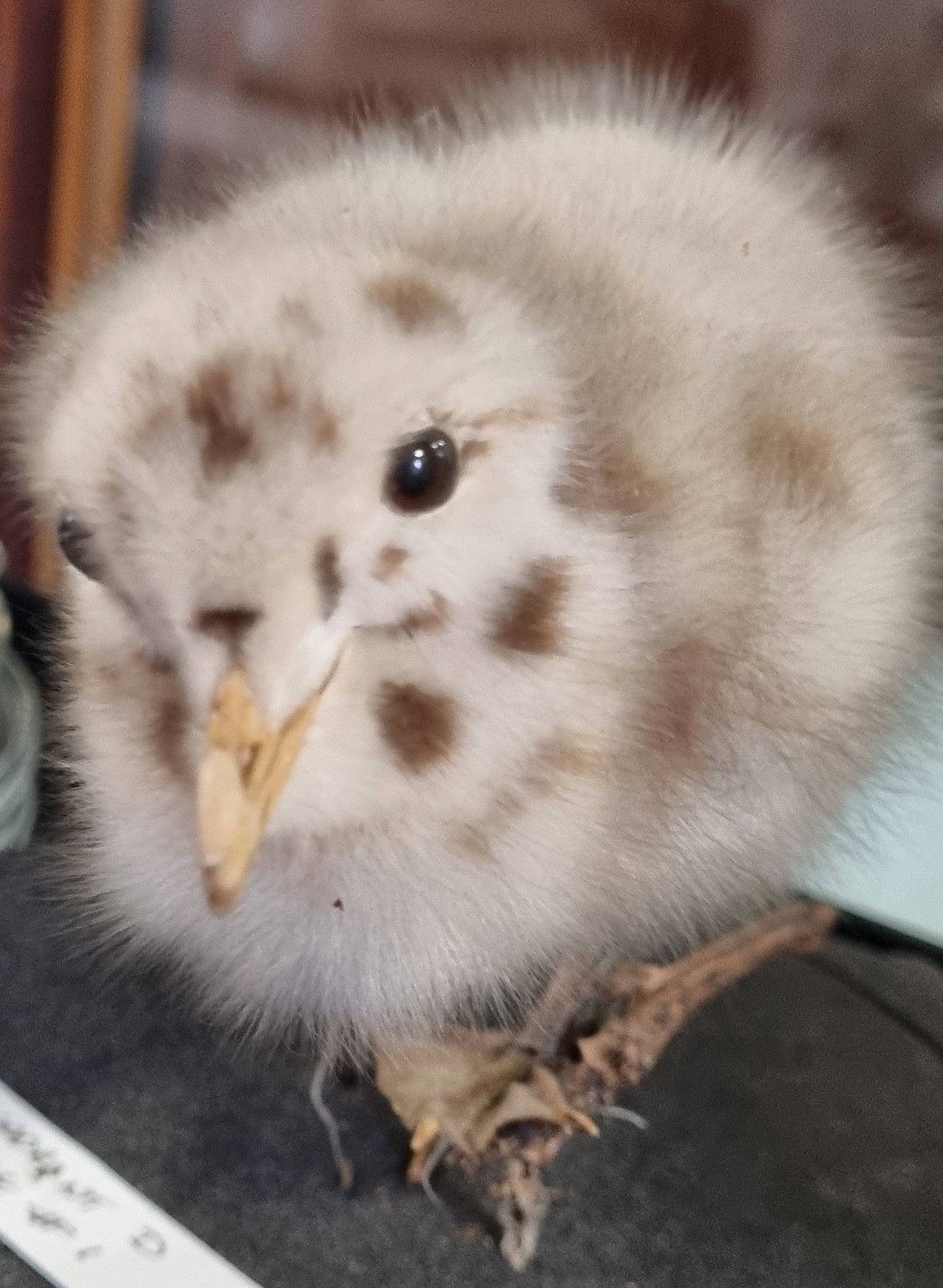
Last week I gave you these fuzzy chicks to try your hand at identifying:

Their speckled camouflage is perfect for pebbly beaches and it’s just what you’d expect from a member of the Gull Family (the Laridae). This is something that everyone picked up on, with a variety of excellent clues.

pleasantly78f070d606 was first in the door, with a great clue identifying the correct species in three words:

Silvery chip thief

The chip stealing (both in the UK and USA meaning of chips) encapsulates one of the more familiar and frustrating behaviours of this commonly kleptoparasitic species:

The “silvery” references the species name argentatus (which in tern references the silvery shade on back of these cheeky birds). So this is the chick of a Herring Gull Larus argentatus Pontoppidan, 1763.

It can be tricky to distinguish between the chicks of various different gull species, but you may notice that these look a bit like they’ve gone for, what I can probably best describe as an eyeliner flick. This bar behind the eye is variable, but occurs frequently in Herring Gull chicks, but less so in the similar looking chicks of other closely related species.

These chicks are from a particularly nicely done diorama in the Dead Zoo, which we’ve been in the process of preparing for transport out of the building. We’ll be sharing some of the progress on the project on some social media platforms (Bluesky and Instagram) soon – so I’ll be sure to share some of those stories from our hard-working team here as well.

Friday mystery object #508

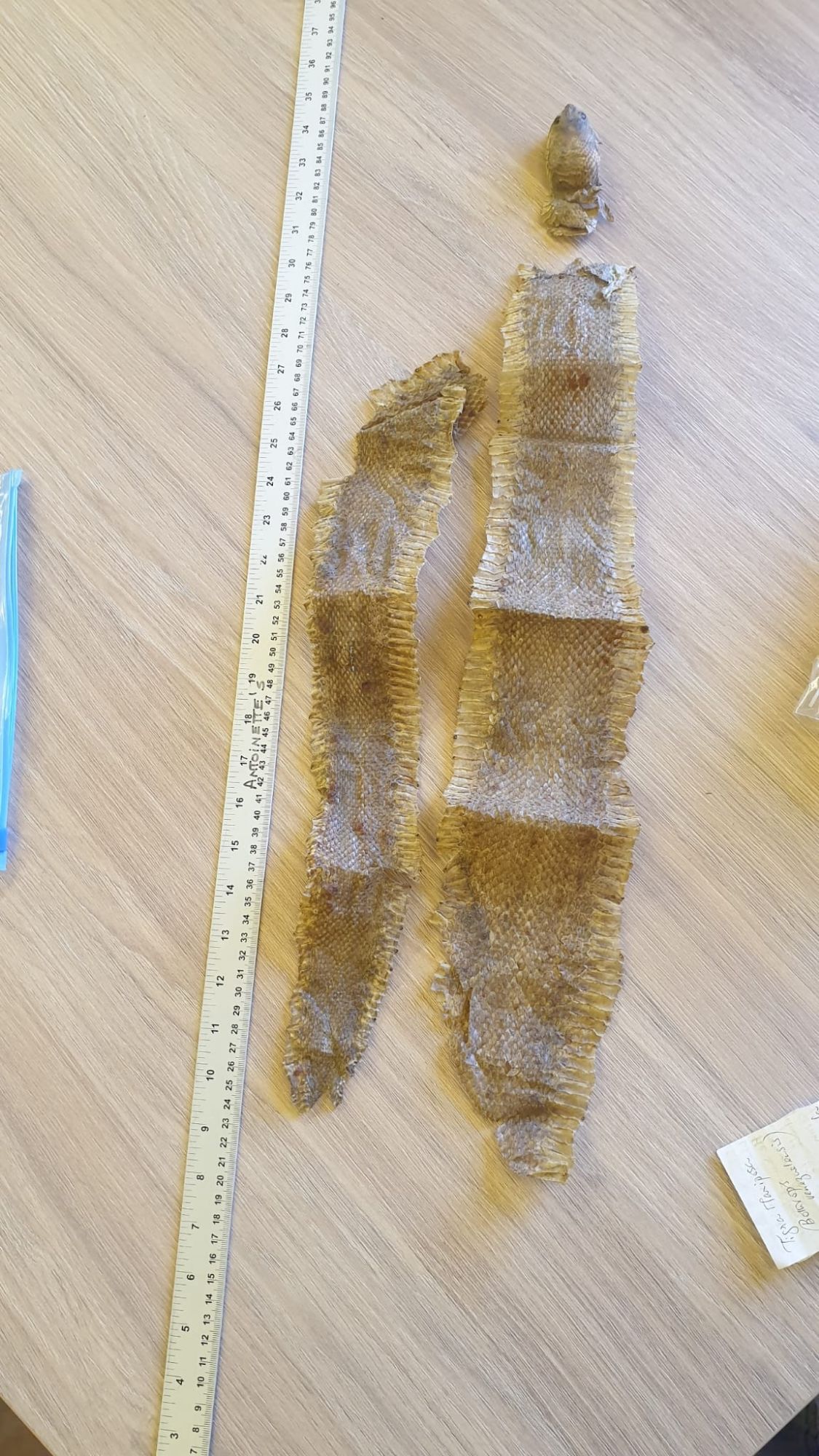
This Friday we’re gearing up for the St. Patrick’s weekend here in Ireland, so it seems only appropriate to have a snake for you to have a go at identifying:

It’s not an easy one, so if you need a clue to help narrow down the options, I can confirm that this specimen is most definitely not Irish and is in fact from a bit further afield.

Big thanks to our Terrestrial Zoology Curator Emma for sharing these photos.

I look forward to seeing how you do with this tricky St. Patrick’s themed mystery object!

Friday mystery object #507 answer

Last week I gave you this extreme close-up of a specimen from the Dead Zoo to have a go at identifying:

Only providing this would probably have been unforgivably mean, so I also provided an image with less detail and little bit more context:

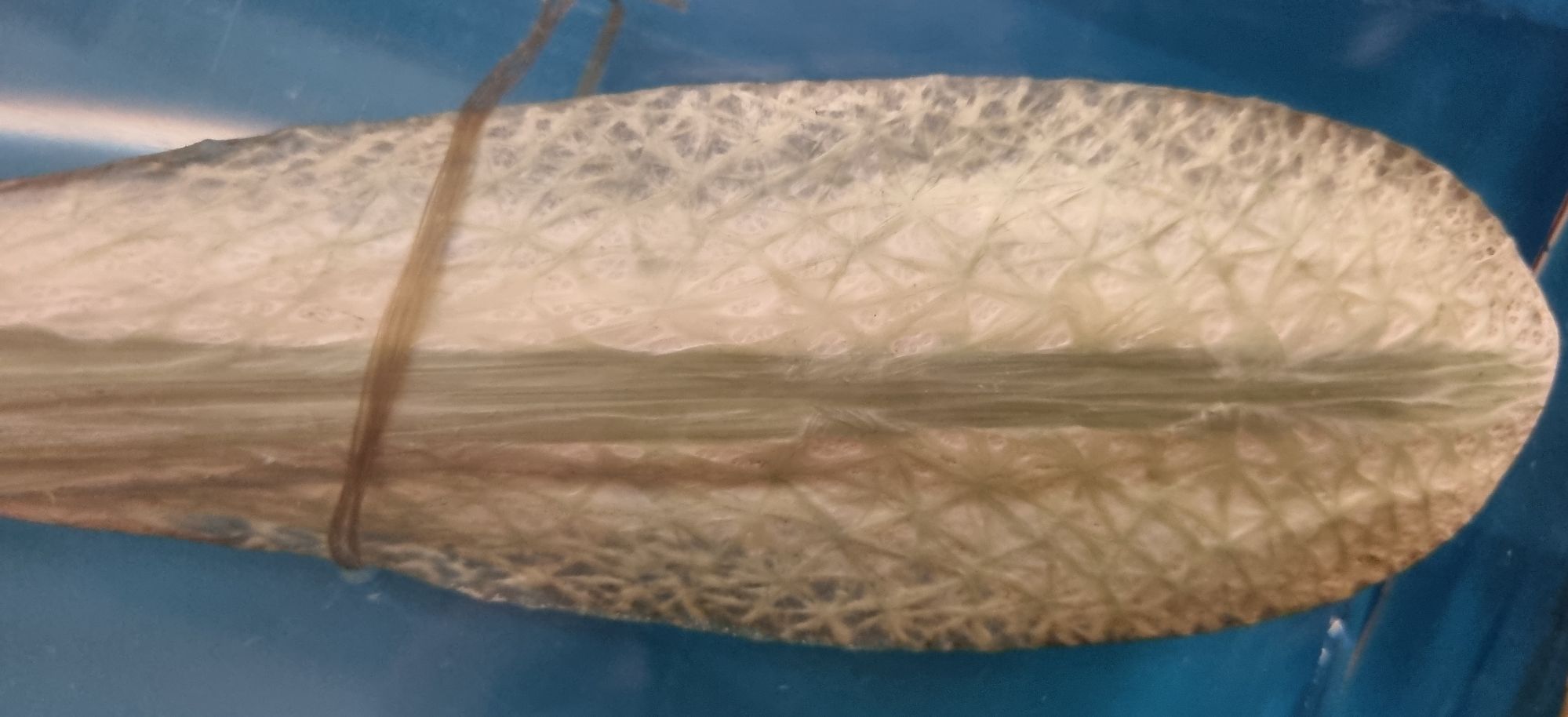
Clearly this provided plenty of information, since several of you managed to work out what this spatula-shaped appendage was from. In fact, the spatulate shape is so distinct it’s incorporated into the animal’s name.

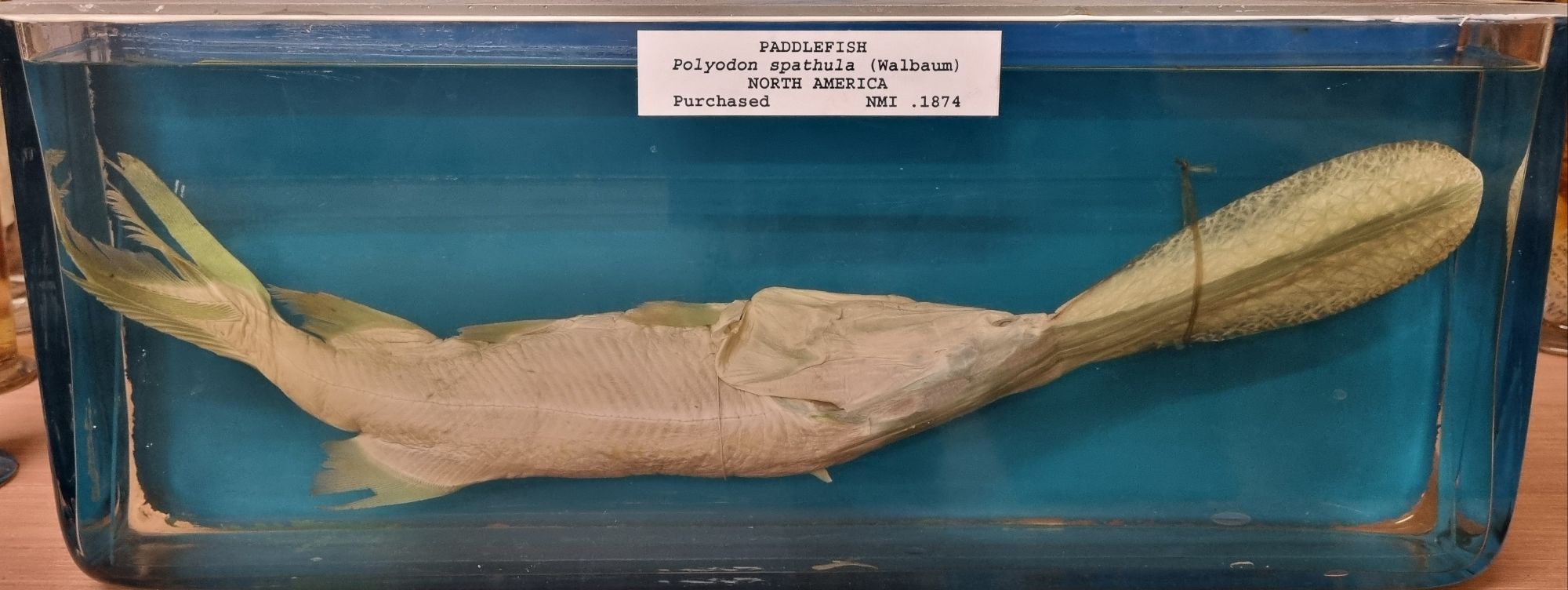
Adam Yates was the first to comment correctly, identifying that this is the rostrum of the American Paddlefish Polyodon spathula (Walbaum, 1792). Here’s a photo of the complete specimen:

It’s a fairly small example of this wonderfully unusual fish, as on average they weigh in at 60lb (27kg) and measure 5ft long (about 1.5m). I call them unusual because they do things differently to most other fish.

For starters, they’re from a very small family of fish that contains just themselves and a handful of sturgeon species. This family have heterocercal tails like sharks, and cartilaginous skeletons like sharks, but they’re actually bony fish that have become less bony.

They also have that distinctive spatulate rostrum (presumably constructed from little interlocking rays of cartilage based on the detailed photo), which looks more like the bill of a Spoonbill bird or a dabbling duck than the slashing blade that other fish species with an extended rostrum tend to have. However, the rostrum isn’t part of the jaw, and it can’t function in the same way as similar shaped structures in birds. Instead it serves a function in electroreception – picking up the tiny electrical signals from the muscle movements of clouds of planktonic crustaceans. Oh, did I mention that they’re freshwater filter feeders?

The name Polydon suggests to me that the species should have many teeth, and while this may be true for the tiny juvenile stages, the adults have no teeth at all – although the name probably relates to the large number of gill-rakers that are used to capture prey.

Another odd thing is that it’s only the American Paddlefish that filter feeds – the Chinese Paddlefish (which was recently declared extinct) fed on things like fish and crabs and had a totally different feeding mechanism that was much more similar to a Sturgeon.

Sadly, the American Paddlefish is at risk of going the way of its Chinese cousin due to overfishing and exploitation of their eggs for caviar. This would be a real loss, as they represent a fascinating example of how evolution is happy to play fast and loose with our expectations based on nearest relatives and shared ancestry.

Friday mystery object #506 answer

Last week I gave you a charismatic critter to have a go at identifying:

I only provided a close-up of the face of the specimen, since I didn’t want to make it too easy, and when you see the whole skeleton it’s pretty obvious which animal this is from:

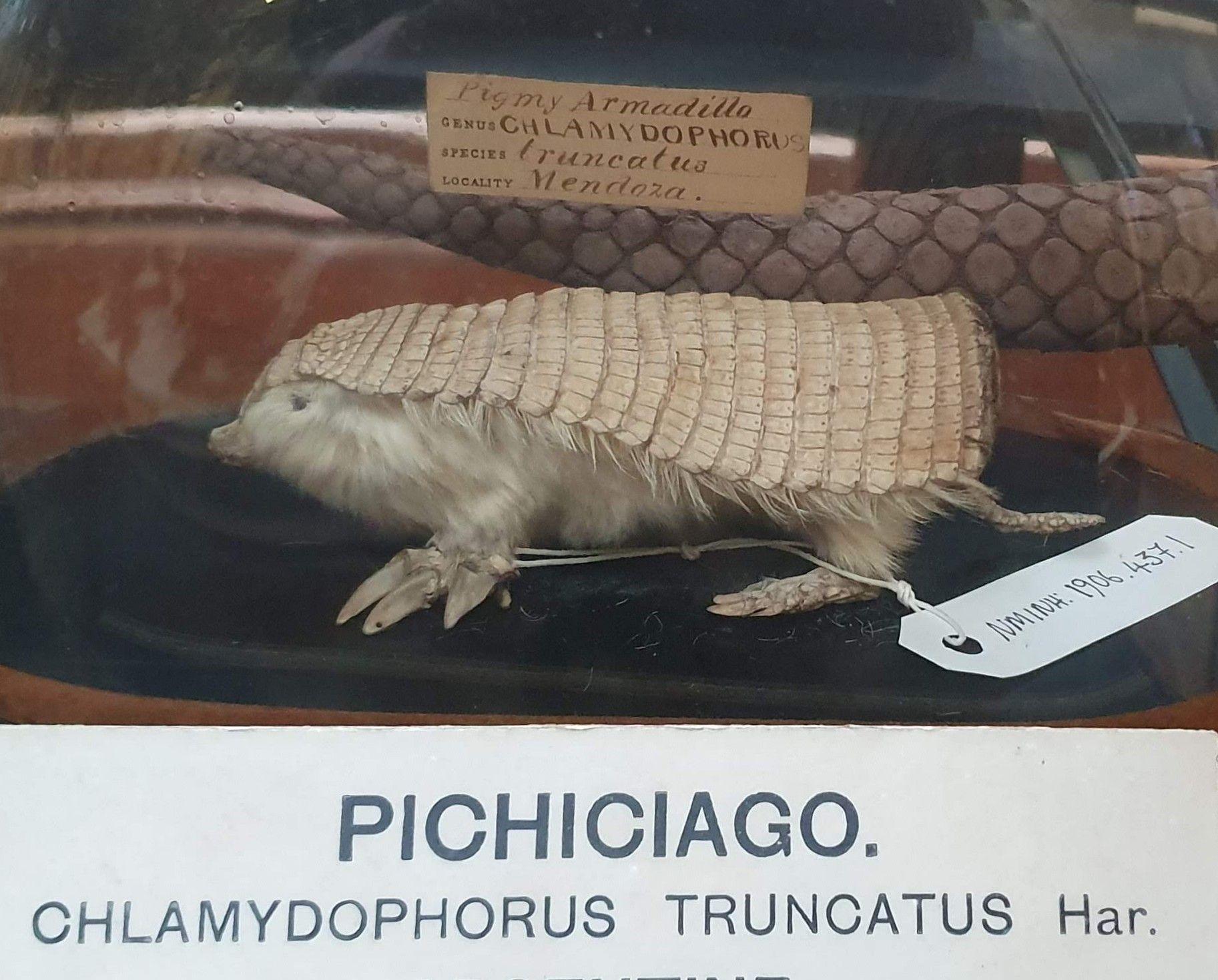
This is, of course, a Pichiciago or Pink Fairy Armadillo Chlamyphorus truncatus Harlan, 1825.

These tiny Argentinan armadillos are incredibly cute, with their silky fine hair and huge forefeet with massive claws (all the better for burrowing, my dear), although it’s a little hard to see that from the skeleton, so here’s this specimen’s skin:

Several of you worked out what this was, but Adam Yates was the first to post the answer – so well done Adam.

One of the observations from Kat Edmonson was about the protuberences from the top of the skull – for which I’ve yet to find any functional explanation. It may be as simple as providing a structure to support the armoured shield over the head area, but it’s not present in other armadillo species, so I’m not sure how this would work.

Since this species burrows and spends a lot of time in the sand hunting for ants and insect larvae, it may be that the bony protrusions help channel sound to help with prey detection and predator avoidance – but that is pure speculation. I’d love to hear your thoughts on this feature!

Well done to everyone who worked out the identity of this mystery object – while it may be distinctive, it’s an unusual wee beastie.

Friday mystery object #505 answer

Last week I shared this specimen from the collections of the Dead Zoo, as it’s a good example of the type of specimen that will often turn up for identification:

If you didn’t recognise it, this is the braincase of a seal.

It’s not usual for seal skulls to be found in sections like this for a few reasons. One is that marine mammals tend to have quite open sutures in their skulls, presumably to help prevent issues with pressure during diving. Another is that young animals (with unfused skulls) will often be the ones that succumb to the rigours of nature. Finally, beaches are high energy environments, so skulls will often be rolled and broken up by wave action.

Knowing it’s a seal is useful, but there are over 30 species to choose between. However, Adam Yates spotted some useful information written on the specimen:

‘It looks like “Yellow Slrank 20/9/92” ???? I’m guessing a location and date, but Slrank? WTF is that?

Got it! Yellow Strand. It is a beach in Ireland.’ 

This really helps, since there are only a couple of species that are likely to be found in Ireland – the Grey Seal and the Harbour Seal.

It’s about the right size for a Harbour Seal, but the shape isn’t quite right. In particular, the frontals (that pair of bones that forms the skinny section that’s sticking out) aren’t skinny enough. There’s also a hint of muscle scars and unfused frontal-parietal sutures that suggest that the animal may be juvenile.

If that is the case (and I think it is), then I think this is most likely the skull of a young Grey Seal Halichoerus grypus (O. Fabricius, 1791). This was Adam Yate’s suggestion, supported by Kat Edmonson, so well done to them for picking up on that detail.

I hope you enjoyed that challenge – more to come next week!

Friday mystery object #504 answer

Last week I gave you this lovely fishy from the Dead Zoo to try identifying:

I think everyone recognised that this specimen is a member of the Molidae – that’s the family containing the Sunfish. But the tricky bit was working out which of the five living species it might be.

I didn’t include a scale, because it would have made it a bit too easy. Most of the Sunfish are very large – on average well over 2m long, with some over 3m. They’re also heavy – most weighing in at over 2 tonnes and with a specimen of the Southern Sunfish recognised as the biggest bony fish on record at 2,744kg.

However, the mystery specimen is a lot more svelt, as it’s from the smallest species – the Slender (or Truncated) Sunfish Ranzania laevis (Pennant, 1776).

So I offer my congratulations to everyone who managed to work it out, with Adam Yates making the first comment to indicate the species. It’s worth noting Allen Hazen’s observation that the paint job on this specimen is not really very accurate. – although this isn’t unusal for fish taxidermy.

All that’s left to say on this is that this Slender Sunfish was a much easier object to move than its Ocean Sunfish cousin, who was much bigger and even less slender than me…