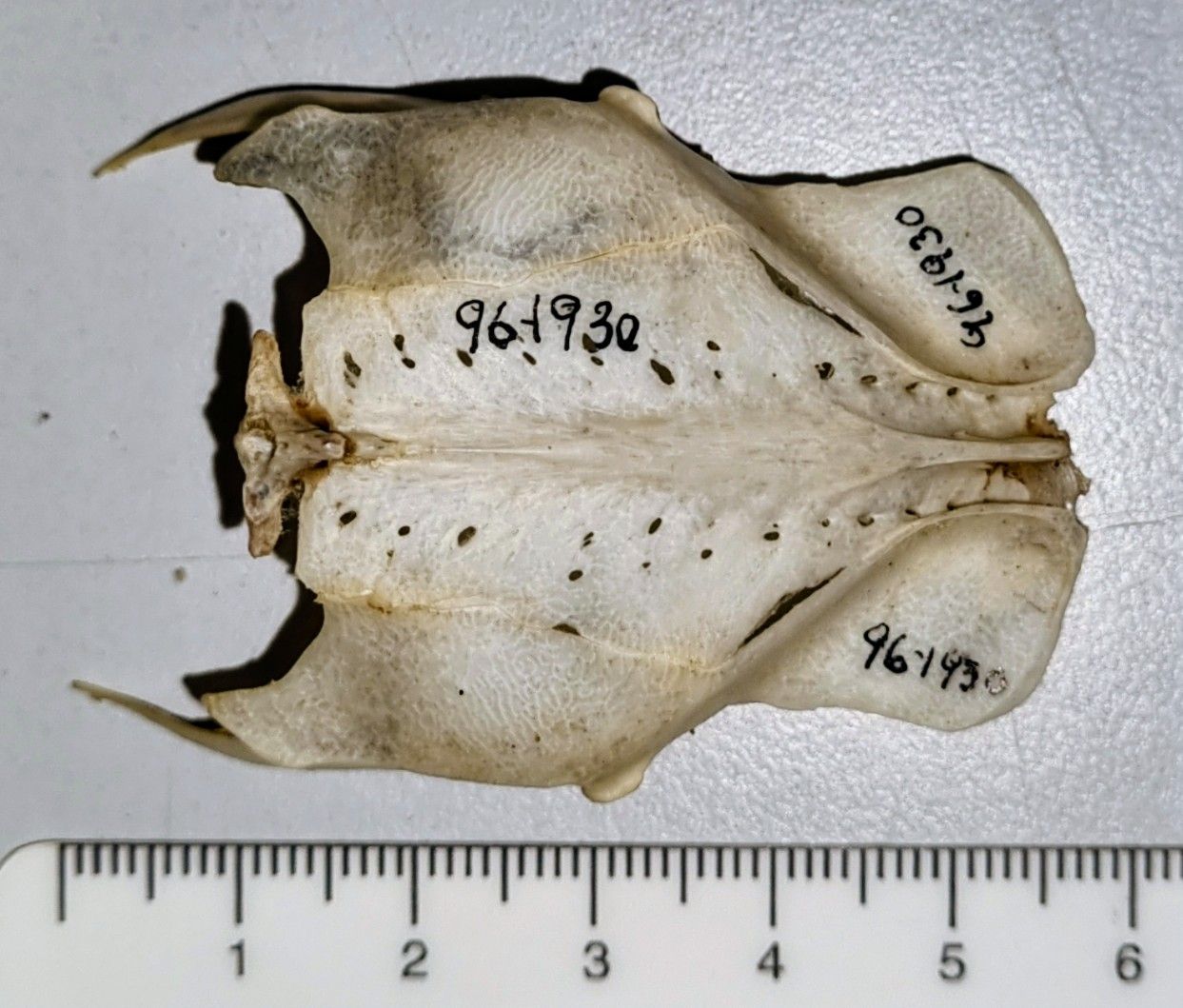
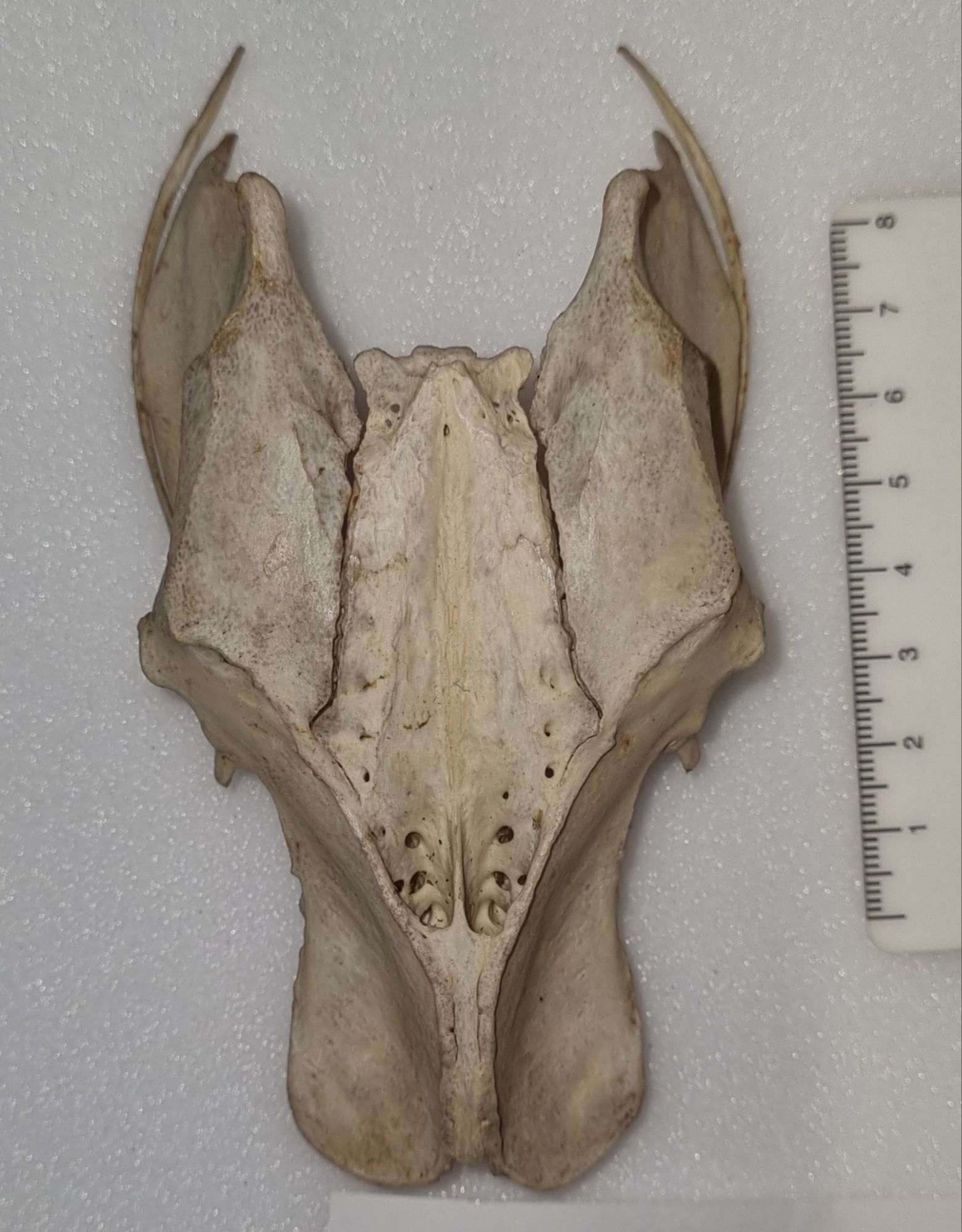
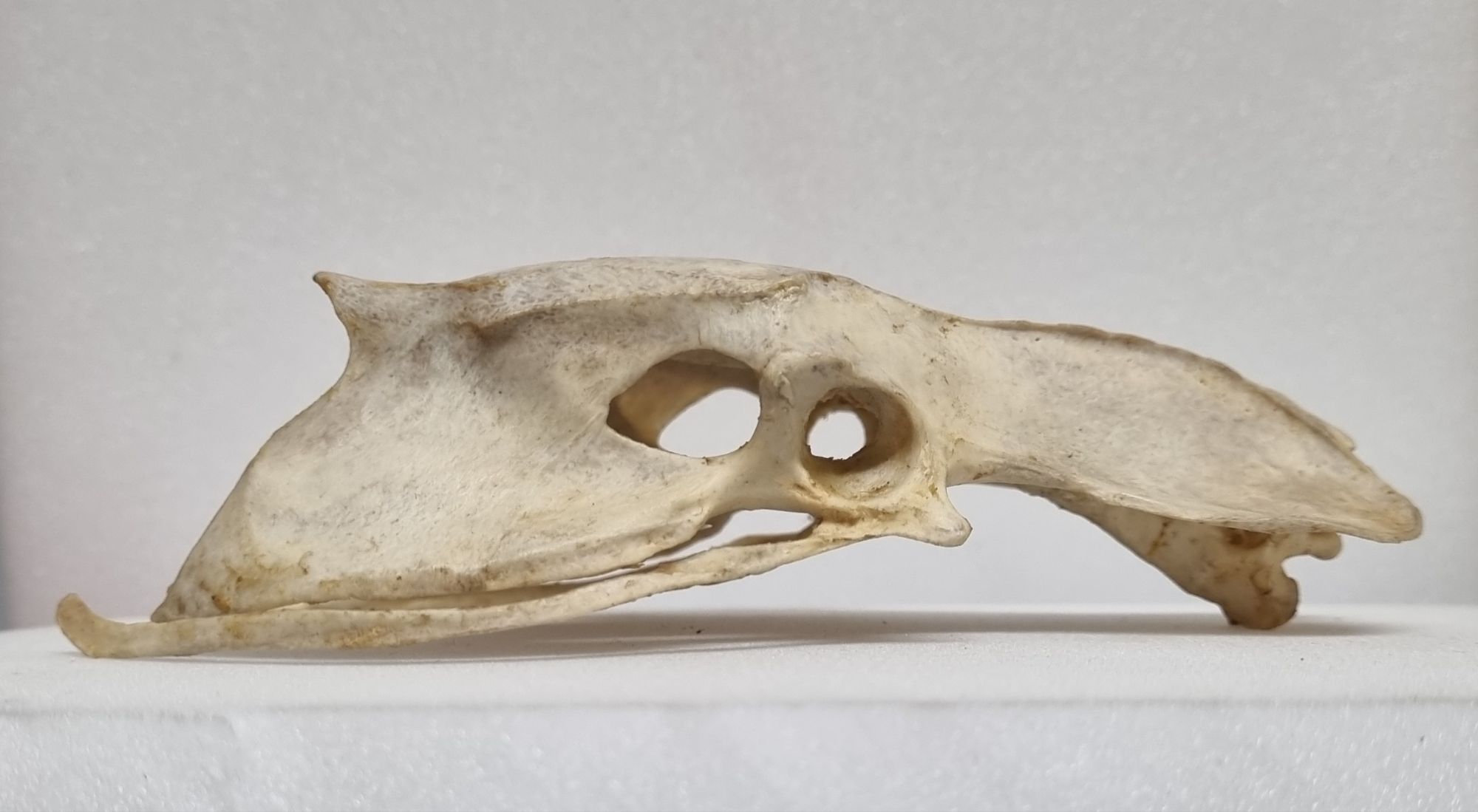
Friday mystery object #527 answer

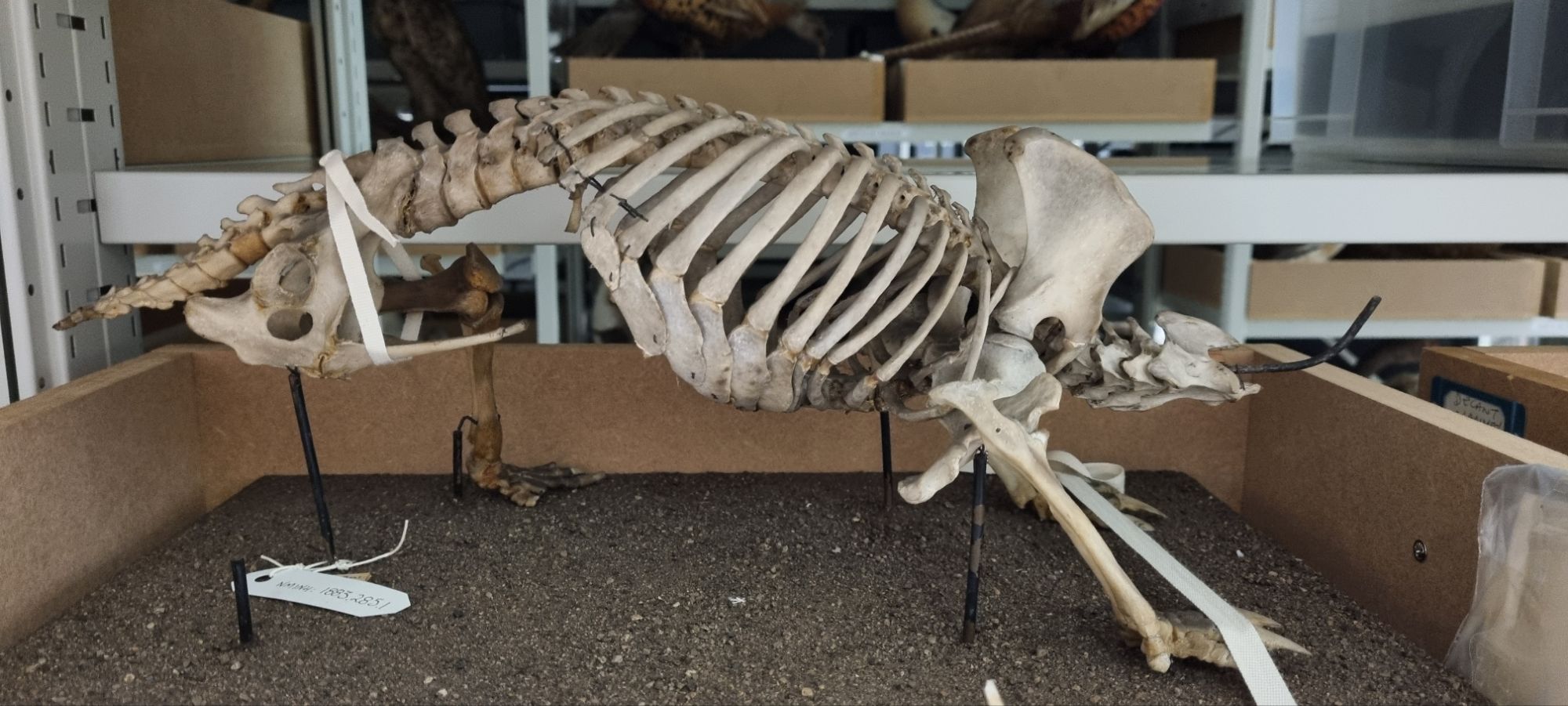
Last week I gave you this skeleton from the stores of the Dead Zoo to have a go at identifying:

The comments came flooding in, with some slightly off and some very much on target.

The robust skeleton and stocky build of this animal, combined with some interesting bony processes – especially in the pelvic region – offered up some pretty good indicators of the type of critter we’re looking at.

The forward-facing processes of the pelvis were initially mistaken for a baculum, but on a closer look their dual nature becomes more apparent:

These are epipubic bones, which aren’t found in Placental mammals – but this is definitely a mammal – so this is either a Marsupial or Monotreme.

The lack of a skull makes it a little harder to immediately figure out what this might be, but the feet are useful – very useful in fact:

These look like the feet of a digger with those big, robust, triangular claws – but not just a burrowing digger like a Wombat – more like an ant and termite specialist whocan break open their nests. That offers a key clue.

This is the skeleton of a species of spiny anteater – one of the four species of Echidna. The feet actually offer a further diagnostic clue to the species, since most species have five claws, while just one has three – the Three-toed or Western Long-beaked Echidna Zaglossus bruijnii (Peters & Doria, 1876).

This particular specimen was originally on display in the Dead Zoo under its old name Pro-echidna Bruijnii:

Photo of Three-toed Echidna skeleton NMINH:1883.285.1 at the National Museum of Ireland – Natural History taken by Illustratedjc, 2015.

The specimen has been taken off display along with everything else in the building over the last year or so, in preparation for a big refurbishment project.

When it was decanted, along with skull, the fragile right-hand-side rear limb was removed. In the photo above you can see where a claw is detaching – possibly as a result of incorrect foot positioning on the mount (Echidna feet point sideways and backwards, which seems to have confused some mounters). In other places, cotton tape was used to stabilise some of the more wobbly robust elements.

Being able to work through items like this while they’re in storage will be helpful, since it will allow us a chance to remove the worst of the dust from what may have been 140 years of display, and to make some small repairs to things like the detaching claw so it doesn’t get lost. Changing the foot position may be a bigger job, but it’s something to consider.

So while the Dead Zoo may be closed, we’re keeping busy checking the condition of the other 10,000 object we had on display, and working out what we need to do to put them back!

Friday mystery object #526 answer

Last week I gave you this mystery object that I found dead in the street when visiting Copenhagen earlier this year:

Clearly this is a species of insect in the Order Odonata, which are the dragonflies and damselflies. Damselflies are much slimmer than this, and their wings fold back along their body at rest, so this one is a dragonfly.

Everyone who commented had worked out the species, since the metallic green-bronze body and fuzzy body are quite distinctive.

This is an example of a Downy Emerald Cordulia aenea (Linnaeus, 1758) which is a species that is fairly widespread across northern Europe. While this species does occurs in Ireland, it has only been recorded from a few localities.

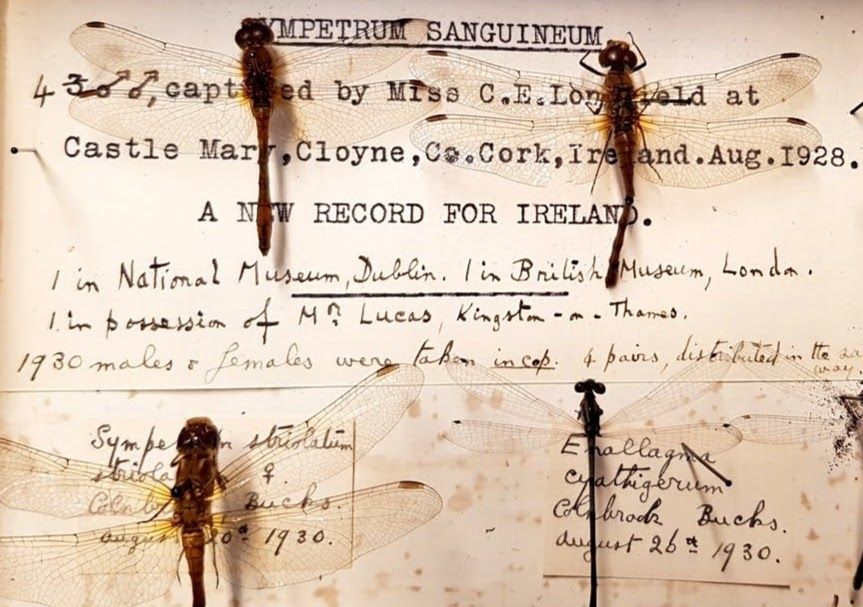
We only have one example of this species in the collections of the Dead Zoo, collected in 1978 from County Cork. I was a little surprised that it wasn’t collected by Madame Dragonfly herself, Cynthia Longfield (1896-1991), since she lived in Cork in the 1970s and was a hugely experienced and prolific expert on dragonflies.

Longfield was an adventurous and trailblazing female scientist – the first woman to be a member of the Royal Entomological Society, with expeditions in the 1920s to the Andes, Amazon, Galapagos, Egypt and a host of other localities that she undertook as part of a team from London Zoo, collecting specimens for the Natural History Museum in London, where she later became a voluntary cataloguer and was credited with saving the Museum from fire following bombing during WWII thanks to her actions as part of the Auxillary Fire Service.

Most of Longfield’s collections are held in the NHM, London, but we do have specimens collected by her in the National Museum of Ireland, donated after her retirement and move from South Kensington to Cloyne in County Cork. The Downy Emerald is not one of the specimens we received, but her specimens include new records for Ireland and a number of Paratypes of African species that she collected on her adventures both near and far.

Friday mystery object #525 answer

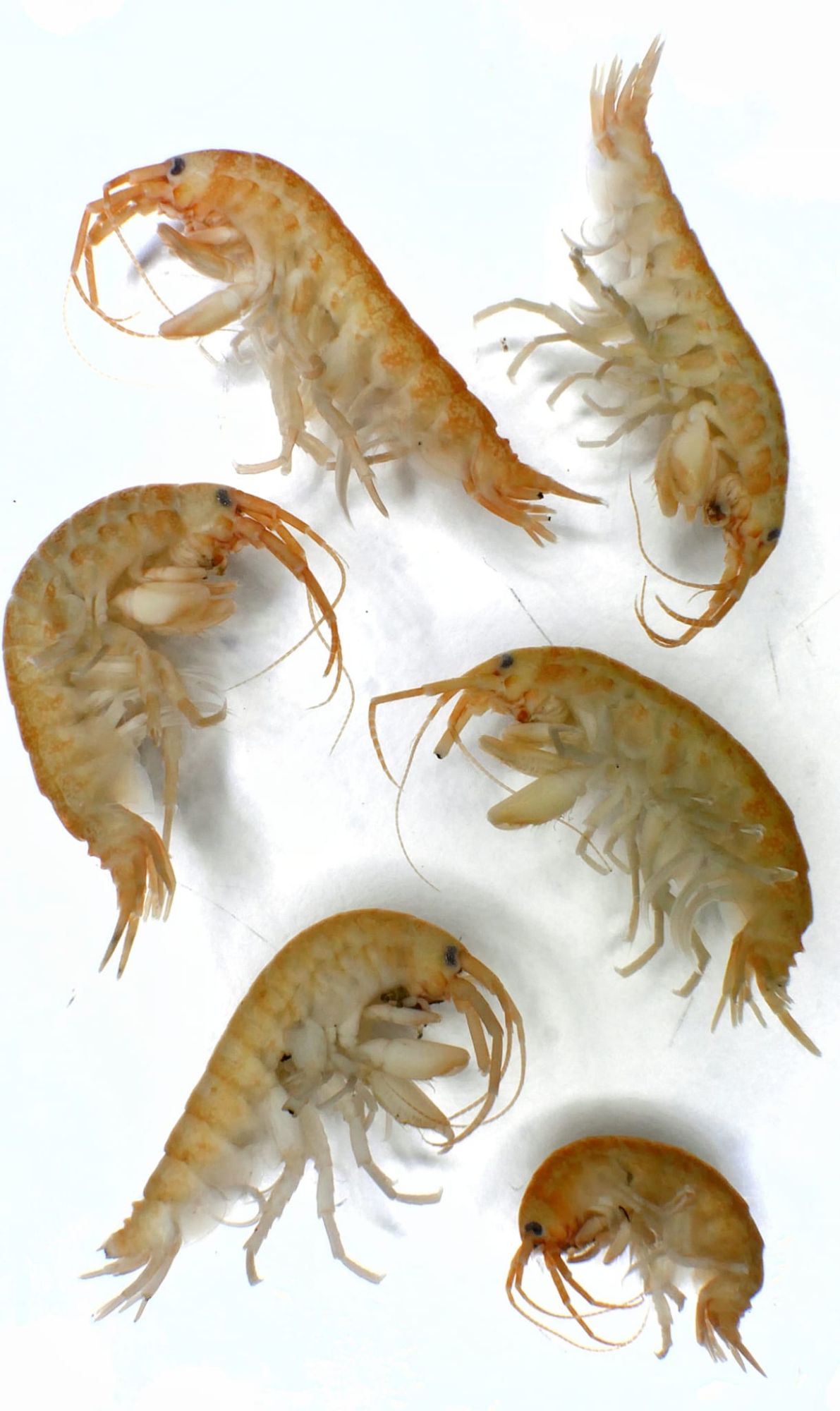
Last week I gave you these specimens that are new to the Dead Zoo to have a go at identifying:


Image taken by Jamie Maxwell, 2025

These are specimens that were lodged in the collection as part of research identifying them as a new invasive alien species to Ireland.

Adam Yates and Chris Jervis both worked out which invasive this happens to be, and it’s a bad one. These are examples of the Demon Shrimp Dikerogammarus haemobaphes (Sowinsky, 1894).

This species is a real problem, as it’s predatory and voracious – able to predate species much larger than themselves. They are very difficult to differentiate from other amphipods, although they do have some distinguishing features that can provide an identification.

There’s some very useful information about the species on the National Biodiversity Data Centre’s Invasives.ie page, which highlights some of the features for identification and details the risk posed by the species in Ireland.

Invasive species like this can have a huge environmental impact – altering food chains, introducing diseases that related taxa may be less able to cope with, and ultimately disrupting ecosystems that are already under pressure from multiple other impacts.

Managing the introduction and spread of species like this requires vigilence – the Check Clean Dry campaign offers some useful advice on how to help stop the spread:

Well done to everyone who worked out this demonic little mystery – I hope you can avoid finding these in your area!

Friday mystery object #524 answer

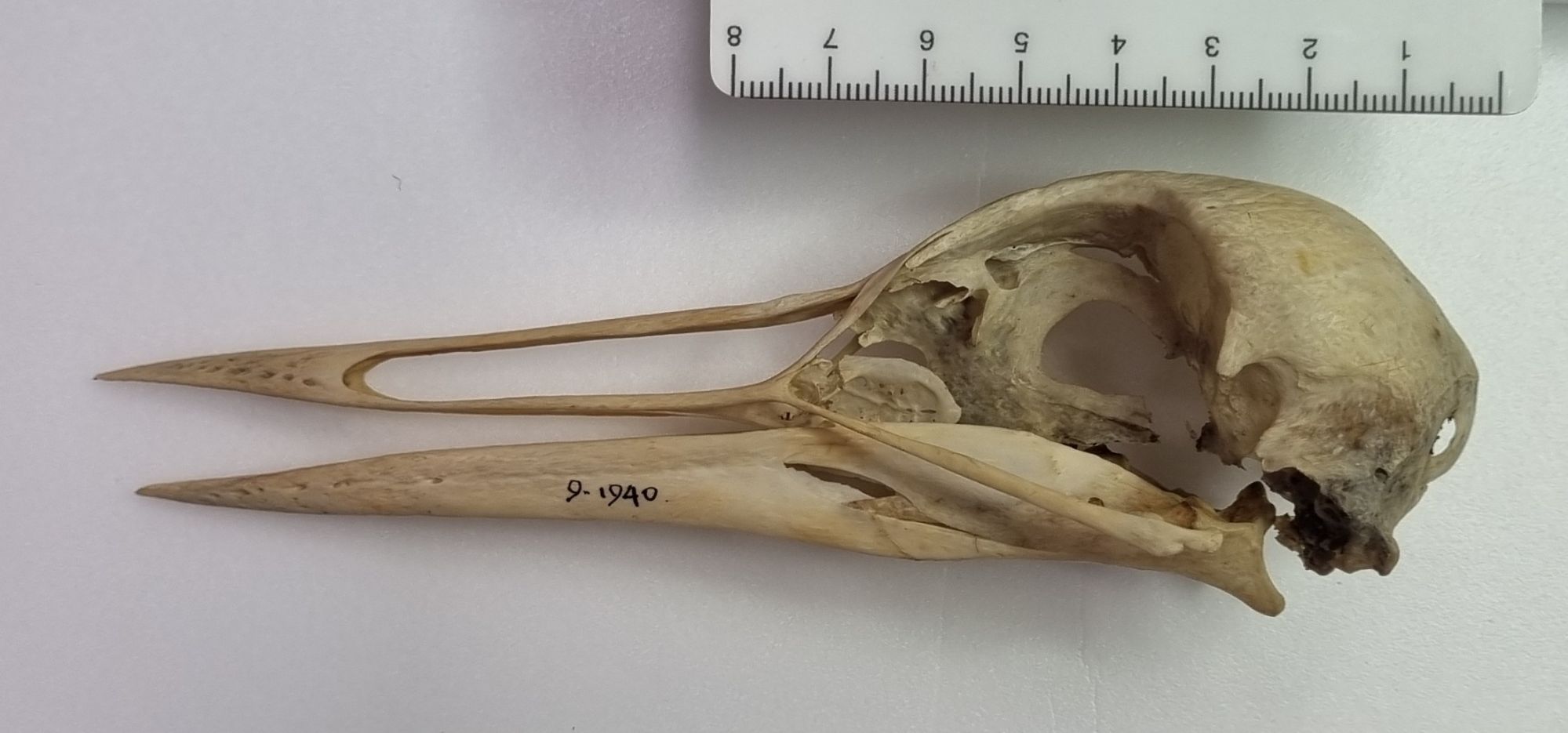
Last week I gave you this skull from the collections of the Dead Zoo to have a go at identifying:

Bird skull identification can take a bit of work, until you get your eye in on things like the bill morphology (especially without the clues provided by the keratin sheath). Resources like the excellent Skullsite.com certainly help a lot, by providing a huge range of images of different species for comparison, and with tools to help narrow down options based on skull size and bill morphology.

As it turns out, Adam Yates certainly had his eye in, and he was first to comment with a correct identification for this specimen. It’s a Common or European Crane Grus grus (Linnaeus, 1758).

I chose this specimen as it’s one that we recently put on display in the Dead Zoo Lab as part of a community curated project called Our Irish Natural History. Eight community groups involved with iCAN (the Irish Community Archive Network) contributed to the work, which was coordinated by Adriana Ballinger – a fantastic postgraduate humanities researcher who has been working with us for the past year on a project with a focus on the wider cultural context surrounding natural history collections. The community groups involved each explored a different areas of interest, illustrating and exploring some of the connections between objects and local communities.

The Common Crane offered a fascinating topic explored by the Woodlawn Heritage Group and Galway Community Archaeology, who delved into the past history of the Crane in Ireland, and its importance to Bronze Age people, also touching on their recent return, with a pair of these fantastic birds recently recorded nesting in rewetted boglands. There’s too much information for me to cover it all here, so I recommend taking a look at the work for yourself on the Galway Community Archaeology web resource about the project.

These sorts of projects, that connect our ostensibly scientific objects back into local communities through a cultural link are a fantastic way to broaden the relevance and interest in our collections. As a scientist it can be easy to focus on one aspect of an object – but every item we look after can be viewed from multiple perspectives – all of which add value and relevance.

I look forward to working on similar projects in the future, while hopefully taking the opportunity to share more of the collection here, for those of you with an interest in identification!

Friday mystery object #523 answer

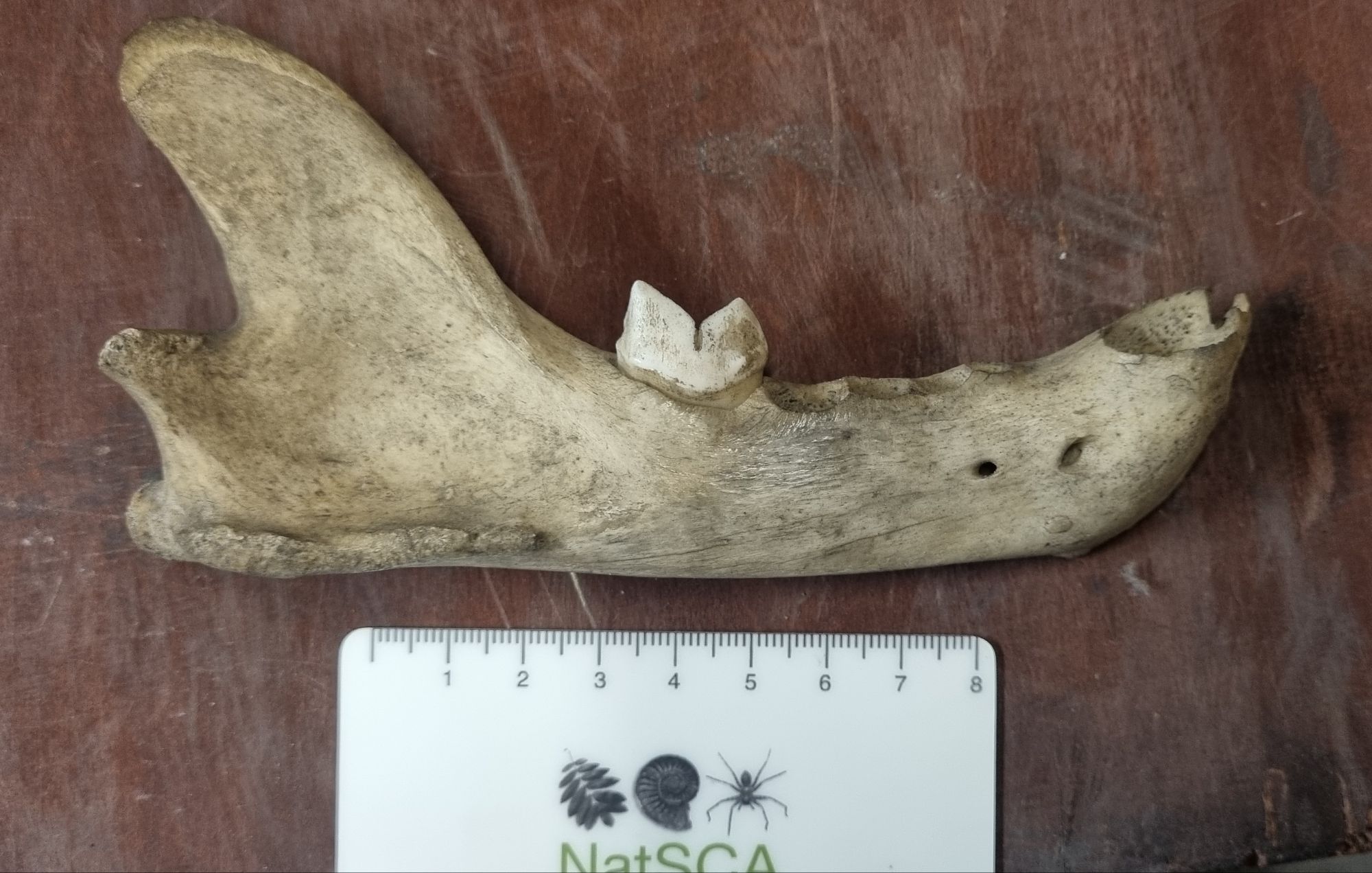
Last week I gave you this mystery mandible to help me identify:

It was found in a box of mixed shells and bony fragments, with no label, and nothing to offer a clue to its origin. This is very unusual, since these sorts of boxes of miscellany were mainly addressed years ago, but this one was well tucked away and somehow escaped being dealt with.

It’s fairly easy to recognise this as being the right mandible of some kind of cat. The Felidae have a reduced tooth count, with those hyper-carnivorous bladed premolars forming a meat-shearing carnassial row that’s very distinctive. So that’s the easy bit done.

The hard bit comes next, since the cats all share this same dental configuration, making the specific kitty in question a bit harder to narrow down. However, the size is a useful clue. This is much too big to be something like a Domestic Cat, Serval or Ocelot, but it’s also too small to be one of the big Big Cats – like the Lion or Tiger:

Tiger skulls facing off – the scale of these skulls is much greater than the mystery mandible

This leaves some of the medium-large Big Cats and perhaps a very large Small Cat (i.e. the Cheetah). Let’s start by ruling out that last one – the size is still a bit on the big side, but also the Cheetah has a more gracile coronoid process that curves, and a relatively shorter toothrow. Pumas also have a more rounded coronoid process.

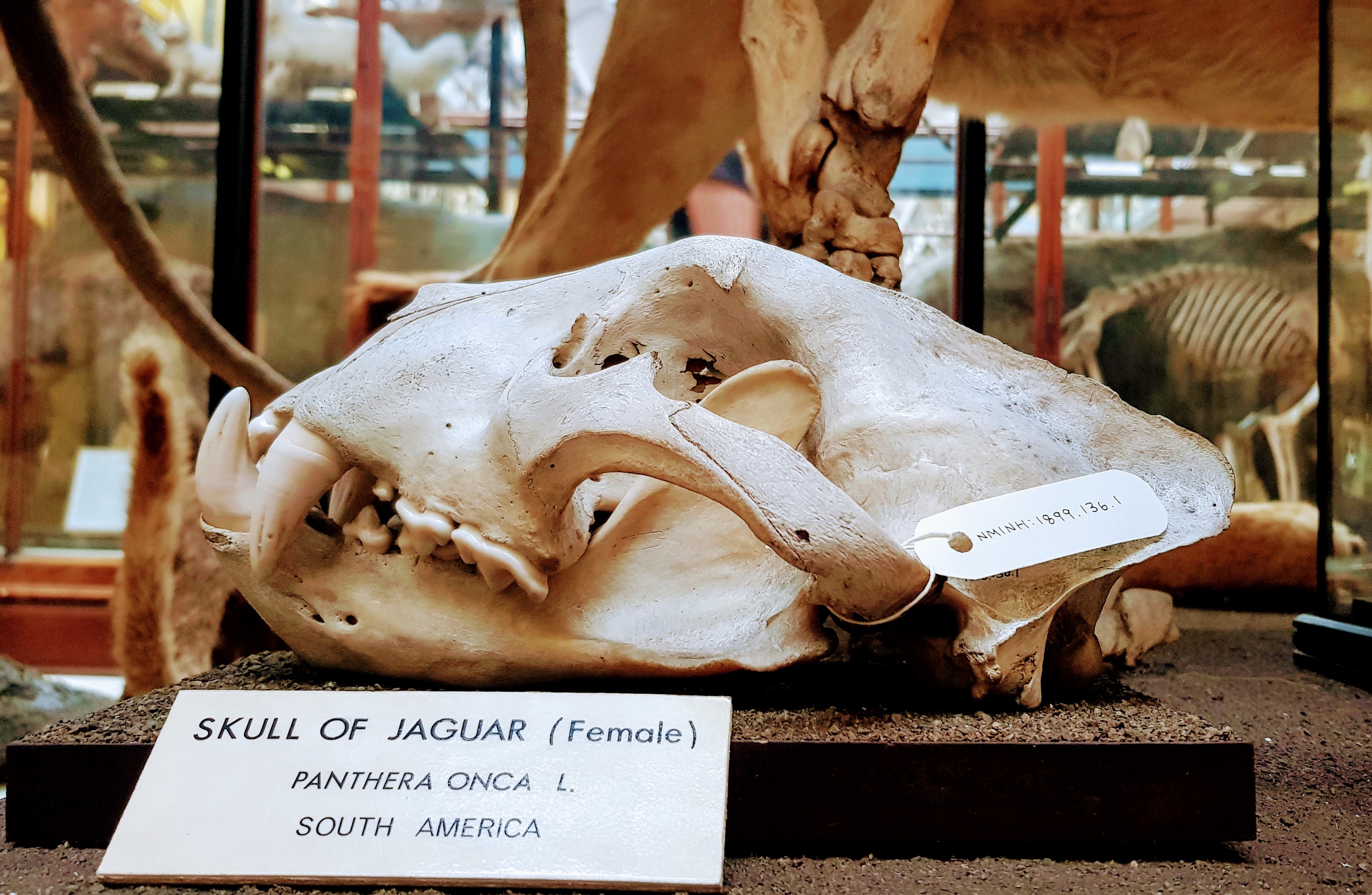
The Jaguar also has a more rounded coronoid process, and has a more robust mandible, that’s just built thicker to deal with the high bite forces these cats generate:

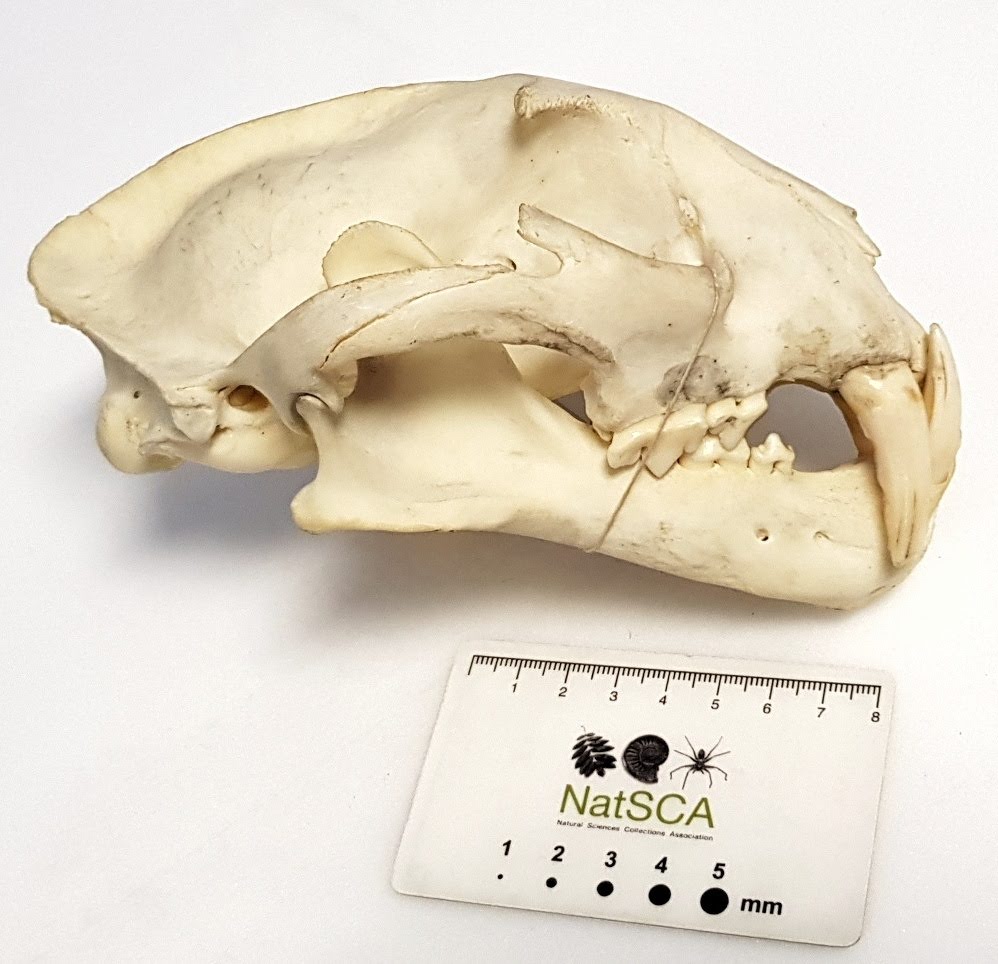
That leaves us with the Snow Leopard and the not-snow-Leopard, both of which have the more pointed coroid process that we see in the mystery object. However, the Snow Leopard has downwards inflected angular process, that’sI suspect may relate to the increased gape needed to use the excessively long canine teeth in this species:

The answer to last week's mystery mandible
Snow Leopard skull, showing the hypertrophied canines normal in this species.

So, by a process of elimination, we’re left with Leopard Pathera pardus (Linneaus, 1758). This species varies significantly in size and the morphology can be quite variable, since the species has a wide distribution, from Eastern Russia to as far West as Senegal.

This actually reminds me of a very similar mystery object from the Grant Museum of Zoology that I shared 10 years ago, so I’ hope that provided something useful for reference so I’m glad I trawled through some of my past posts to help solve this one. My thanks to everyone who offered their thoughts on this one – it’s great to see so many of you come to the same conclusion!

Friday mystery object #522 answer

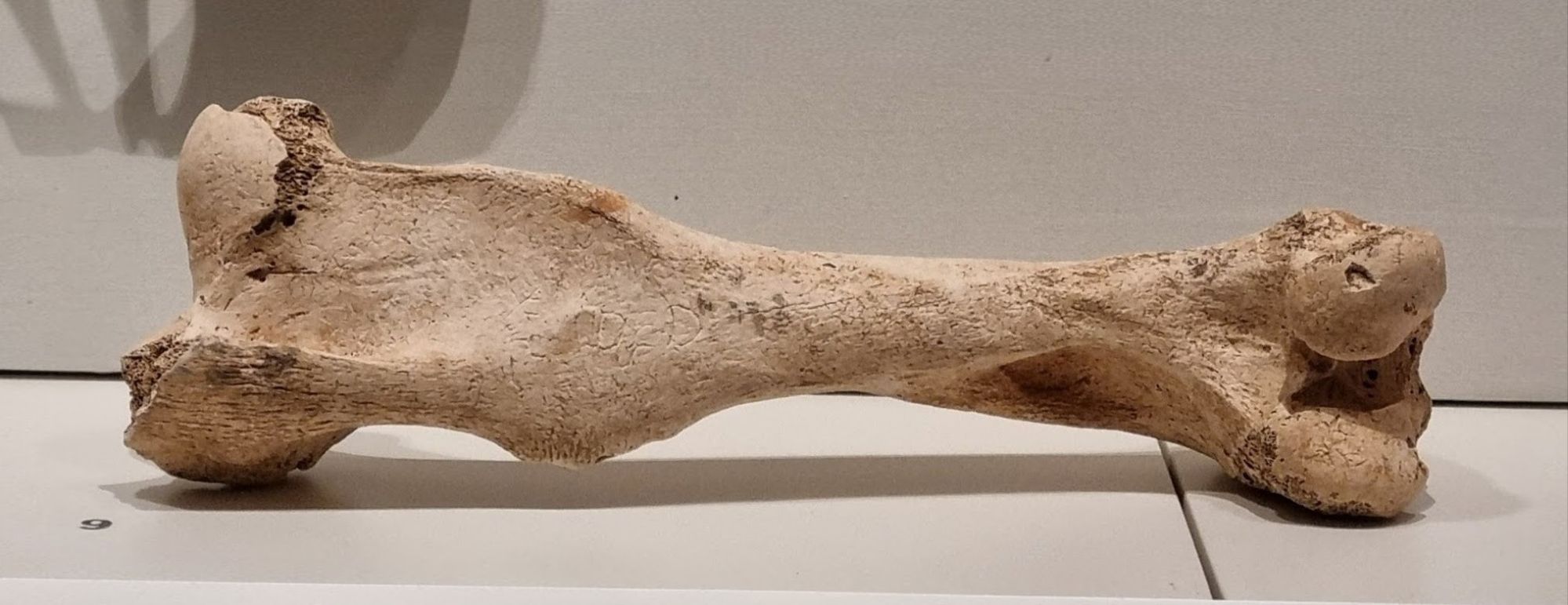
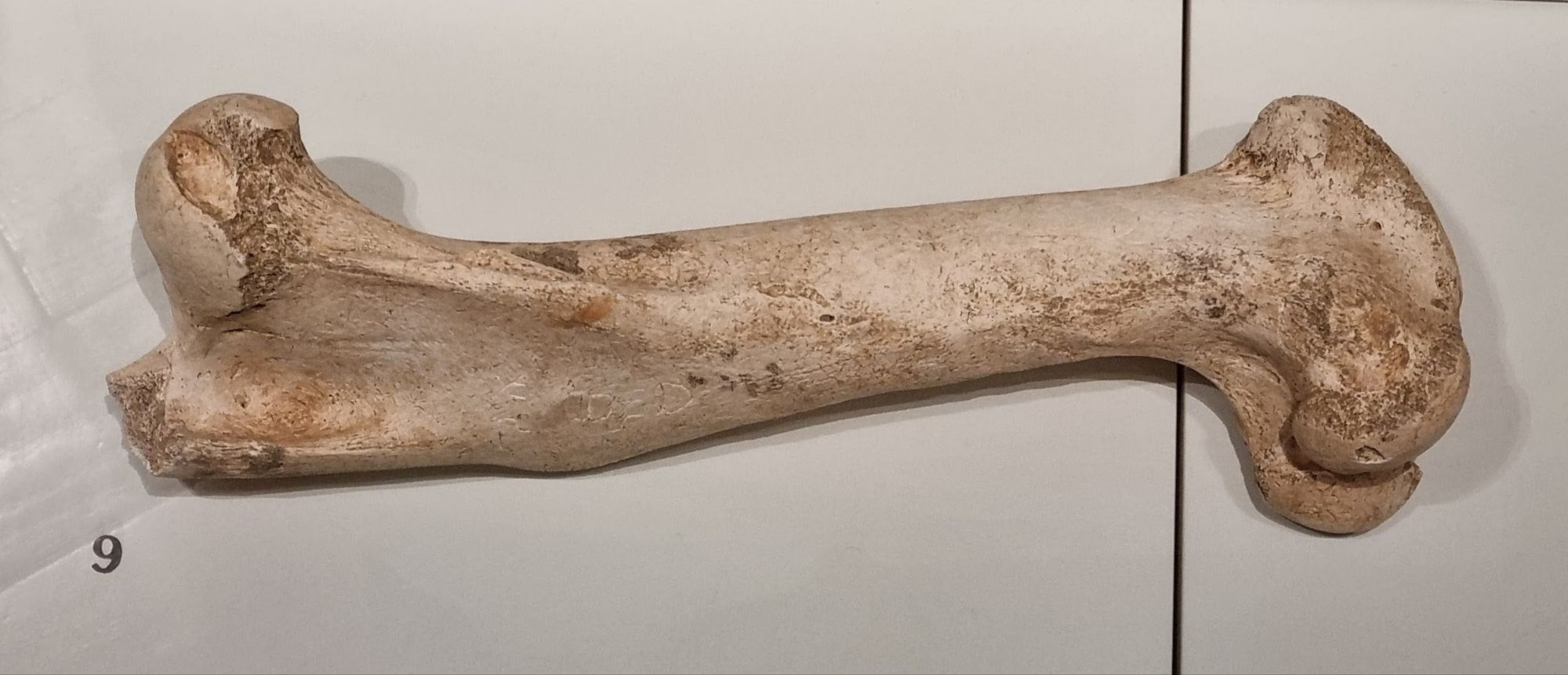
Last week I presented this mystery bone from the Words on the Wave exhibition at the National Museum of Ireland on Kildare Street:

The bone is over a thousand years old, so it’s unsurprising that a few of the processes that could be useful for identification have been worn down a little:

That said, there was plenty of information remaining to allow several of you to identify the animal, bone type and side of the animal this is from. Adam Yates was first to the comments and he also left a very helpful Toot on Mastodon, detailing the diagnostic features:

@mike @PaoloViscardi 
The prominent third trochanter and really well-developed supracondylar fossa on the lateral caudal surface at the distal end of the shaft should get you there. You won't have to look beyond  familiar farmyard beasts to find it.

For me, the supracondylar fossa on the lateral caudal surface is the instant give-away. For those who don’t speak anatomese, that’s the bit that flares out from the side of the shaft of the bone (which is actually missing a bit in this example).

This is a feature I always associate with the Perissodactyla (the tapirs, rhinos and horses), and this one is nowhere near robust enough for anything other than one of the horses. It’s also fairly small (although the lack of a scale bar doesn’t make this obvious).

This a left femur that I suspect is from a Horse Equus ferus caballus Linnaeus, 1758, but it could also be from a Donkey Equus africanus asinus Linnaeus, 1758. It can be tricky to tell these species apart, especially when the bone is a little worn down and you only have a few photos to work from – so best to err on the side of caution and leave it at an identification of Equus sp.

If you’re in Ireland and wanted to take a look at this object – and a selection of remarkable mediaeval manuscripts from the Abbey of St Gall, Switzerland, some of which are returning to Ireland for the first time in 1000 years – you have until the 24th of this month, I’d definitely recommend it!

Friday mystery object #522

This week I have another bony mystery object for you:

This one is currently on display in the beautiful Words on the Wave exhibition at the National Museum of Ireland on Kildare Street, but the focus is on the inscription on the bone, rather than the species the bone came from:

So, I’d love to hear your thoughts on what this is? Have fun with it!

Friday mystery object #521 answer

Last week I had a genuine mystery object for you to identify that was freshly dug out of the ground:

While there were a few suggestions of baked goods on social media, plenty of you spotted what it actually is – with a nod to Adam Yates who was first with the correct identification.

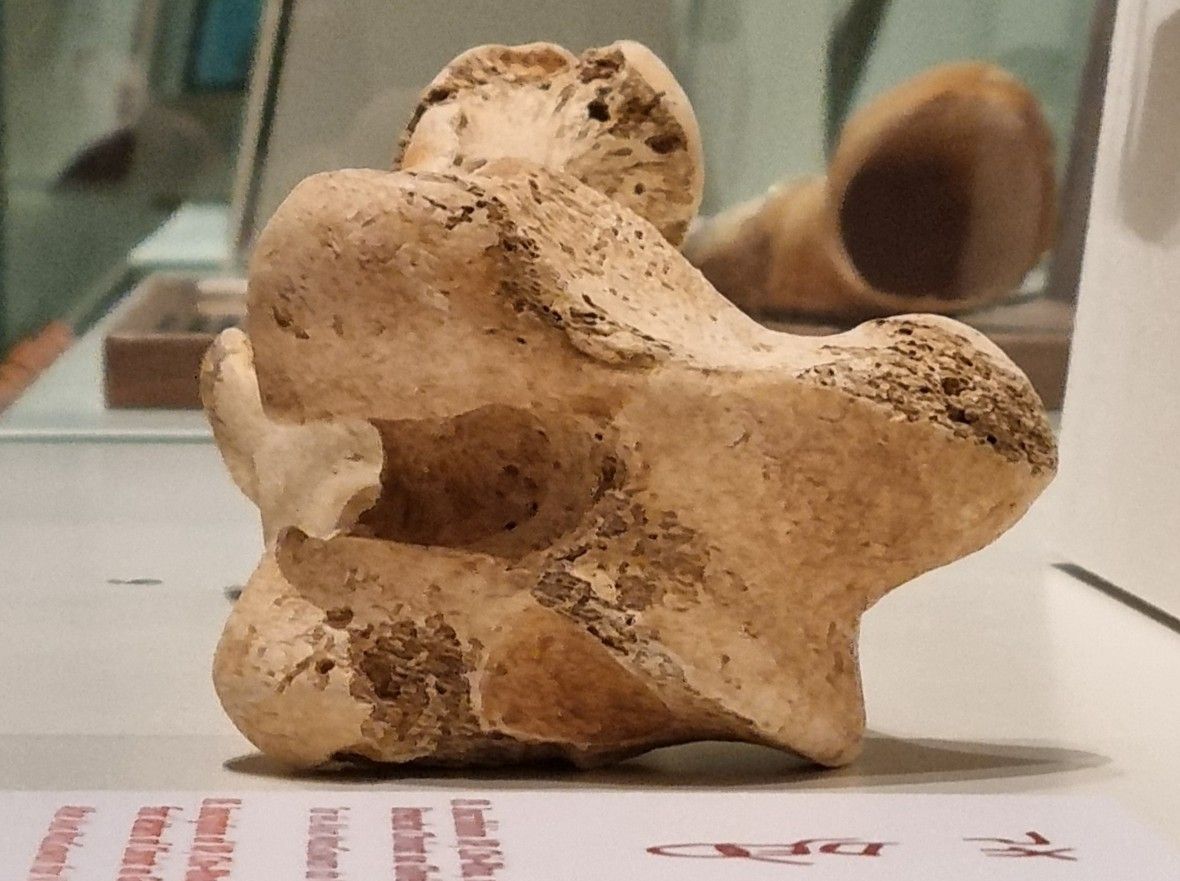
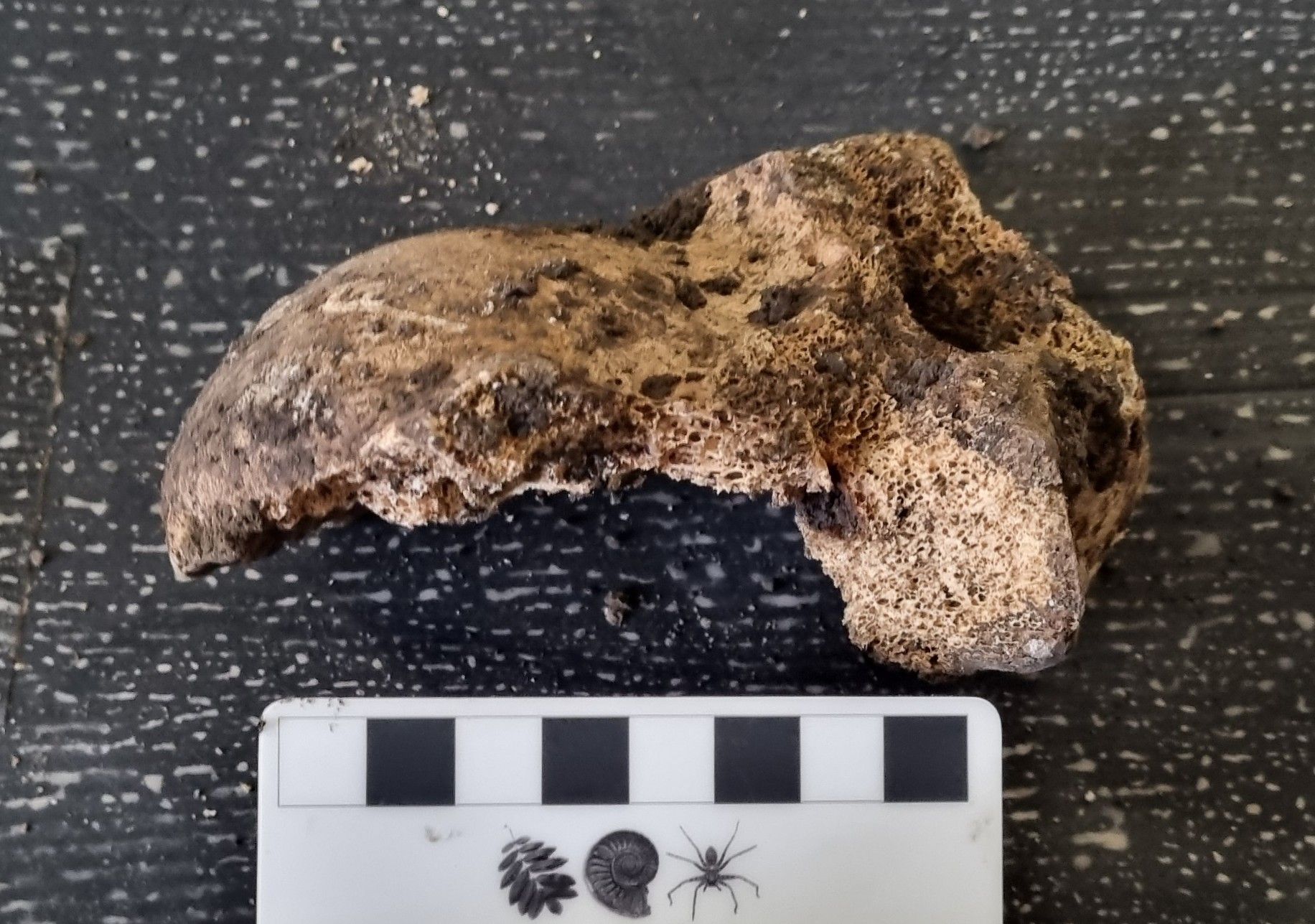
The side view is probably the most useful for setting context, as it shows the smooth curve of the head of an articular surface, with an adjacent tuberosity (or sticky-up-bit, if you prefer):

This is what you expect to see at the proximal end of a humerus (that’s bit that works with the shoulder). It’s pretty big – the scale bar is 8cm and the head of this humerus is a good bit wider across, so that also tells us something.

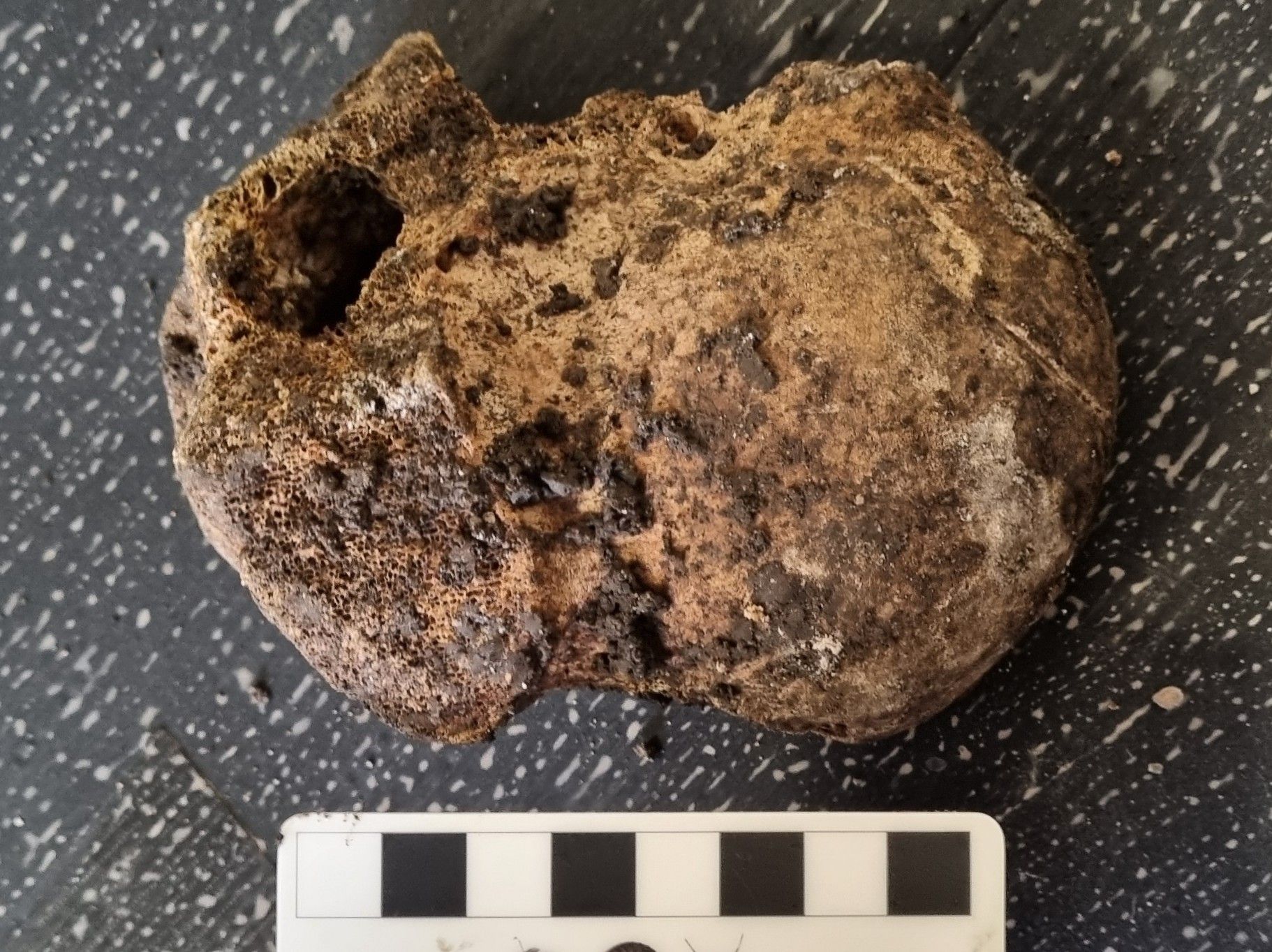
Another key observation comes from the underside of the humerus head:

You can just make out a rugose pattern on the underside of this piece of bone, which tells us that this is an unfused epiphysis that has become detached from the rest of the humerus. That means the animal that this piece of bone came from was young enough to still be growing, as the bones hadn’t fused.

All of that information leads us to the conclusion that the animal this piece of humerus came from was large, but still young. For me, that says that this humerus is from a Cow Bos taurus Linnaeus, 1758.

I suspect this mystery object represents the remains of a Victorian meal, based on where it was found – just under the floor of the Dead Zoo. It came to light during the investigation works on the building, which are currently underway. The building work started in 1856, so that gives us a good idea of when this beef shoulder was probably eaten.

Friday mystery object #520 answer

Last week I gave you this colourful chap to have a go at identifying:

As I mentioned in the previous mystery object answer, parrots can be hard to identify due to the large number of species globally. However, this time the specimen posed no problems for people to identify – perhaps unsurprisingly, given its importance.

Chris Jarvis was first in the door with the correct answer – a nice cryptic clue using the Seminole name for the species:

What a Puzz ila!

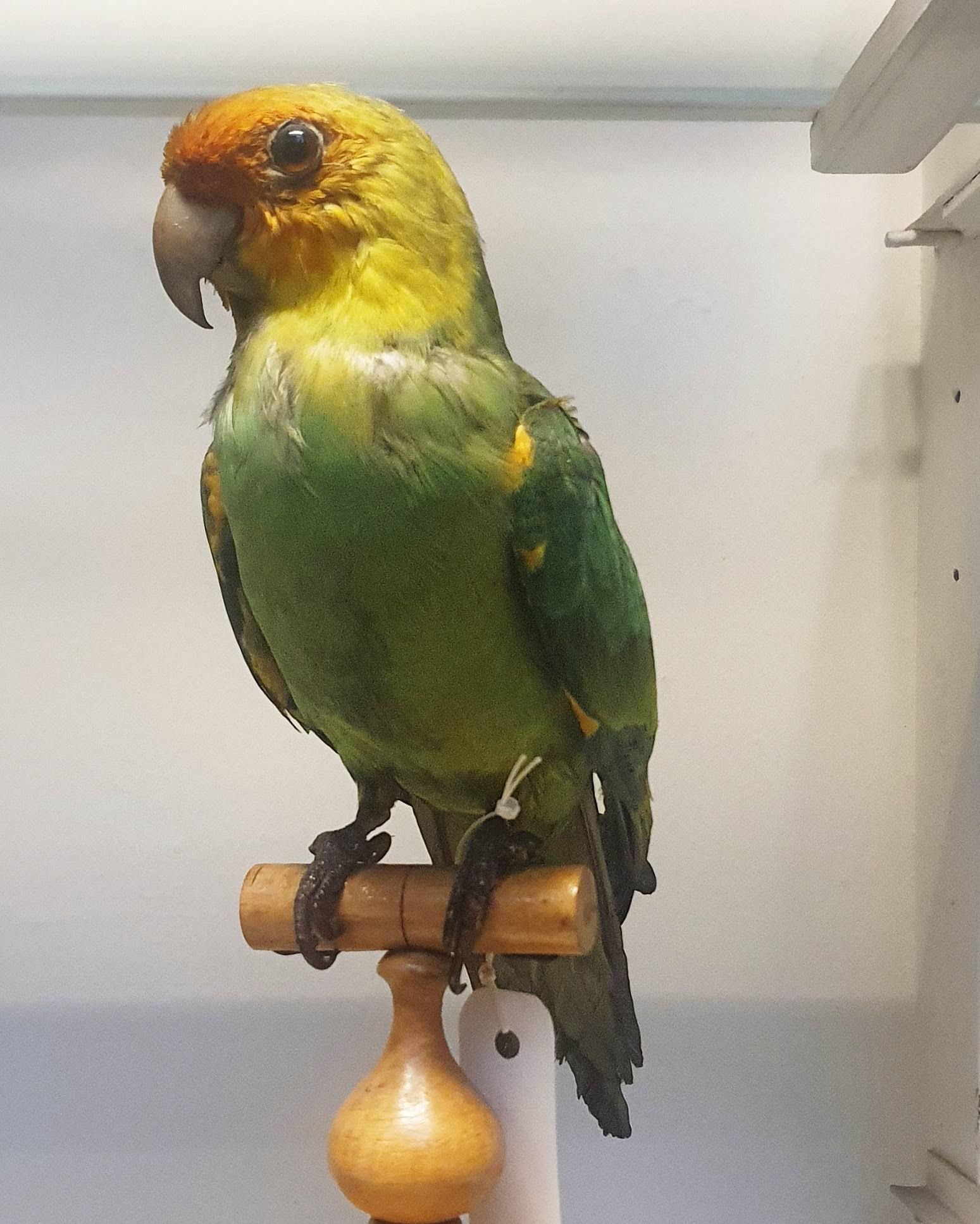
Other clues came thick and fast, but they all pointed to this yellow-headed, orange-faced bird being the now extinct Carolina Parakeet Conuropsis carolinensis (Linnaeus, 1758).

This colourful small parrot weighed in at around 100g and hung around in large flocks of up to 300 birds. Until the middle of the 19th Century they were commonplace in swampy forest habitats in parts of North America. The main resident population was in Florida although their range spread northwards along the marshes of the East coast (into the Carolinas) and westwards along the Gulf of Mexico just into Louisana.

A subspecies of the Carolina Parakeet (C. c. ludovicianus) also occurred in much of the Midwest and as far south as the top of Texas and as far north as the bottom of New York state. This subspecies had bodies that were more blue, but they disappeared alongside their greener sibling subspecies by the beginning of the 20th Century.

Conuropsis carolinensis ludovicianus by John James Audubon, 1811

It seems likely that the usual culprits played a role in the extinction of North America’s only endemic parrot – habitat loss and overhunting. Swamps were drained and forests cleared to make way for agricultural land, the birds were then shot for feeding on crops, and their beautiful plumage made the birds a target to supply the feather-forward fashions of the time.

While most of the shooting stopped before the birds went extinct, as people started to recognise the risk of extinction (especially in the context of the Passenger Pigeon that was being eradicated at around the same time), the last small wild population was vulnerable and it has been suggested that they were finally wiped out by an avian disease.

While a few stragglers likely remained living wild in the Florida swamps until the 1930s, the last known Carolina Parakeet (a male named Incas) died in Cincinati Zoo in 1918, just four years after Martha (the last Passenger Pigeon) died in the very same cage. A somewhat dismal end to colourful species.

Friday mystery object #519 answer

Last week I gave you a bit of tricky mystery object in the form of this colourful character:

Obviously it’s a parrot of some sort, but there are LOTS of parrots. With over 400 species to choose from, identifying one from a single image is not easy at all. Generally when it comes to parrot identification it’s very useful to know where it came from, and without that information this mystery is made even harder – but if I’d provided the locality it would have been way too easy!

I find a useful way to narrow down possible species when looking at parrots is to simply use a search engine and add descriptive terms of the colours of parts of the external anatomy. In this instance I searched for “parrot with emerald green wings, blue and purple chest” which offered up a few possible species, but it significantly narrowed down the options to work through. Of course, I did that with some awareness of colours likely being a little off.

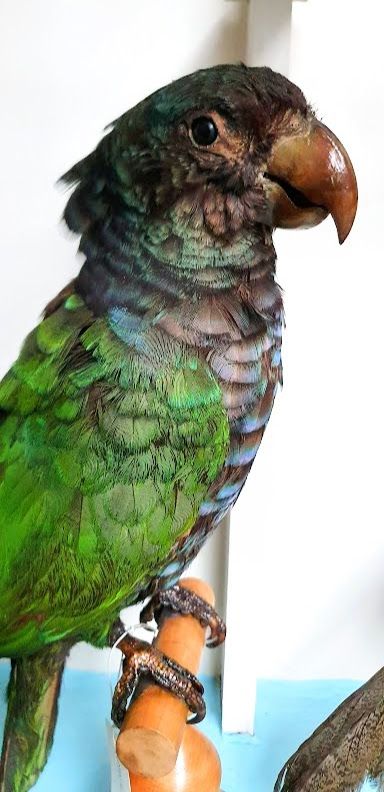
This is a specimen that arrived in the Dead Zoo in 1902 and it’s been progressively fading due to light exposure over the last 120+ years. The purples here are muted and I suspect the blue visible on the breast is actually residual following preferential colour loss of red pigments (types of carotenoid) that would have interacted with the structural blue colour of the feather (structural colours being much more light-stable than pigments) to create a much more vivid and robust purple colour than we see today. With that in mind, it becomes much easier to work out what this species is.

This is the Dominican Amazon (or Imperial Amazon, or Sisserou) Amazona imperialis Richmond, 1899 – one of just three species of parrot from the Commonwealth of Dominica, an Island in the Carribean. Here’s an illustration of what it looks like when it’s not faded:

This species features on the flag of the Commonwealth of Dominica and sadly there are very few of these stunning birds remaining, with estimated numbers somewhere between 40 and 60 mature individuals – making it Critically Endangered.

While numbers had been declining due to habitat loss, hunting and the taking of wild birds for the pet trade, the population has been significantly impacted by severe hurricanes hitting the island – which are increasing in frequency and severity due to climate change.

Hopefully, conservation efforts and the relatively inaccessible mountaious areas of the island in which the birds live will allow them a chance to recover, but they breed slowly and the threat from hurricanes remains.

Well done to everyone who had a go at this – it really was very difficult, so props to Katenockles who came close with a suggestion of the Blue-headed Parrot. Of course, there were lots of comments that referenced the infamous Norwegian Blue, which for younger readers might be unfamiliar, so here’s the source:

Just to note, while there are no parrots known from Norway, there are some fossil examples known from Denmark – so perhaps there is a chance the Norwegian Blue actually existed – albeit 55 million years ago,

Friday mystery object #518 answer

Last week I gave you this mystery object to have a go at identifying:

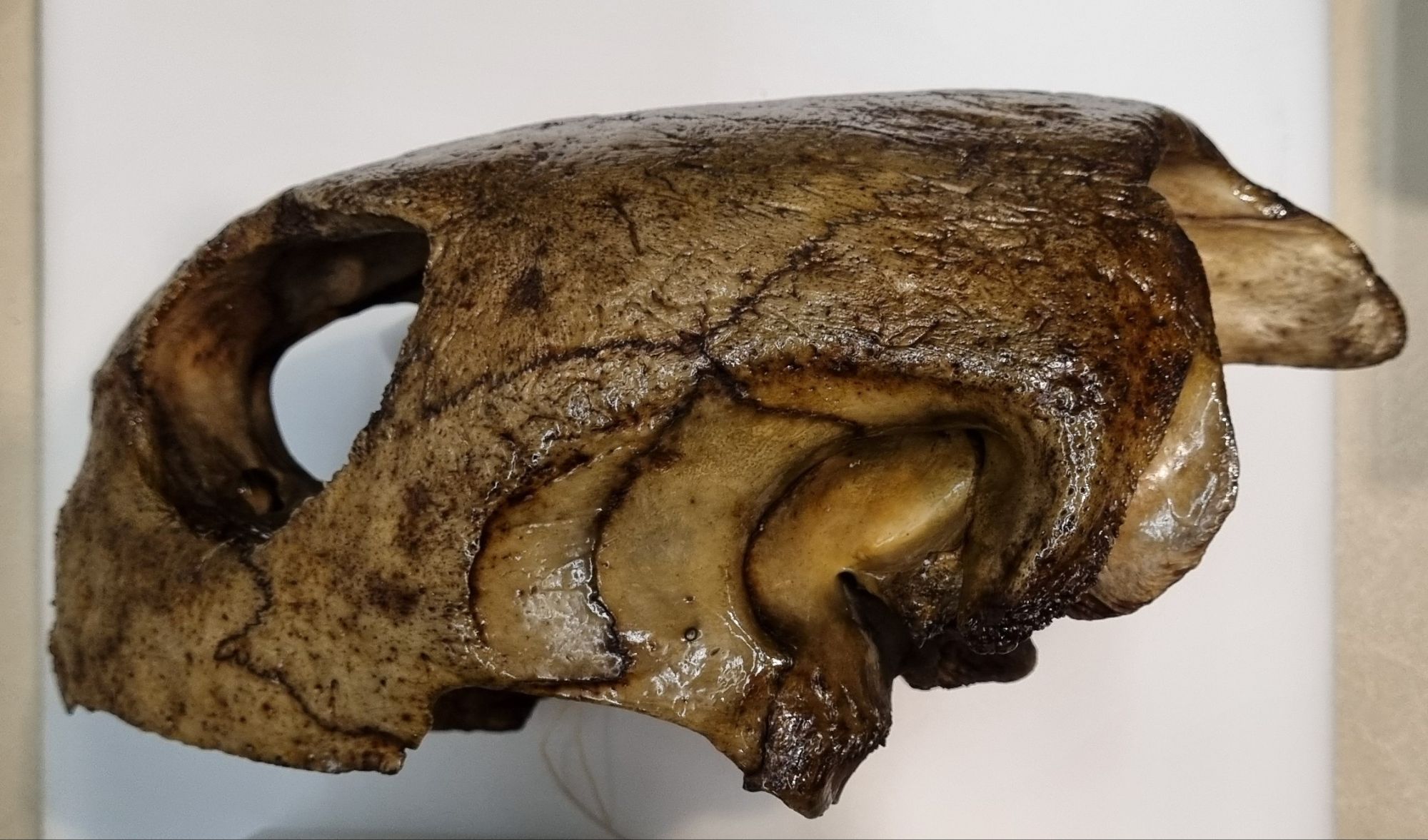
This one is fairly straightforward to get to the superfamily level – it’s one of the Sea Turtles (the Chelonioidea). However, despite there only being seven species alive today, their skulls can take a bit of careful observation to distinguish the diagnostic features that offer the clues to a species level identification.

When attempting this kind of thing, it’s always helpful to have access to a good key or guide that illustrates and describes those diagnostic features, and for me a very useful resource is The Anatomy of Sea Turtles by Jeanette Wyneken. Alas this excellent reference only covers six of the seven species, so it’s worth also taking a look at the Chatterji, Hutchinson and Jones redescription of the skull of the Australian flatback sea turtle for the sake of completeness.

In the comments on the mystery object this became something of a mix, with a variety of options being proposed. The first, from Adam Yates was actually the correct identification, but he then second-guessed himself.

In a nutshell, you can tell that this is a Green Turtle, Chelonia mydas (Linnaeus, 1758) based on the broad U-shaped curve of the upper jaw (other Sea Turtles have a more pointed bill).

There are plenty of other features as well, such as the configuration of the bones of the palate, a pair of ridges in the maxilla – which are admitedly a little hard to make out, so I’ve indicated them in red below to help you spot where to look:

Another useful feature visible from the palate is the lack of pterygoid processes, which rules out the Australian Flatback Turtle.

I also happen to know that this specimen was collected from Ascencion Island, which is slap bang in the middle of the Atlantic Ocean and is renowned as an important breeding site for Green Turtles.

So thanks to everyone for your thoughts on this one – I hope you had fun investigating, and I hope you find the references above useful if you stumble across more turtle skulls in need of identification.

I should probably add that I picked this specimen because I spotted it during the install of some displays in the new Dead Zoo Lab, which I’ve been working on intensively for the last few weeks. This is a space where we will be displaying some of our collections, and working with collaborators and our audiences on how we’ll be using our objects in the future redisplay of the Dead Zoo when the building has been refurbished.

The Dead Zoo Lab is now open to the public, so I’ll add a photo of the space below, and you can read more about it in this article in the Irish Independent in case you’re interested. I hope you get to visit sometime – and if you do, be sure to let me know!

Friday mystery object #517 answer

Last week I gave you a close up of a specimen from the Dead Zoo to have a go at identifying:

I don’t think this proved too much of a challenge, since Chris Jarvis responded with a correct identification within the hour:

This one’s sent me into a spiral, kudyu show a bit more,. bucky?
chrisjarvise8da89e10d says: July 18, 2025 at 8:44 am

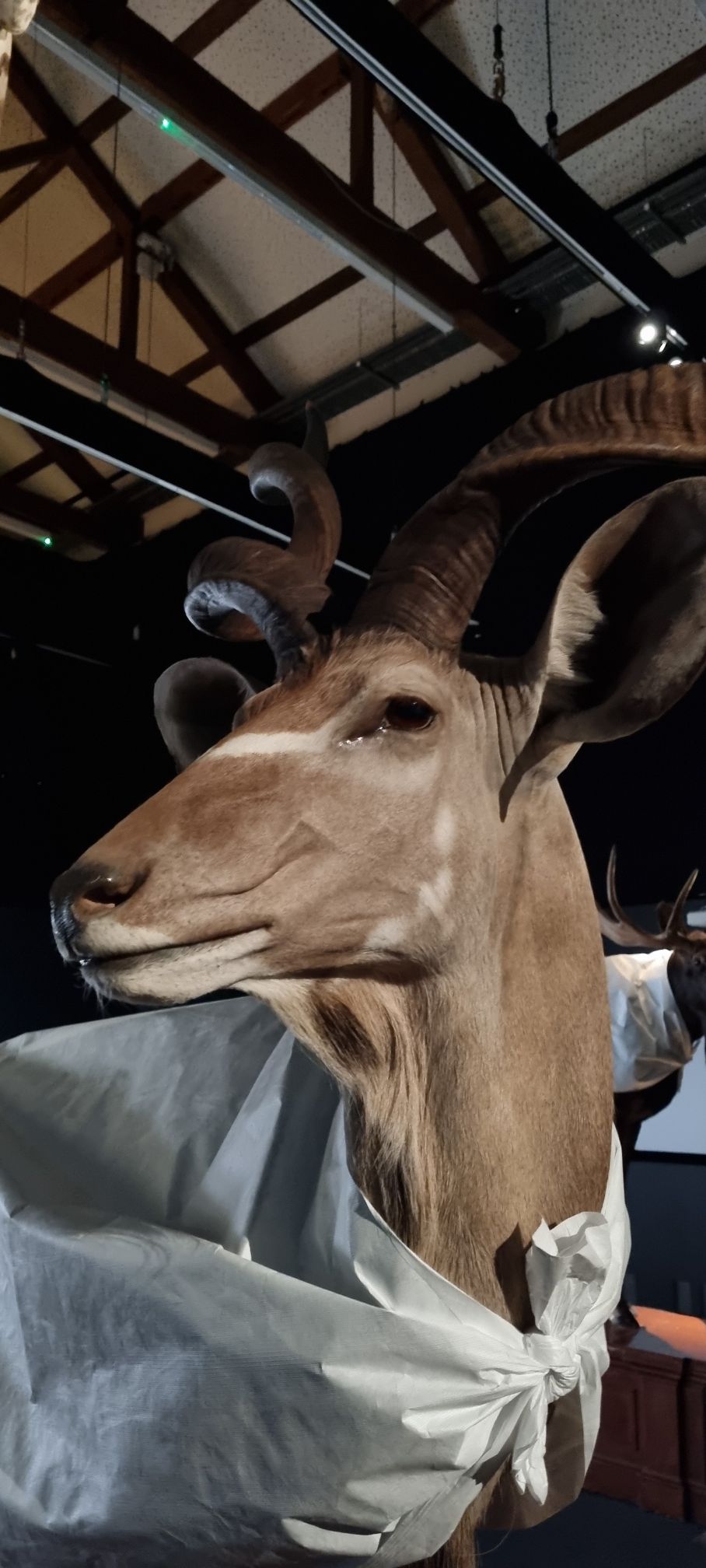
In case you missed the cryptic clues here (after all, I suspect that not everyone is as much of an antelope aficionado as Chris), this is a male Greater Kudu Tragelaphus strepsiceros (Pallas, 1766).

These handsome, large, spiral-horned antelopes have a distinctive white chevron that runs between their eyes – presumably the clue that Chris spotted to identify this specimen so quickly.

There are other species in the Genus Tragelaphus that look similar to the Greater Kudu, but they have different colouration and subtly different patterns on their faces.

I had the photo of this specimen because I’ve been working with my colleagues in the National Museum of Ireland team on getting objects ready for display at another of our Dublin sites called Collins Barracks. Obviously this is one of those objects.

The Dead Zoo has been closed since last September, while we’ve been emptying the space of collections for a major and much needed refurbishment. Of course, we want to make some of the collection available to the public while the Dead Zoo is closed, hence the work we’re doing now.

However, the display we’re working on is a bit weird – but it’s not intended to be an exhibition. I want it to be more of an iterative experiment for myself and my team to work out how we’re going to deal with redisplaying and interpreting the collections when the refurbishment works are done and we reopen the main Dead Zoo building on Merrion Street.

We’re calling the temporary display the “Dead Zoo Lab”, because of the experimental approach we plan to take. We want to involve the public in a conversation about how what we’re doing works for our audiences. I’m excited to see how we can build dialogue in this space to help inform our work over the next few years.

I am getting a bit ahead of myself though, as we still need to finish installing objects over the next week or so, before we can open the doors to the public. Once we get to that stage I’ll be sure to share some photos of the space for the Zygoma community – and I’ll be excited to hear your thoughts!

Friday mystery object #515 answer

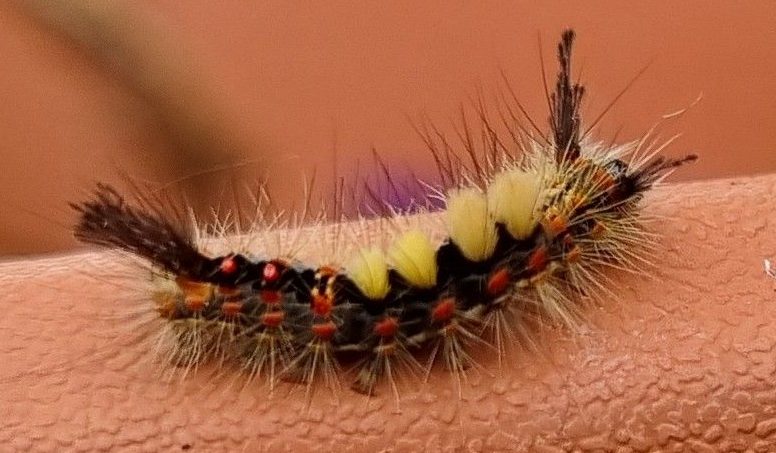
Last week I gave you this fuzzy little fella to have a go at identifying:

It’s a very distinctive caterpillar and I had a feeling it wouldn’t prove much of a challenge (correctly it turns it). Those tufts of hair, “horns” and bristles are a dead give-away.

As everyone who commented recognised, this is the larva of a Vapourer Moth, also known as a Rusty Tussock Moth Orgyia antiqua (Linneaus, 1758).

This day (and night) flying moth is fascinating, as the adults demonstrate quite extreme sexual dimorphism, with the female being almost wingless and the males flying around seeking her out by detecting her “vapours” – the pheromones she secretes that give these moths the name “Vapourer”.

72.017 BF2026 The Vapourer, Orgyia antiqua, mating, by Patrick Clement from West Midlands, England, 2005

The name Orgyia is apparently meant to derive from the ancient Greek word “órgyia” meaning “outstretched arms” – referencing the front legs of these moths, which splay out in front of them. However, knowing how much taxonomists enjoy a bit of wordplay, I wonder whether the clouds of males attracted to the vapouring females inspired the name for a different reason…

These moths are quite widespread, occurring in Ireland, the UK, across Europe and they are well established in America. They feed on a wide variety of different plants, but generally don’t cause many issues for gardeners as they tend to not be around in very high densities.

This may be a bit surprising, considering the flightless females can carry and lay large numbers of eggs, since they don’t have to worry about maintaining flight weight. But, numbers of moth eggs laid rarely equate to the number of surviving offspring, due to predation and the actions of parasitoid wasps.

I hope you enjoyed working out the identity of this mystery object, and maybe finding out more about a pretty interesting insect.

Friday mystery object #514 answer

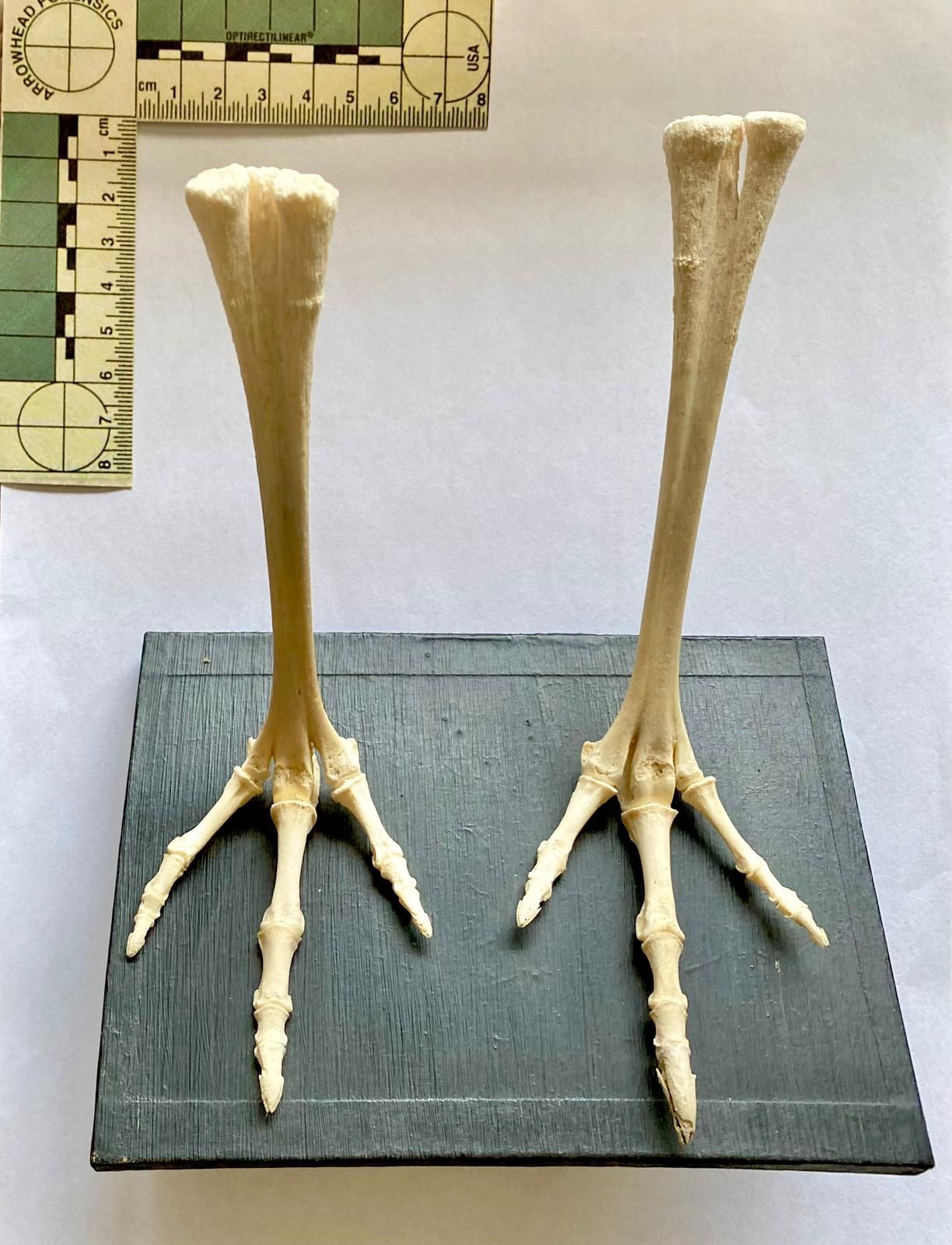
Last week I gave you another guest mystery object from regular contributor Andy Taylor FLS FBNA:

Image by Andy Taylor FLS FBNA, 2025

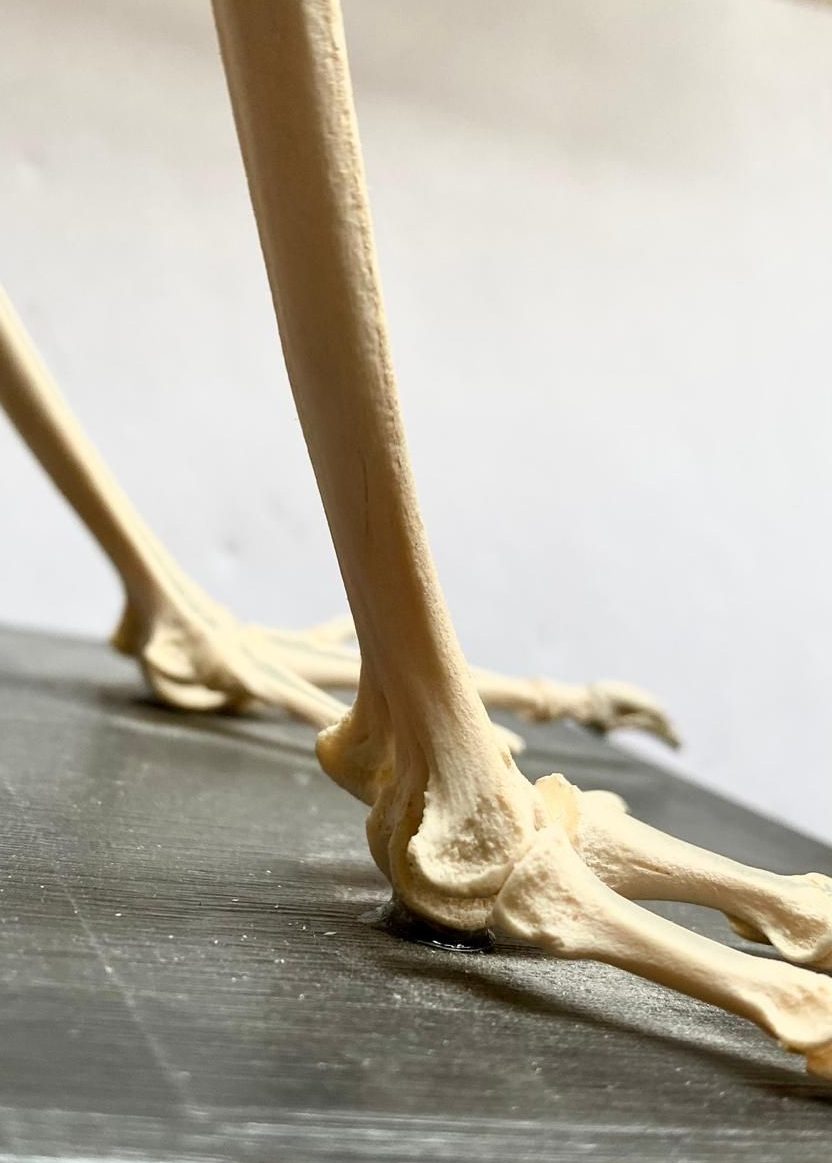
This proved to be a tricky challenge. The large size and the lack of a halux (the rear-facing small toe found in many birds) makes this seem like the feet of some sort of Ratite, which is the group of birds that includes a variety of flightless examples, including Ostriches, Emus, Cassowarys, Rheas, and Kiwis – many of which lack the hallux.

Image by Andy Taylor FLS FBNA, 2025

However, these feet do not belong to a Ratite – and in the comments, many of you seemed to notice that there was something funky with the arrangement of the toes and bones that may have offered a clue to indicate that fact. Even though they’re not from a Ratite, there are some useful pointers that can be taken from the similarities, since form follows function and if we know Ratite feet can look similar to these, then perhaps it’s worth asking “why is that?”

Many (although not all) Ratites have three forward-facing robust toes, although the Ostriches are a bit of an exception, as they only have two toes per foot. In the evolutionary push to be fast on your feet, too many toes can make you slow – just look at how horses have lost all but one of theirs.

Ratites also lack a hallux, and their claws don’t curve. These features all reflect the fact that Ratites don’t perch on branches, they’re heavy, and they spend most, if not all, of their time walking around on dry grasslands (actually, this isn’t true for Kiwis or the extint Moas that have more scrubby or habitats, but these Ratites do have a hallux). These are all useful things to consider when thinking about potential species that these feet could be from.

If you think of large and heavy birds that don’t perch and have a grassland habitat the list of possible options gets narrowed down quite quickly. Sereimas and Secretary Birds are out, as they have a hallux and more curved claws. Storks, Megapodes and Galliformes all also have a hallux. But one type of bird matches the description very well – the Bustards (or Otididae if you prefer).

The size means it must be one of the larger species of Bustard, but I suspect that it would be difficult to confirm the identification to species level without good quality reference material, since there are quite a few species. But in this case we’re luck to know the species, since Andy has the information – these feet belonged to a Great Bustard Otis tarda Linneaus, 1758.

It’s a species I’ve talked about before in a previous post and I really appreciate Andy sharing the images and information from his collection, and all the thoughts and comments that came in about the mystery object from the community here on Zygoma. Thanks for taking part!

Friday mystery object #513 answer

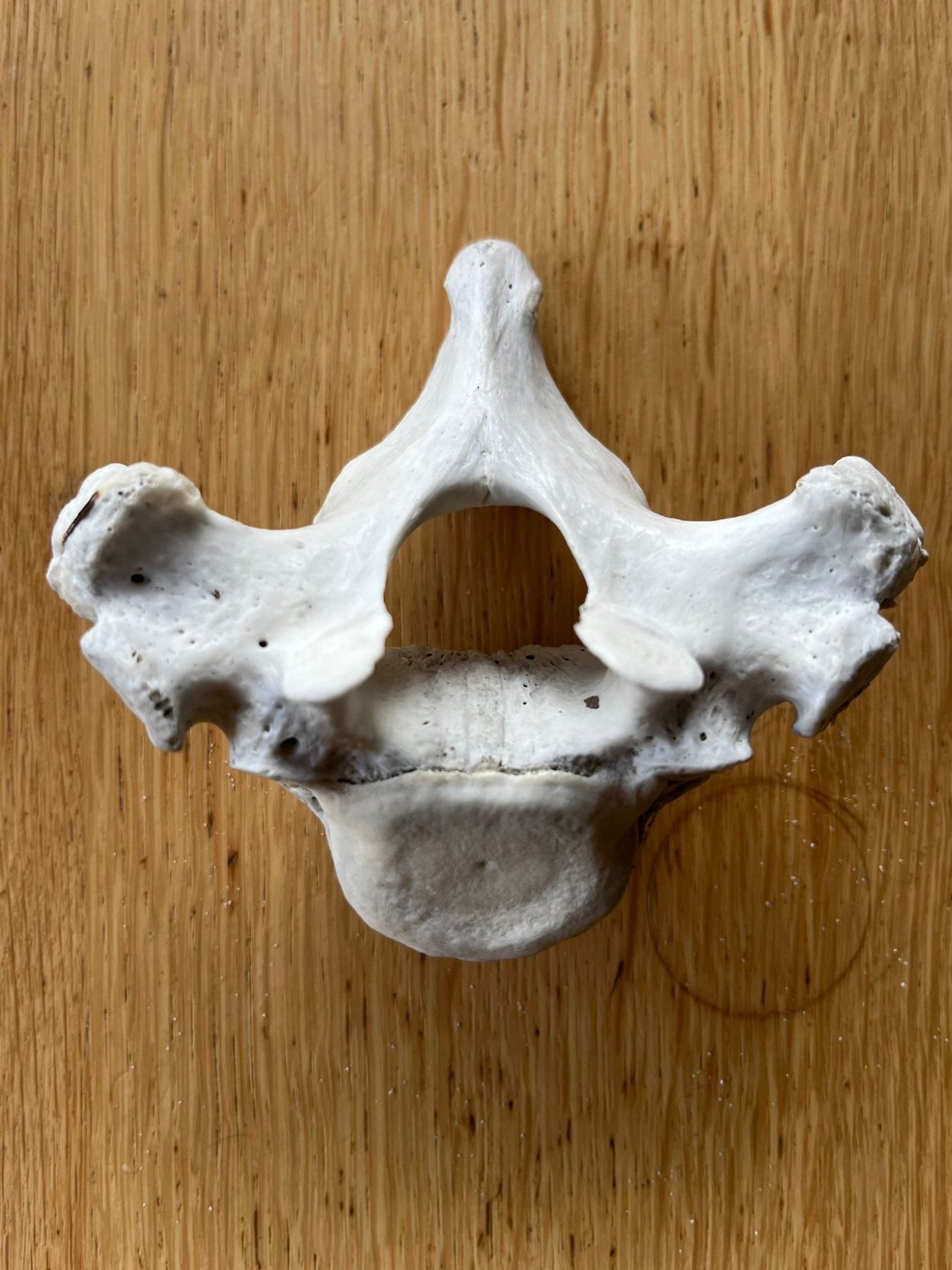
Last week I gave you this mystery object found by the family of one of my colleagues to have a go at identifying:

Image by Andrew Brady, May 2025

Adam Yates got the ball rolling with some key observations about this skeletal element that provides a handy set of clues to look for when assessing vertebra:

The element is easier than than the taxon. It is a thoracic vertebra from a mammal because it has zygapophyses (so therefore not a fish), flat centrum faces (so therefore not bird or reptile), and rib articulation facets (so therefore not from the neck, lumbar or tail regions). Which mammal is less easy, I’m pretty sure it is isn’t a relative of flipper, but that’s all I’ve got now.

Adam was also right in flagging that it’s not from a cetacean – their transverse processes are longer and less robust than we see in this mystery specimen. However, this bone was found on the beach on Achill Island, so there’s a good chance it’s from a species that’s frequently in the water.

Then Joe Vans, Kat Edmonson and Adam got stuck in with consideration of the possible species and specific thoracic vertebra, and as part of that there was reference to images from John Rochester’s Flickr pages. As far as I’m concerned, John’s pages are some of the best resources available for osteological comparison and I use them regularly.

The discussion ended up converging on the 5th thoracic vertebra (or T5 as it would be commonly referred to) of a Harbour Seal, based on specimens imaged by John here: https://www.flickr.com/photos/jrochester/14181517647 – best compared to this image of the mystery specimen:

Image by Andrew Brady, May 2025

This could well be correct, but I personally think it may be from a different species of seal. The size is fairly large (based on the hand that provides some scale), yet the epiphyses of the articular surfaces are not fully fused, suggesting that this is from a subadult animal:

This suggests to me that the animal had some more growing to do before reaching full size, which may impact on some of the features, but it also makes me think that the vertebra is probably on the smaller end of the size range for the species.

For me that would suggest a Grey Seal Halichoerus grypus (O. Fabricius, 1791) and looking at another of John’s pages: https://www.flickr.com/photos/jrochester/24441096790/in/photostream/ I would expect it to be in the T6 or T7. This also tracks for me in terms of the shape of the neural canal, which seems narrower and taller (generally more square) in the Grey Seal compared to a broader and perhaps more triangular neural canal in the Harbour Seal.

I suspect a measurement of the size would help confirm one way of the other, so I’ll see if I can get that to be sure. I hope you enjoyed the challenge of working this out, and I’d love to hear your thoughts if you think it could be something else!

Friday mystery object #512 answer

Last week I gave you this guest mystery object to try identifying, from the collection of Andy Taylor FLS FBNA:

Andy had brought this particular specimen along to the NatSCA Conference, which was held in the Manchester Museum this year. It’s not the only one he brought – there were several fantastic specimens from his incredible collection, my favourite being the Bathynomus Giant Marine Isopod:

Me holding a Giant Marine Isopod from Andy Taylor’s collection

It was great to see these specimens, and it’s surprisingly rare to be able to see specimens like this at a conference these days, since UK museums have very strict controls on how accessioned collections are transported and used, which can make it hard to support use in outreach. While this is good for the care of the collections, it does reduce their ability to be used to educate and inspire.

Andy doesn’t have this limitation, since the specimens are from his own collection, which has been built up over 40 years of interest in natural history and through a network of contacts researching life in the deep seas and a variety of other environments. Andy does this because he’s passionate about nature, and his collection is available for use for research, loans to support exhibitions, and use in training and outreach activities.

Many natural history collections in museums came from the activities of passionate naturalists like Andy – in fact quite a lot of local and regional museums in the UK were originally founded to house the collections of local naturalist organisations, that sprung up to support the learning of working people who didn’t have the opportunity to follow an academic route into the natural sciences, but who made huge contributions to our understanding of local biodiversity in the areas in which they were active. These people were true amateurs – doing this work for the love of it, rather than for profit.

Various organisations still support the activities of passionate naturalists (both amateur and professional), such as the British Naturalists’ Association and the Linnean Society of London (of which I am a Fellow) and I think they have huge value for furthering our understanding of natural science and supporting the activities of taxonomists and conservationists who do the vital work needed to protect our threatened natural world.

However, none of this offers an answer to last week’s mystery object, so let’s get to that.

The photos I provided weren’t great, but that didn’t stop the Zygoma regulars from figuring it out. Chris Jarvis indicated that it was a type of mussel, Sallie Reynolds got the clue I offered in last week’s post (“you may need to dive deep to work it out”) and figured it was from very deep in the ocean, and Adam Yates suggested the wrong species in the right genus, and then dialled in on the correct species after a helpful comment from Andy.

This is a specimen of Bathymodiolus thermophilus Kenk & Wilson, 1985 a type of mussel that lives around hydrothermal vents. This particular specimen was collected at a depth of 2.2km from a hydrothermal vent on the East Pacific Rise by Alvin Deep-Submergence Vehicle (DSV) as part of research by the Woods Hole Oceanographic Institution.

Alvin DSV in action. Photo credit: NOAA, August 1978

The distribution of specimens like this to a variety of people and organisations is an important activity, since it helps ensure examples of species can be made more available for interested parties around the globe – decentralising collections so local events (from earthquakes to funding cuts by anti-science governments) stand less chance of taking specimens out of circulation for research into our global biodiversity.

I would like to offer up my thanks to Andy – his support for this blog has always been enthusiastic and I appreciate it greatly!

Friday mystery object #511 answer

Last week I gave you a particularly mean mystery object to try to identify:

This would be difficult if it was an accurate representation of the eye of the living animal, but I suspect it’s pretty much impossible (unless you’re familiar with this specimen), considering how different this eye appears from the eye of the actual animal. This is something that katedmonson spotted and commented on:

The problem I can “see” with this eye is that we are relying on the skill of the taxidermist to have correctly chosen the exact correct glass eye: pupil, color, shape of the iris, for the animal is is supposed to represent. And did the preparer accidentally strip the eye of any eyelashes, (sus scrofa as many have indicated) or does this animal not have any. Which is fairly unusual as far as ‘eyes’ go. Unless it was cetacean, which the fur would indicate it is not. Not seal either.

Kat made the point I was planning on making when I chose this mystery object – the eyes of taxidermy specimens are a choice made by the taxidermist who does the preparation, and that choice might be accurate – or it might not be. However, there is one point Kat makes that isn’t quite on point – this is in fact a type of seal:

This is a Hooded Seal Cystophora cristata (Erxleben, 1777) – a species that I have talked about before on the blog, in fact I think the specimen I used in that instance may have been the skull that came from this taxidermy example:

I should probably offer my apologies at this point, for going with such a difficult mystery object, but sometimes it’s nice to pose a puzzle that even the crack community of commenters on the blog have trouble with. Thanks to you all for your thoughts on this – I hope the search for an answer wasn’t too frustrating!
Friday mystery object #510 answer

Last week I gave you this genuine mystery object to have a go at identifying:

This came to light when we were clearing out cupboards in the Dead Zoo, and it may have been an ill-considered option, considering how tricky vertebrae can be to narrow down to species and how little time I’ve had to research this particular specimen.

I was hoping that someone in the comments might spot something I’d missed, and Adam Yates certainly spotted everything I’d noted from my inspection of the specimen:

Clearly birdy (pneumatic foramina and saddle-shaped posterior centrum face). The odd short anterior of the pair is probably the axis, and the one behind, Ce 3. I can’t do better than that right now, but will return to this puzzle later…

He also added a useful comment about size which I hadn’t really considered fully:

…The first few cervical vertebrae of birds are surprisingly small and I judge this axis to be about 25 – 30 mm across the postzygapophyses, using Paolo’s thumbnail as scale. That would suggest a raft of large species. I’m going to guess this one rhymes with “he knew”.

I’m assuming that’s a reference to Emu, and the size of the vertebrae certainly seem to be in the right size range (at least according to this paper by Baranowski et al, from 2018). However, I’m not entirely convinced that the shape is quite right, Rheas might be a little more similar, and there was a hint at a pouched animal by katedmonson, which I suspect is a reference to a Pelican.

I think these are a little bit too short for a Pelican, but I’ll certainly keep that identification in mind as I try to find where these came from. However, without spending a good bit more time trying to find comparative specimens, it’s going to be a challenge. It may be that the easiest way to work out what this is will be to search for a large mounted bird skeleton that’s missing these vertebrae, since there are not too many such specimens in the Dead Zoo.

But before I start a wider search, I have a hunch that I want to check out. There is a King Vulture specimen that I’ve blogged about previously (way back in 2018) that is large and consists of a partially dismounted skeleton. I think I’ll make that my first port of call, as (if memory serves) it has similar levels of soot build up on the bones, and I suspect it’s in the right sort of size range, as vultures have fairly large and robust cervical vertebrae for their size.

So my thanks to everyone for their suggestions and observations – if I eventually discover the identity of these bones I’ll be sure to update this post, and if you think you know what it is, I’d love to hear your thoughts!

Oh, and if you celebrate Easter, I hope you have a great one!

Friday mystery object #509 answer

Last week I gave you these fuzzy chicks to try your hand at identifying:

Their speckled camouflage is perfect for pebbly beaches and it’s just what you’d expect from a member of the Gull Family (the Laridae). This is something that everyone picked up on, with a variety of excellent clues.

pleasantly78f070d606 was first in the door, with a great clue identifying the correct species in three words:

Silvery chip thief

The chip stealing (both in the UK and USA meaning of chips) encapsulates one of the more familiar and frustrating behaviours of this commonly kleptoparasitic species:

The “silvery” references the species name argentatus (which in tern references the silvery shade on back of these cheeky birds). So this is the chick of a Herring Gull Larus argentatus Pontoppidan, 1763.

It can be tricky to distinguish between the chicks of various different gull species, but you may notice that these look a bit like they’ve gone for, what I can probably best describe as an eyeliner flick. This bar behind the eye is variable, but occurs frequently in Herring Gull chicks, but less so in the similar looking chicks of other closely related species.

These chicks are from a particularly nicely done diorama in the Dead Zoo, which we’ve been in the process of preparing for transport out of the building. We’ll be sharing some of the progress on the project on some social media platforms (Bluesky and Instagram) soon – so I’ll be sure to share some of those stories from our hard-working team here as well.

Friday mystery object #508 answer

Last week I gave you a St Patrick’s themed mystery object in the form of this snake:

It was a really difficult ask – the skin is faded and the specimen has been chopped into several pieces, making identification very tricky. I did provide a clue with the location of where this specimen is from, to offer a little help in narrowing down the possibilities (it’s from Venezuela).

Unfortunately, as Adam Yates spotted, I managed to leave in another more obvious clue that I thought I’d removed – the name of the species, which appears in the photo of the full specimen. I cropped the image in WordPress, not realising that if you click on it the original uncropped image opens. Not my finest moment!

However, specimen identifications need to be taken with a pinch of salt until they’re verified, so let’s do that as best we can.

The side view of the head of this specimen gives a useful clue that Adam picked up on:

It has a sensory pit between the eye and the nostril, indicating that this is a type of Pit Viper, which does help reduce the options from around 50 Venezeulan snake species to around 15 or so. It’s also consistent with the identification of Bothrops venezuelensis Sandner-Montilla, 1952.

Most of the other Pit Vipers are fairly distinct from this specimen in terms of colour and pattern, but there are a couple of members of the Genus Bothrops (the Lanceheads) that are similar to this.

You may just be able to see a hint of a stripe behind the eye that terminates just above the last scale above the mouth, which can be useful in distinguishing between B. atrox (where the stripe touches the last three scales over the mouth) and B. asper (where it just touches that last scale as we see here), but this feature is less relaibe for B. venezuelensis, which can be distinguished from the other two species by having a more rounded rostrum:

This specimen’s rostrum (snout) is a little pointy, but for a type of snake called a Lancehead, you expect them to be very pointy. Of course this specimen is a little imperfectly prepared, so the rostrum shape may be misleading. As a result, I’d be a bit unwilling to differentiate between B. asper and B. venezuelensis based on the images.

What we do know is that this was certainly a venomous snake, since it bit a farm labourer working on a hacienda who required two doses of antivenom, but they thankfully survived. I suspect that this is why the head is separated, since the snake was killed and presumably identified to assist with administration to the appropriate antivenom.

This specimen is one of several from the same collector, who I plan to talk about more in future posts, since we have great information about a fascinating life.