
Last week I offered up this specimen from the comparative avian osteology collections of the Dead Zoo, to test your bird cranium identification skills:


This wasn’t the easiest mystery object, as this specimen is from a species that has several similar relatives that are quite hard to distinguish based purely on their skull, but they tend to be easy to tell apart whe they have their plumage. As many of you spotted, this is the skull of a species of Ibis.
It has similar proportions and features to several species, including the Australian White Ibis (or “Bin Chicken” as it’s fondly known), the American White Ibis, the Scarlet Ibis, and the actual species that this is – the Glossy Ibis Plegadis falcinellus (Linnaeus, 1766).

It was a bit mean of me to not include the collection locality for this particular specimen, since that would have provided the additional piece of information that would have allowed people to work out which species it was, since it was collected around 1946 near Athlone in Ireland.
The Glossy Ibis is the only species of Ibis that regularly turns up in Ireland:
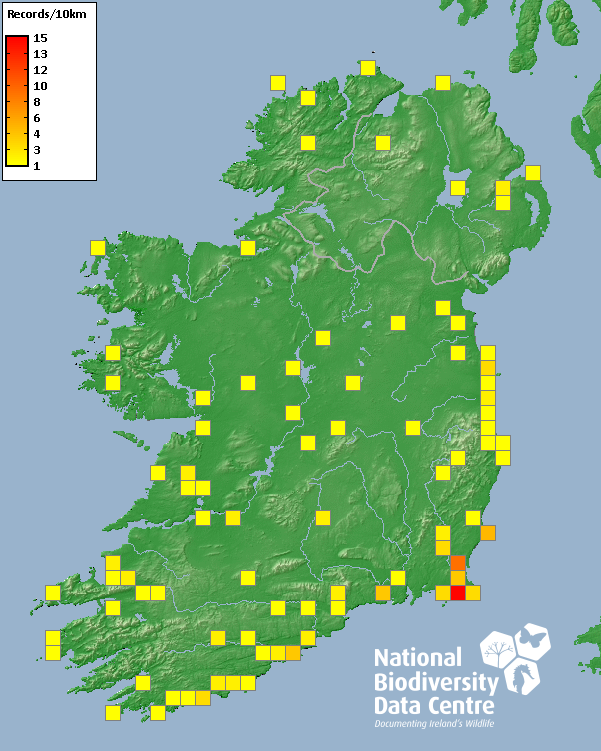

In recent years the Glossy Ibis has been turning up increasingly frequently in Ireland, and it seems that this is linked to changing climate. In particular, the wetlands of Doñana National Park in southern Spain have been drying out following hot summers and misuse of water, forcing these rather fetching birds further north to forage for food in shallow water in wetter areas in the UK and Ireland.
Some are even starting to breed in southern England, so we may yet see the Glossy Ibis forming breeding colonies in Ireland in the next few years, if the situation in Spain continues to reduce their available habitat.
So well done to everyone who worked out which of the curve-billed bird groups this belonged to, and my apologies again for being stingy with the locality details when I set the challenge!


Quite amazing that I see the same species occasionally here in central Australia.