
Last week I gave you this rather beautiful mystery object to have a go at identifying:
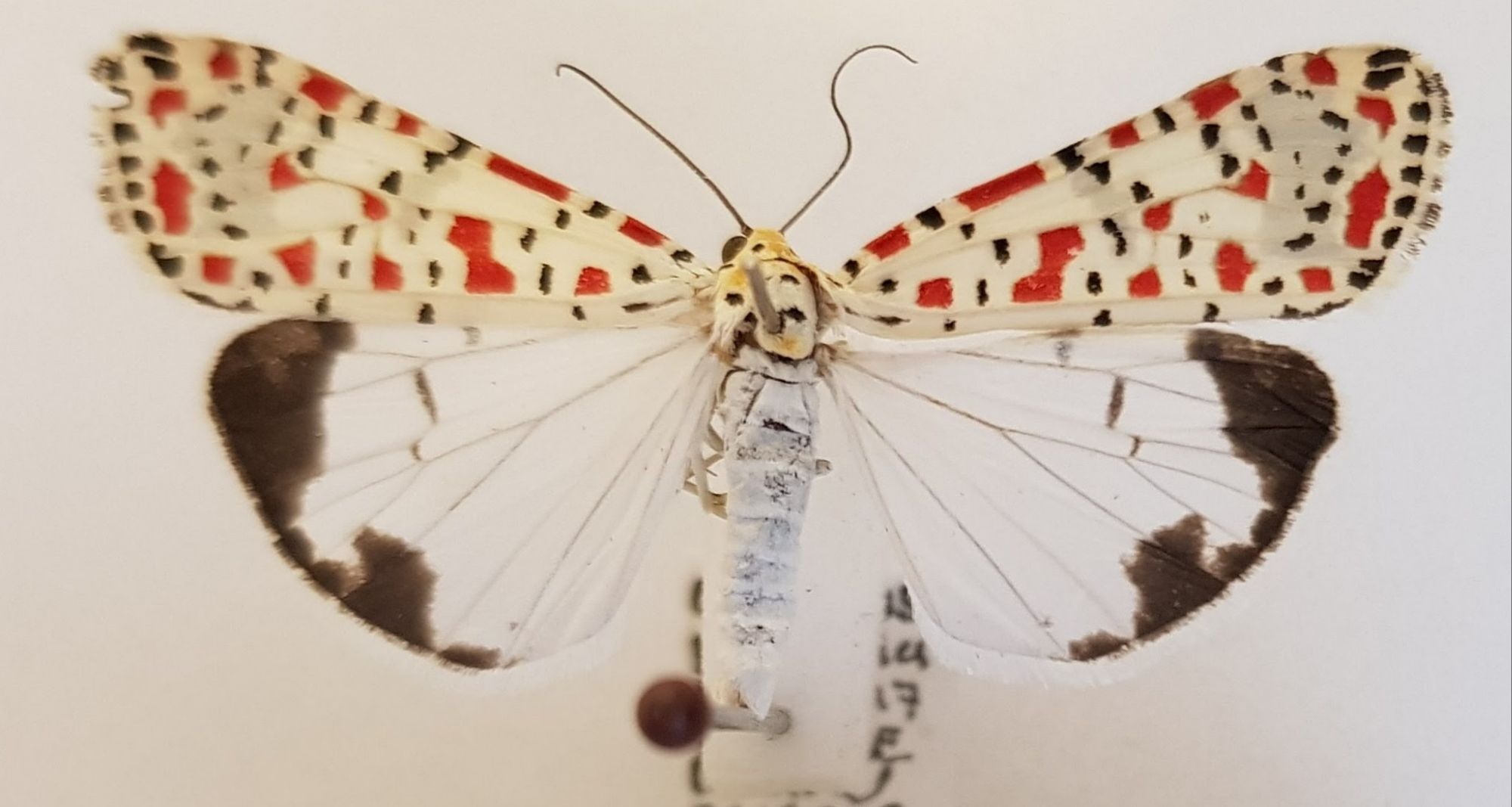
This is a pretty distinctive species, but not without some very similar relatives who can complicate things.
The speckled crimson pattern on the forewings of this species provide all the clue you really need for the identification – it’s a Speckled-crimson Moth (or Crimson-speckled Flunkey, or Crimson-speckled Footman) Utetheisa pulchella (Linnaeus, 1758). I even dropped a hint when I described it as a “rather beautiful beastie” as the Latin species name pulchella translates to “beautiful”.
This species occurs across Africa, Asia, and Europe, with occasional migratory visitors turning up in the UK and Ireland – in this case in Tramoe, Co. Waterford.
However, there is a very similar looking species in the same Genus that goes by the name Utetheisa pulchelloides – which literally means “resembling Utetheisa pulchella“. The common name for that species is the Heliotrope Moth, which mainly occurs in the Southern Hemisphere – mainly New Zealand, Australia and up into Borneo and Singapore.
Here’s a comparison between specimens of these two species from other collections:
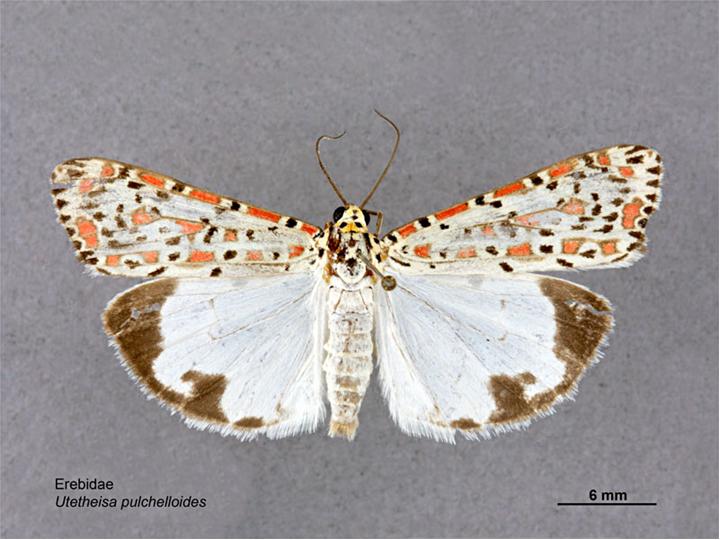
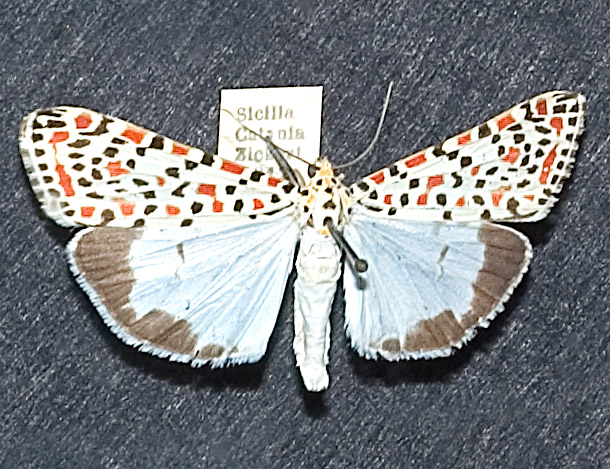
You can see how similar they are – and if you look at the underwing the U. pulchelloides specimen looks more similar to the mystery specimen – which I suspect may have led Adam Yates down the wrong path.
If you look at the forewing you might notice that U. pulchelloides has small black triangles along the margins, whereas U. pulchella (and the mystery specimen) has truncated triangles or rectangles. You may also notice that the crimson speckles of U. pulchelloides are more faded and have a dark margin.
So well done to Chris Jarvis, Katenockles, and Jonathan T who all spotted the subtle differences either in the comments or on Mastodon.
 Zygoma
Yes, it was the underwing pattern that tripped me up.