
Last week I gave you another guest mystery object from regular contributor Andy Taylor FLS FBNA:
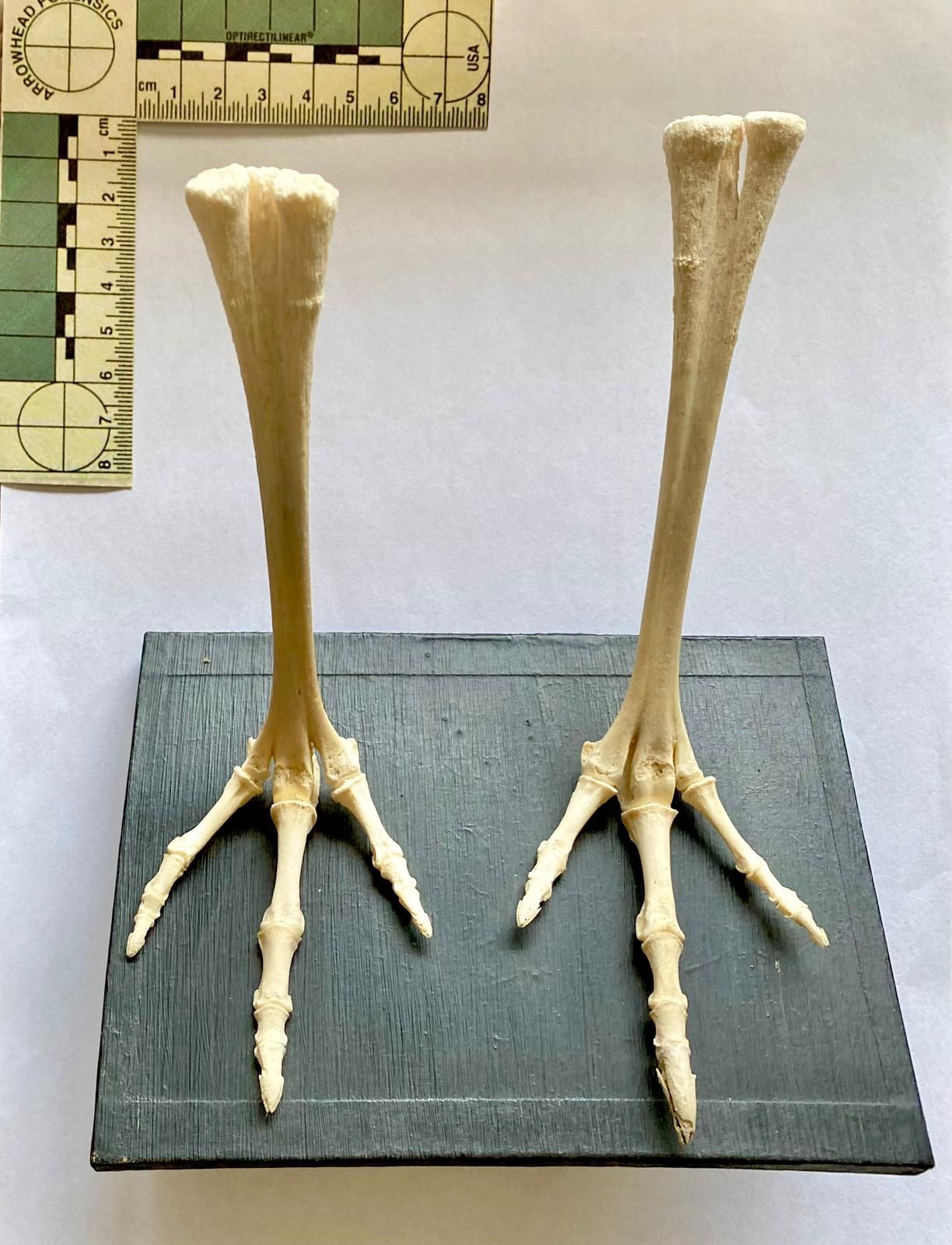
This proved to be a tricky challenge. The large size and the lack of a halux (the rear-facing small toe found in many birds) makes this seem like the feet of some sort of Ratite, which is the group of birds that includes a variety of flightless examples, including Ostriches, Emus, Cassowarys, Rheas, and Kiwis – many of which lack the hallux.
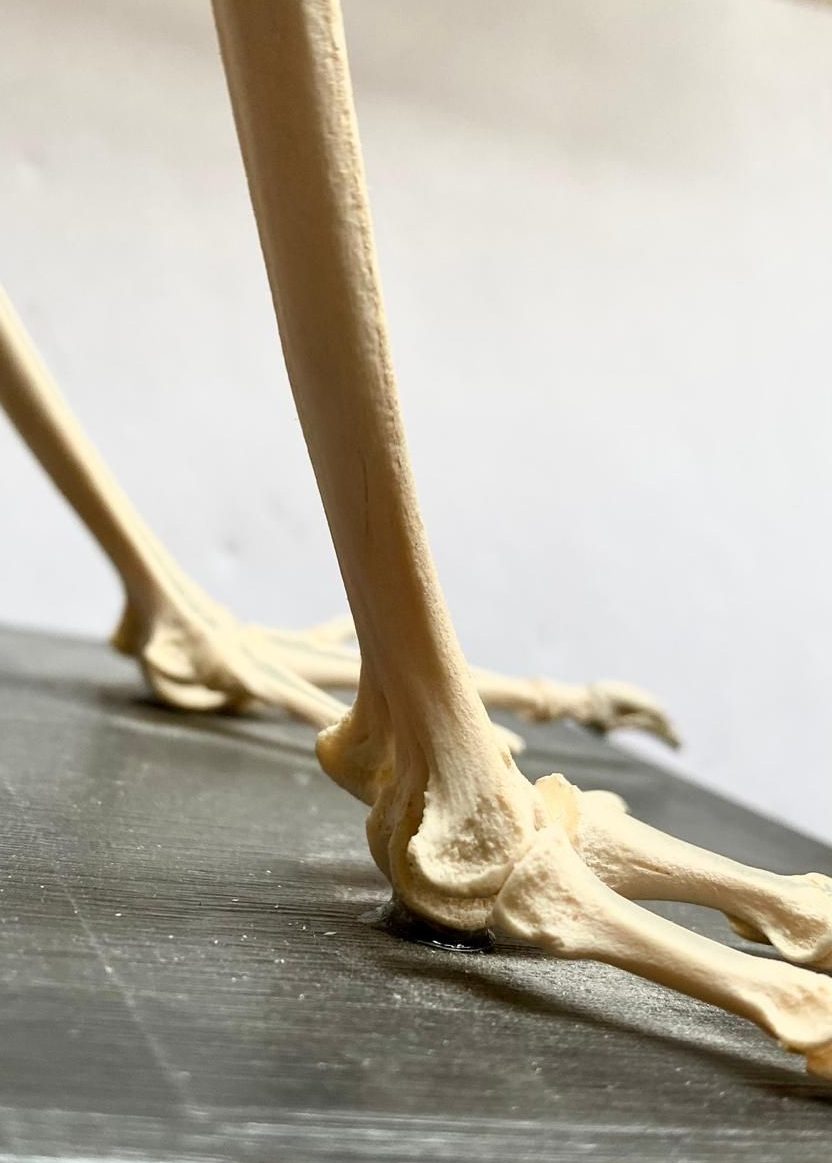
However, these feet do not belong to a Ratite – and in the comments, many of you seemed to notice that there was something funky with the arrangement of the toes and bones that may have offered a clue to indicate that fact. Even though they’re not from a Ratite, there are some useful pointers that can be taken from the similarities, since form follows function and if we know Ratite feet can look similar to these, then perhaps it’s worth asking “why is that?”
Many (although not all) Ratites have three forward-facing robust toes, although the Ostriches are a bit of an exception, as they only have two toes per foot. In the evolutionary push to be fast on your feet, too many toes can make you slow – just look at how horses have lost all but one of theirs.
Ratites also lack a hallux, and their claws don’t curve. These features all reflect the fact that Ratites don’t perch on branches, they’re heavy, and they spend most, if not all, of their time walking around on dry grasslands (actually, this isn’t true for Kiwis or the extint Moas that have more scrubby or habitats, but these Ratites do have a hallux). These are all useful things to consider when thinking about potential species that these feet could be from.
If you think of large and heavy birds that don’t perch and have a grassland habitat the list of possible options gets narrowed down quite quickly. Sereimas and Secretary Birds are out, as they have a hallux and more curved claws. Storks, Megapodes and Galliformes all also have a hallux. But one type of bird matches the description very well – the Bustards (or Otididae if you prefer).
The size means it must be one of the larger species of Bustard, but I suspect that it would be difficult to confirm the identification to species level without good quality reference material, since there are quite a few species. But in this case we’re luck to know the species, since Andy has the information – these feet belonged to a Great Bustard Otis tarda Linneaus, 1758.

It’s a species I’ve talked about before in a previous post and I really appreciate Andy sharing the images and information from his collection, and all the thoughts and comments that came in about the mystery object from the community here on Zygoma. Thanks for taking part!
 Zygoma