
Last week I gave you this extreme close-up of a specimen from the Dead Zoo to have a go at identifying:

Only providing this would probably have been unforgivably mean, so I also provided an image with less detail and little bit more context:
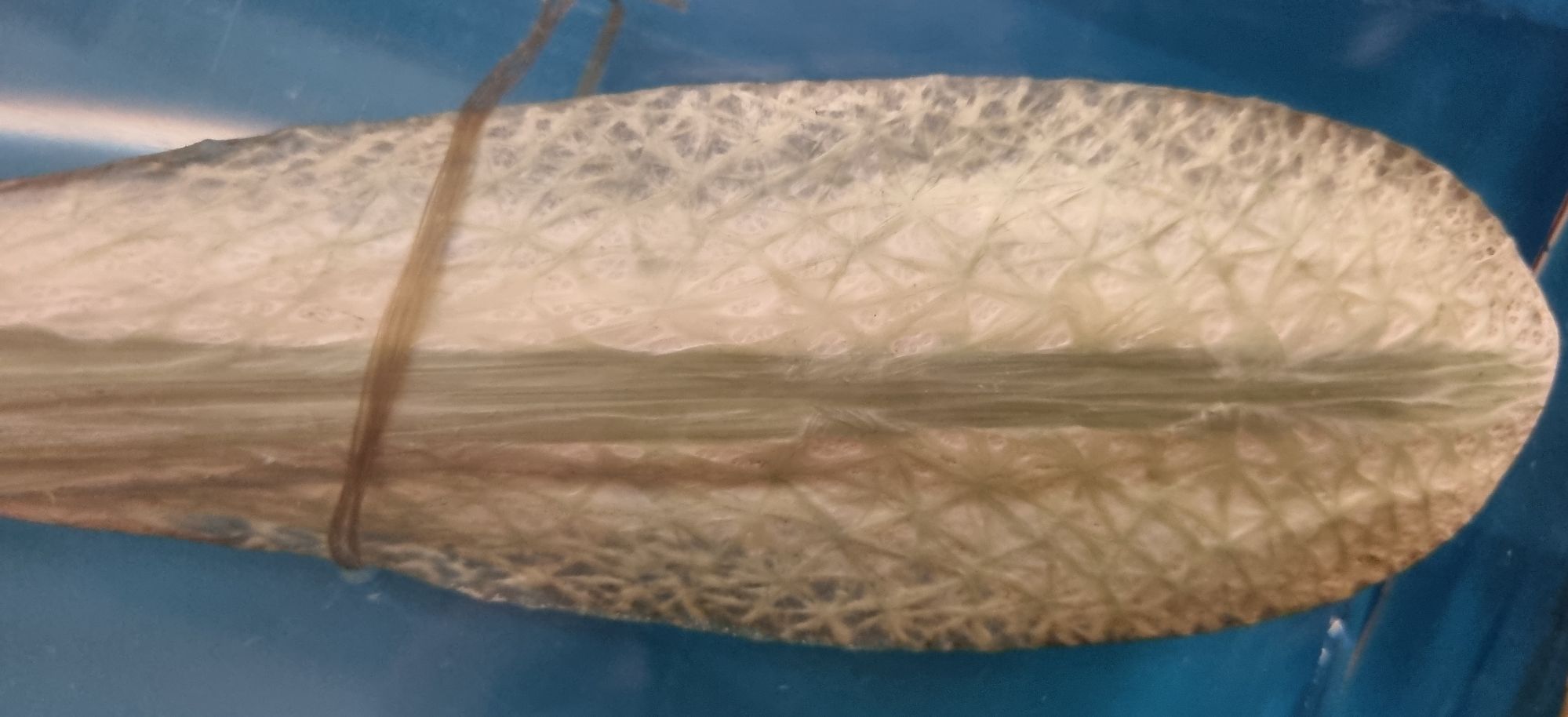
Clearly this provided plenty of information, since several of you managed to work out what this spatula-shaped appendage was from. In fact, the spatulate shape is so distinct it’s incorporated into the animal’s name.
Adam Yates was the first to comment correctly, identifying that this is the rostrum of the American Paddlefish Polyodon spathula (Walbaum, 1792). Here’s a photo of the complete specimen:
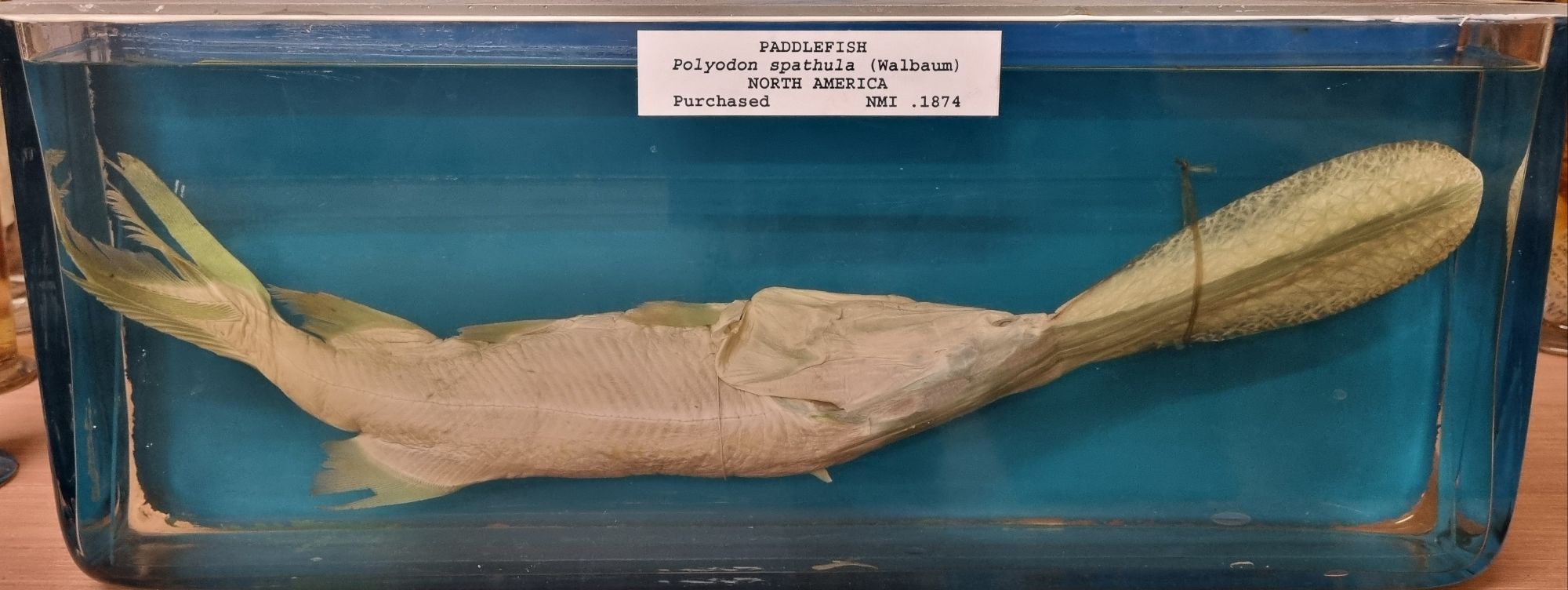
It’s a fairly small example of this wonderfully unusual fish, as on average they weigh in at 60lb (27kg) and measure 5ft long (about 1.5m). I call them unusual because they do things differently to most other fish.
For starters, they’re from a very small family of fish that contains just themselves and a handful of sturgeon species. This family have heterocercal tails like sharks, and cartilaginous skeletons like sharks, but they’re actually bony fish that have become less bony.
They also have that distinctive spatulate rostrum (presumably constructed from little interlocking rays of cartilage based on the detailed photo), which looks more like the bill of a Spoonbill bird or a dabbling duck than the slashing blade that other fish species with an extended rostrum tend to have. However, the rostrum isn’t part of the jaw, and it can’t function in the same way as similar shaped structures in birds. Instead it serves a function in electroreception – picking up the tiny electrical signals from the muscle movements of clouds of planktonic crustaceans. Oh, did I mention that they’re freshwater filter feeders?
The name Polydon suggests to me that the species should have many teeth, and while this may be true for the tiny juvenile stages, the adults have no teeth at all – although the name probably relates to the large number of gill-rakers that are used to capture prey.
Another odd thing is that it’s only the American Paddlefish that filter feeds – the Chinese Paddlefish (which was recently declared extinct) fed on things like fish and crabs and had a totally different feeding mechanism that was much more similar to a Sturgeon.
Sadly, the American Paddlefish is at risk of going the way of its Chinese cousin due to overfishing and exploitation of their eggs for caviar. This would be a real loss, as they represent a fascinating example of how evolution is happy to play fast and loose with our expectations based on nearest relatives and shared ancestry.
 Zygoma
Fascinating! I had never heard of these fish. Thanks for it.