This week I have something cute and fuzzy for you to have a go at identifying:

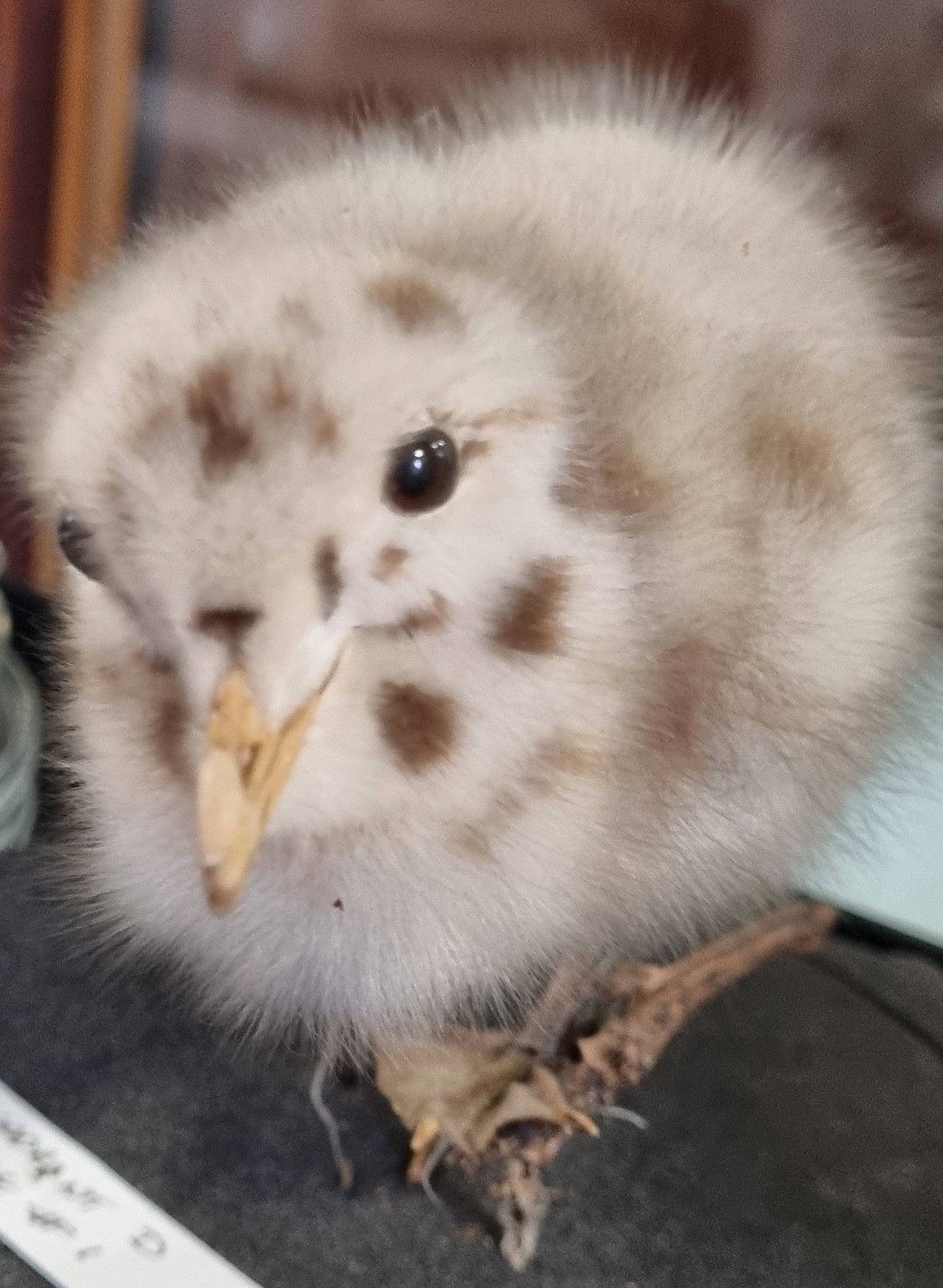
Any ideas what these floofballs might be? If you think it’s easy, keep your answers cryptic to give others a chance to work it out. Have fun!

This week I have something cute and fuzzy for you to have a go at identifying:
Any ideas what these floofballs might be? If you think it’s easy, keep your answers cryptic to give others a chance to work it out. Have fun!
Last week I gave you a St Patrick’s themed mystery object in the form of this snake:
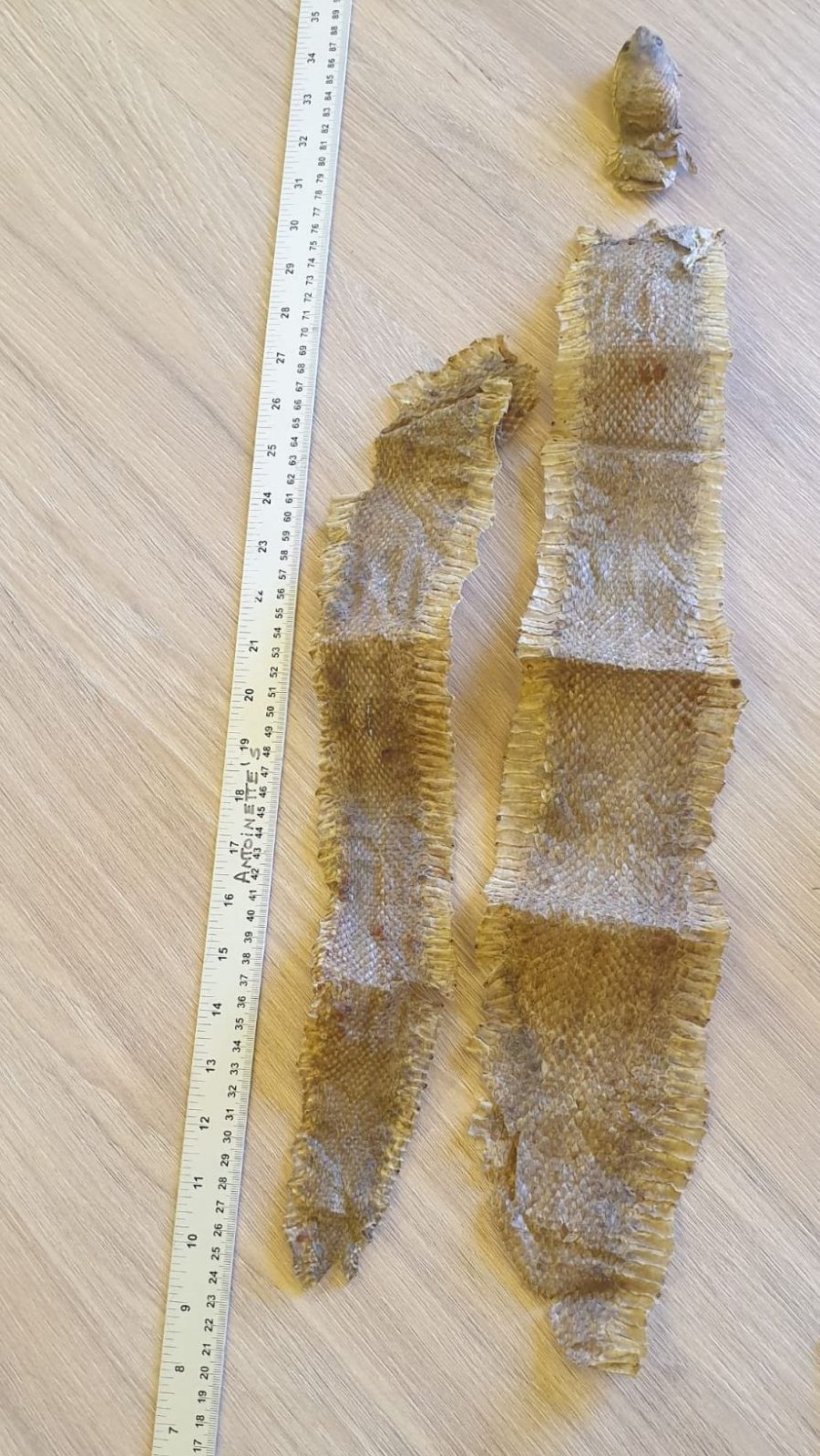
It was a really difficult ask – the skin is faded and the specimen has been chopped into several pieces, making identification very tricky. I did provide a clue with the location of where this specimen is from, to offer a little help in narrowing down the possibilities (it’s from Venezuela).
Unfortunately, as Adam Yates spotted, I managed to leave in another more obvious clue that I thought I’d removed – the name of the species, which appears in the photo of the full specimen. I cropped the image in WordPress, not realising that if you click on it the original uncropped image opens. Not my finest moment!
However, specimen identifications need to be taken with a pinch of salt until they’re verified, so let’s do that as best we can.
The side view of the head of this specimen gives a useful clue that Adam picked up on:

It has a sensory pit between the eye and the nostril, indicating that this is a type of Pit Viper, which does help reduce the options from around 50 Venezeulan snake species to around 15 or so. It’s also consistent with the identification of Bothrops venezuelensis Sandner-Montilla, 1952.
Most of the other Pit Vipers are fairly distinct from this specimen in terms of colour and pattern, but there are a couple of members of the Genus Bothrops (the Lanceheads) that are similar to this.
You may just be able to see a hint of a stripe behind the eye that terminates just above the last scale above the mouth, which can be useful in distinguishing between B. atrox (where the stripe touches the last three scales over the mouth) and B. asper (where it just touches that last scale as we see here), but this feature is less relaibe for B. venezuelensis, which can be distinguished from the other two species by having a more rounded rostrum:
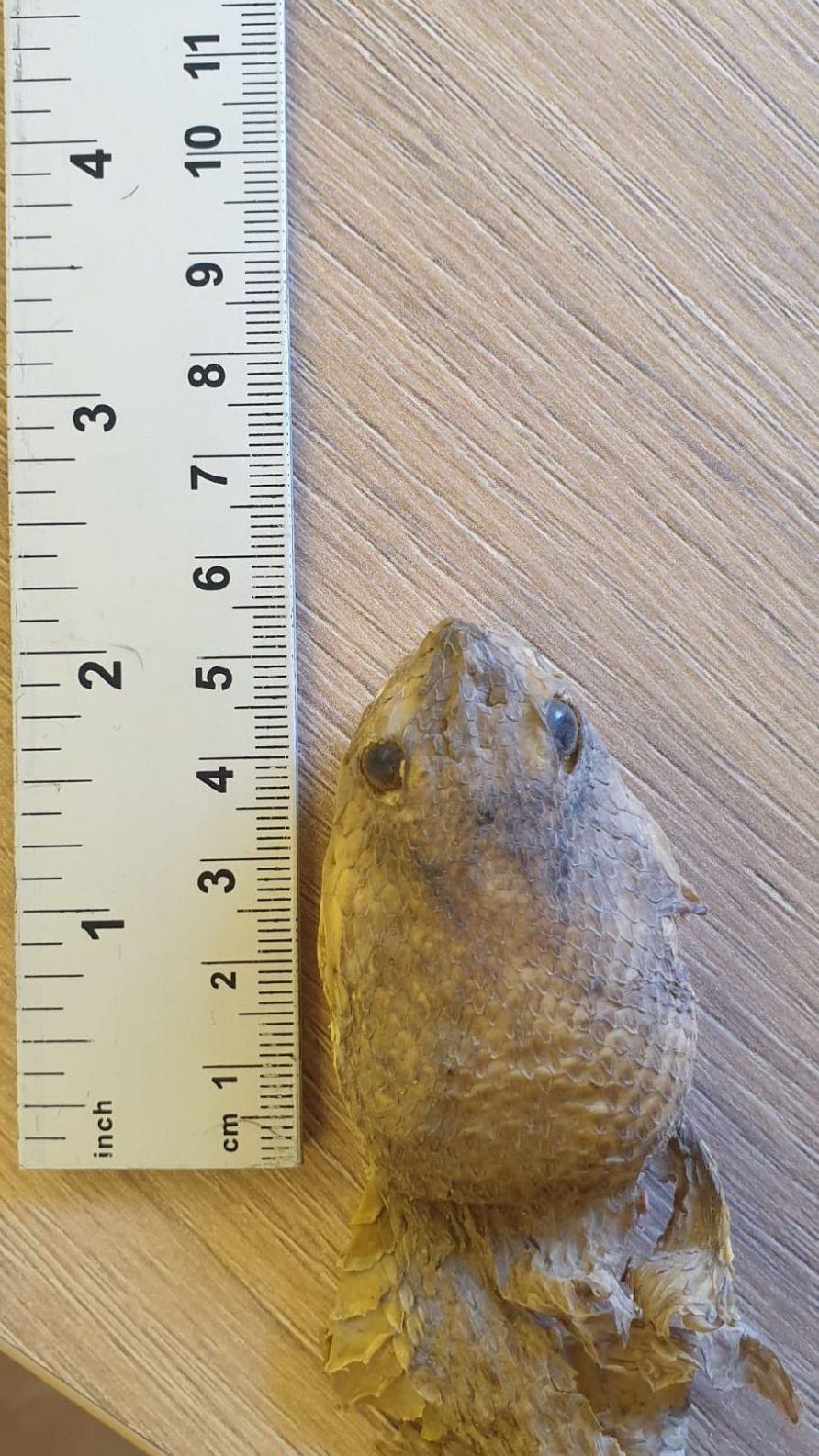
This specimen’s rostrum (snout) is a little pointy, but for a type of snake called a Lancehead, you expect them to be very pointy. Of course this specimen is a little imperfectly prepared, so the rostrum shape may be misleading. As a result, I’d be a bit unwilling to differentiate between B. asper and B. venezuelensis based on the images.
What we do know is that this was certainly a venomous snake, since it bit a farm labourer working on a hacienda who required two doses of antivenom, but they thankfully survived. I suspect that this is why the head is separated, since the snake was killed and presumably identified to assist with administration to the appropriate antivenom.
This specimen is one of several from the same collector, who I plan to talk about more in future posts, since we have great information about a fascinating life.
This Friday we’re gearing up for the St. Patrick’s weekend here in Ireland, so it seems only appropriate to have a snake for you to have a go at identifying:
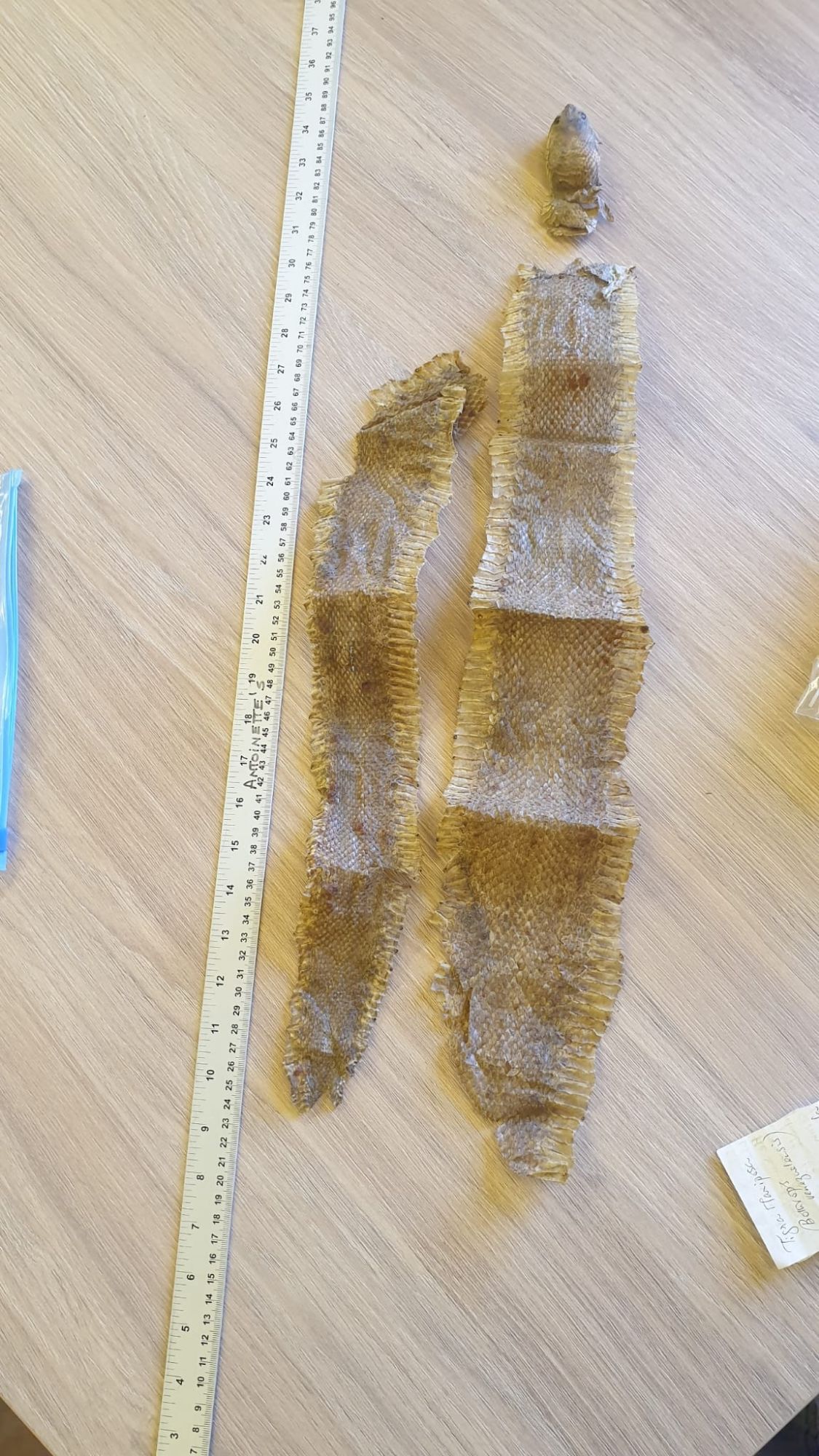

It’s not an easy one, so if you need a clue to help narrow down the options, I can confirm that this specimen is most definitely not Irish and is in fact from a bit further afield.
Big thanks to our Terrestrial Zoology Curator Emma for sharing these photos.
I look forward to seeing how you do with this tricky St. Patrick’s themed mystery object!
Last week I gave you this extreme close-up of a specimen from the Dead Zoo to have a go at identifying:

Only providing this would probably have been unforgivably mean, so I also provided an image with less detail and little bit more context:
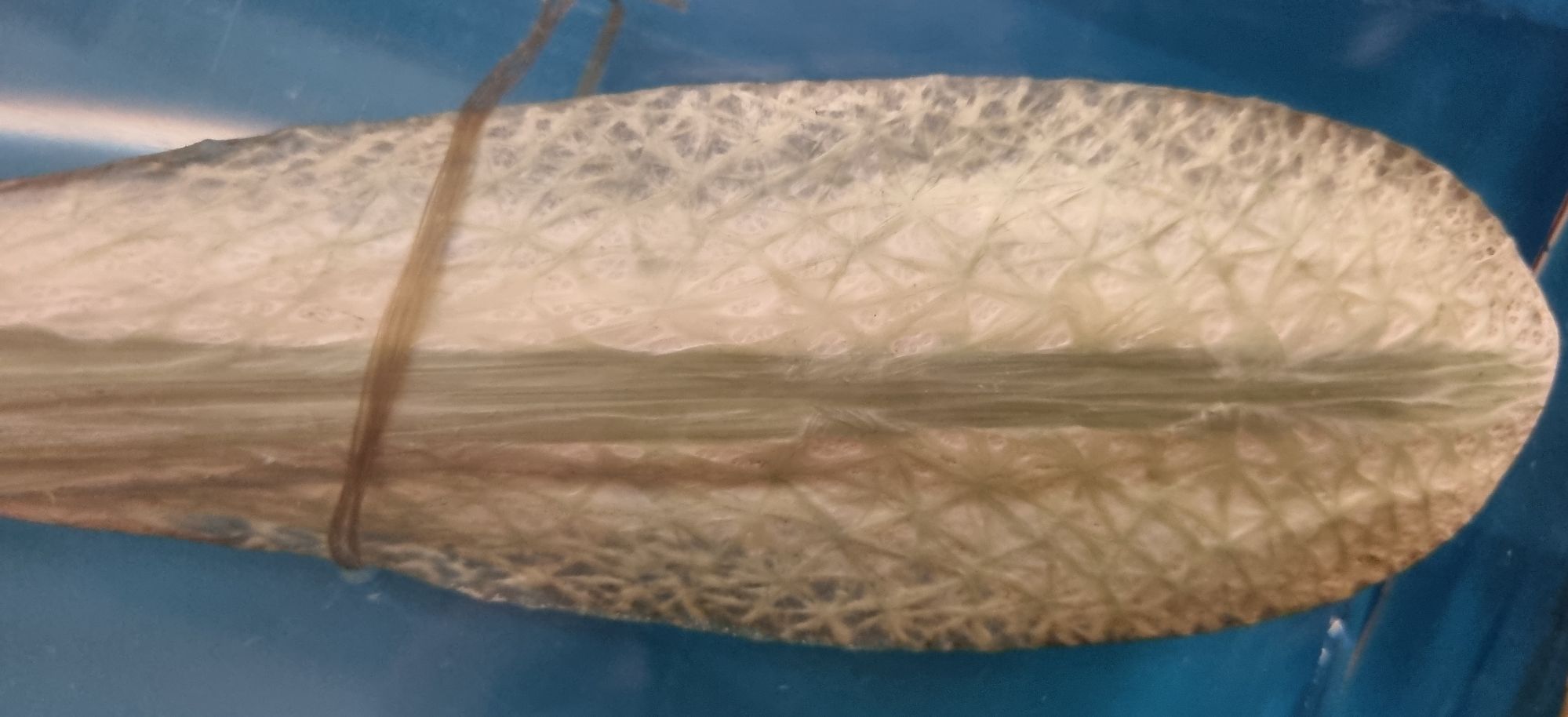
Clearly this provided plenty of information, since several of you managed to work out what this spatula-shaped appendage was from. In fact, the spatulate shape is so distinct it’s incorporated into the animal’s name.
Adam Yates was the first to comment correctly, identifying that this is the rostrum of the American Paddlefish Polyodon spathula (Walbaum, 1792). Here’s a photo of the complete specimen:
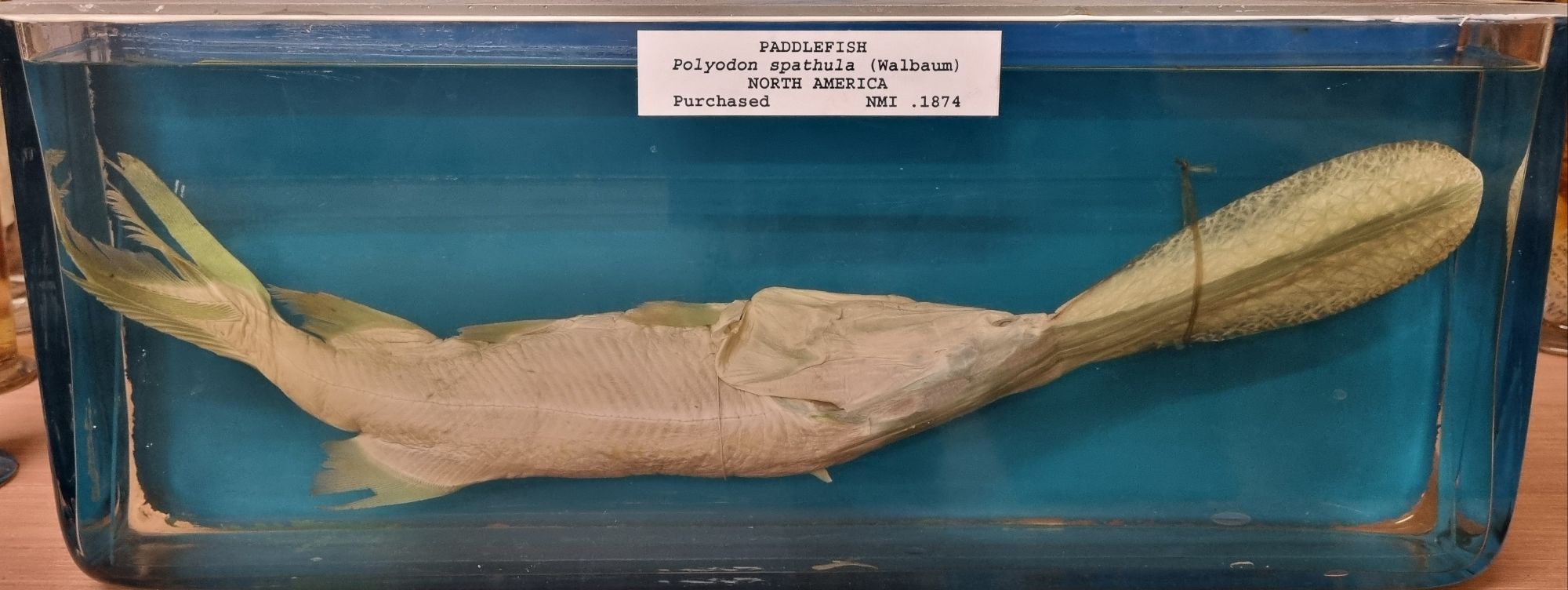
It’s a fairly small example of this wonderfully unusual fish, as on average they weigh in at 60lb (27kg) and measure 5ft long (about 1.5m). I call them unusual because they do things differently to most other fish.
For starters, they’re from a very small family of fish that contains just themselves and a handful of sturgeon species. This family have heterocercal tails like sharks, and cartilaginous skeletons like sharks, but they’re actually bony fish that have become less bony.
They also have that distinctive spatulate rostrum (presumably constructed from little interlocking rays of cartilage based on the detailed photo), which looks more like the bill of a Spoonbill bird or a dabbling duck than the slashing blade that other fish species with an extended rostrum tend to have. However, the rostrum isn’t part of the jaw, and it can’t function in the same way as similar shaped structures in birds. Instead it serves a function in electroreception – picking up the tiny electrical signals from the muscle movements of clouds of planktonic crustaceans. Oh, did I mention that they’re freshwater filter feeders?
The name Polydon suggests to me that the species should have many teeth, and while this may be true for the tiny juvenile stages, the adults have no teeth at all – although the name probably relates to the large number of gill-rakers that are used to capture prey.
Another odd thing is that it’s only the American Paddlefish that filter feeds – the Chinese Paddlefish (which was recently declared extinct) fed on things like fish and crabs and had a totally different feeding mechanism that was much more similar to a Sturgeon.
Sadly, the American Paddlefish is at risk of going the way of its Chinese cousin due to overfishing and exploitation of their eggs for caviar. This would be a real loss, as they represent a fascinating example of how evolution is happy to play fast and loose with our expectations based on nearest relatives and shared ancestry.
 Zygoma