
Last week I gave you this genuine mystery object to identify, from the collections of the Dead Zoo:
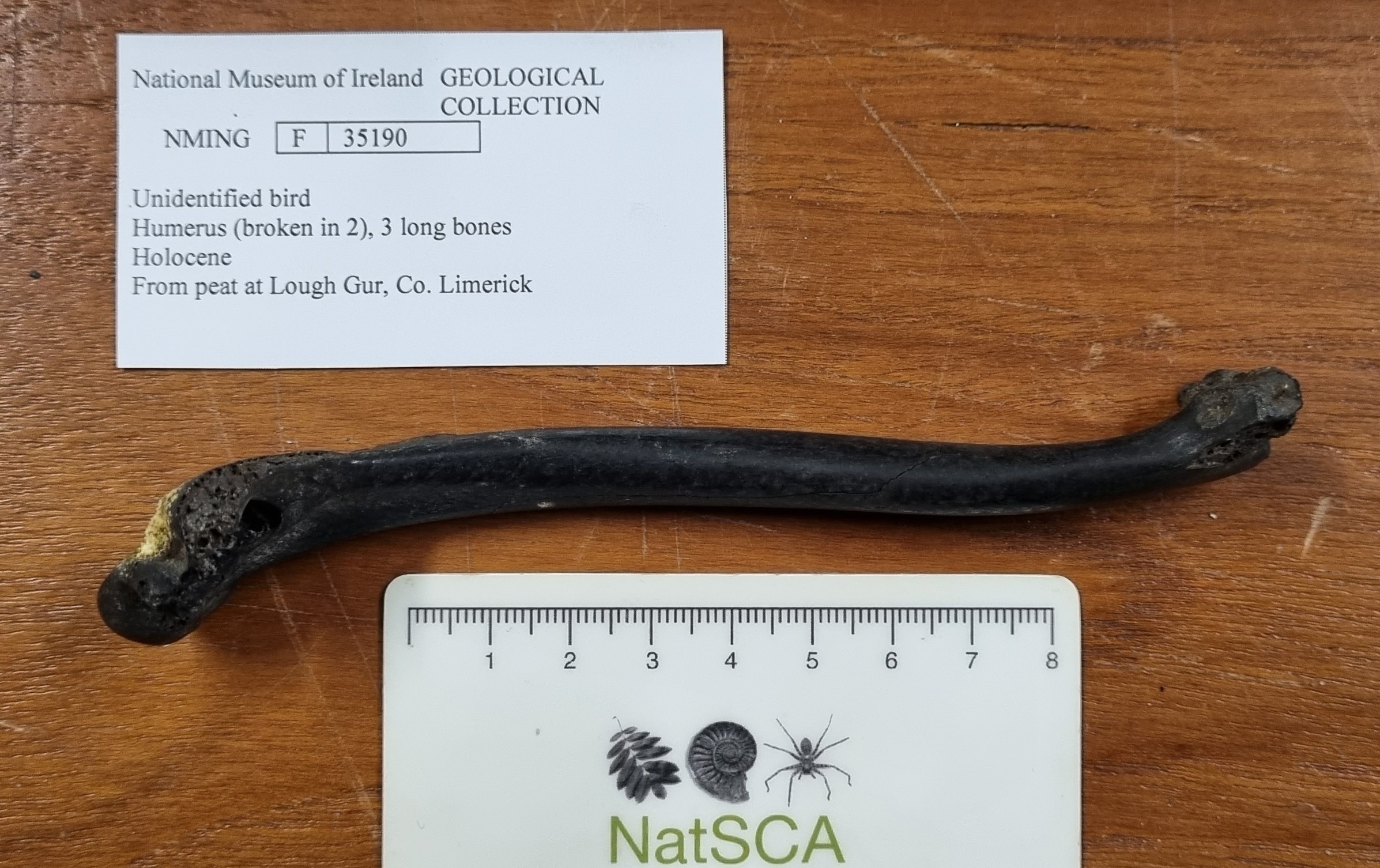
As you may have noticed, there is a preliminary identification with the specimen, that lists it as being an unidentified bird humerus from peat at Lough Gur in County Limerick. It’s dated to the Holocene, so nothing that you wouldn’t expect to find around today, at least within the wider European context.
I always maintain that identifications on labels should never be assumed to be accurate – although I’m happy to say that this one is correct.
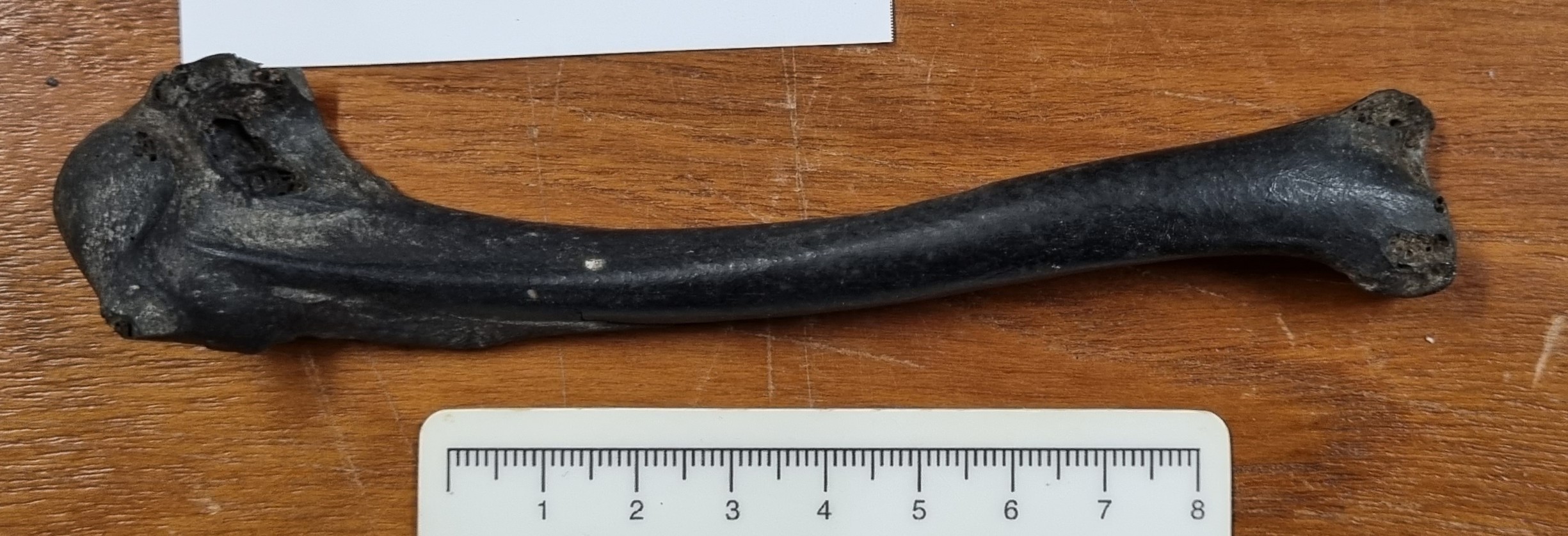
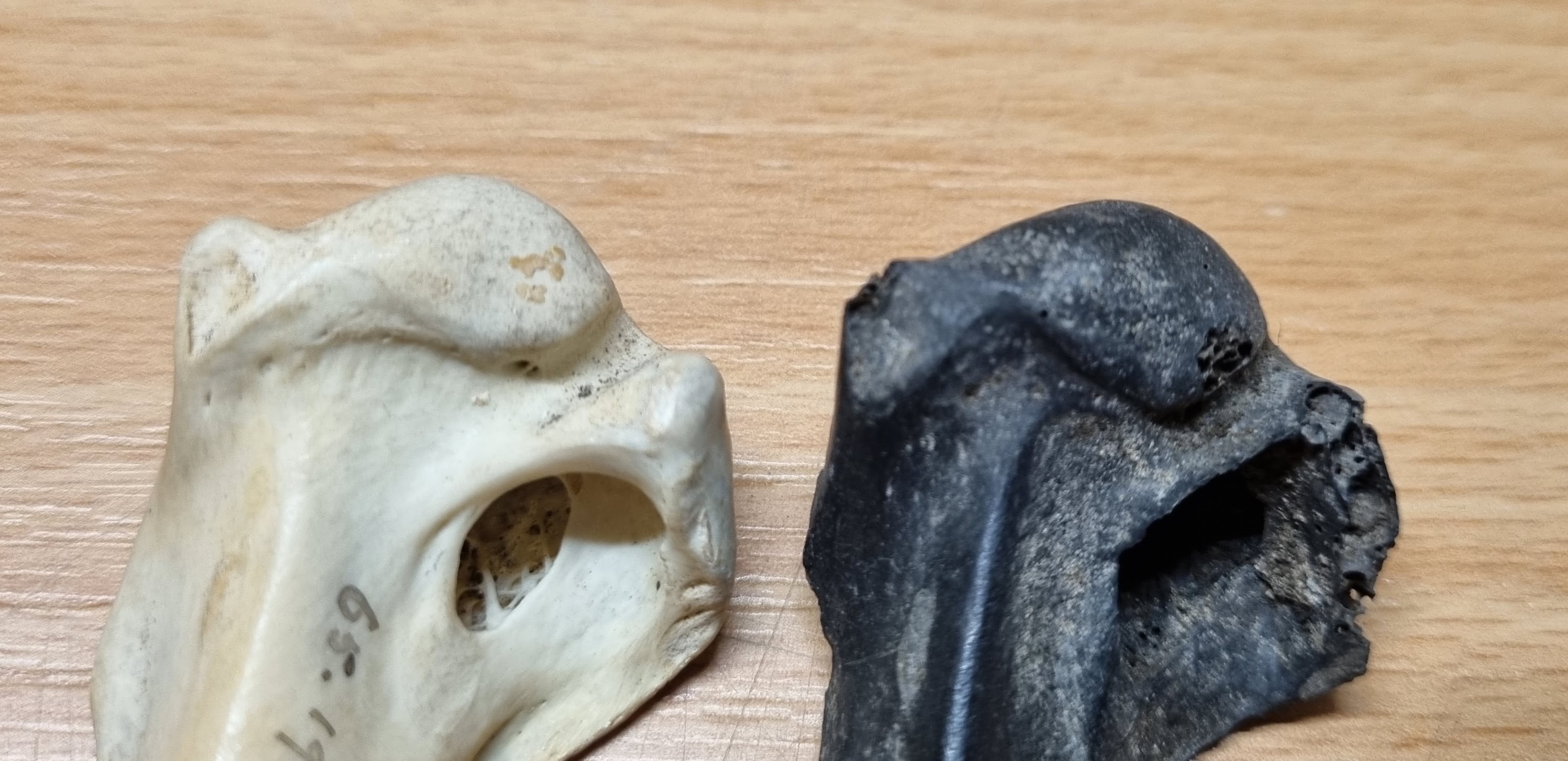
The humerus is fairly large, which helps narrow down possibilities, but there are areas of damage on the articulations, where some useful features of the bone have been worn away, revealing the honeycomb texture inside the bone:
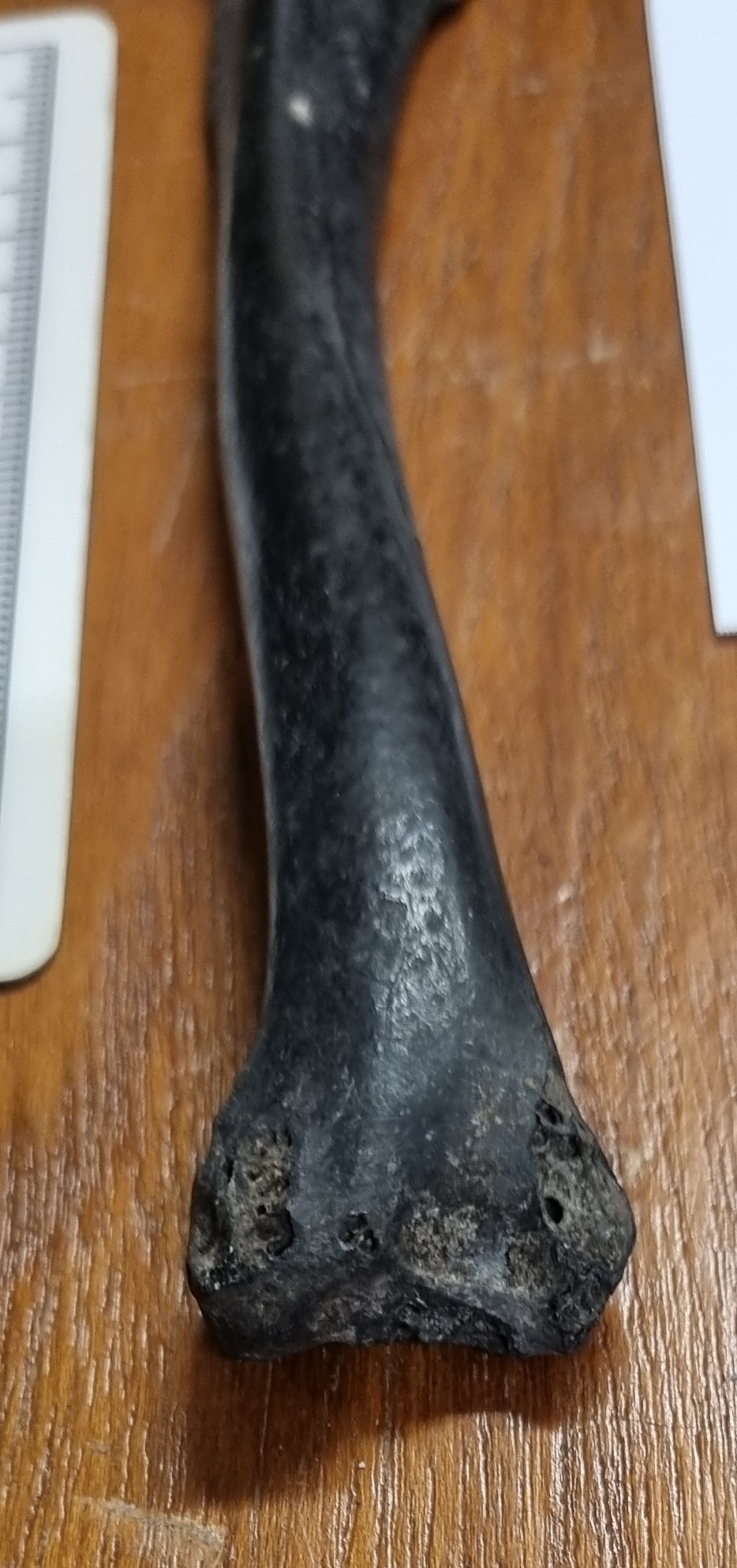
This sort of damage can often make identifications much more difficult, as it can remove diagnostic features and even change the profile of the bone, making it appear substantially different to the original form – especially where parts of elongated crests of bone have been lost:
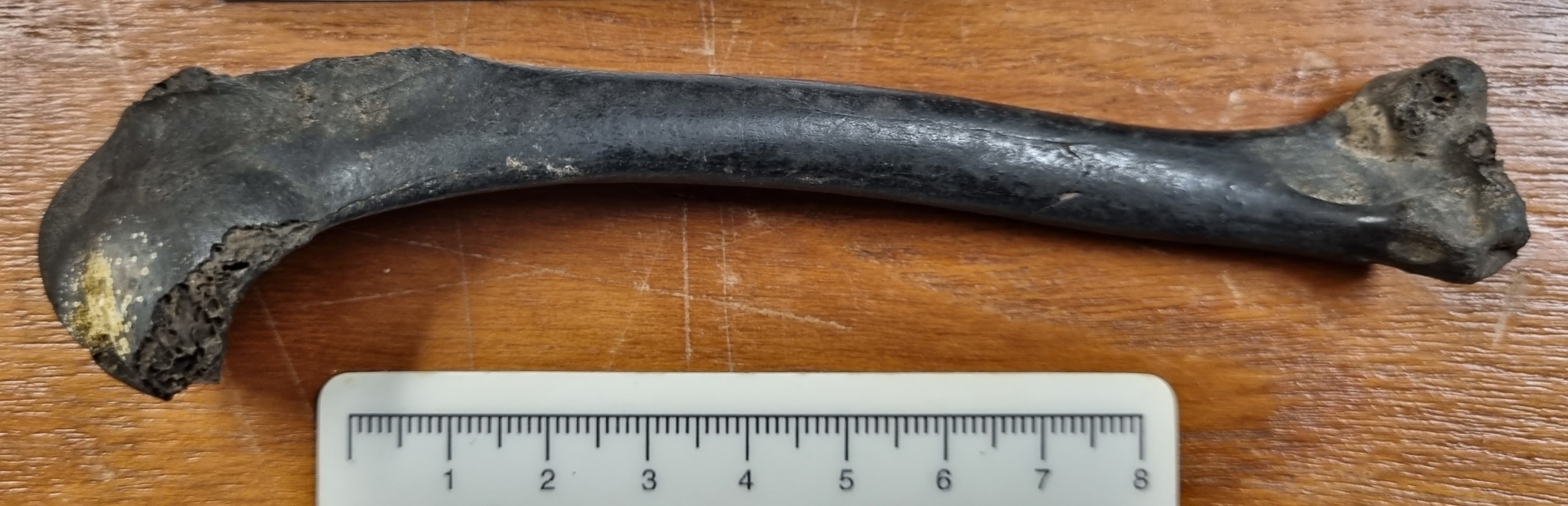
When you attempt to identify a bone with this kind of damage, you have to keep in mind that something is missing, which can be very misleading when working from the overall shape. I think this is why many of you went down the route of a bird of prey, such as an eagle species or Osprey.
Generally in terms of an identification, the best option is to rule out the most likely species first – which means anything with a high population density or regular occurence, that frequents the habitat in which the bone was found. In this case my first thought went to waterfowl rather than raptor.
This humerus is too small for something like a swan or large species of goose, and too large for one of the ducks. However, it’s right in the range for one of the smaller goose species, so I took a look through some reference specimens from the genera Anser and Branta.
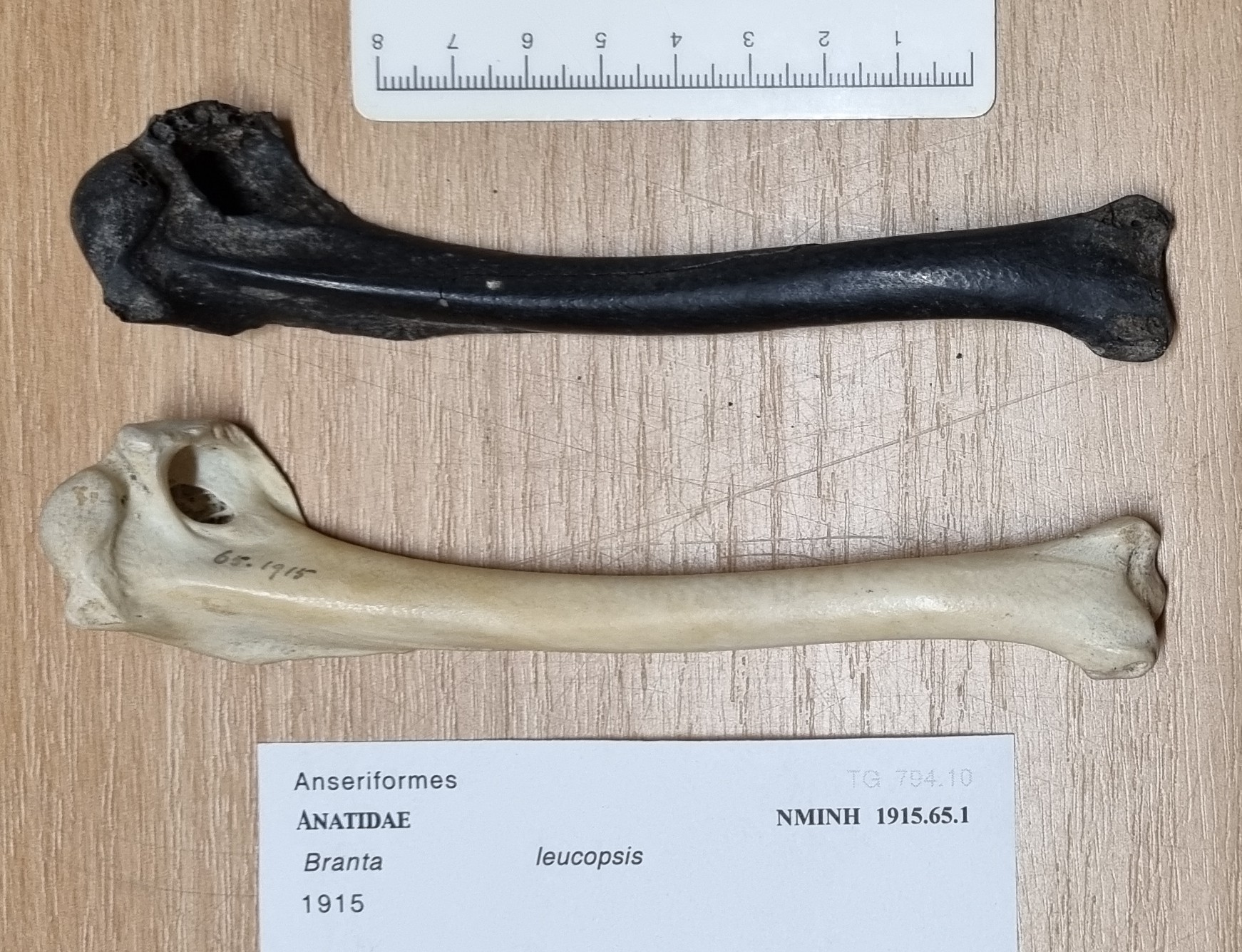
Of all comparisons, the Barnacle Goose Branta leucopsis (Bechstein, 1803) was very close in size and shape, and where the shape differed it was where there was damage visible to the bone, making it likely that some of the features that seem to be missing were actually there originally but have been abraded away:
I’m still not 100% certain the mystery object is from a Barnacle Goose, but I’m quite confident that if it’s not, it’s from a close relative. I would love to hear your thoughts!
 Zygoma
Wonderful!