
Last week I gave you a somewhat tricky object to identify:
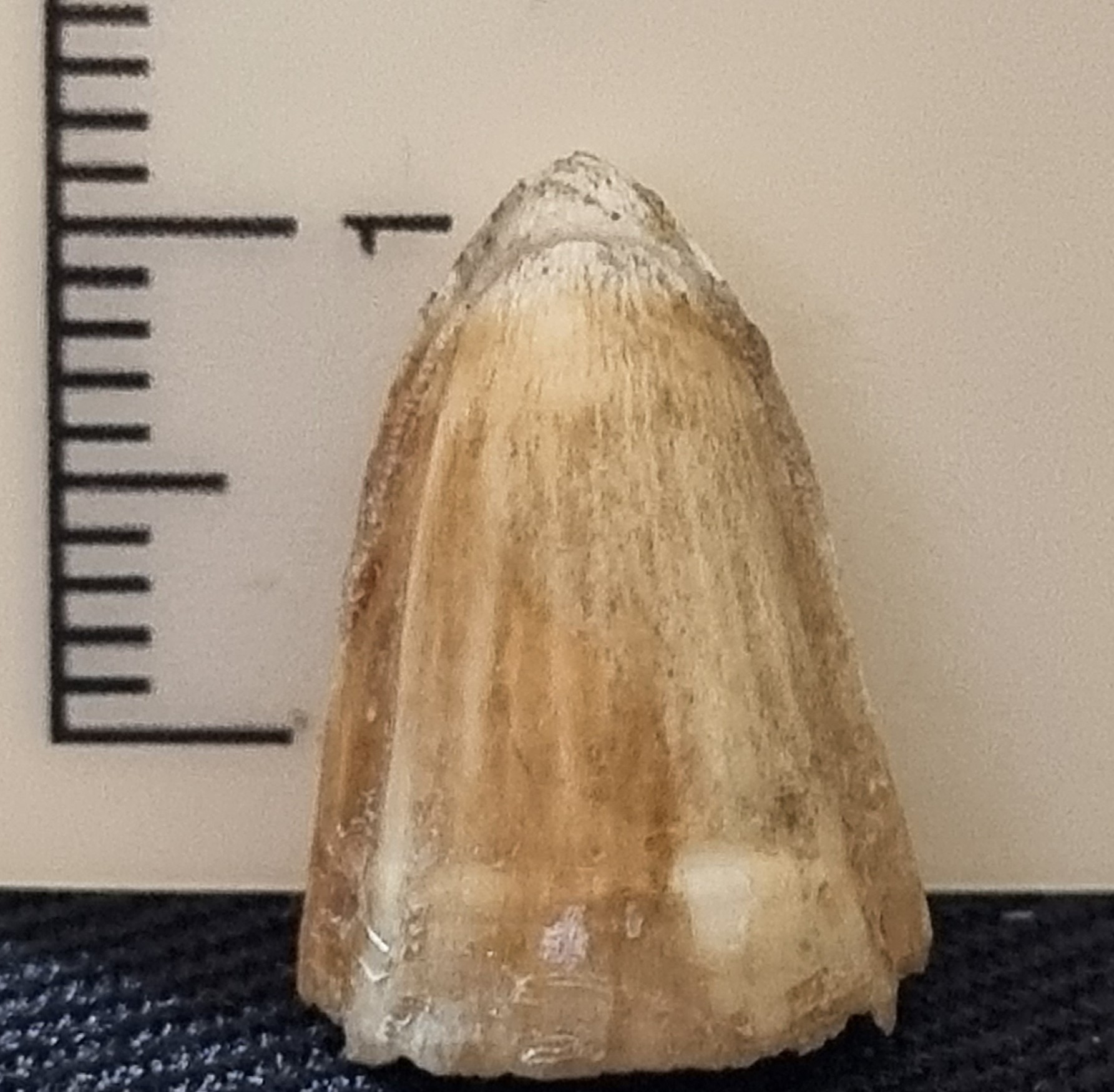
It’s only about 14mm long, it’s hollow and it has a seam down either side:
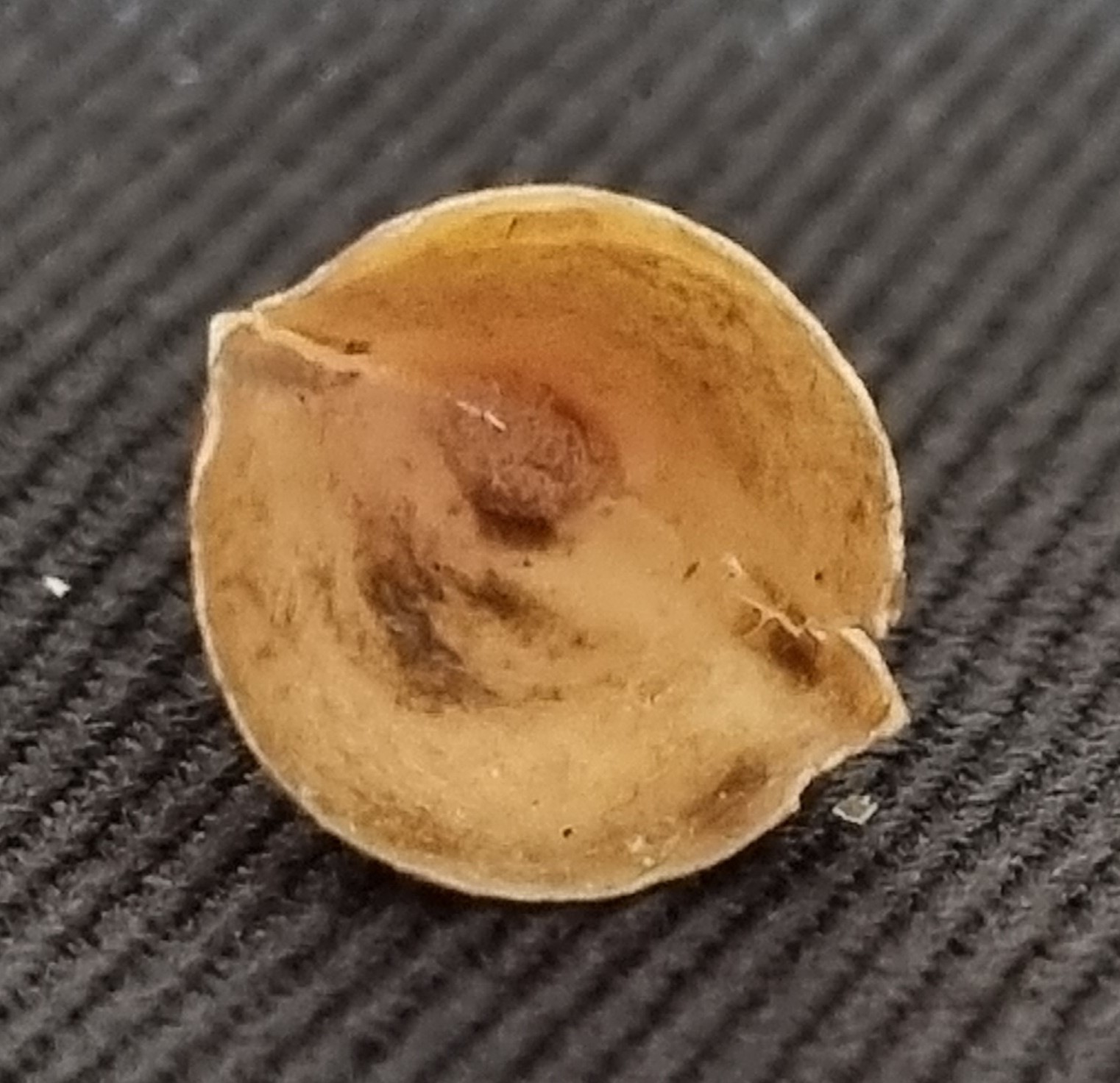

These features seemed to raise more questions than answers for many of you – and I’m not surprised, since this really does require some experience with the object to identify it.
Fortunately, some of you clearly had the necessary experience. Chris Jarvis and Adam Yates and Kat Edmonson all chimed in with some very useful suggestions, observations and discussion.
It’s a tooth from a Mugger Crocodile Crocodylus palustris (Lesson, 1831), in fact, if you want to be specific, it’s a newly emerging tooth from the 3rd socket from the rear in the left maxillary row.
I really wasn’t expecting anyone to figure out the exact species, but I was impressed that several of you figured out it was from the genus Crocodylus rather than Alligator.
There isn’t much published on dental morphological characteristics of extant crocodilians – a point noted in the one paper I was able find that tried to figure out what’s going on with crocodile tooth shape – although this one would more or less match up to M12 in this figure from that paper.
So well done to everyone who figured out the crocodilian source of this mystery object!
 Zygoma
C. palustris is a species I’ve struggled to find a specimen of to examine in person. If you have the rest of the skull I would really appreciate a decent set of photos from all angles.
I’ll see what I can do – I’m not in our stores often any more, but I’ll try to get photos next time I’m out there.
Thanks! there is no rush and it is greatly appreciated.
What’s with the seam? How do these teeth form? If I may be so bold as to ask.
Honestly, I’m not 100% sure. They grow new teeth, which generate from stem cells in the root of the old tooth, absorbing the root of the previous tooth and forcing off the old crown.
I assume the ‘seam’ reflects the shape of the stem cell bundle that secretes it and it’s there to provide an additional enamel ridge for helping chop food, since the enamel portion of a croc tooth is actually pretty thin and a cone alone isn’t great for processing softer materials into chunks.
Well, that’s more than I knew before! So thanks a million. Every little new bit of information is exciting. That’s why I keep hanging out here.
I think ‘seam’ is a combination of the carinae (cutting edges) which are a feature of crocodylian teeth, and some post mortem splitting possible caused by drying of the tooth after death
That was very interesting!!
I agree Sallie!