This week I have something both bumpy and squishy for you to have a go at identifying:

Any idea what this could be? As ever you can leave your thoughts, questions and suggestions in the comments section below. Have fun!

This week I have something both bumpy and squishy for you to have a go at identifying:
Any idea what this could be? As ever you can leave your thoughts, questions and suggestions in the comments section below. Have fun!
Last week I gave you this specimen from the Dead Zoo to have a go at identifying:
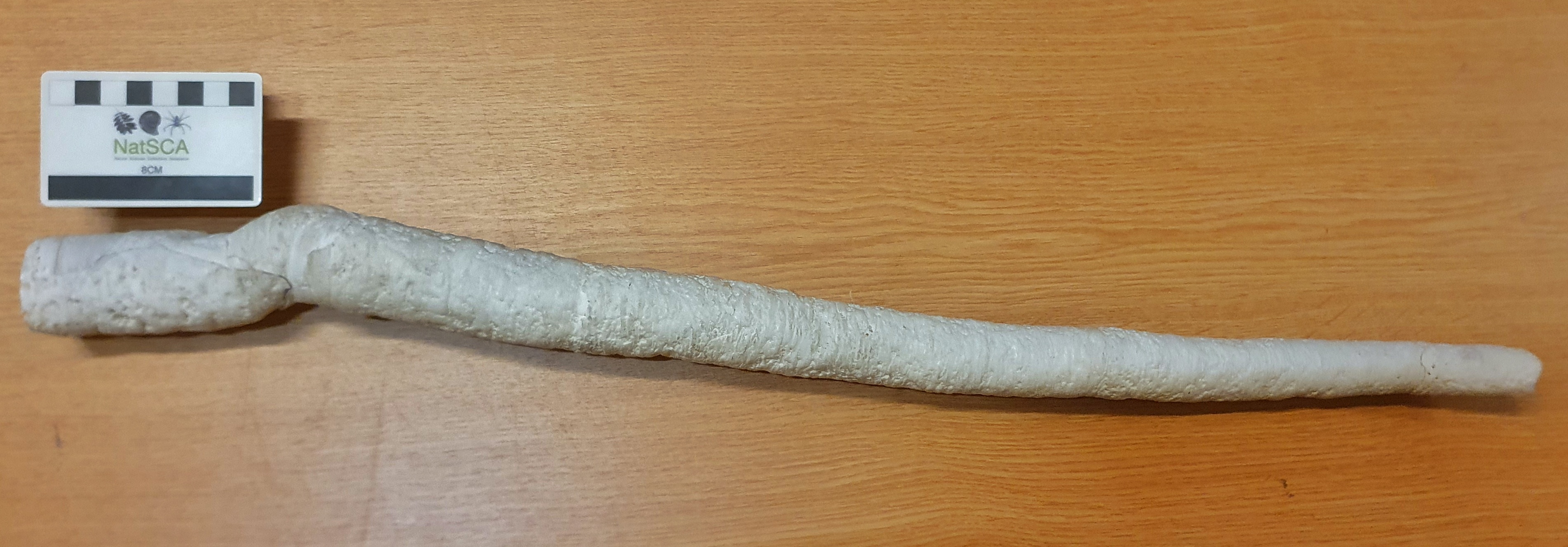
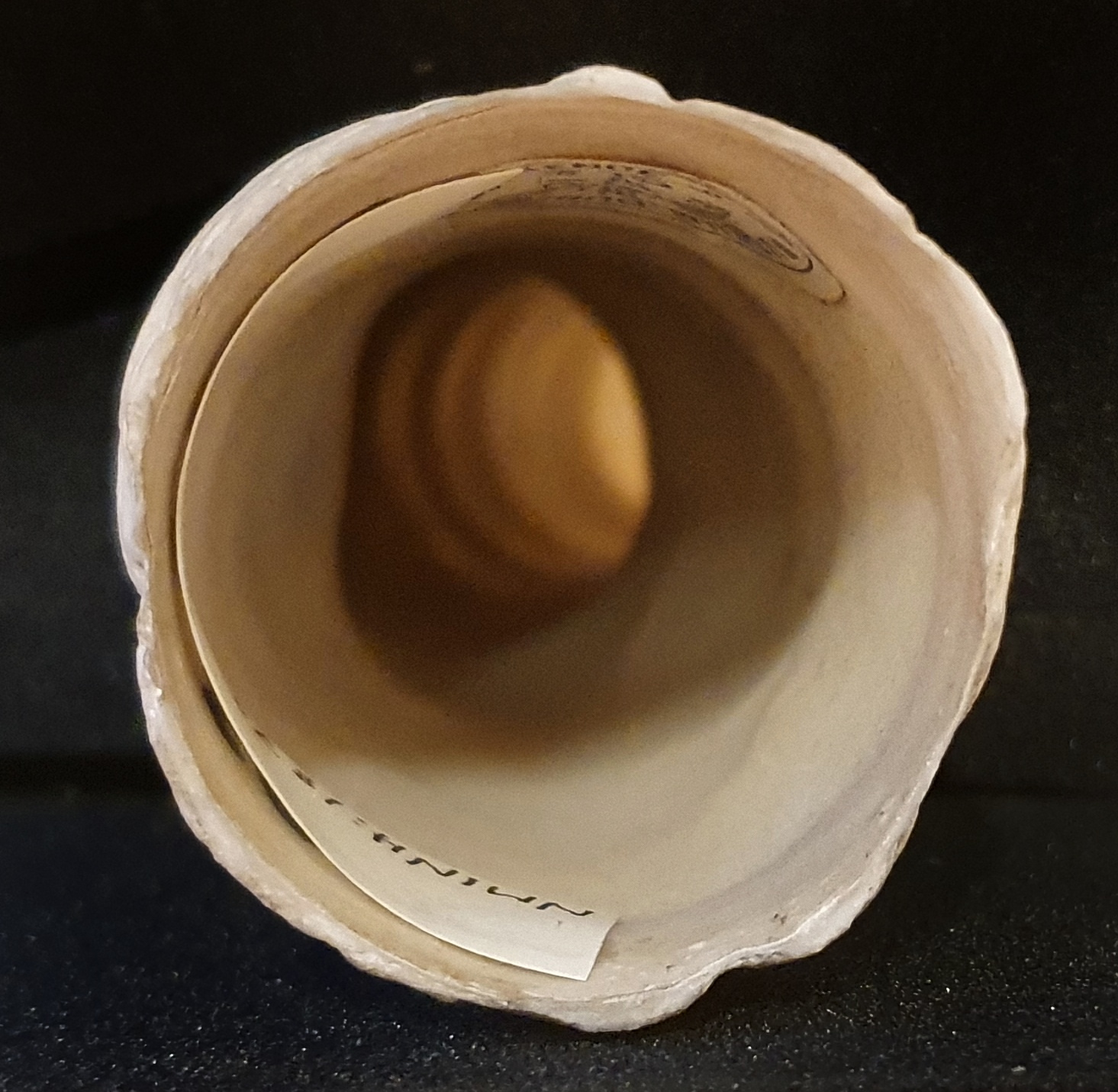
There were some great suggestions, some alluding to the tusk-like shape and structure, but the first person with a correct identification was Tony Irwin with an anagram of “Kuphus“. If you’re not familiar with the Giant Shipworm Kuphus polythalamius (Linnaeus, 1758), it’s a genus of boring mollusc that has proved to be rather interesting.
It’s in the shipworm family, but until recently it was only known to science from large, empty tubes like this one that washed up on a few beaches in the Philippines. That all changed 2016 when some live specimens were found and researchers were able to take a closer look at the biology of these surprising animals.
Unlike other shipworm, it turns out that Kuphus doesn’t eat wood. Instead it burrows into sediment and has a symbiotic relationship with bacteria that live in its gills, which metabolise hydrogen sulphide. This is quite a big deal, since it seems to provide an example of one set of symbionts (those able to digest cellulose in other shipworms) being replaced by a very different set capable of metabolising inorganic chemicals.
This change in relationship allows Kuphus to utilise in a different habitat type and may provide a clue as to how some of the organisms present along mid-ocean ridges have managed to adapt to a habitat far away from sunlight and largely removed from normal organic inputs.
It’s odd to consider that this specimen has been in the Dead Zoo since 1879, but we never knew just how interesting the species is until so recently. I wonder what other revelations we’ll come across as we carry on with our decant?
I have an interesting mystery object from the Dead Zoo for you this Friday:
Any idea what this might be? Cryptic answers from those in the know would be appreciated!
Last week I gave you this mystery object to have a go at identifying:
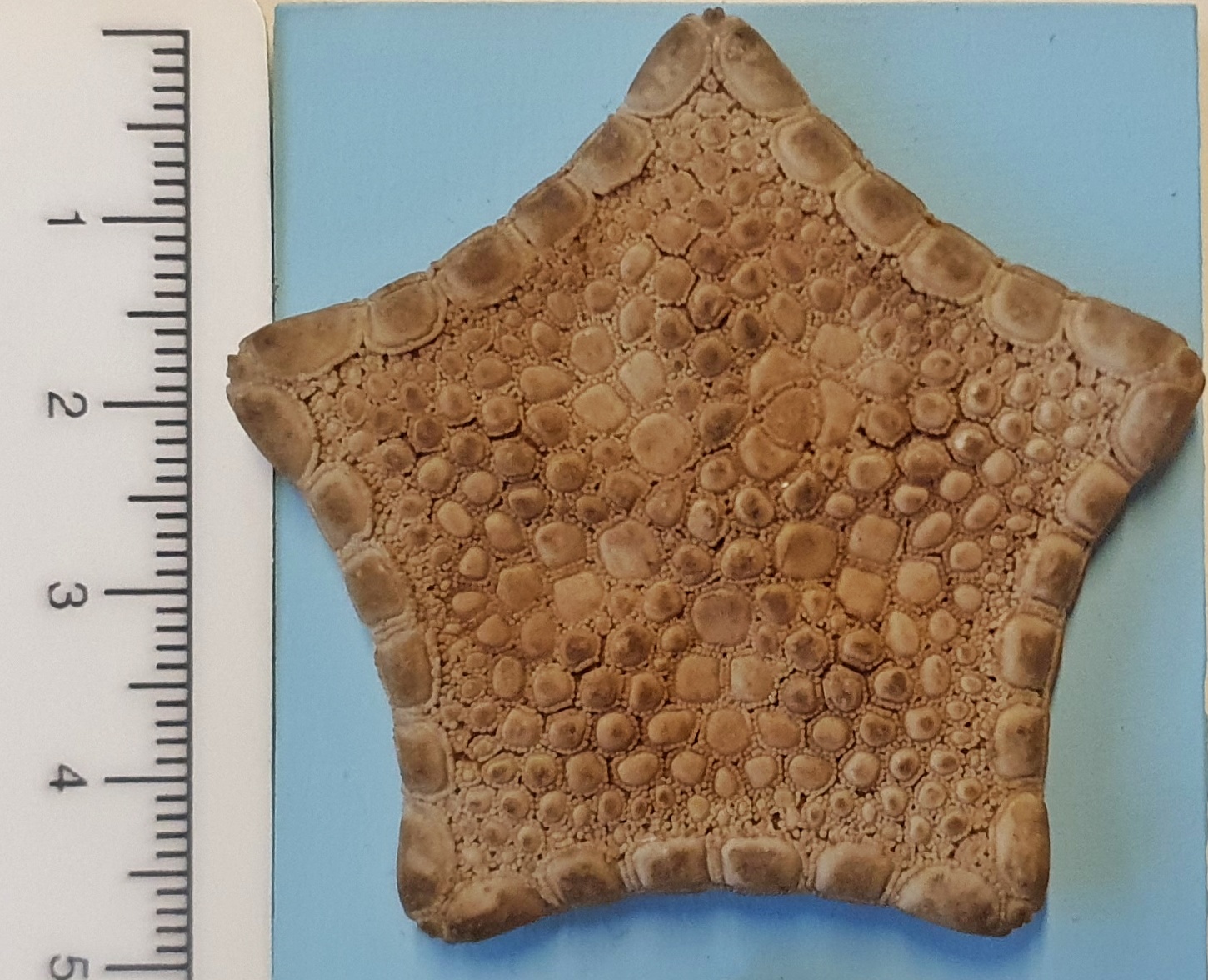
Clearly it’s some kind of sea-star, but there are a LOT of different species .
Remarkably, that doesn’t seem to have posed a problem. The five stumpy arms narrowed it down to one of the cushionstars or biscuitstars and it seems that was more than enough for some of you.
Salliereynolds flagged one of the diagnostic features and dropped a hint to the species name:
“Six lumps to a side? From down under?”
But Goatlips took the mystery object to a whole new level with a biscuit recreation:
This specimen is a Southern Biscuit Star Tosia australis Gray, 1840. Probably not as tasty as an actual biscuit, but certainly very biscuity in appearance.
A short answer today I’m afraid, but it’s been a difficult week and there’s a lot to do in the Dead Zoo this Friday!
 Zygoma