Friday mystery object #272 answer

Last Friday I gave you this skull to identify:
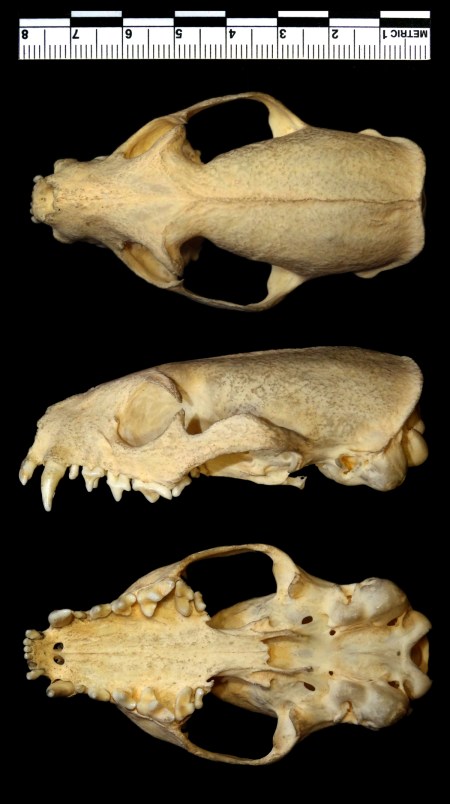
mystery272

It was a bit of mean one, because although the family is fairly distinctive, it has poor species representation in online resources or indeed the literature.

The cranium is quite low and long, with some similarities to an otter, but the rostrum (or muzzle) is a bit too narrow and the teeth aren’t quite the right shape. Also the orbits are orientated more vertically, whereas otters have orbit that are at more of an angle so the eyes are closer to the top of the head.

The overall shape, dental configuration and median lacerate foramen all suggest it’s a member of the Herpestidae.

Narrowing down the species was a step too far however, after all, there are around 34 species spread across Africa, Madagascar and Asia and Europe and they are generally quite similar in cranial morphology, with only a few species having good descriptions of the skull.

To help challenge the lack of images of mongoose crania online, I’m pleased to say that this specimen does have an identification – it’s a Ruddy Mongoose Herpestes smithii Gray, 1837. While the name Ruddy Mongoose makes it sound like it’s annoyed me, it actually refers to the reddish-brown of its coat.

A Ruddy mongoose from Daroji wildlife sanctuary in Karnataka, India. By Kalyanvarma, 2009

A Ruddy mongoose from Daroji wildlife sanctuary in Karnataka, India. By Kalyanvarma, 2009

This species is endemic to India and Sri Lanka, where it lives in dry, forested hills and feeds on pretty much anything it can get hold of, from snakes to bird eggs. As with other mongooses (or should that be mongeese?), they have a mutation that prevents snake neurotoxins from bonding at receptor sites, meaning that they are immune to some types of venom – pretty handy if you’re going to eat snakes!

Friday mystery object #272

This week I have another specimen from the Grant Museum of Zoology for you to try your hand at identifying:

mystery272

I have a feeling that it may be easy to get this identification to Family level, but species may prove a little bit more tricky.

I’d love to hear what you think it might be, so leave your suggestions in the comments box below. Have fun!

Friday mystery object #271 answer

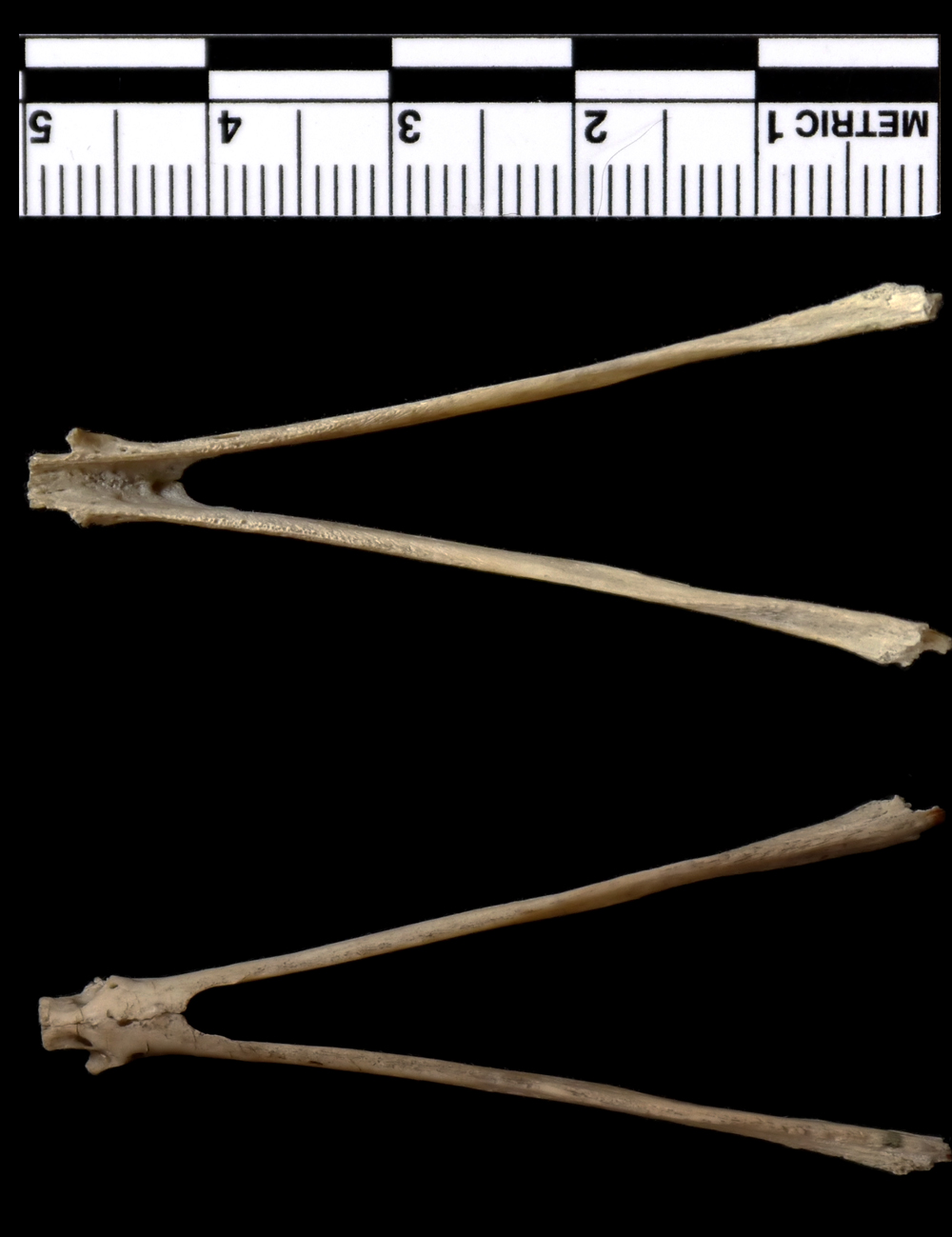
Last Friday I gave you this odd looking V-shaped bone to identify:

mystery271a

It led to a lot of speculation on Facebook and Twitter, with ideas including a bird wishbone, hyoid or mandible. However, the comments on the blog tended to be a little more focussed in the area of the mandible of an ant-eating mammal.

The two little prongs at the anterior of this lower jaw are a bit of a give-away about which type of ant-eating mammal it is, as they are only seen on one family. When you look at the additional image I provided it becomes even easier to work out which:

mystery271b

As most of you correctly worked out, this is a specimen of Pangolin, of which there are four species in the genus Manis (thanks Allen Hazen for the correction – there are more like eight species in the family). I found this nice illustration of the skulls of the various species, to help narrow it down even further:

Anatomical and zoological researches: comprising an account of the zoological results of the two expeditions to western Yunnan in 1868 and 1875; and a monograph of the two cetacean genera, Platanista and Orcella. John Anderson, 1878.

Anatomical and zoological researches: comprising an account of the zoological results of the two expeditions to western Yunnan in 1868 and 1875; and a monograph of the two cetacean genera, Platanista and Orcella. John Anderson, 1878.

So it appears from the morphology of the premaxilla, zygomatic region and nasals that this is a Sunda Pangolin, Manis javanica Desmarest, 1822.

Manis javanica by Piekfrosch, 2006

Manis javanica by Piekfrosch, 2006

These unusual scaly insectivores are critically endangered due to poaching for their meat, skin and scales for the Chinese market, with their population suspected to have declined by 80% in the last 20 years, despite having a protected status. Sad to say that their ability to roll into an armoured ball does nothing to protect them from people.

Friday mystery object #271

This week I have a mystery object for you from the Grant Museum of Zoology that’s either a bit too easy, or a bit mean:

mystery271a

If you’re not a fully paid-up bonegeek, you might like to have a bit of an additional clue; if so, click here.

Please keep your answers in the comments section cryptic, so everyone gets a chance to have a go at working it out without spoilers. Have fun!