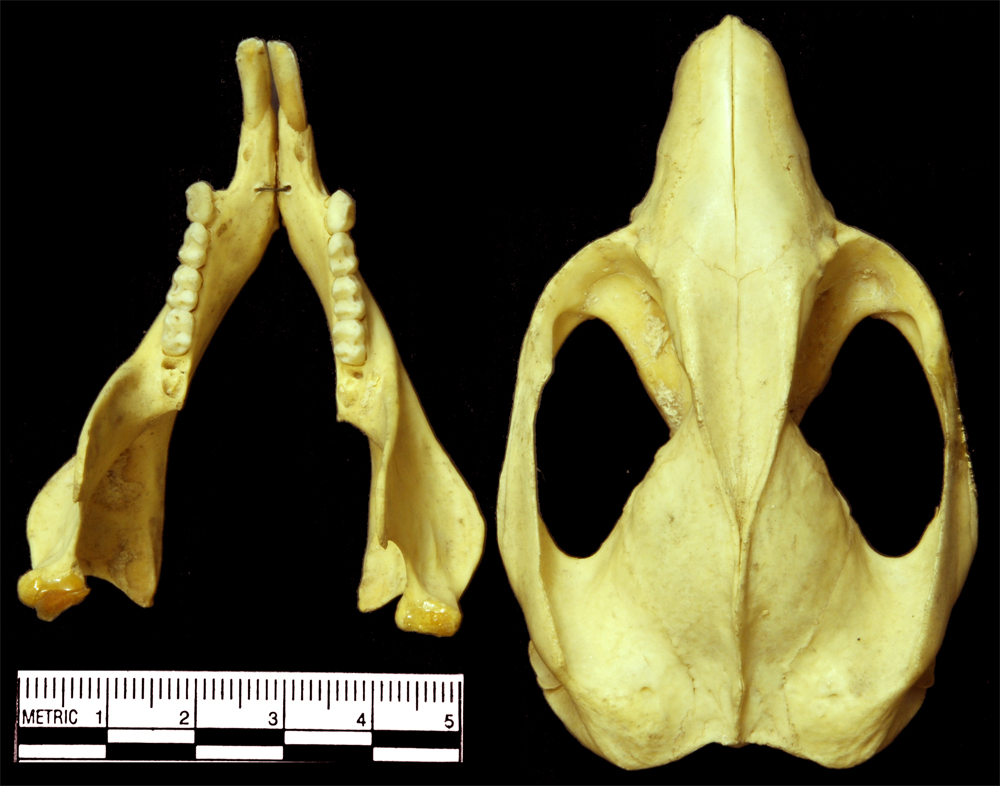
On Friday morning I gave you this skull to identify:

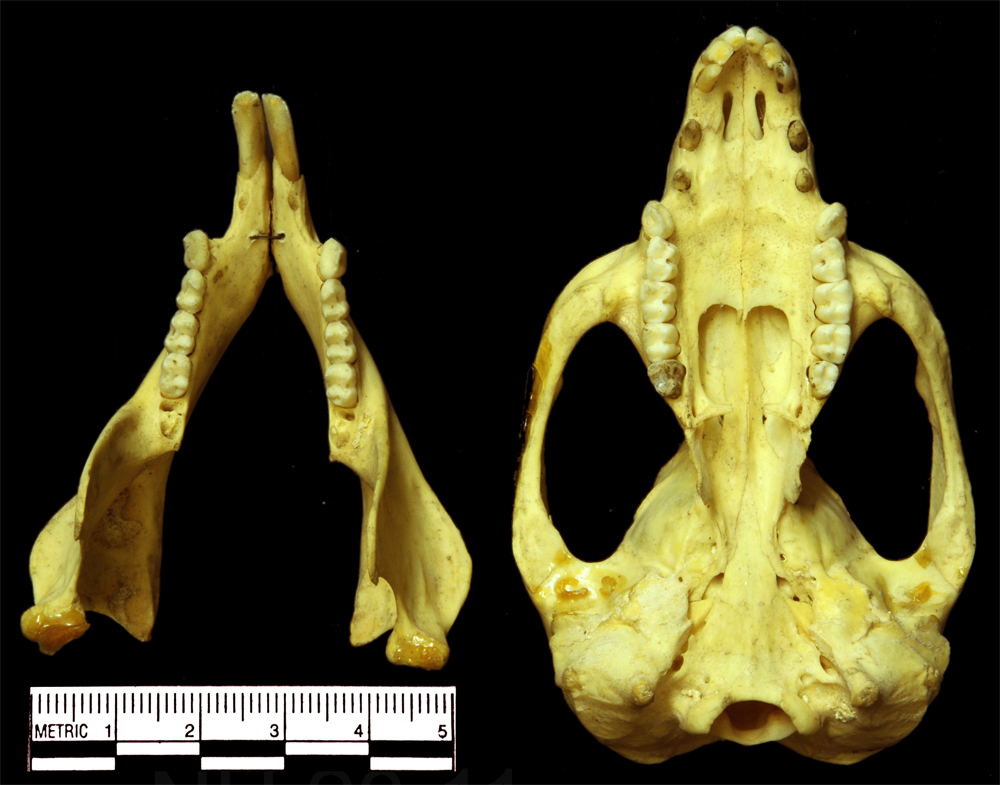
Then at lunchtime I added this image of the underside of the skull to make the task a bit more manageable:

Before the second image was added most people were thinking that the specimen was some sort of large rodent due to the pair of incisors in the mandible and the skull shape reminiscent of a Beaver. However, the second image shows the teeth in the upper jaw, clearly showing way too many incisors for the specimen to be a rodent, not to mention the fact it has canines and caniform premolars.
At this point it became clear that the skull was from a Marsupial and the identifications started getting a lot closer to the correct species. Several people suggested that this skull belonged to a Brush Tailed Possum and it’s easy to see why – they have very similar skulls. As you might expect this species and the Brush Tailed Possum are in the same family (Phalangeridae). The main visible differences are that the Brush Tailed Possum has a narrower skull with a less well developed zygomatic region (cheek bone). They also tend to have a less well-developed caniform first premolar.
As we’ve seen before these small differences in skull shape and size can be due to differences within a species – perhaps due to age or sex of the animal. This means that there may be a chance the the specimen is a Brush Tailed Possum, but the similarity between the dental configuration of this specimen taken in consideration with the slight differences in skull shape suggest to me that this is a Continue reading →



 Zygoma