
Last week I gave you this leggy mystery object to identify:

As I suspected, it wasn’t a difficult challenge in terms of working out the species, since it is one of the most common examples of its type. To make it a bit more interesting I also asked for you to keep the answer cryptic for extra points.
Chris Jarvis was first to the party referencing “stone” – part of the common name of this species. Adam Yates gained some extra points by cleverly working in a reference to the species name “forficate”, and Joe Vans managed to work a rhyme into his correct response.
This is, of course, a Stone (or Garden, or Brown) Centipede Lithobius forficatus (Linnaeus, 1758). It’s a very widespread species, ocurring across Europe as its natural range, but also now widespread in North America – even occurring on the Hawaiian islands and with records from Colombia.
These centipedes live in leaf litter and hunt small invertebrates with their venomous front legs (which are called forcipules).
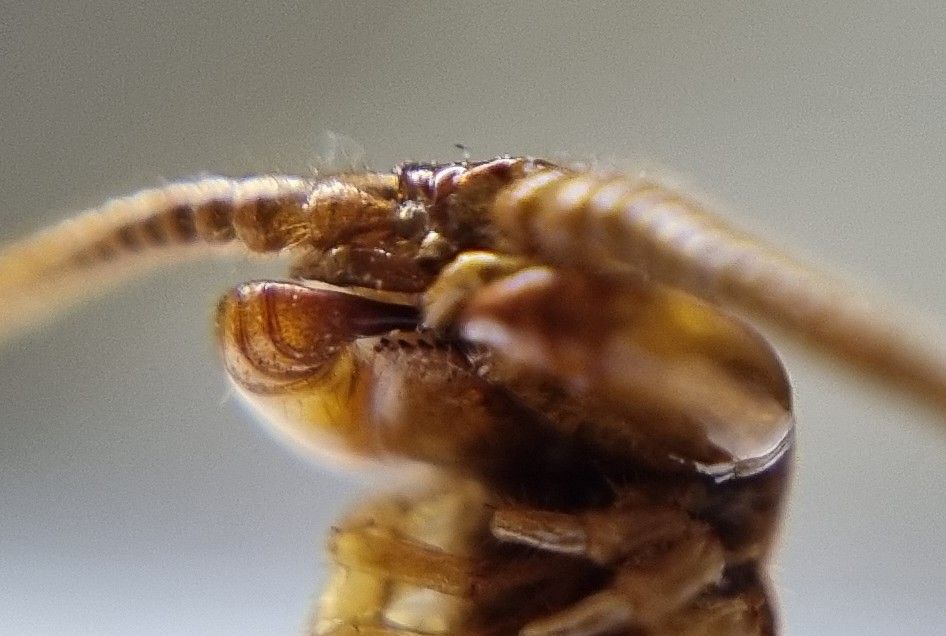
These centipedes can actually be quite difficult to definitively confirm the identification of, as they share a lot of similarities with other Lithobius species, such as the larger Lithobius pilicornis Newport, 1844, so a proper key is really needed (the British Myriapod and Isopod Group have some very useful resources) and specimens are essential for any surveying work that takes place, to allow checking of detailed features under a microscope – such as the forcipular teeth.
This is why specimens are an important validation resource for confirming species identifications, and appropriate lodging of these specimens in collections is important, to allow observations to be checked and confirmed.
Thanks to everyone for playing – let’s see what mystery object I’ll stumble across for next Friday’s challenge. Have a lovely weekend!

