
Last week I gave you this bird pelvis to have a go at identifying, as part of a series of posts on that particular feature across birds utilising different environments:
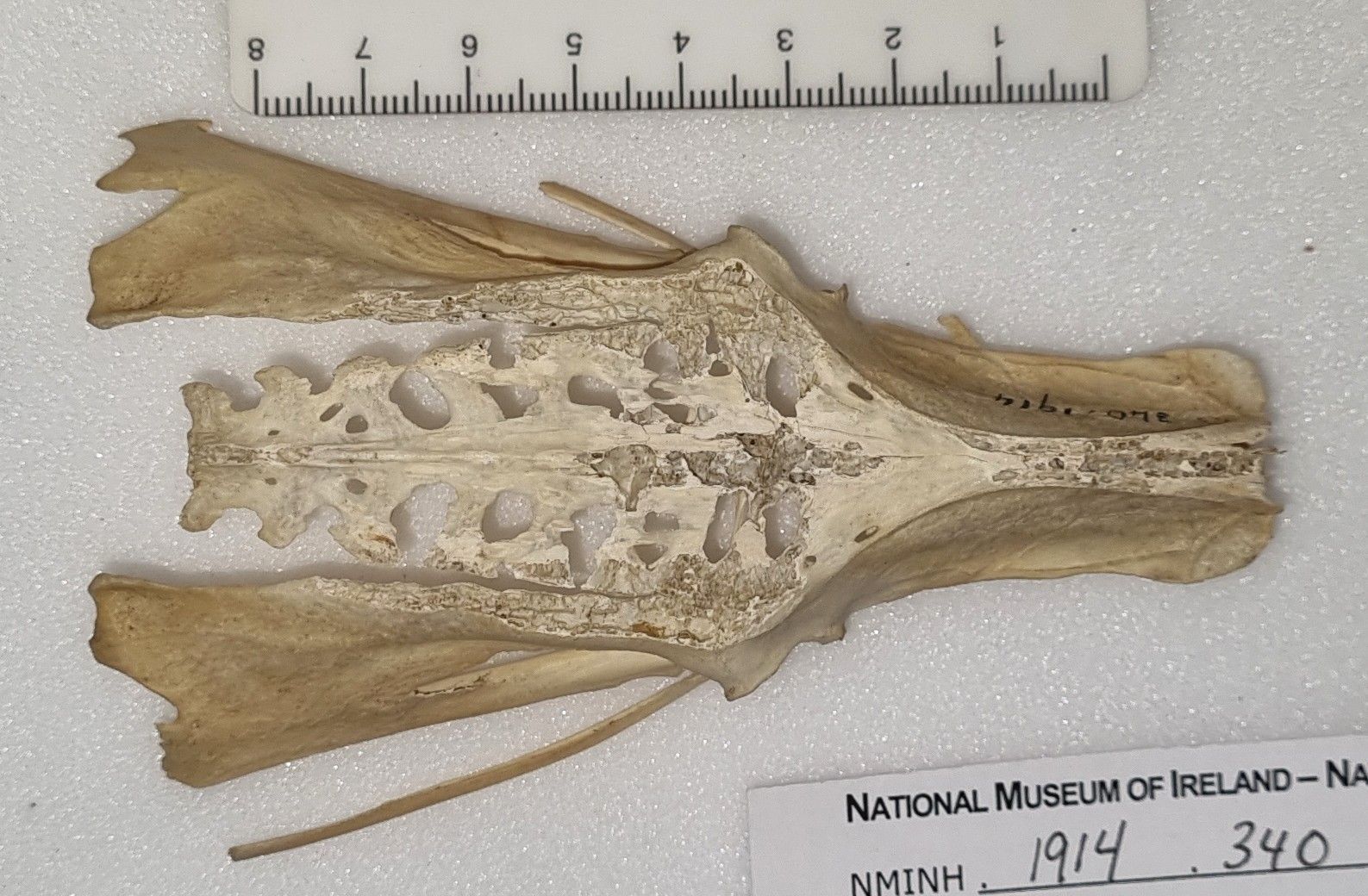
It probably wasn’t the easiest challenge, since this pelvis is damaged. It’s missing part of its dorsal surface and with some small amount of damage to the posterior margin of the right ischium (that’s the broad bit that flares out on the bottom left of the image) and with both of the pubic bones snapped (those are the long skinny bits that stick out to either side).
Still, the overall shape still gives some useful clues. The long, narrow, triangular form offers some ideas about the distribution of mass and use of the legs, to give a sense of possible locomotion habits.
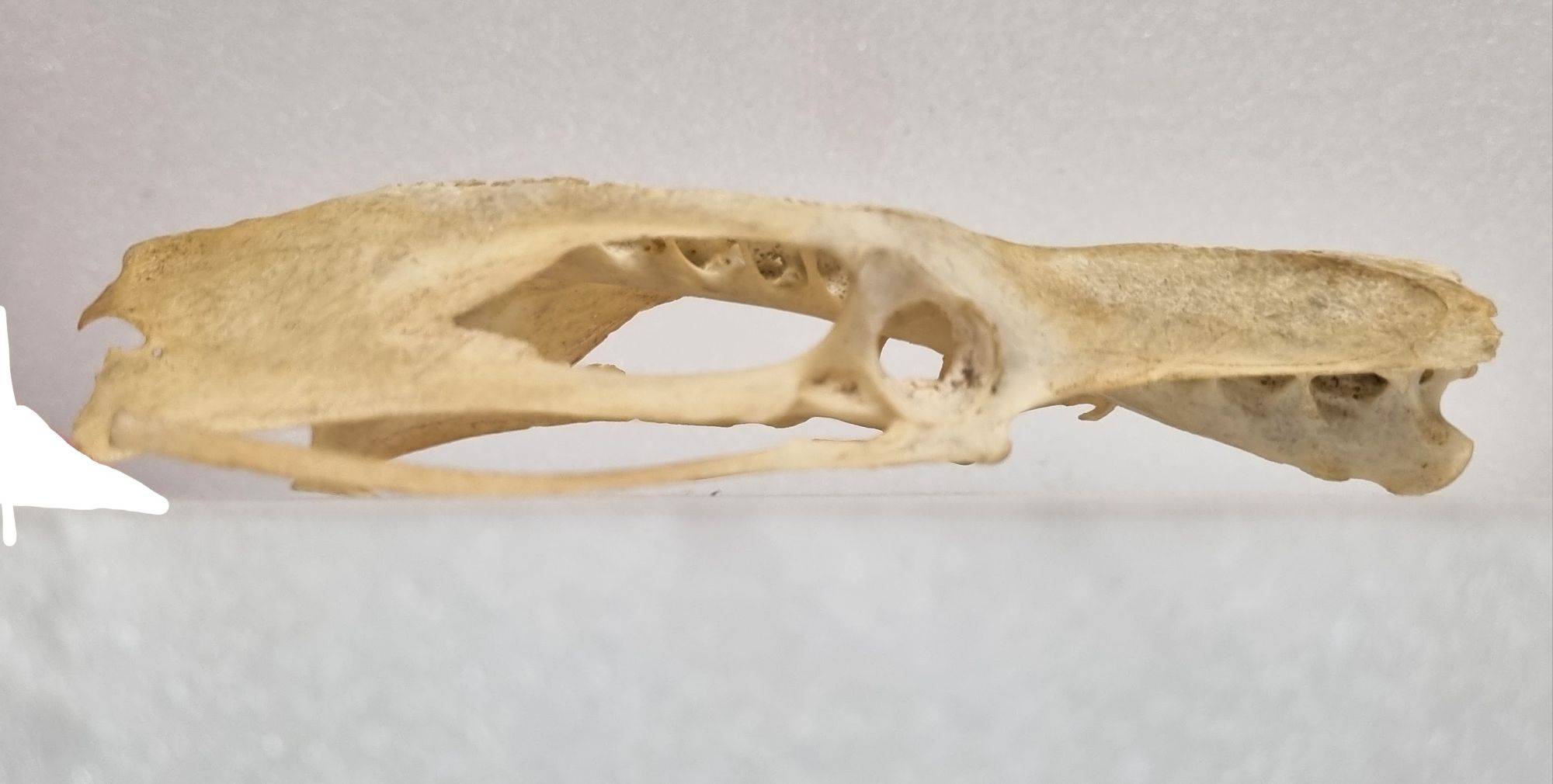
The pelvis is very flat and the points of articulation with the femur are quite far forward:
At least in comparison with something like a Chicken:
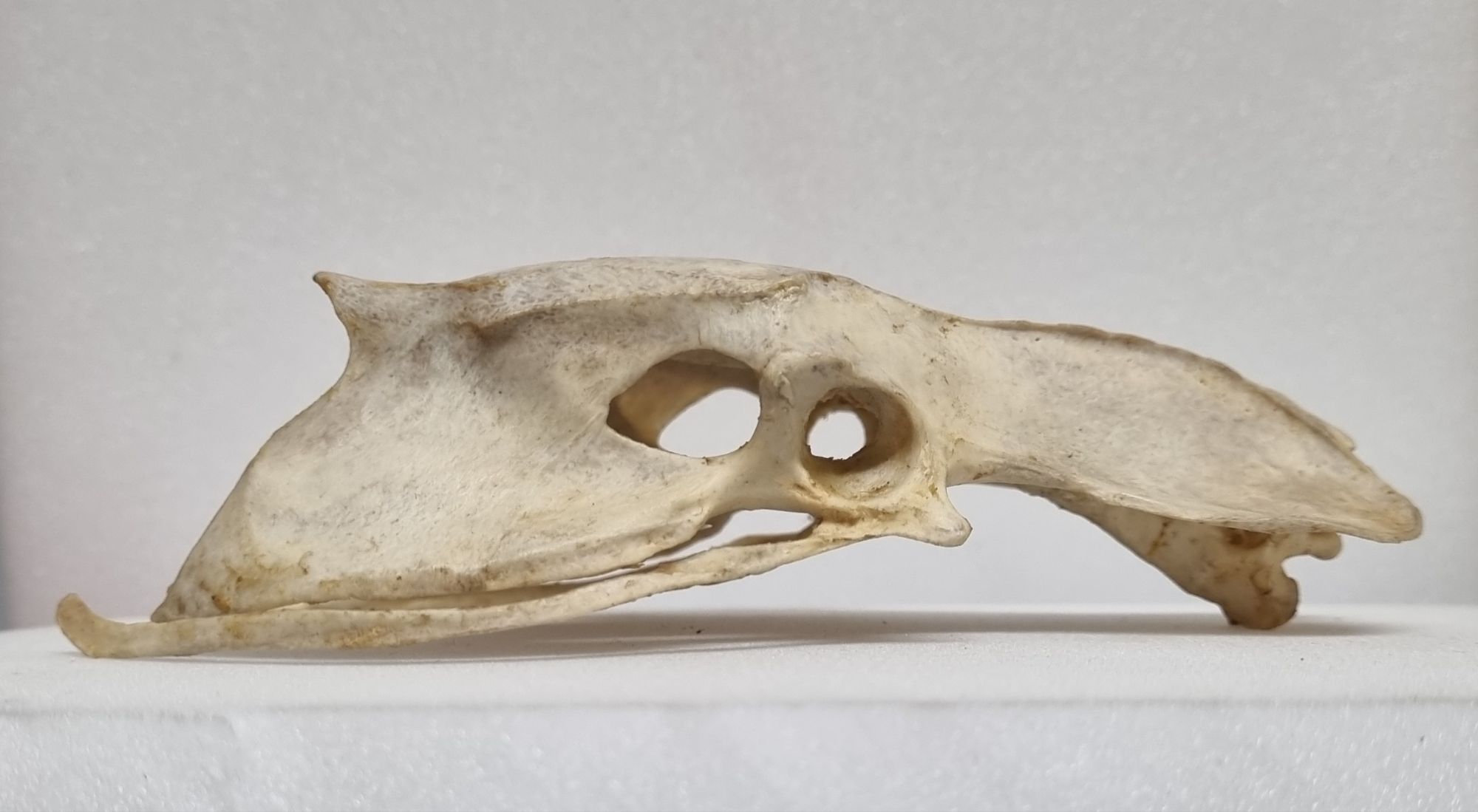
This suggests something that has a centre of mass that’s quite far forward compared the foot position. This immediately raises the question of why? The obvious answer for me is that this is a species that doesn’t brisky strut around, relying on more of a low-speed waddle to get around – or perhaps a paddle.
Waterbirds have legs located quite far back in the body to aid propulsion in the water. Perhaps a bit confusingly this requires the articulation of the femur with the pelvis to be pushed further forward due to the more horizontal orientation of the spine to allow the correct orientation of the legs to push water backwards and the body forwards – unlike terresrial species that are more interested in pushing the body upwards against gravity.
There are of course a lot of waterbirds, from the Pelecanimorphae mentioned in the comments by Adam Yates, to the Anseriformes. That’s what we’re looking at here.
There are a lot of ducks and geese, so narrowing it down isn’t easy. The size of this mystery specimen is in the right range for a large duck or small goose, but if you look at the left ischium (the undamaged one) you’ll notice a deep notch – this is something seen in geese.
You may also notice an additional extra notch – which I think offers a great clue to hint at the species. This is the pelvis of a Brent Goose Branta bernicla Linnaeus, 1758.
I’m not sure if the thoughts I’ve laid out here, and over the last couple of mystery objects are helpful for guiding future identifications of bird pelvises, but I hope they may be of use. Let me know your tips on working these things out – more ideas are always welcome!
 Zygoma