
Last week I had a genuine mystery object for you to identify that was freshly dug out of the ground:
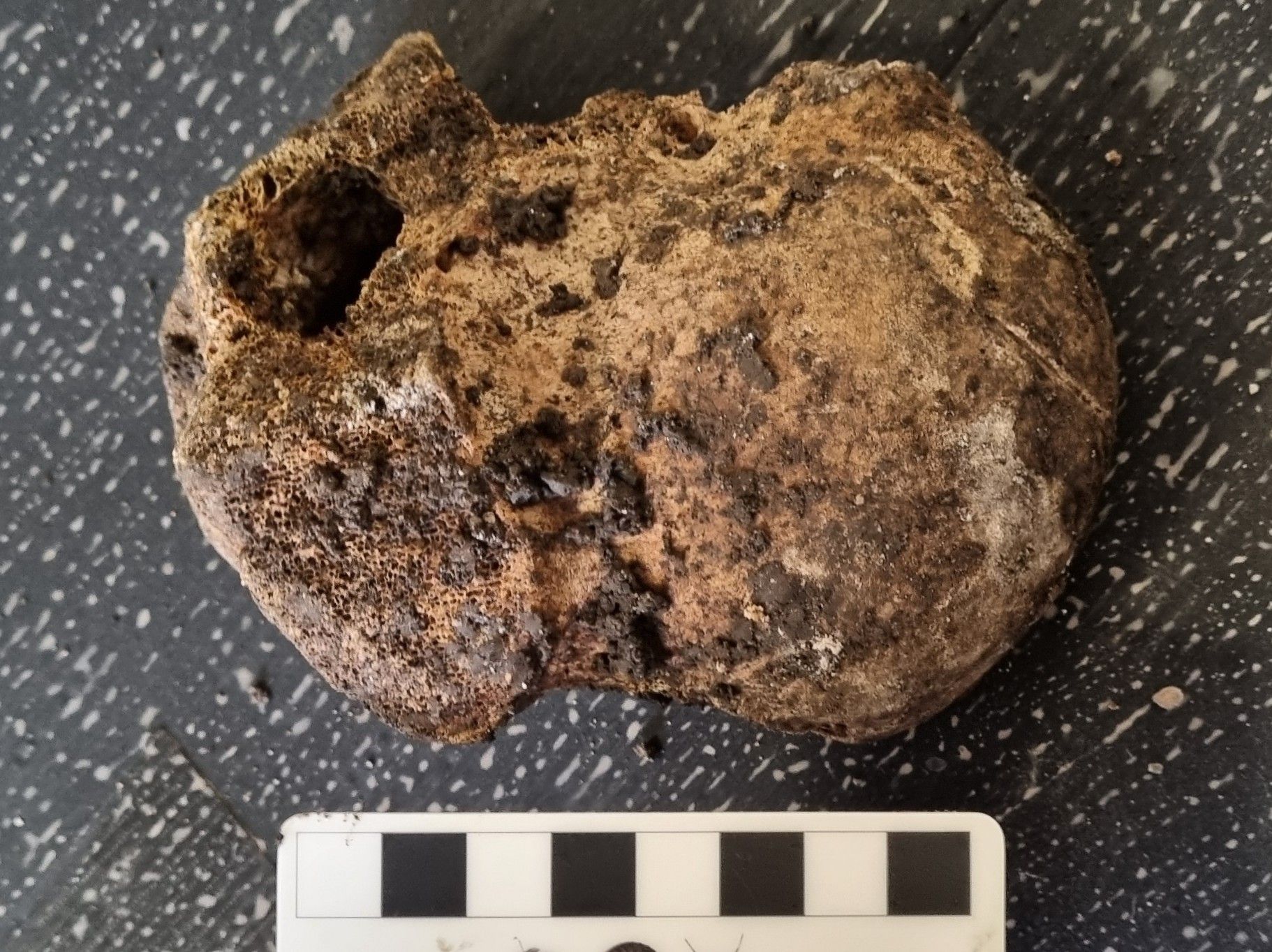
While there were a few suggestions of baked goods on social media, plenty of you spotted what it actually is – with a nod to Adam Yates who was first with the correct identification.
The side view is probably the most useful for setting context, as it shows the smooth curve of the head of an articular surface, with an adjacent tuberosity (or sticky-up-bit, if you prefer):
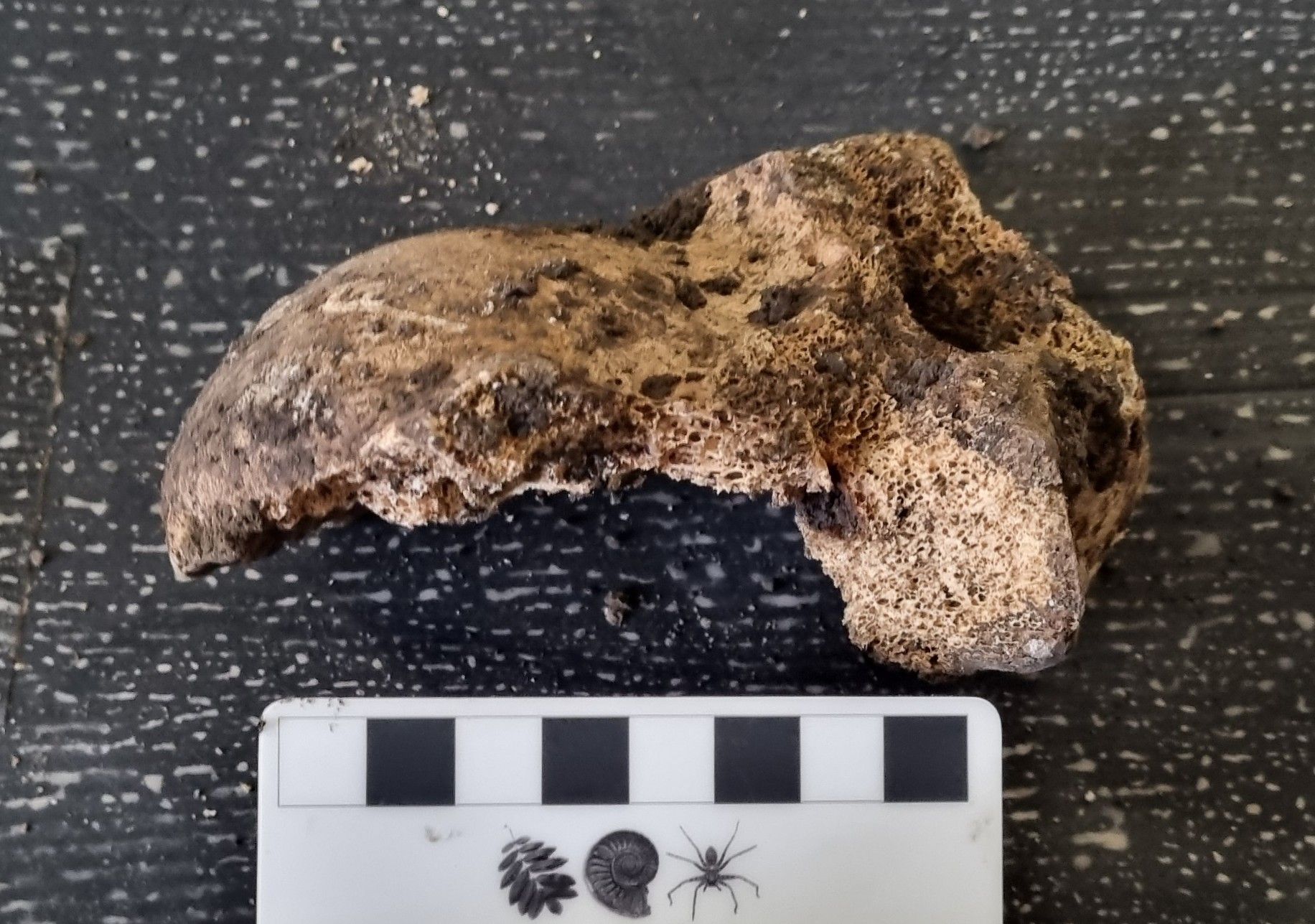
This is what you expect to see at the proximal end of a humerus (that’s bit that works with the shoulder). It’s pretty big – the scale bar is 8cm and the head of this humerus is a good bit wider across, so that also tells us something.
Another key observation comes from the underside of the humerus head:

You can just make out a rugose pattern on the underside of this piece of bone, which tells us that this is an unfused epiphysis that has become detached from the rest of the humerus. That means the animal that this piece of bone came from was young enough to still be growing, as the bones hadn’t fused.
All of that information leads us to the conclusion that the animal this piece of humerus came from was large, but still young. For me, that says that this humerus is from a Cow Bos taurus Linnaeus, 1758.
I suspect this mystery object represents the remains of a Victorian meal, based on where it was found – just under the floor of the Dead Zoo. It came to light during the investigation works on the building, which are currently underway. The building work started in 1856, so that gives us a good idea of when this beef shoulder was probably eaten.
 Zygoma