
Last week we had a very difficult guest mystery object (or objects, as there were two specimens). These are from the collections of Andy Taylor, FLS:
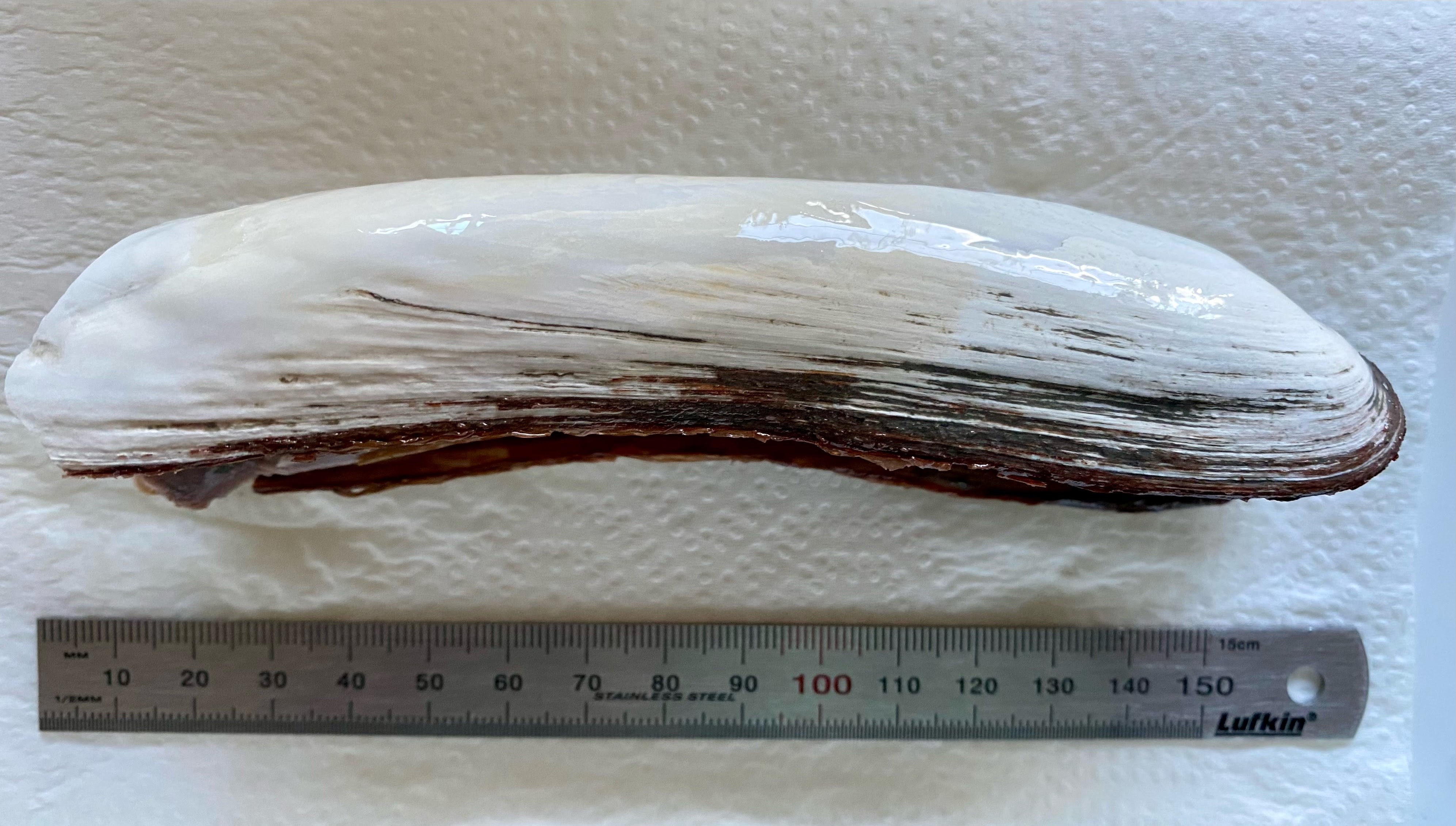
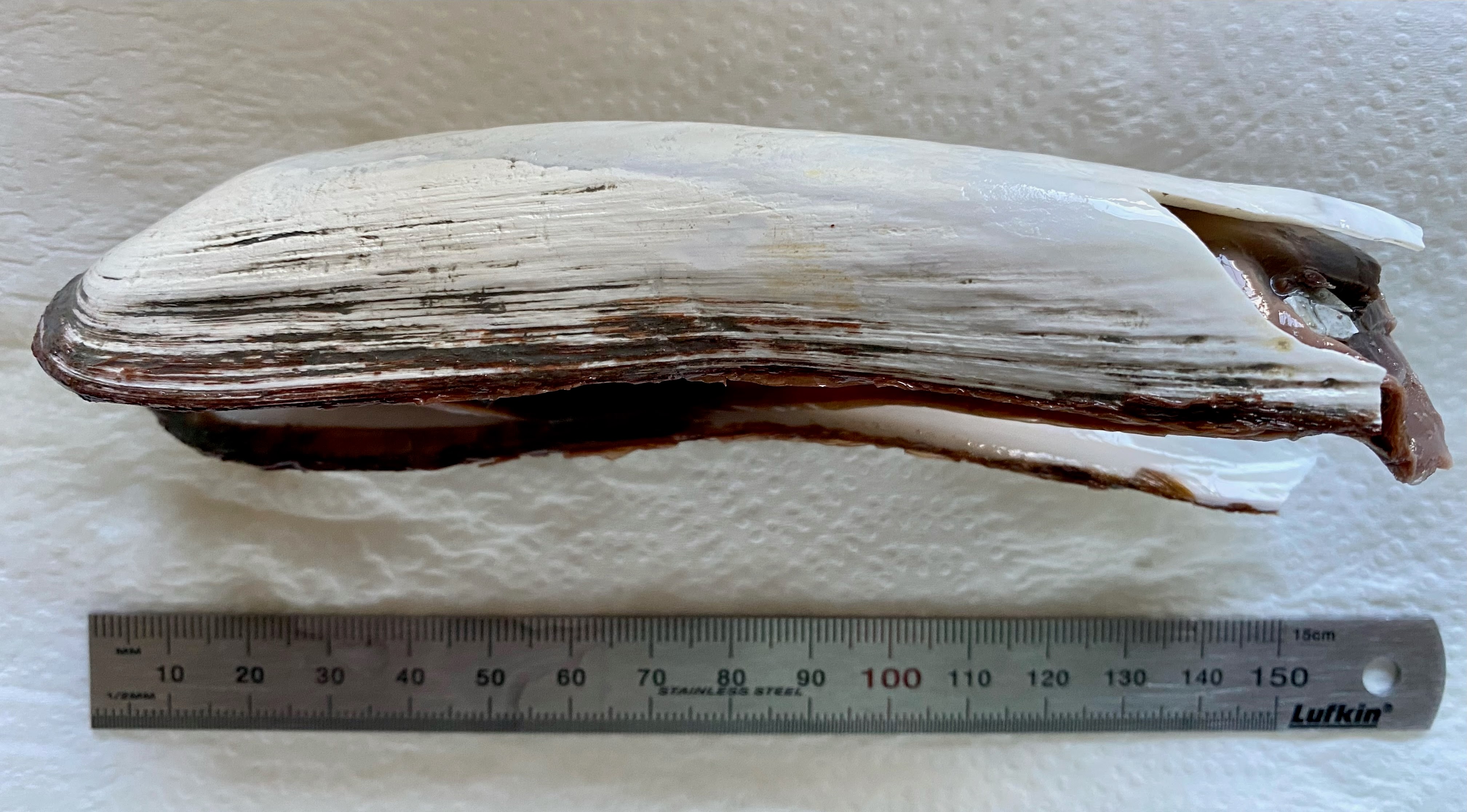
The general consensus in the comments was that they are a type of mollusc, and due to the elongated nature there were a few suggestions of something in the Razor Clam area of the crunchy-yet-squishy zone of the tree of life.
But these are a bit more unusual than that, and unfortunately nobody seems to have picked up on my ever so cryptic clue:
You may need to delve into the depths of the internet to work it out
This refers to the fact that this species is one of the denizens of the deepest parts of the world’s oceans.
This combined with the characteristically elongated shell shape does help to narrow it down, although it takes a lot of work – or a degree of familiarity to work it out.
Remarkably, Dennis C. Nieweg on LinkedIn did manage to figure it out to the previous generic name of Calyptogena, which is hugely impressive for such an unusual and generally unfamiliar specimen.
These are specimens of Abyssogena (was Calyptogena) phaseoliformis (Métivier, Okutani & Ohta, 1986). They are very deep living bivalves in the Order Venerida, that survive around deep-water vents and seeps in the Abyssal zone and which were first described when submersibles were developed that could sample at great depths – opening up a whole new realm of discovery.
The details provided by Andy are as follows:
First specimen is from the Japan Trench and was collected at a depth of 6347m in 1997 by ’Shinkai 6500’ DSV (Deep Submergence Vehicle) operated by JASTEC (Japan Agency for Marine and Earth Science).
This second specimen was collected from the Aluetian Trench at a depth of 4776m – 44949m in 1994. This specimen was collected by the ‘RV Sonne’ with a remote submersible and TVG (TV guided grab).
Andy Taylor, FLS on 17 Aug 2023
So these specimens represent some of the deepest living organsims on Earth, which we’ve only known about the existence of for about 40 years. That’s pretty cool in my book!
 Zygoma
Props to Dennis!!
Phaseoliformis. Shaped like a bean-pod. I feel a little bit better abut my initial wondering whether it was part of some sort of plant!
(But the real story is fascinating. Thank you, Paolo!)