Friday mystery object #491 answer

Last week I gave you this detail of a specimen from the Dead Zoo to identify:

I don’t think anyone nailed the identification to species, but several of you get very close, with a trend towards the ursine.

This is the mouth of a Polar Bear Ursus maritimus Phipps, 1774 and even more precisely, it’s the mouth of the Polar Bear shot by Irish explorer Leopold McClintock in April of 1851 on the pack ice between Bathurst Island and Byam Martin Island, in the Canadian Arctic Archipelago.
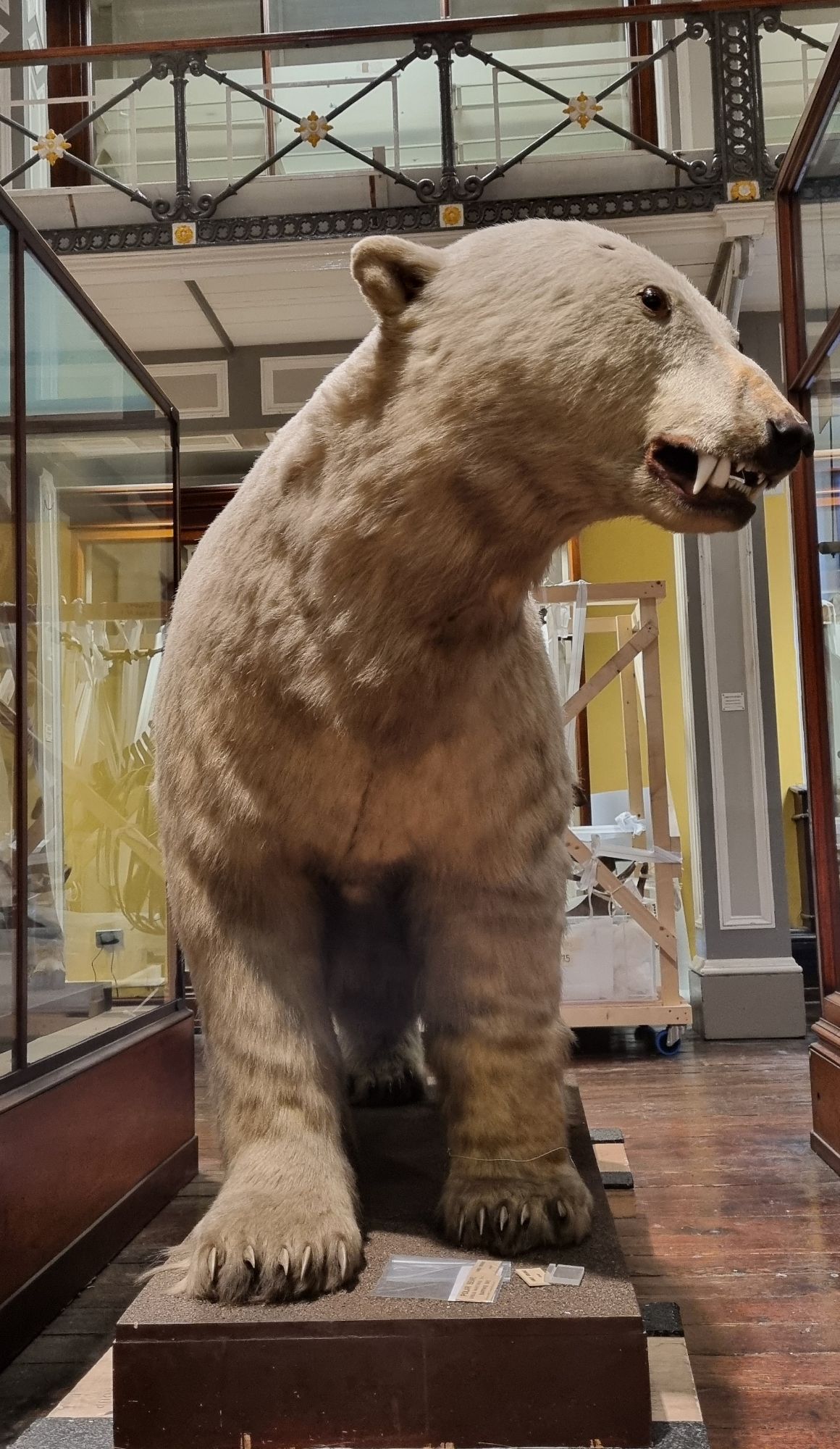
McClintock’s Polar Bear

As I understand it, this particular bear was tracking McClintock’s group on the ice, and was shot by McClintock to protect the party (and provide some fresh meat). However, the specimen has several bullet holes, which suggest that more than one member of the group took a pop at the bear.
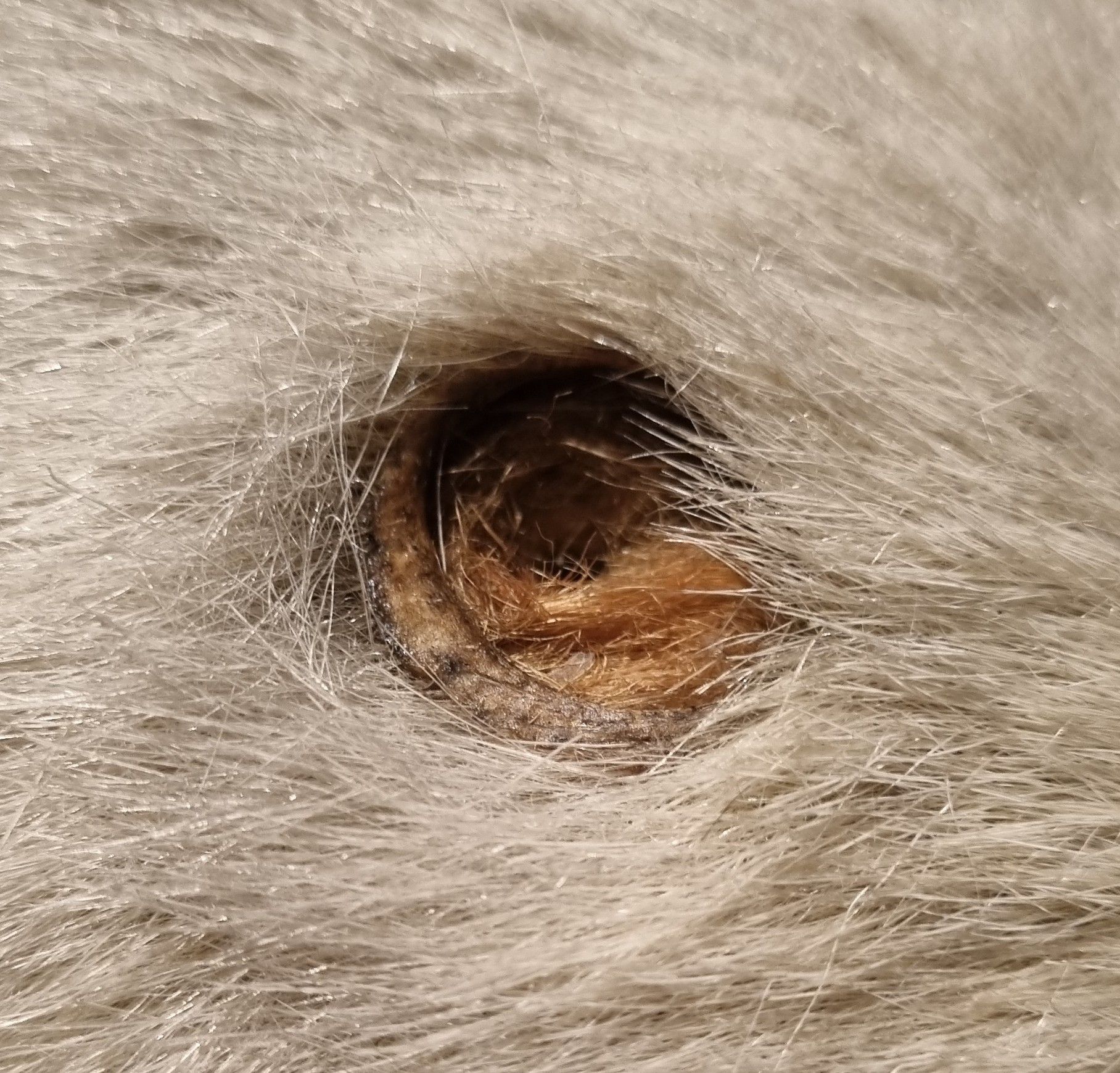
One of several bullet holes in the Polar Bear

Regardless, McClintock is identified as the collector and the specimen was presented to the Royal Dublin Society by Erasmus Ommaney in December that same year. Ommaney was second in second in command of the HMS Resolute, the ship being used to on an expedition to discover the fate of Sir John Franklin, who was lost while attempting to discover the Northwest Passage.

So well done to everyone who managed to recognise the toothy grin of this enormous predator – the animal reputed to give the Arctic its name (“Arctos” meaning “Bear” in Greek – although that probably refers to the constellation Ursa Major or Ursa Minor, which are key navigable features in the northern sky).

Friday mystery object #262 answer

Last Friday I gave you this pretty characteristic mystery object from the Berlin Museum für Naturkunde to try your hand at identifying:


There were lots of great comments – I must apologise for not responding to many (and for posting the answer to this mystery object so late), my excuse is that I’ve had an insanely busy week finishing up my old job at the Horniman Museum and Gardens and then getting started in my new job at the fantastic Grant Museum of Zoology at University College London (more to come about my big paolov.files.wordpress.com/…/mystery262.jpgmove). I also got started on a really interesting project looking at Gorilla osteology and I’m feverishly trying to prepare a training workshop on identifying natural materials for next week.
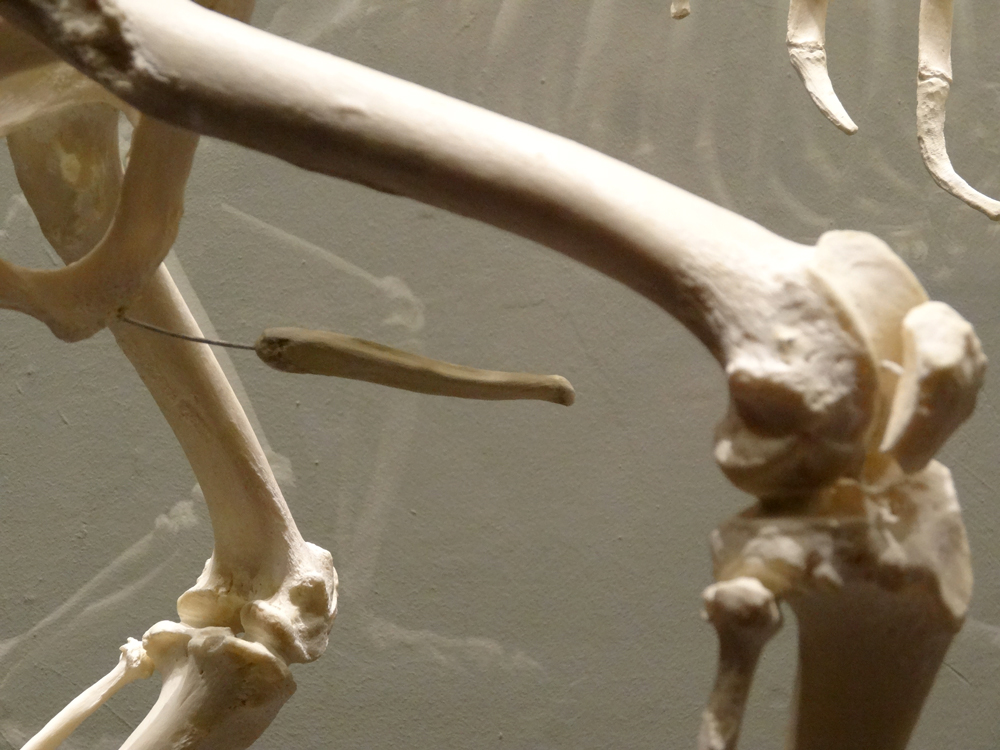
Back to the object. Several of you noticed the presence of a baculum (or penis bone) which shows us quite definitively that this was a male animal (although, I later realised that this baculum does not belong to this specimen!).


It also suggests that the specimen was prepared and mounted without the prudishness that many historical mounts were affected by (see Jack Ashby’s comments about this in his post on the Grant Muesum’s Ringtail).
Many of you also correctly recognised that the plantigrade (or flat-footed) posture, short tail and robust build suggested a bear of some sort.

The distinctive sagittal crest was the final feature needed for identification for some of you to work out that this is the skeleton of a Giant Panda Ailuropoda melanoleuca (David, 1869).

I tend to think of Panda skulls as looking like a cross between those of a Hyaena and a Gorilla, which makes sense when you consider the adaptations of the jaw musculature required for the Panda to process the large volumes of tough bamboo needed to provide enough energy for survival. The bone of the skull has to be able to manage the large forces produced by all this chewing, resulting in a big and robust sagittal crest, a thick and deep mandible and really deep muscle scars on the coronoid process.

These are all features you also see in big chewers like the Gorilla and Hyaena, but not in rodents and ungulates – I think this reflects the difference between groups that rely on temporalis muscle (which runs along the side of the braincase) in chewing compared to the masseter muscle (which attaches to the zygomatic arch or cheekbone).
The final clue to confirm that this is a Giant Panda is the ‘thumb’ on the front limbs:

This handy (excuse the pun) extra ‘digit’ is actually the radial sesamoid bone of the Panda’s wrist, that has been commandeered by evolution for use as a bamboo holder. There are a few other species that have done weird things with wrist bones to gain a digit, but this is clearly not a Mole or Elephant and Red Pandas have a much longer tail.
I hope you enjoyed some of the interesting bony features of this specimen – it’s great to have a chance to see under the surface of such an iconic animal!