
Last week I gave you this cute little netsuke (pronounced nets-keh) to see if you could identify what it was carved from:
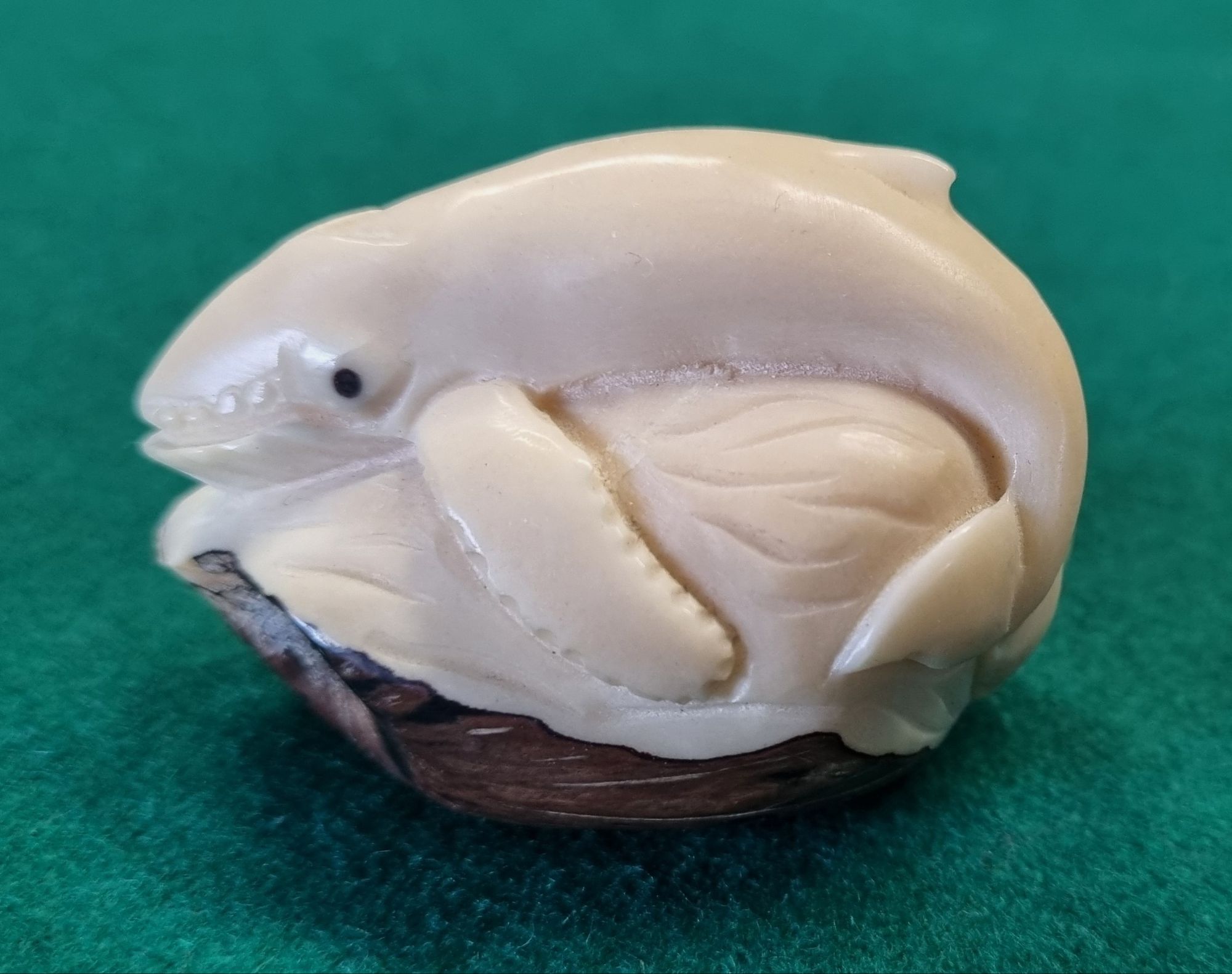
I was hoping it might offer a bit of a challenge, with a few options being put forward for a variety of ivories, and perhaps some pondering on the topic of the carving, but I was disappointed by how quickly and comprehensively everyone told me exactly what this is.
I suppose I shouldn’t be surprised, since the community here on Zygoma are really good at identifying things (I suspect there’s a bit of self selection going on there!) The shape is quite distinctive, but more there’s also a small section on the base that’s just visible, which is very characteristic if you know what you’re looking for.
Here it is pictured from underneath:
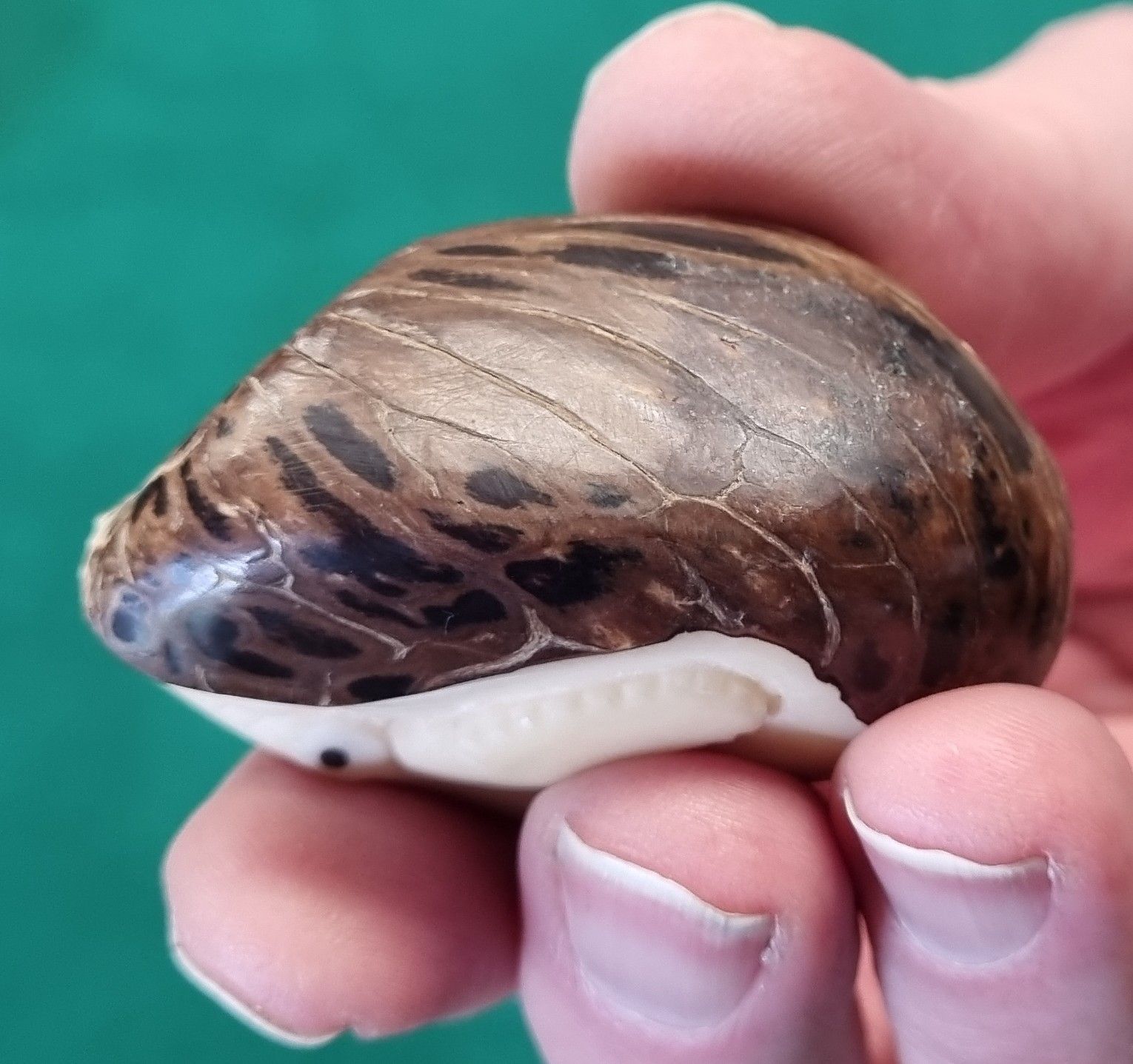
This is an example of vegetable ivory – a material derived from the nut of a Tagua Palm in the genus Phytelephas Ruiz & Pav. These large seeds have a creamy, ivory coloured flesh that is easily carved when wet, but which become hard when dried.
This particular specimen is from the National Herbarium at the National Botanic Gardens in Glasnevin, where I was fortunate to be shown it during a visit to see a very impressive herbarium digitisation project they’ve been undertaking.
The vegetable ivory lacks the Schreger lines found in proboscidean ivories, such as mammoth or elephant:
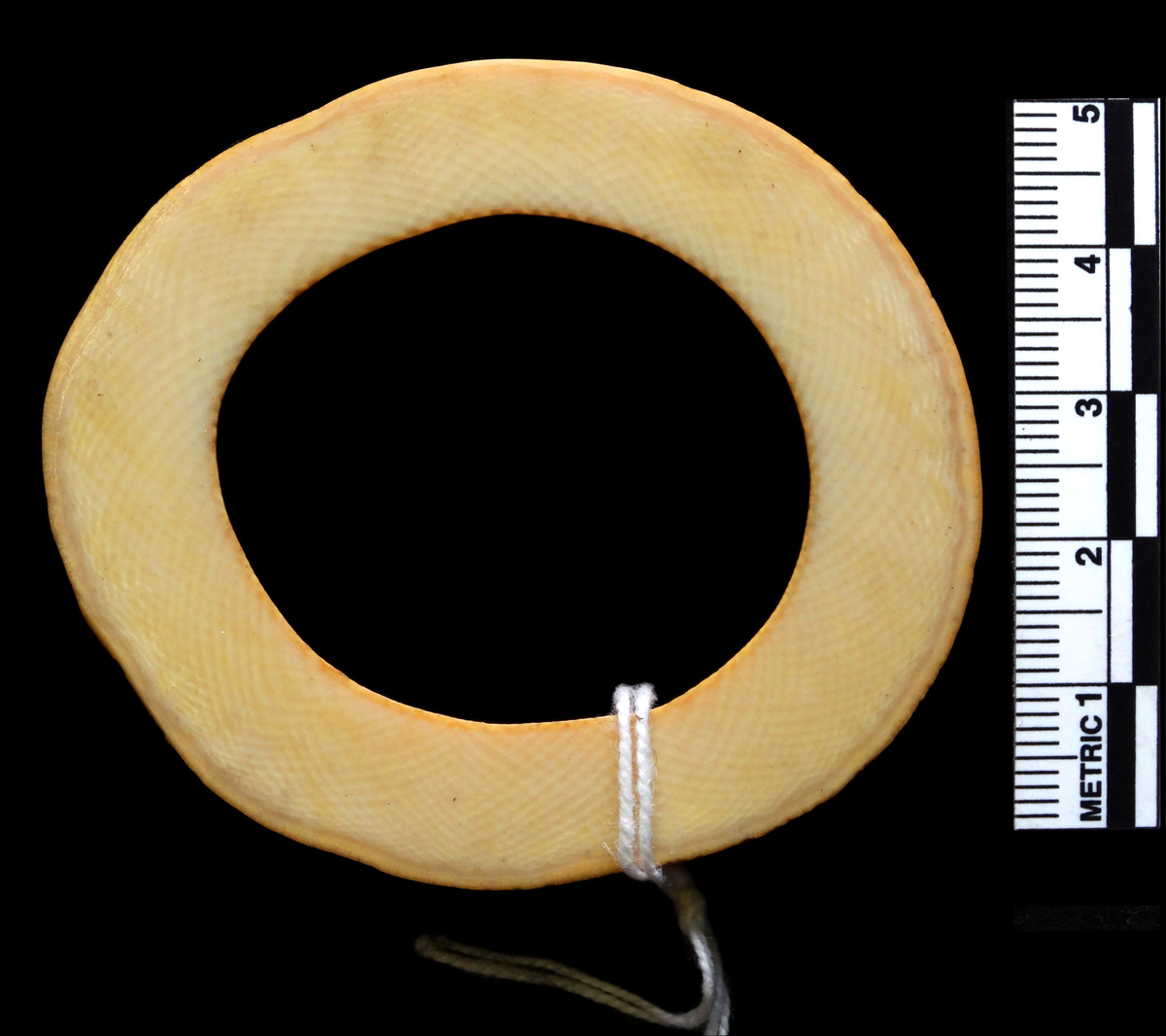
There are plenty of other ivories of course, some of which have similarly distinctive aspects to look for, like Walrus ivory that has a central section that looks almost like clouds due to secondary dentine secretion in the root space of the tusk, and Hippopotamus canine ivory that has a subtle discoloured arch in the middle that results from the flattened triangular shape of the tooth.
In the case of the Tagua nut there is a hole in the centre, but this will often be avoided by not carving too deeply, or by incorporating the natural void into the design of the carving.
So well done to everyone – your skills are still top notch! You can test them again soon, as there will be more mysteries to come next week.
 Zygoma