
Last week I gave you this mystery mandible to help me identify:
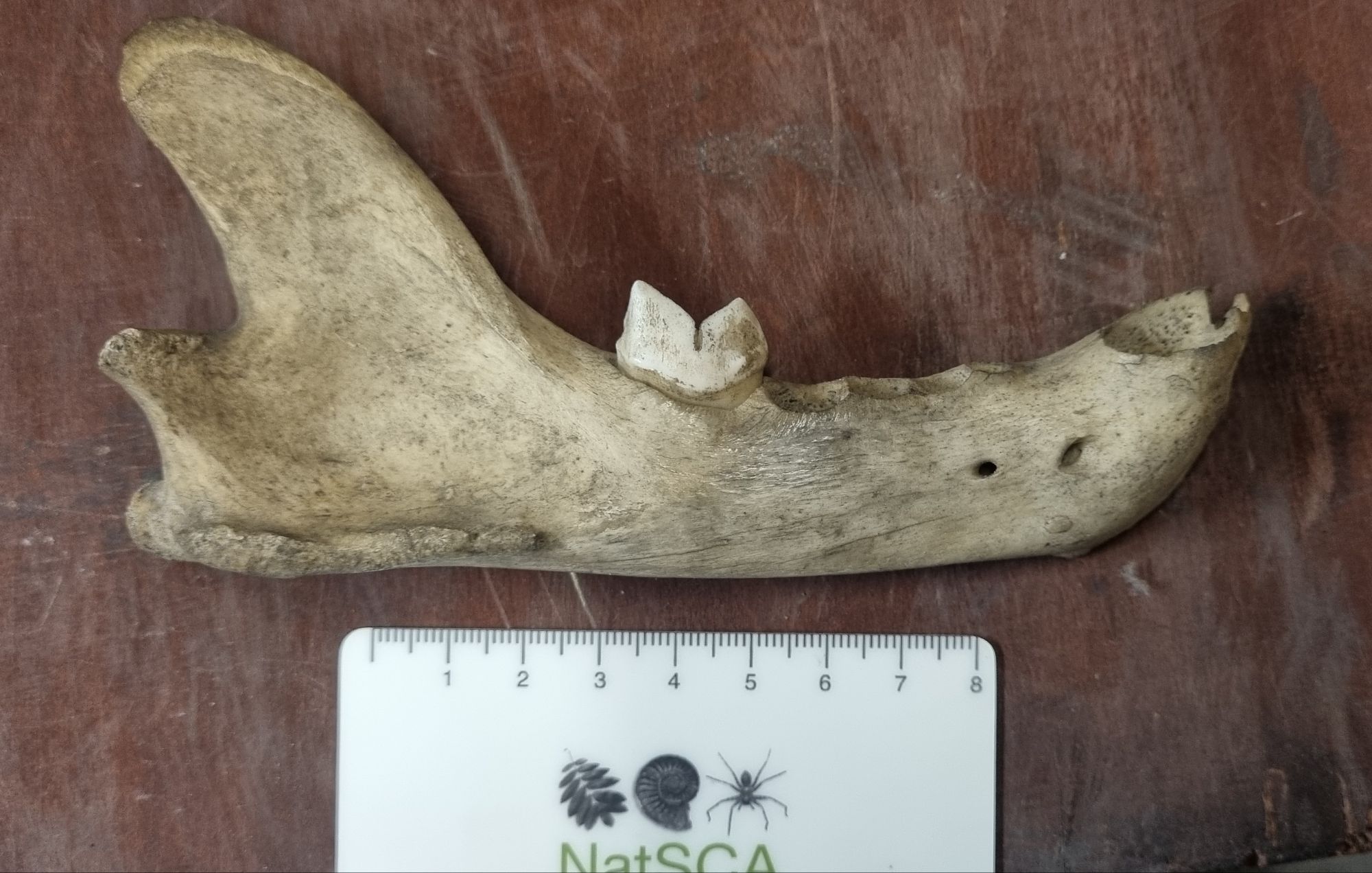
It was found in a box of mixed shells and bony fragments, with no label, and nothing to offer a clue to its origin. This is very unusual, since these sorts of boxes of miscellany were mainly addressed years ago, but this one was well tucked away and somehow escaped being dealt with.
It’s fairly easy to recognise this as being the right mandible of some kind of cat. The Felidae have a reduced tooth count, with those hyper-carnivorous bladed premolars forming a meat-shearing carnassial row that’s very distinctive. So that’s the easy bit done.
The hard bit comes next, since the cats all share this same dental configuration, making the specific kitty in question a bit harder to narrow down. However, the size is a useful clue. This is much too big to be something like a Domestic Cat, Serval or Ocelot, but it’s also too small to be one of the big Big Cats – like the Lion or Tiger:

This leaves some of the medium-large Big Cats and perhaps a very large Small Cat (i.e. the Cheetah). Let’s start by ruling out that last one – the size is still a bit on the big side, but also the Cheetah has a more gracile coronoid process that curves, and a relatively shorter toothrow. Pumas also have a more rounded coronoid process.
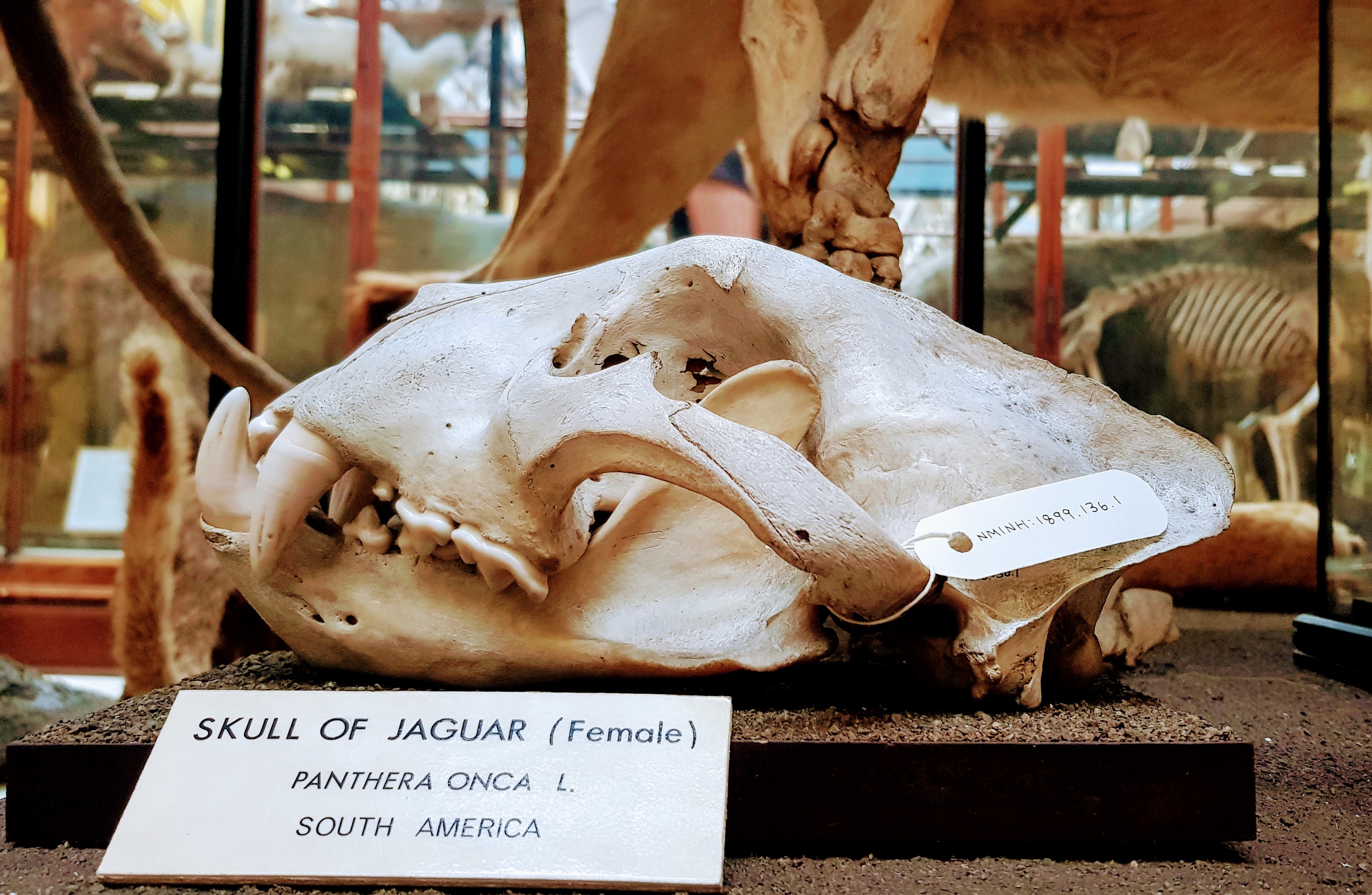
The Jaguar also has a more rounded coronoid process, and has a more robust mandible, that’s just built thicker to deal with the high bite forces these cats generate:
That leaves us with the Snow Leopard and the not-snow-Leopard, both of which have the more pointed coroid process that we see in the mystery object. However, the Snow Leopard has downwards inflected angular process, that’sI suspect may relate to the increased gape needed to use the excessively long canine teeth in this species:
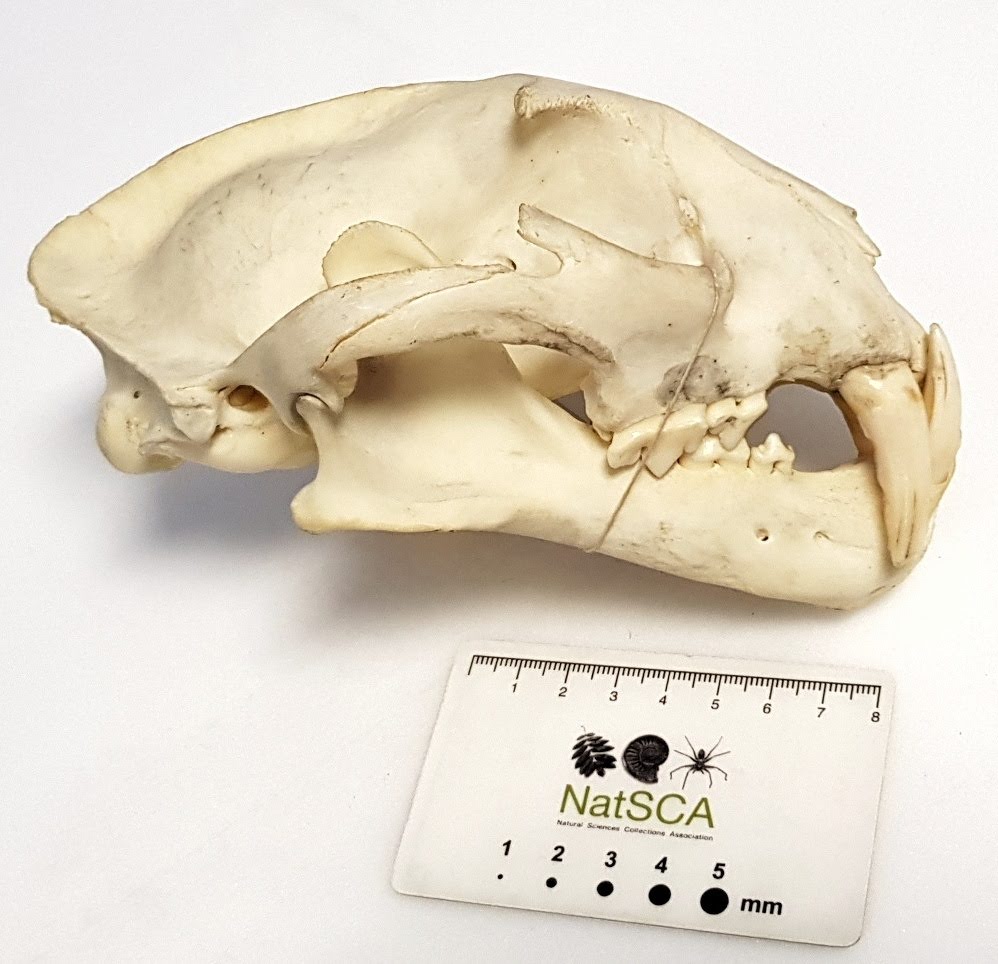
So, by a process of elimination, we’re left with Leopard Pathera pardus (Linneaus, 1758). This species varies significantly in size and the morphology can be quite variable, since the species has a wide distribution, from Eastern Russia to as far West as Senegal.
This actually reminds me of a very similar mystery object from the Grant Museum of Zoology that I shared 10 years ago, so I’ hope that provided something useful for reference so I’m glad I trawled through some of my past posts to help solve this one. My thanks to everyone who offered their thoughts on this one – it’s great to see so many of you come to the same conclusion!
 Zygoma